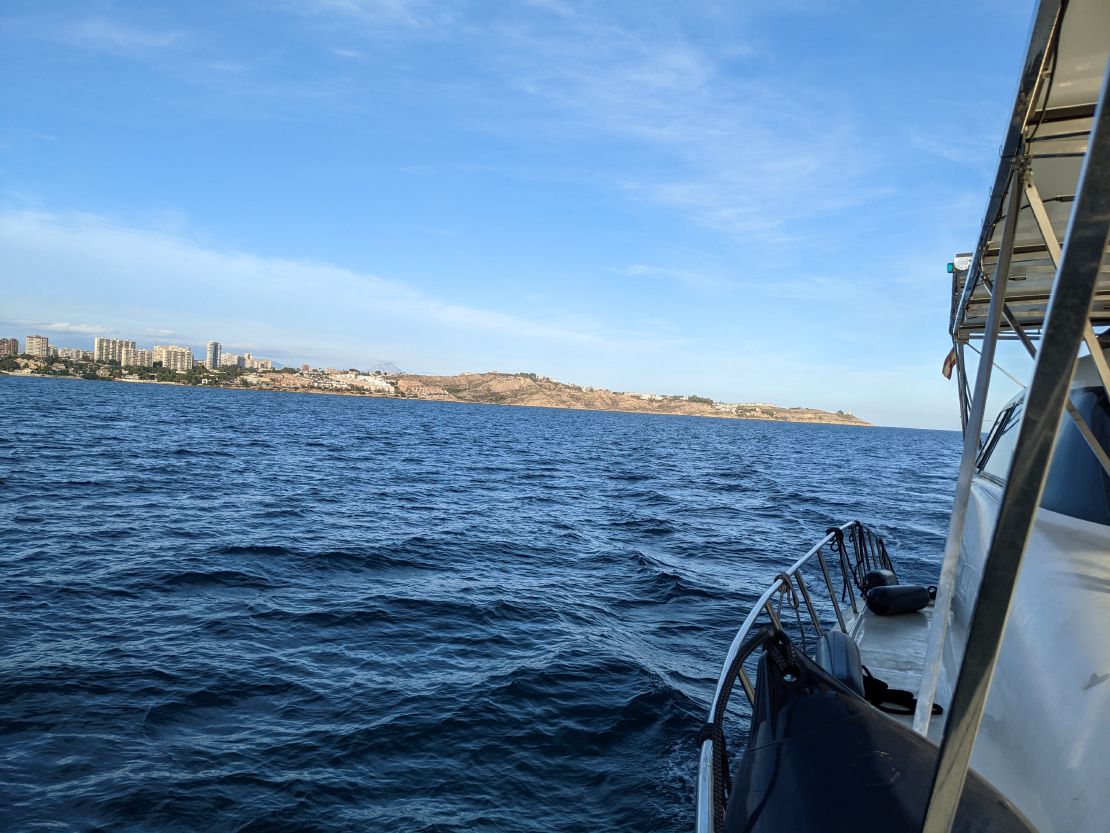
Fall 2022 Navigation Log
We spent the last six weeks with the Escargot on the water at the Varadero STA marina in south Alicante. We used this time to validate the …
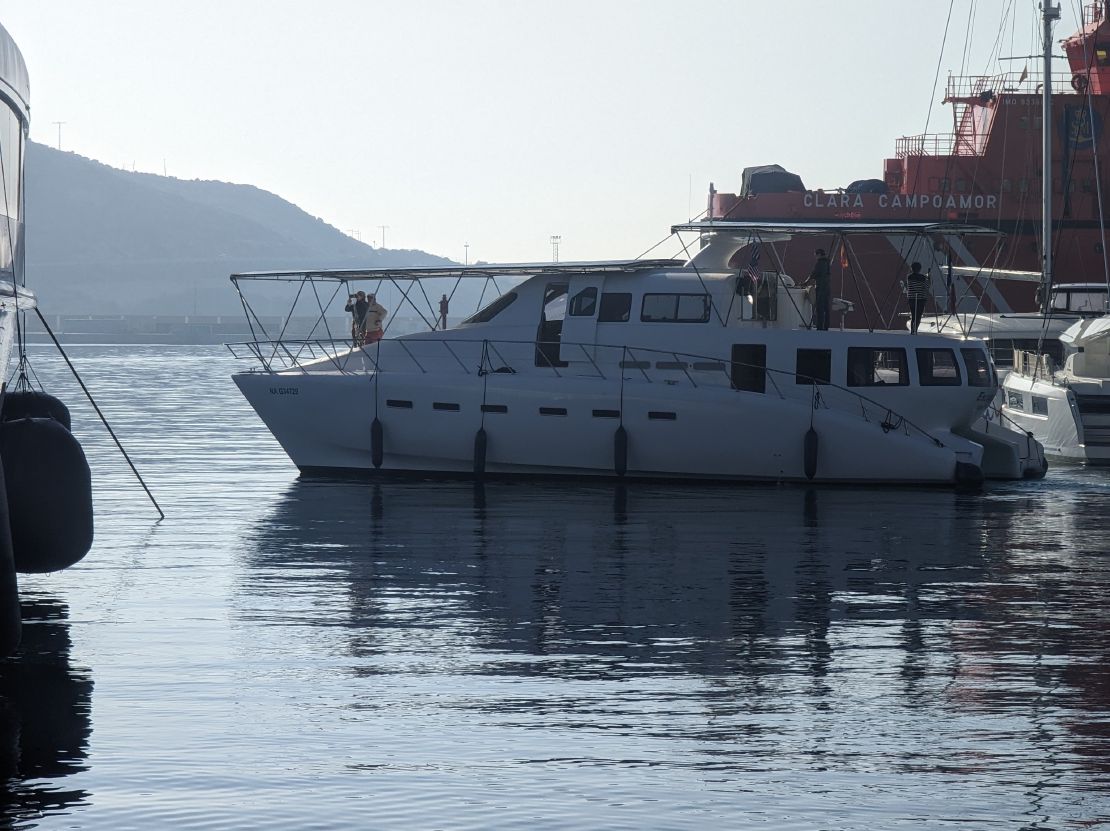
These past few months marked our first season living and navigating aboard Escargot. We left Alicante without a predefined destination, other than a desire to sail south toward Malaga. By mid-December, we arrived in Cartagena and discovered an interesting city with a great community of liveaboards staying for the winter. We decided to settle there to explore the region while tackling the thousands of projects needed to make Escargot more comfortable. We only navigated a little over 100 nautical miles, but it was a great way to gain experience and identify areas for improvement on our still-experimental solar electric catamaran.
| Date | Distance | Speed | Duration | Description |
|---|---|---|---|---|
| 2023-11-07 | 0.3 nm | 1.0 kts | 0.3 h | Short navigation from the Travelift to our berth |
| 2023-11-13 | 3.8 nm | 5.0 kts | 0.8 h | First test navigation loop in the south bay of Alicante, with top speed test of 8.4 kts |
| 2023-11-18 | 5.3 nm | 4.0 kts | 1.3 h | Navigation loop in the south bay of Alicante |
| 2023-11-26 | 6.2 nm | 4.8 kts | 1.3 h | Navigation loop near Alicante, to the Castillo de Santa Barbara |
| 2023-11-30 | 11.8 nm | 4.9 kts | 2.4 h | Alicante to Santa Pola |
| 2023-12-03 | 16.9 nm | 4.8 kts | 3.5 h | Santa Pola to Torrevieja |
| 2023-12-06 | 11.2 nm | 5.7 kts | 2.0 h | Torrevieja to San Pedro del Pinatar |
| 2023-12-11 | 30.4 nm | 4.0 kts | 7.5 h | San Pedro del Pinatar to Cartagena |
| 2023-12-25 | 12.9 nm | 3.8 kts | 3.4 h | Christmas Day navigation loop in the bay of Cartagena |
| 2024-01-02 | 11.8 nm | 4.8 kts | 2.5 h | New Year navigation loop in the bay of Cartagena |
| 2024-01-10 | 0.2 nm | 0.6 kts | 0.3 h | Moving to a new mooring in Yacht Port Cartagena, our home port for the winter |
Total distance: 110.9 nm
Three years after purchasing the wreck of the Jag 530, it was finally time to leave the 360a3 shipyard warehouse for good.
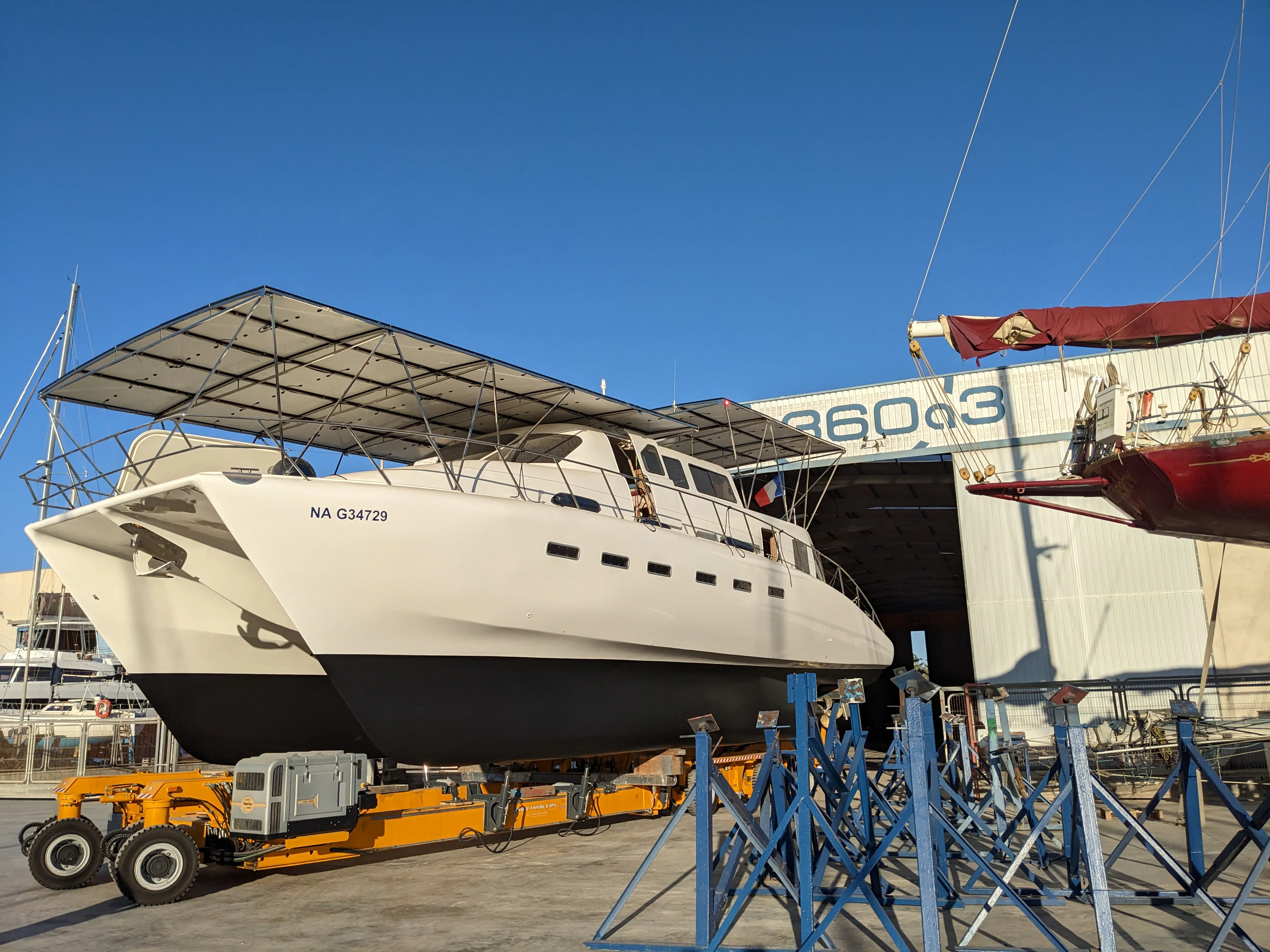
We experienced the launch of Escargot for the third time, but this one was special: we did not have a scheduled lift-out, as we were embarking to live aboard permanently.
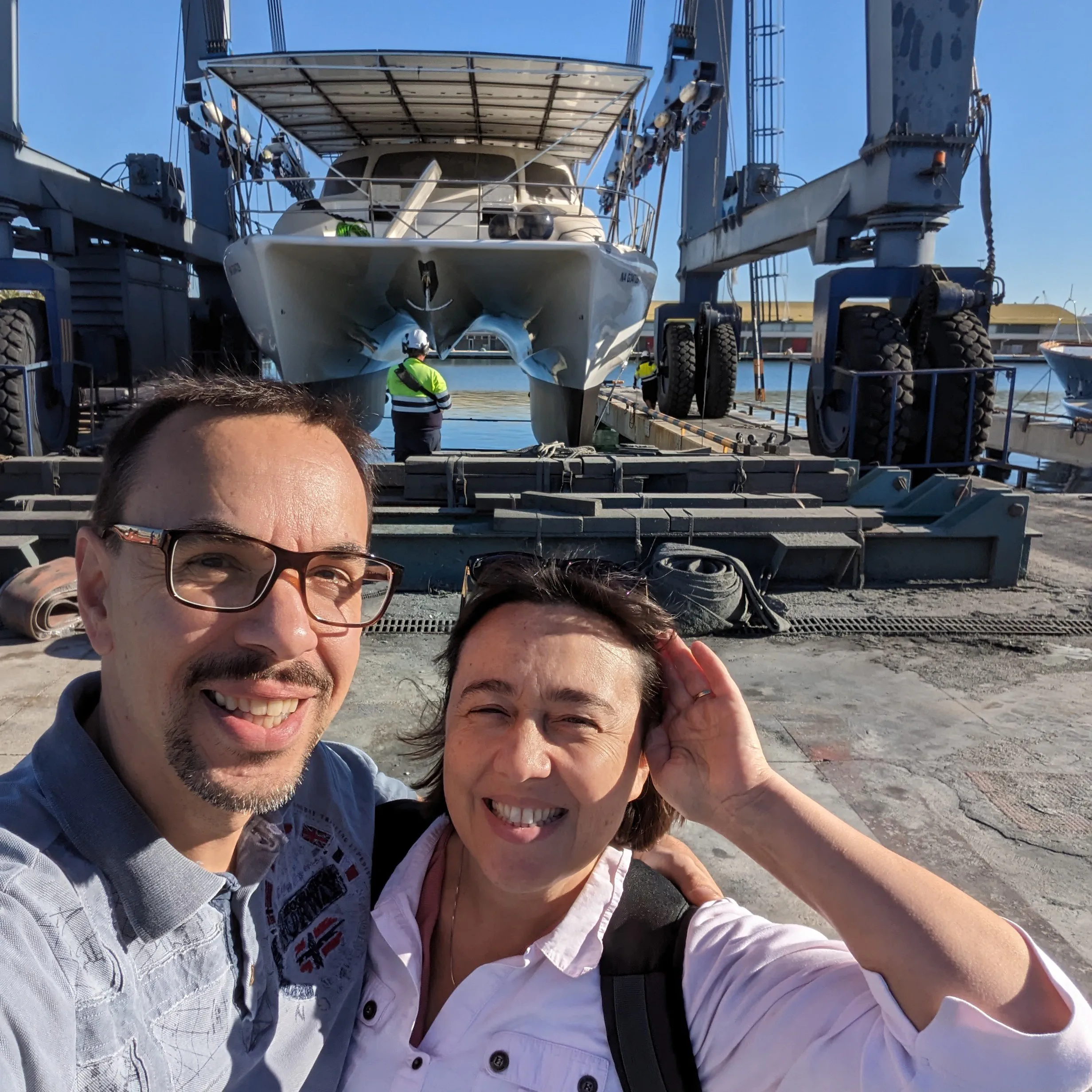
We booked a berth at Varadero STA Marina for the following couple of weeks to allow us to test all the systems and make final adjustments with the help of the shipyard if needed. The very short navigation from the Travelift pool to our mooring went smoothly, even though it had been almost a year since we were last at the helm of Escargot.
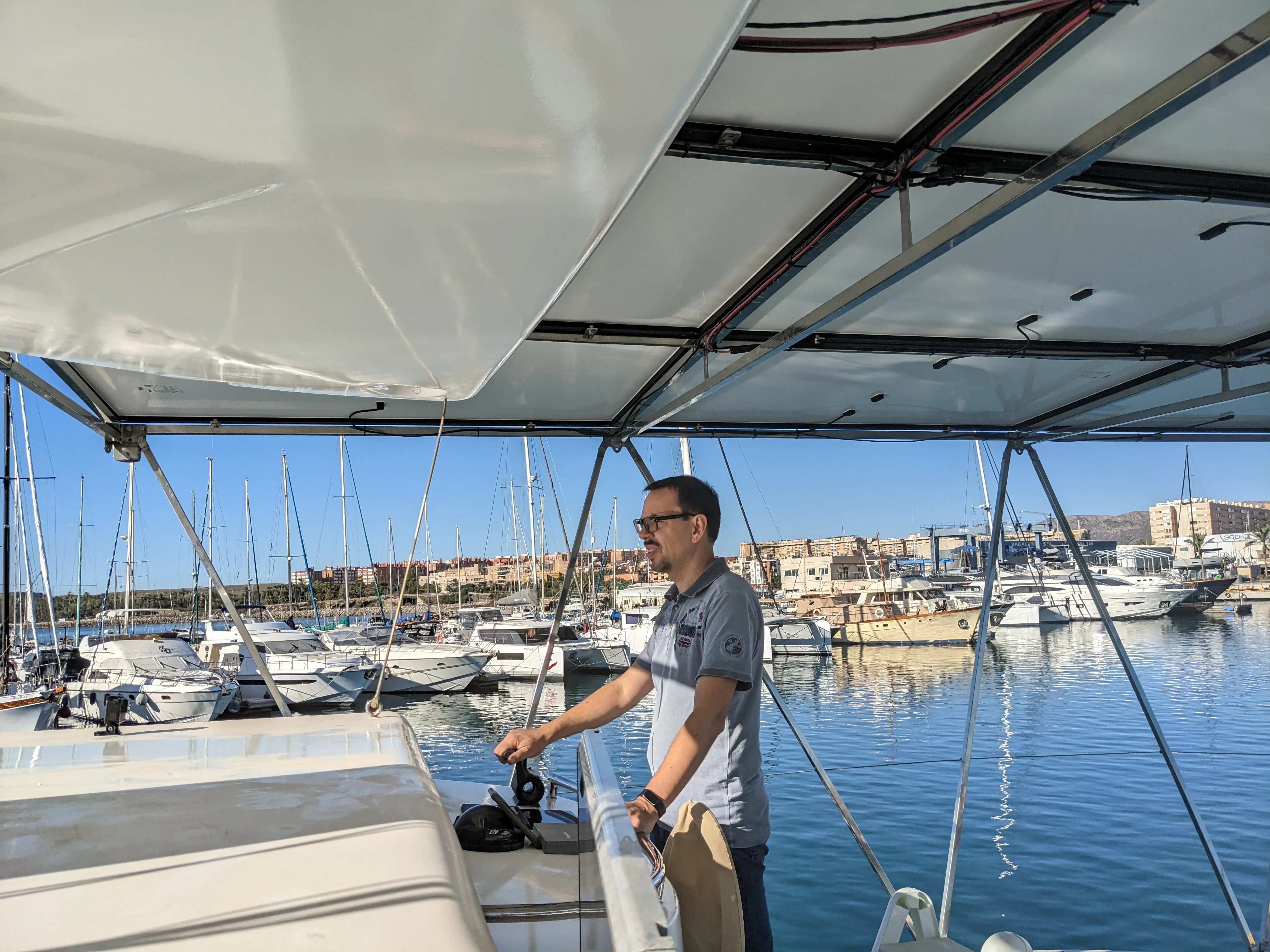
We docked in our berth with the help of two people from a nearby boat who caught our lines.
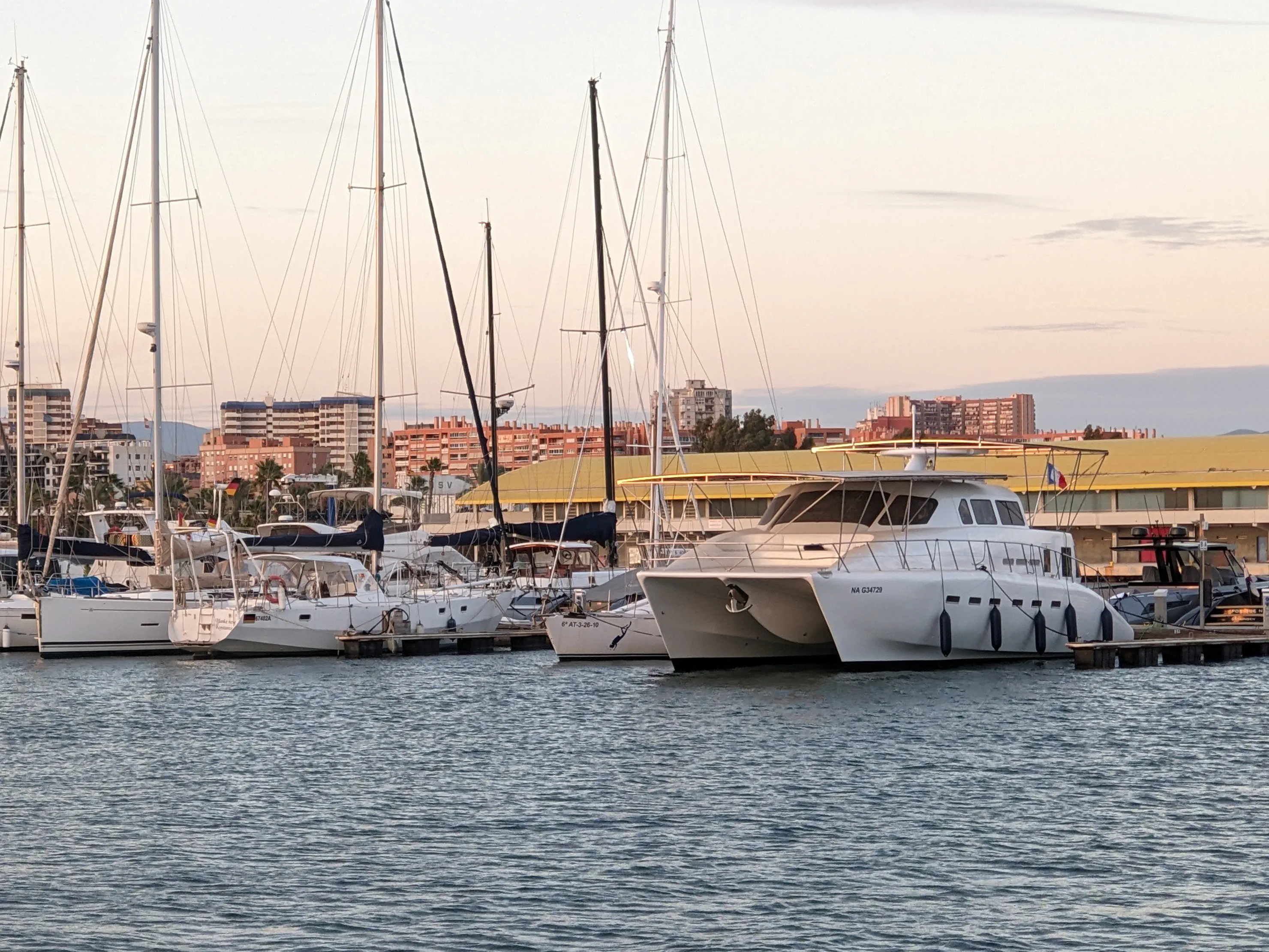
We both got a bit sick over the past few days. Once we finally felt better, we decided to go for a short test navigation in the afternoon.
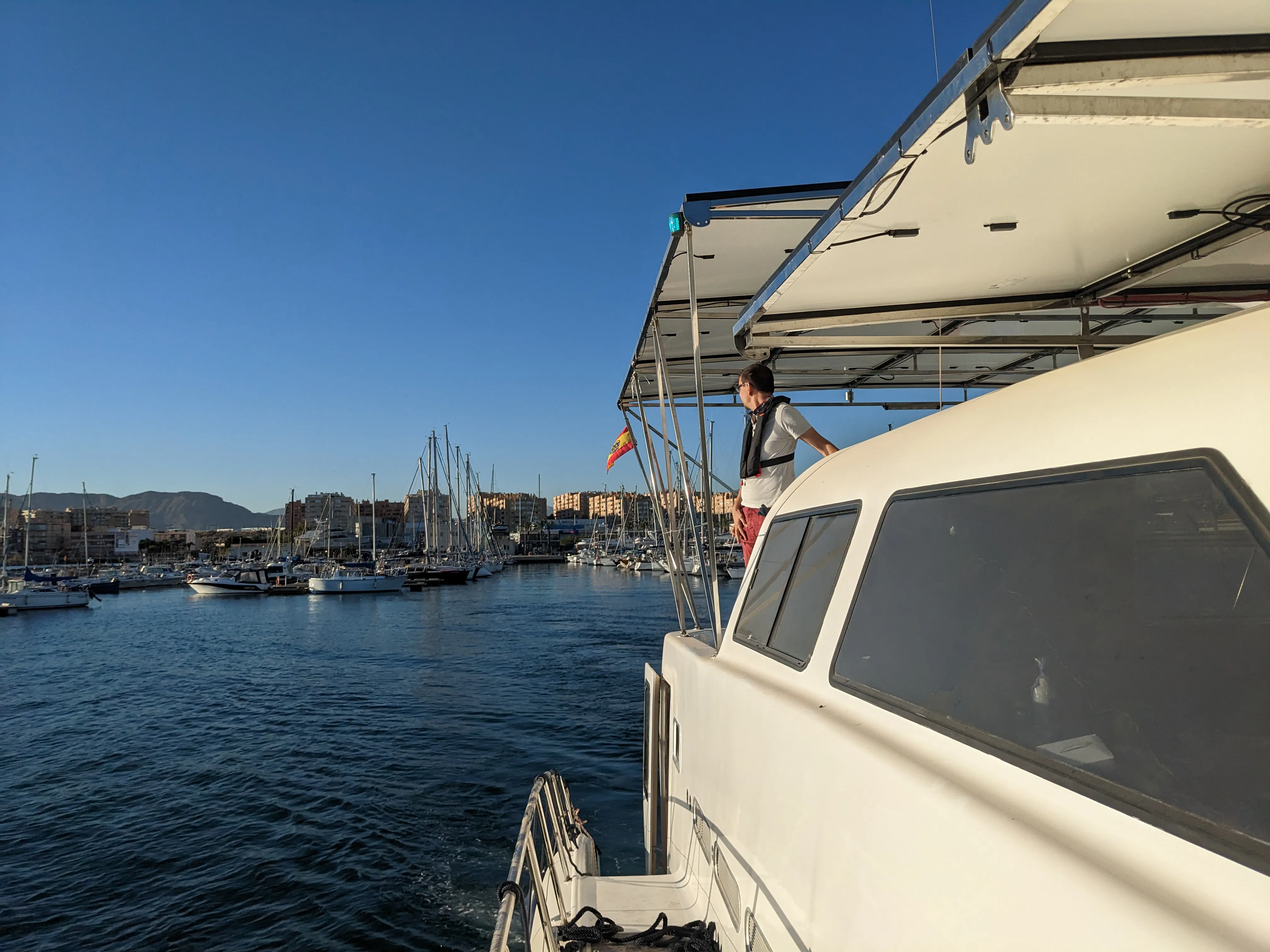
BigBoy enjoyed the sunny ride on the forward deck.
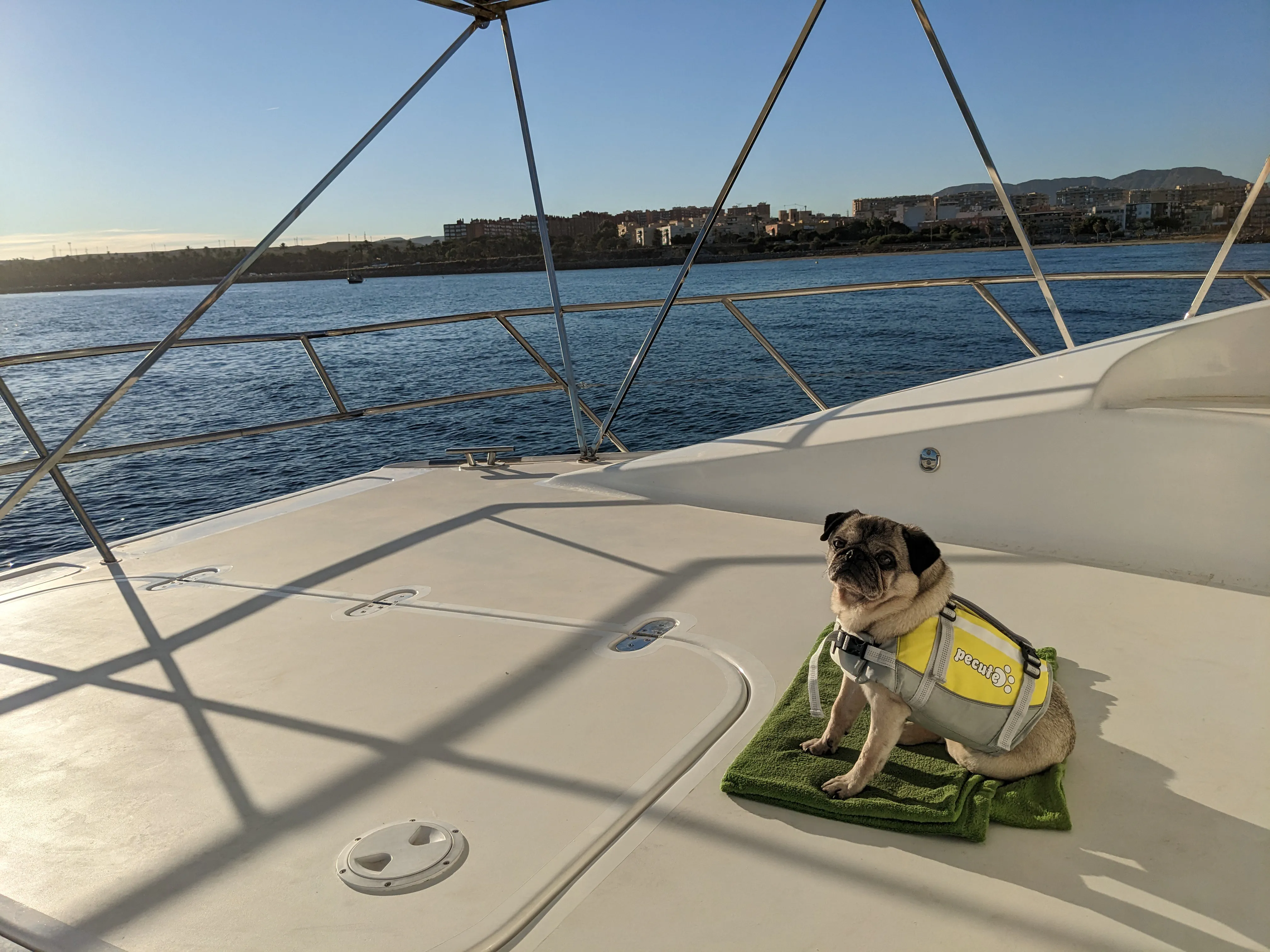
This short loop south of Alicante was an opportunity to test the systems. We pushed the electric motors to the maximum, drawing 82kW to reach a speed of 8.4 kts for a couple of minutes. The test was a success.
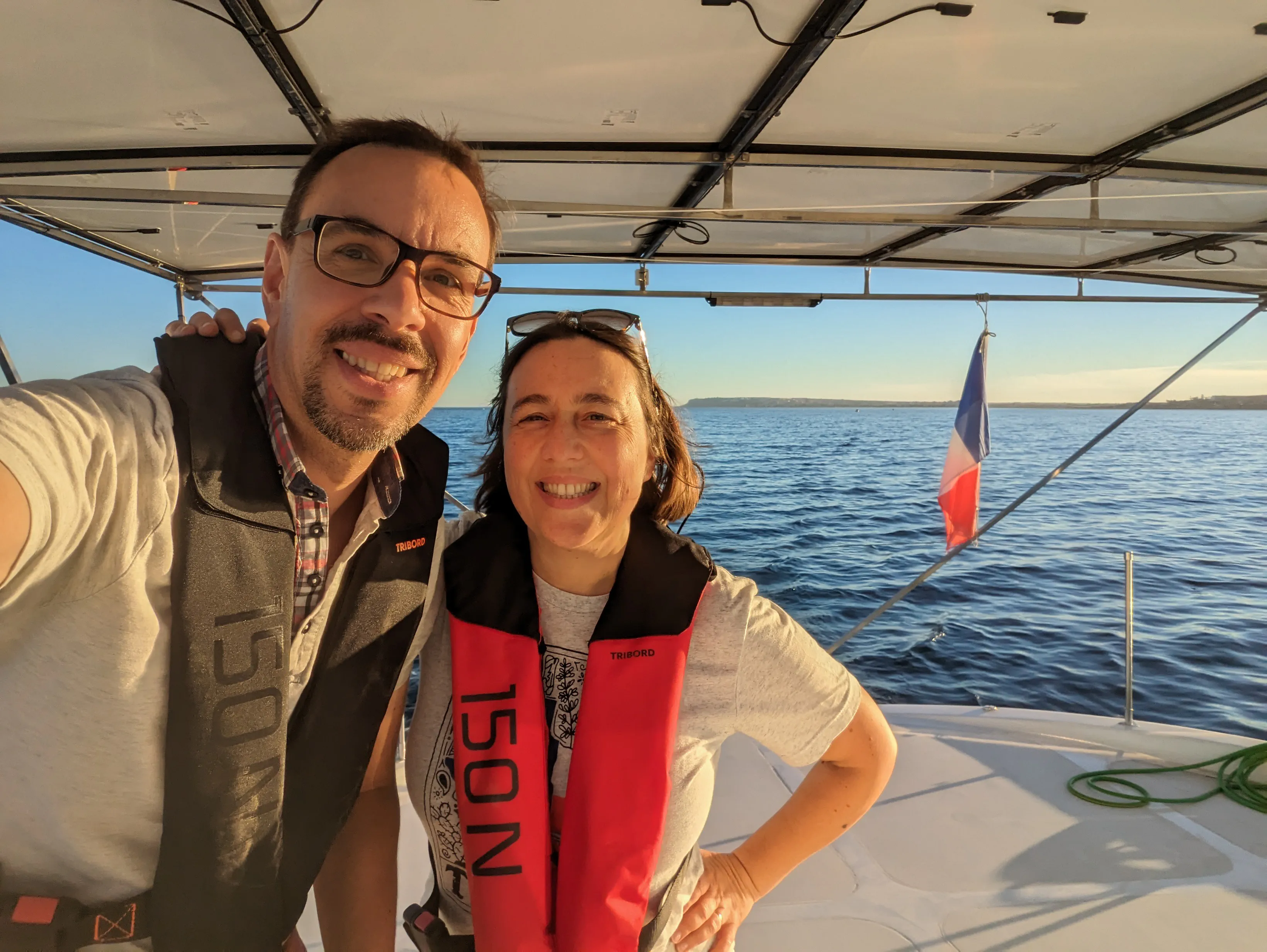
We went for another short late-afternoon loop to the south of Alicante to continue testing the systems and to regain some practice at the helm.
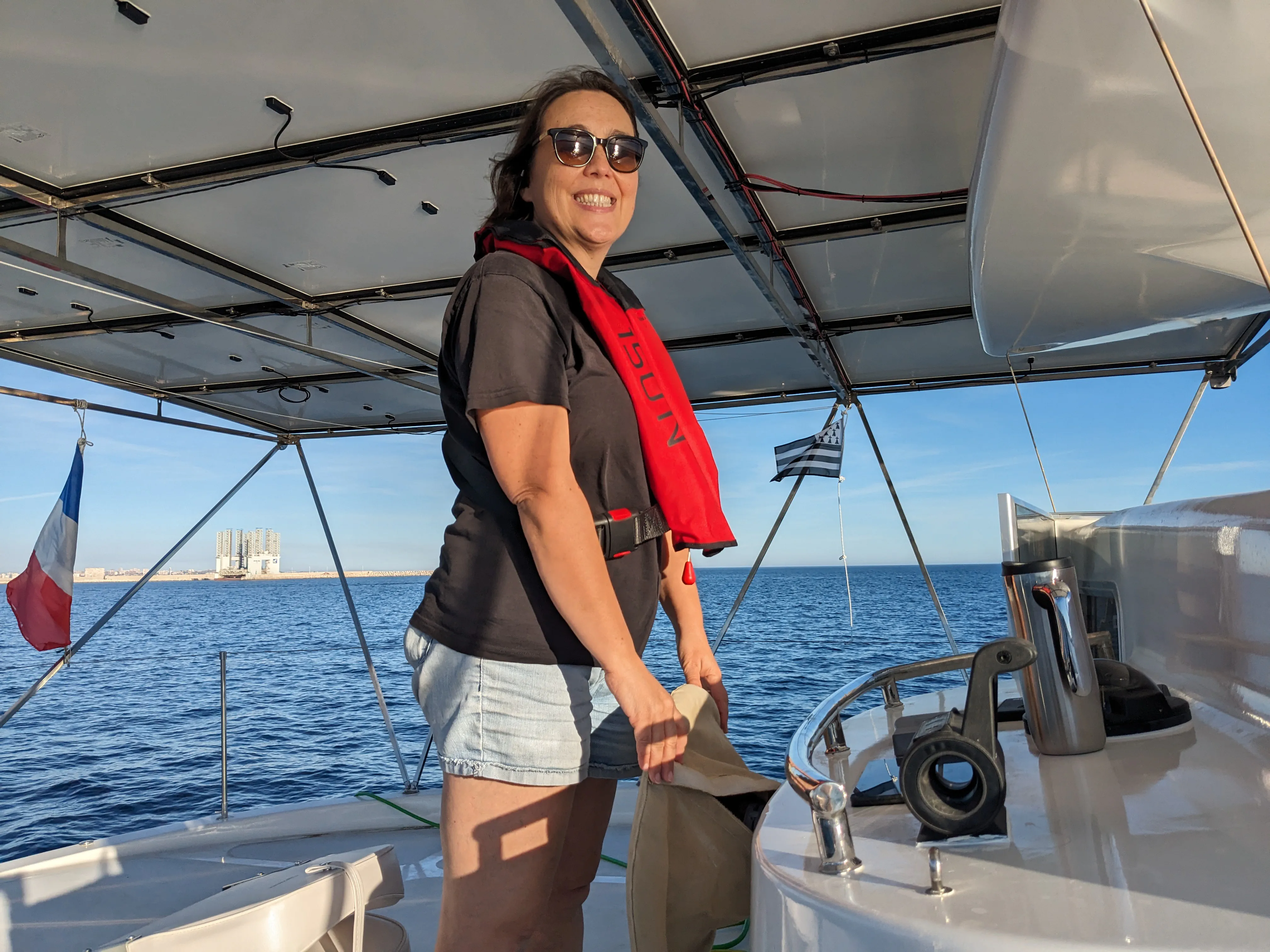
As we were planning our departure from Alicante, we wanted to navigate north of the Alicante Marina to get a view of the Santa Barbara Castle from the sea. On this trip, we experienced beam waves larger than 0.5m, which made the ride a bit uncomfortable.
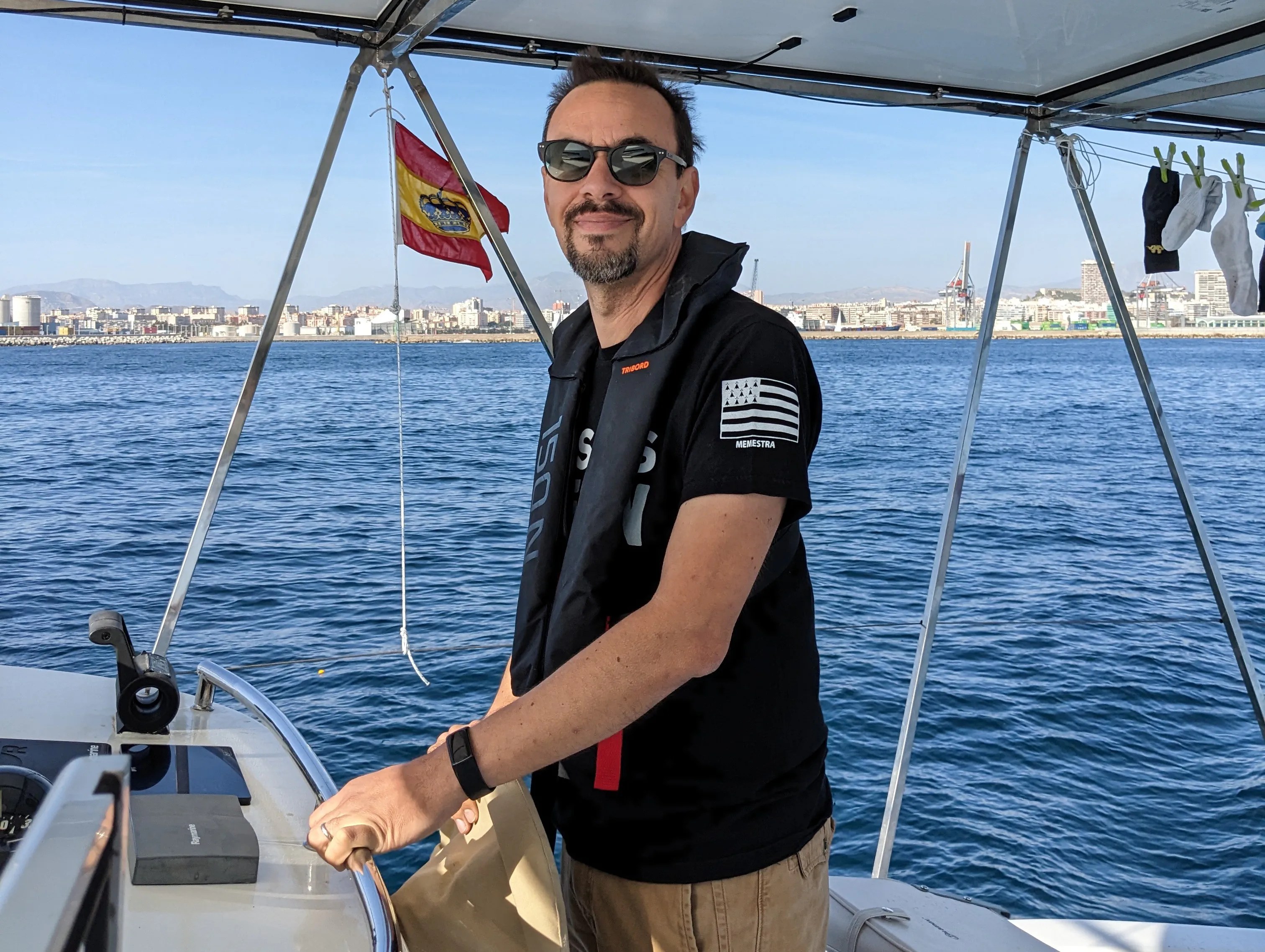
It was time to leave Alicante and head south. We left the dock early in the morning, followed the south coast of Alicante, passed the island of Tabarca, and arrived at the Miramar Marina in Santa Pola. As it was a short 12-nautical-mile trip, we kept our speed between 5 and 6 knots.
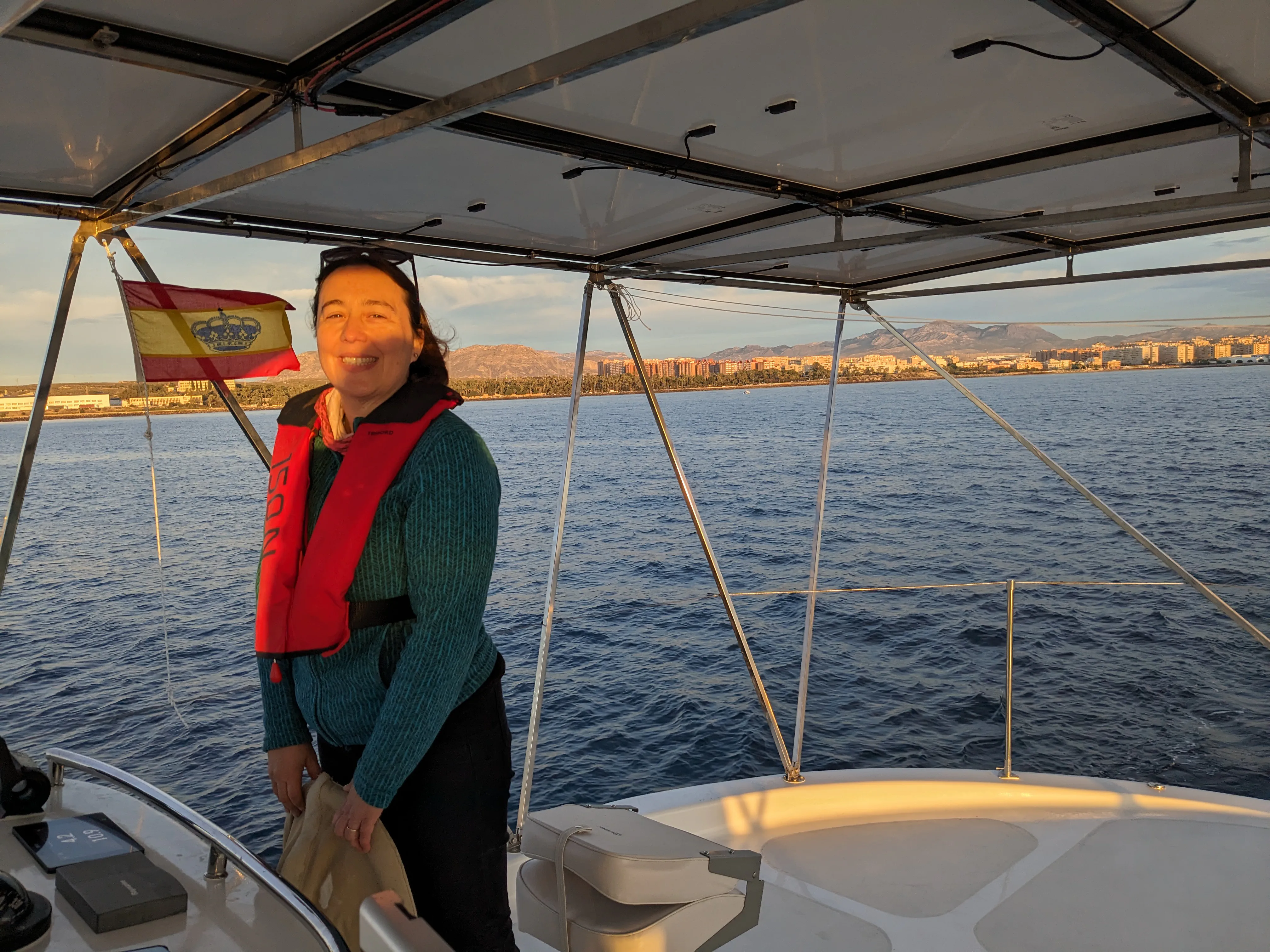
It was our first experience docking with mooring lines (Med mooring). The very friendly and helpful marinero jumped onboard to assist us in tying the mooring lines to the forward cleats.
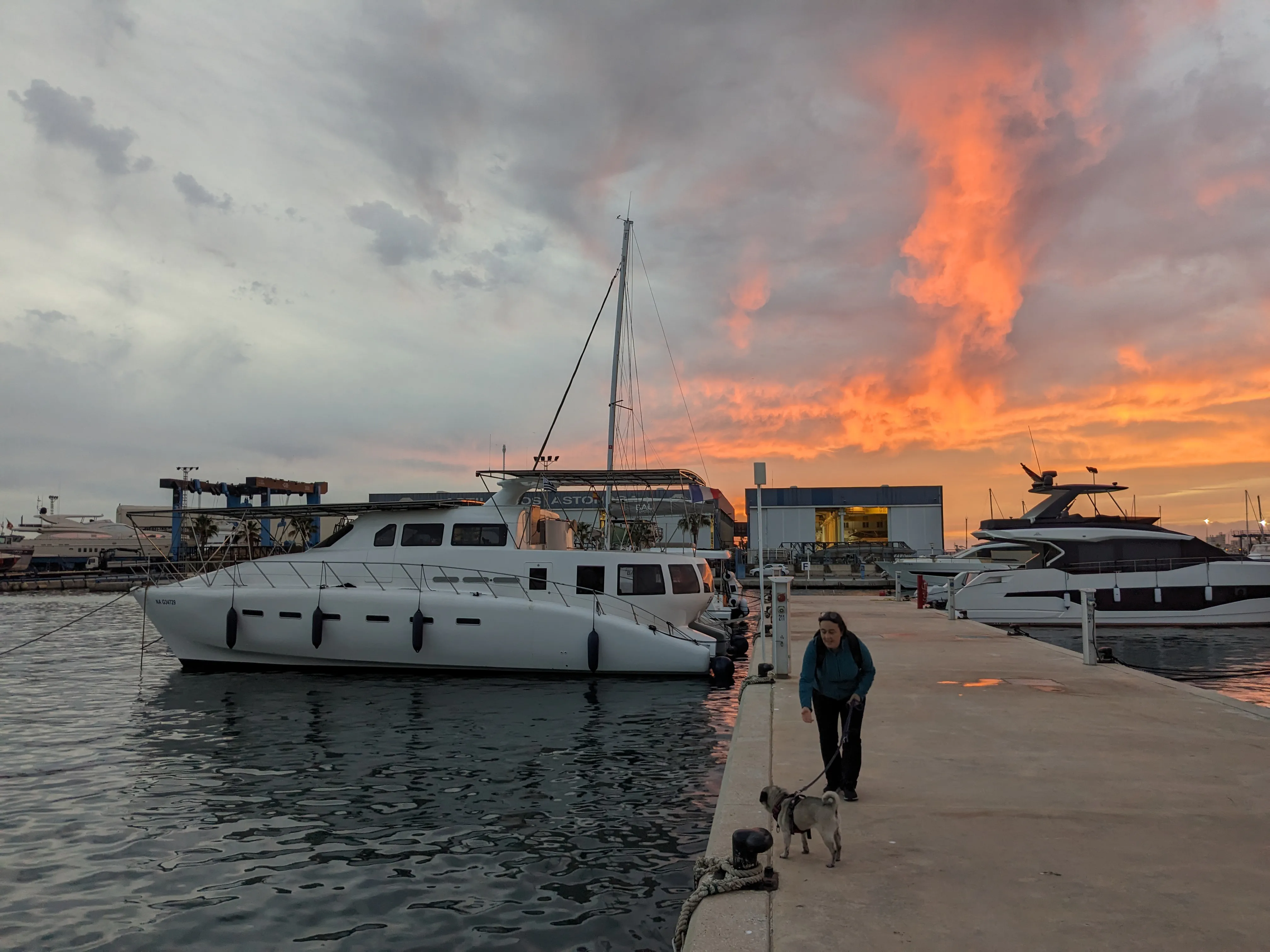
After two days visiting Santa Pola and working on boat projects, it was time for our next leg. We left Santa Pola with a 93% state of charge to continue our way south.
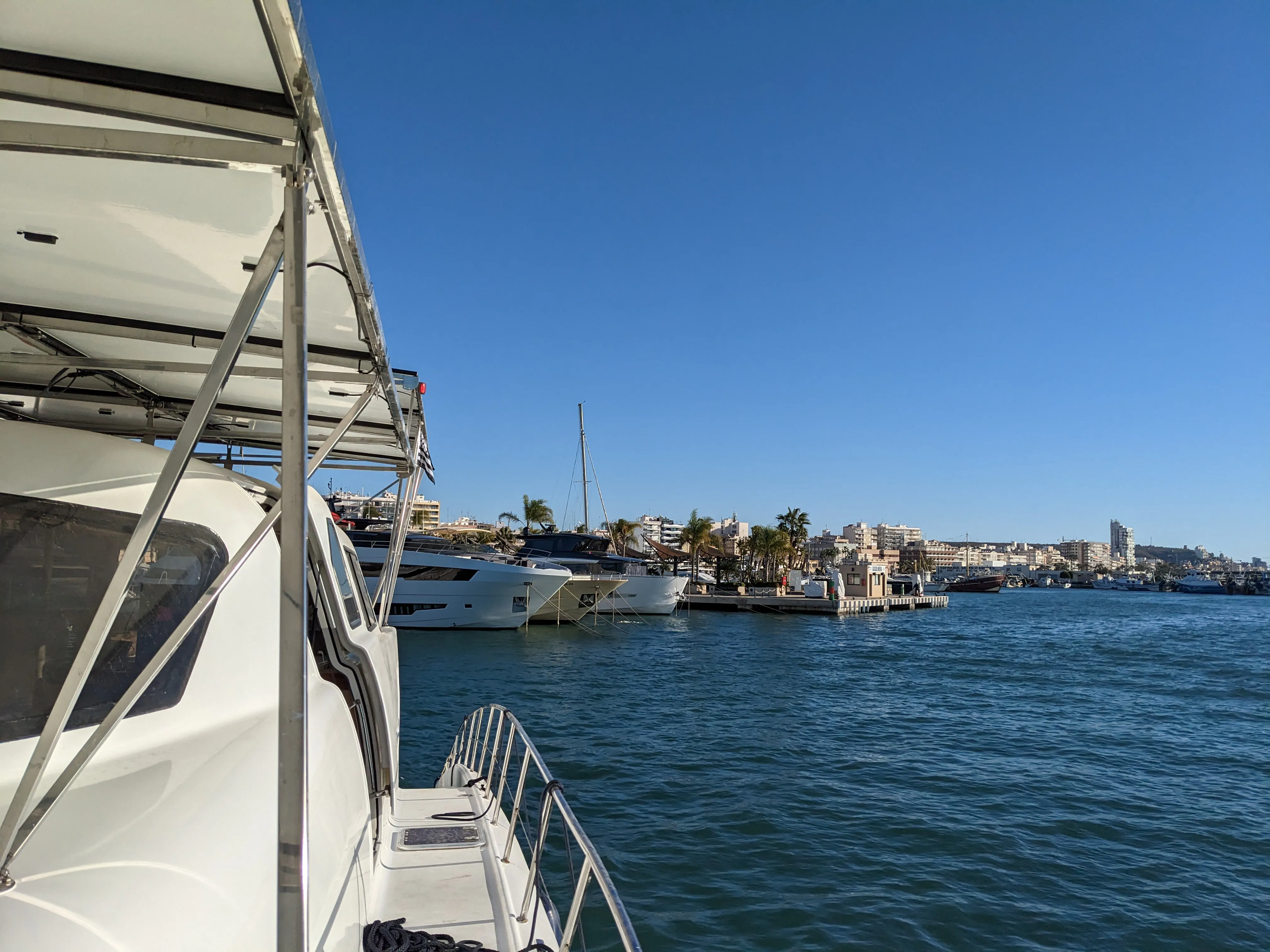
We kept our speed around 5 knots for this 16-nautical-mile navigation. Solar generation was limited due to the December sun, with 5kW or less of power generation most of the time.
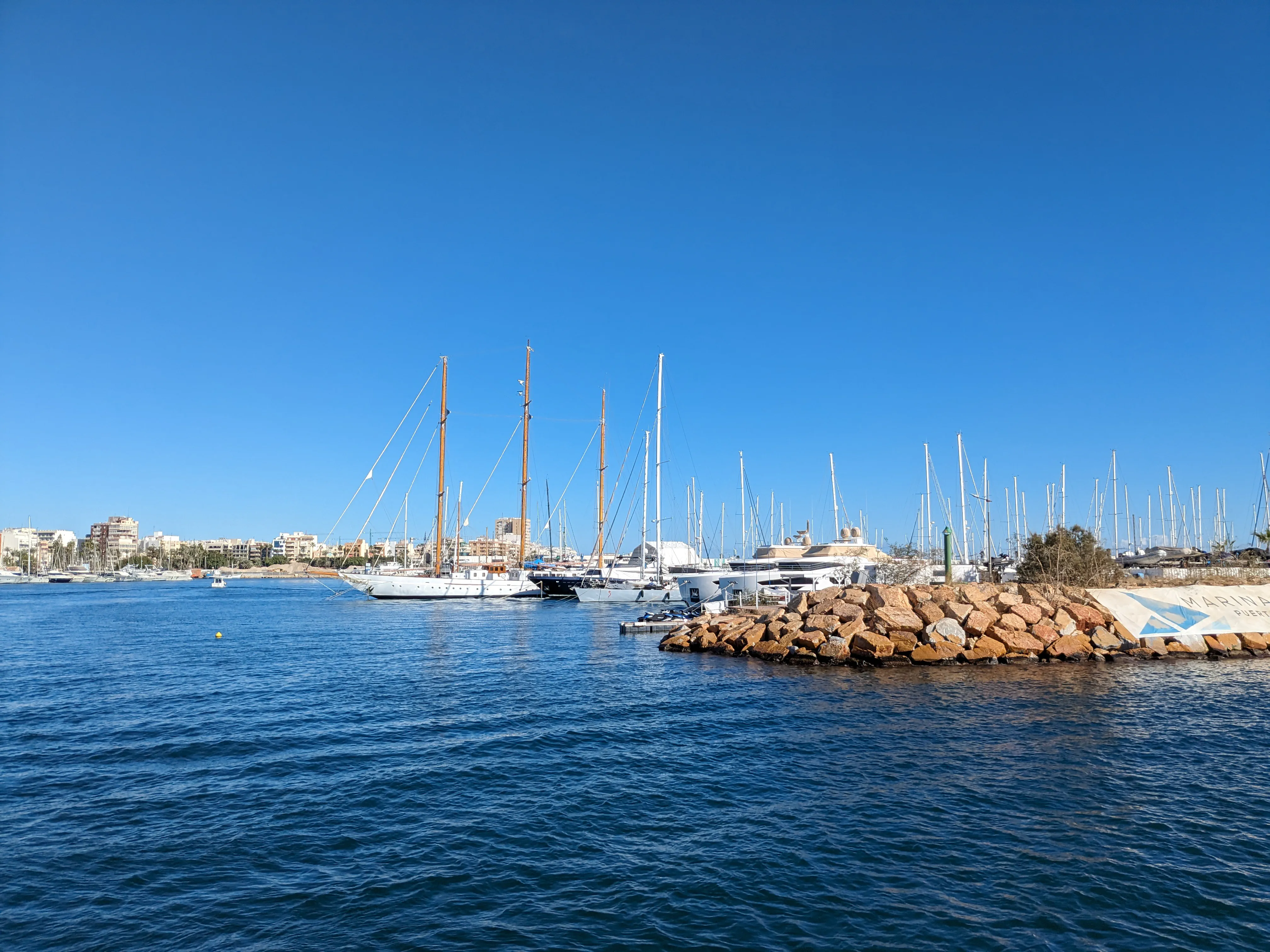
We arrived in Torrevieja and docked at the Real Club Nautico with 67% state of charge left in our batteries.
Going south, our next marina options were either San Pedro del Pinatar or Puerto Deportivo Tomás Maestre at the entrance of Mar Menor. We contacted the former to check if they had a transit berth for Escargot; they replied positively, so we set our destination for this port located amidst sea salt marshes and pink flamingos. This was a short 11-nautical-mile trip. We left Torrevieja with 87% state of charge and navigated at 6 knots, with a few pushes to 7 knots, as we battled 0.5m port beam waves the entire time.
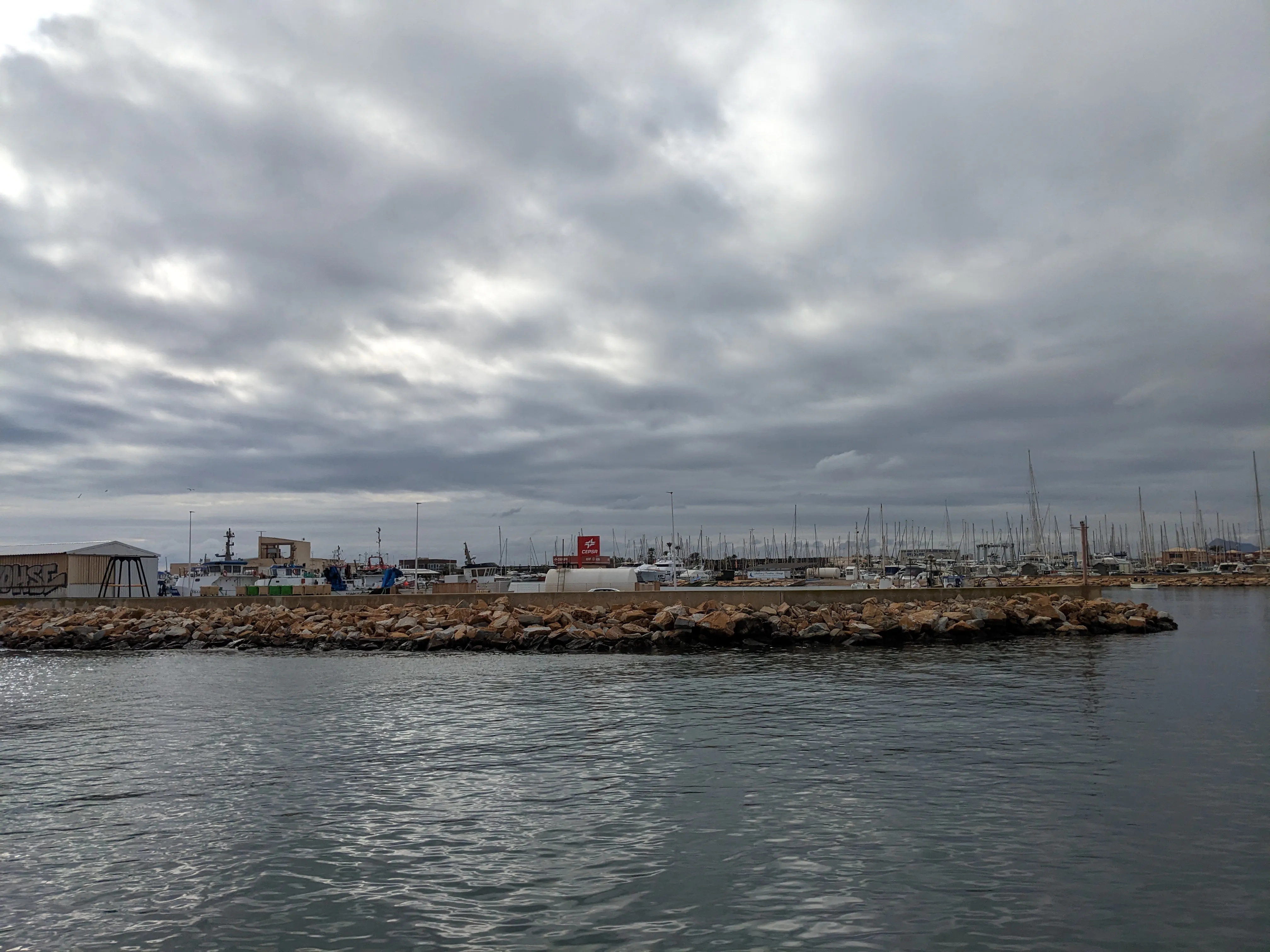
We docked at our mooring with 47% state of charge remaining. It was a short navigation but at a faster pace than usual, resulting in higher energy consumption.
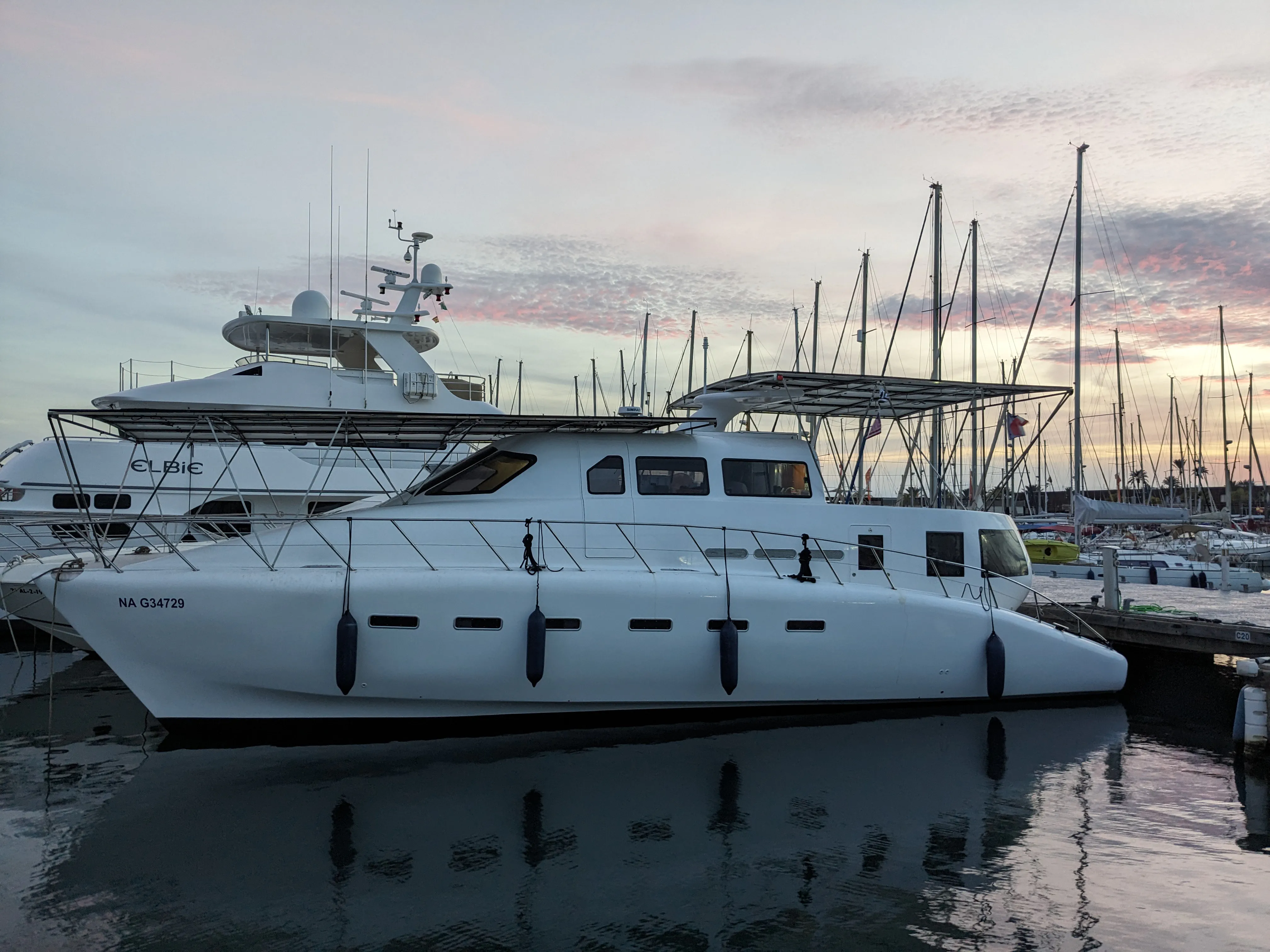
We spent some productive days working on boat projects, making good use of the large concrete dock behind Escargot to cut pieces of carpet for the sides of the beds of the starboard cabins. With the marine weather predicting a calmer sea for our next trip, and with a confirmed booking at Yacht Port Cartagena, we left San Pedro del Pinatar with a 96% state of charge.
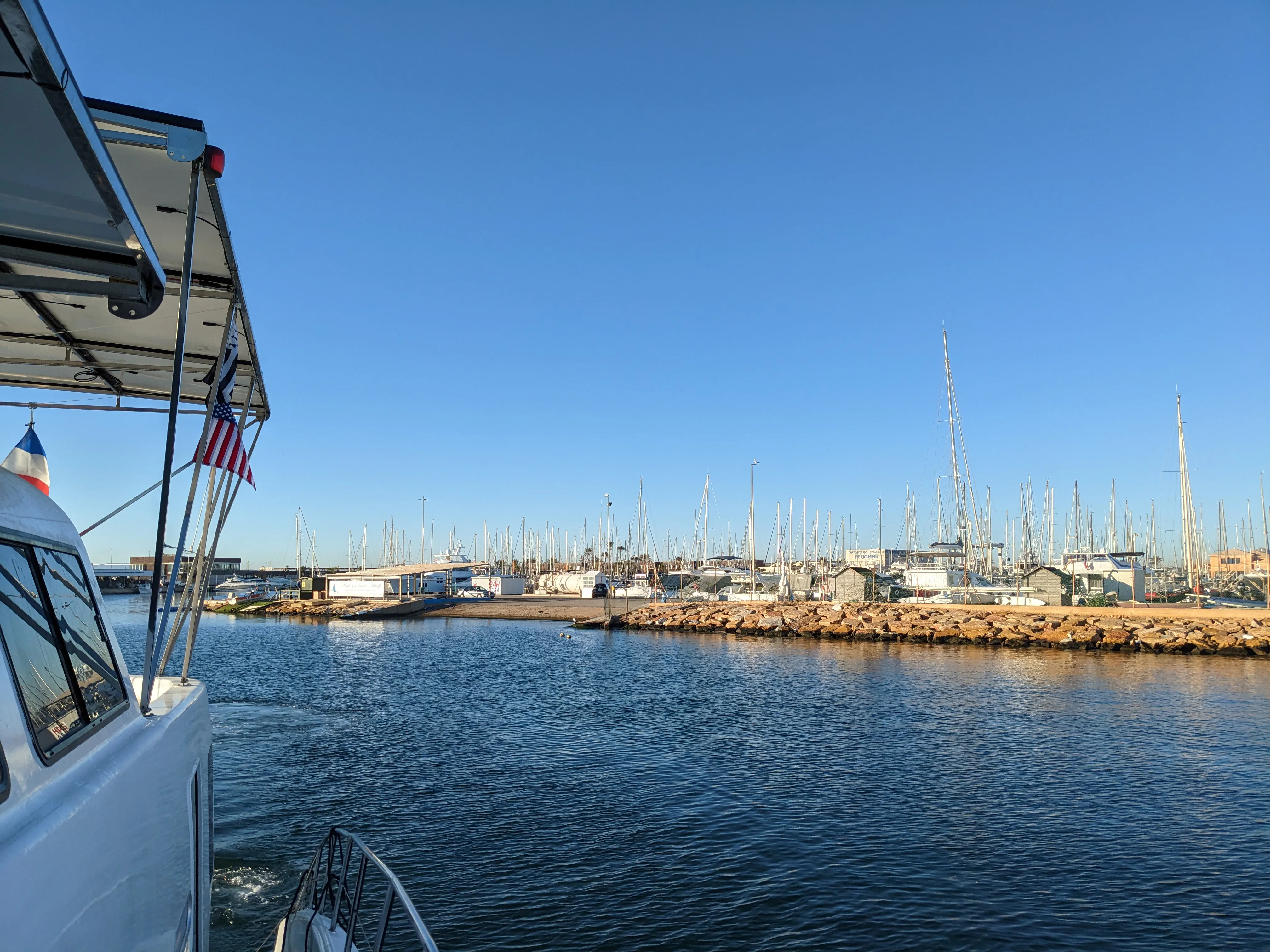
We passed between Isla Grosa and the entrance of Mar Menor on a very calm sea. Up to this point, it was a peaceful navigation.
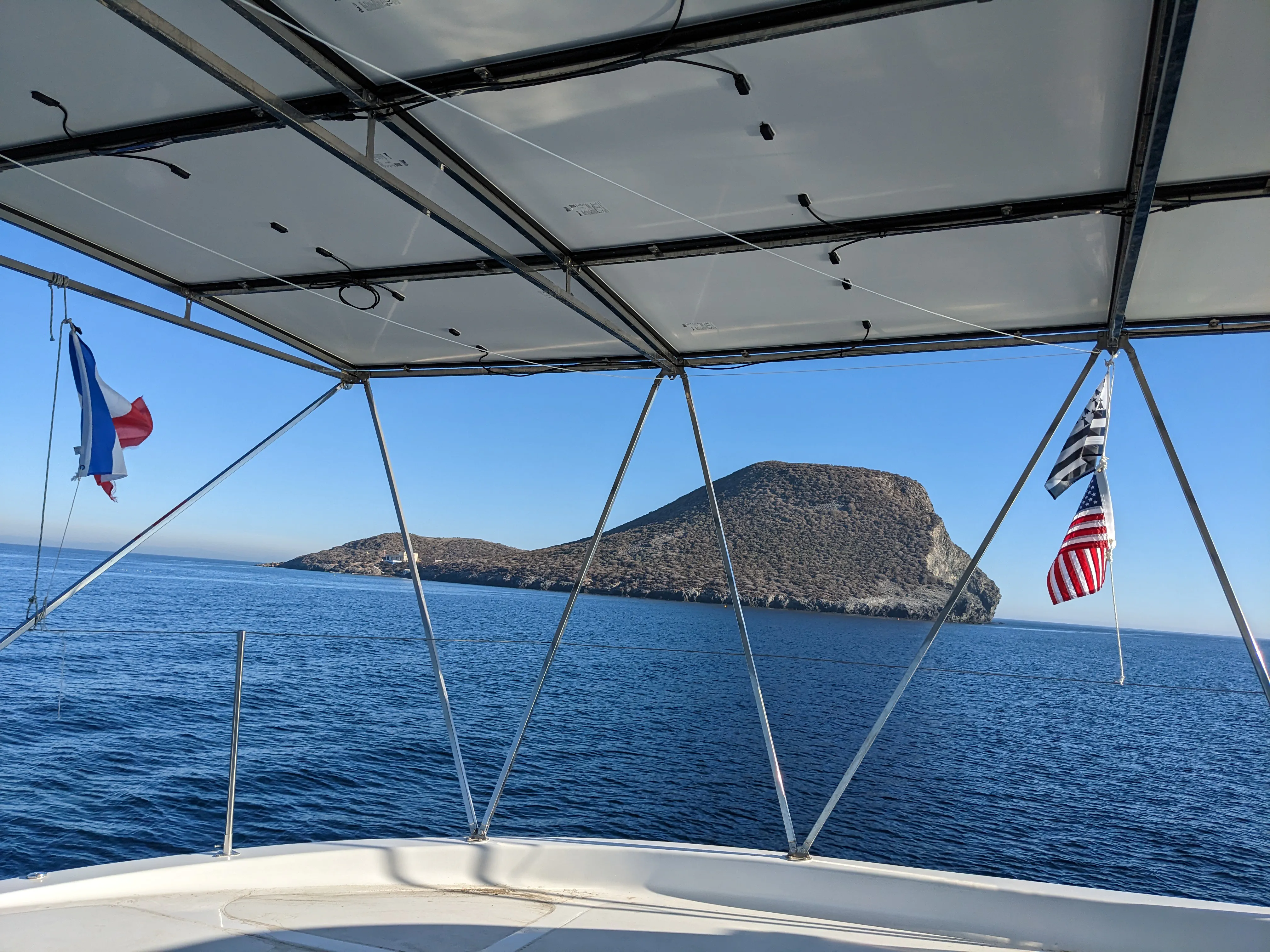
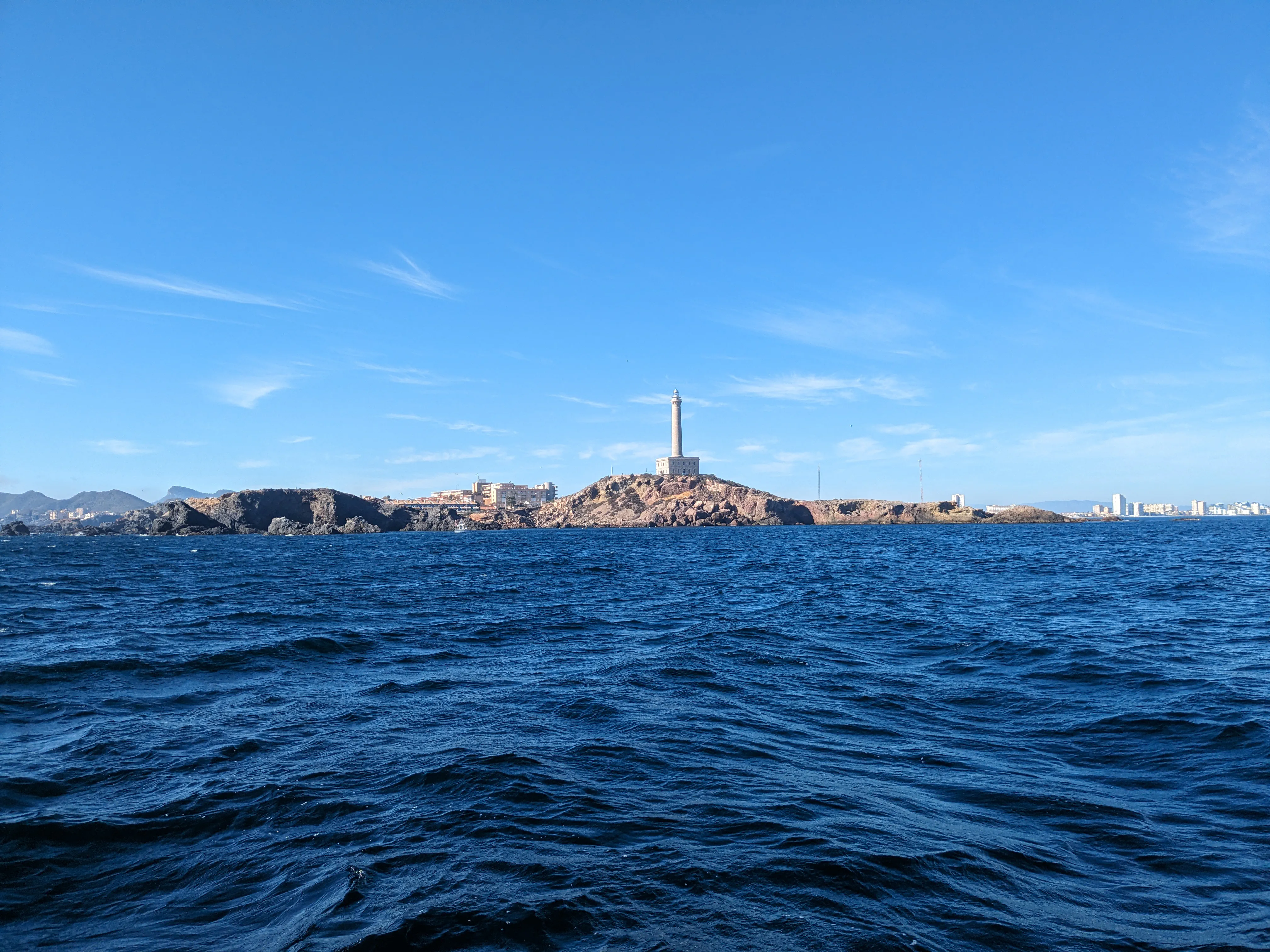
As we approached Cape Palos, we were no longer protected from the south swell. The sea state became a bit more agitated, though still quite gentle. Seeing the lighthouse of Cape Palos was our clue that we were leaving the overly constructed coast on the Mar Menor side (with all its hotels and apartments) and entering the Regional Park of Calblanque.
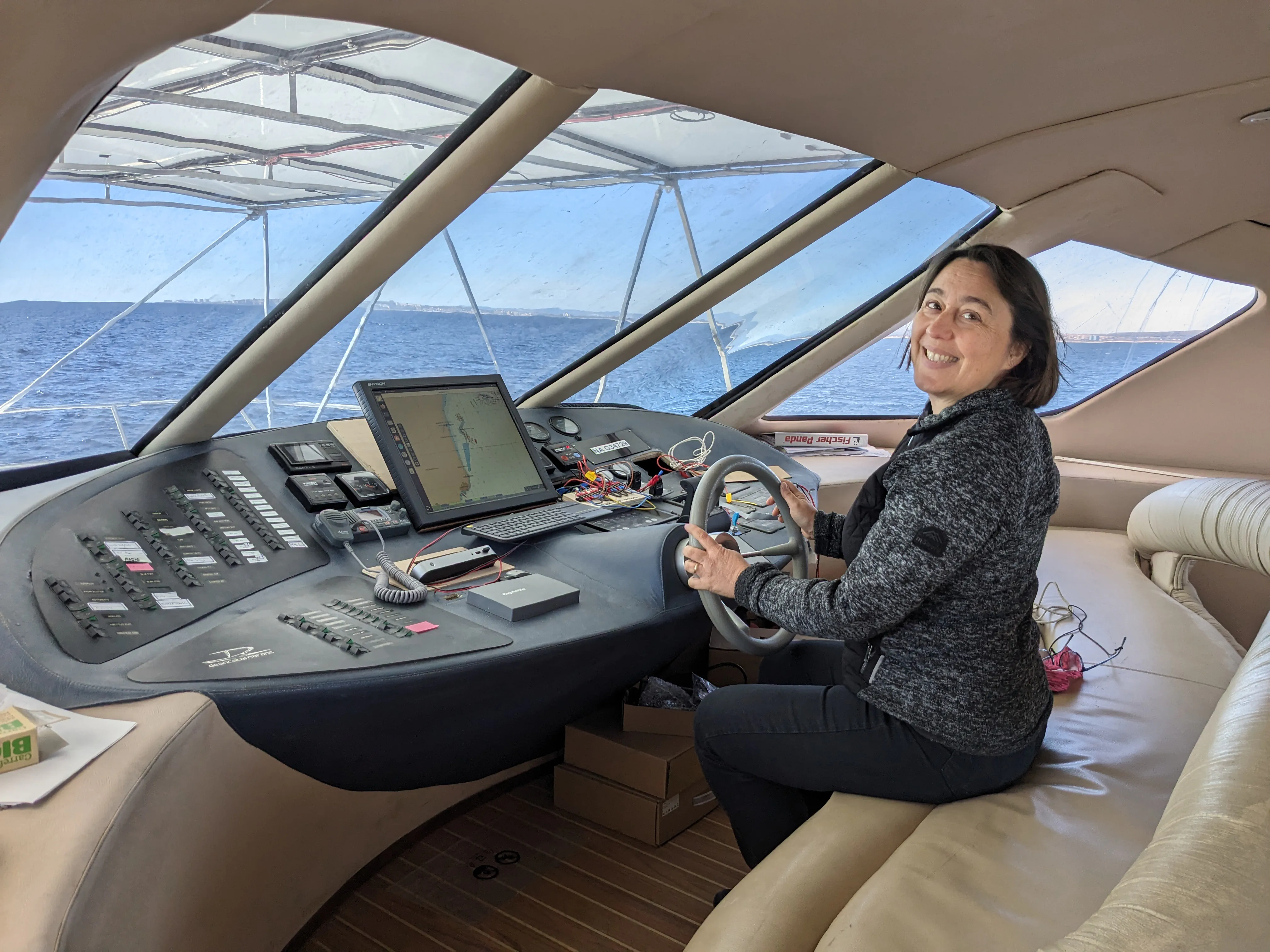
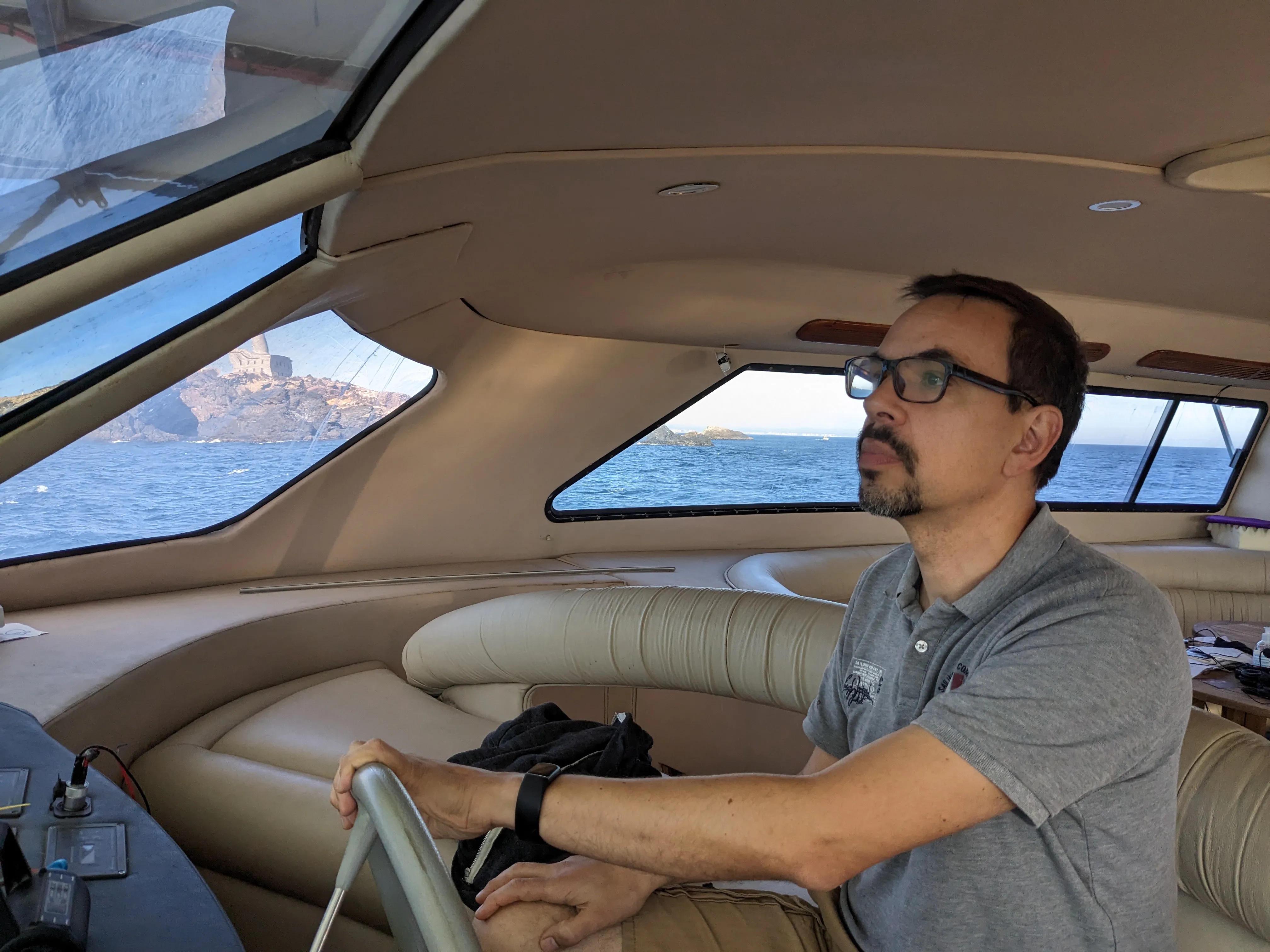
The indoor helm offers a very comfortable position with a great panoramic view. We spend most of our navigation time here, except when departing or arriving in a harbor, at which point we use the flybridge deck for a better view of the port and starboard sides.
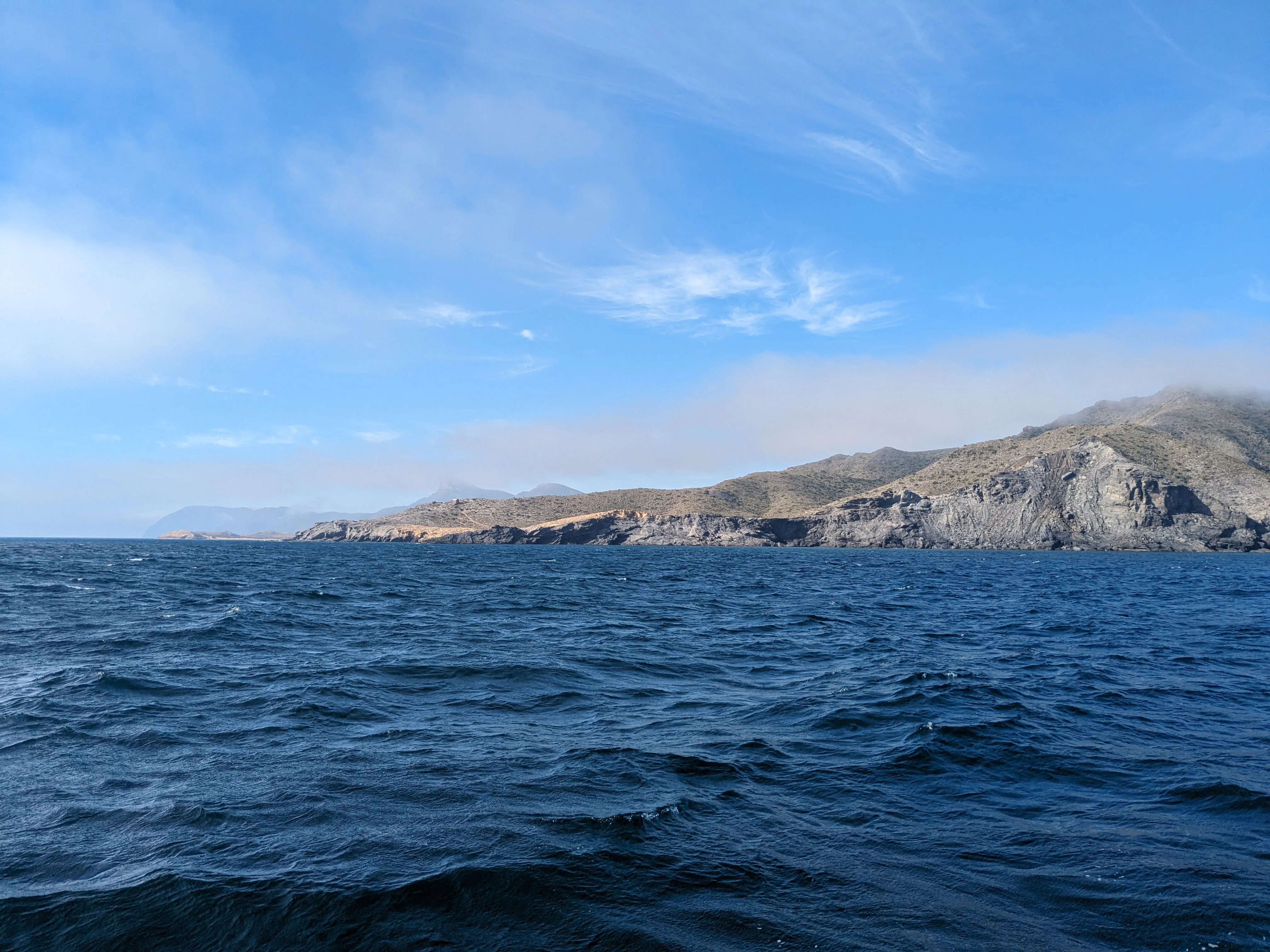
From this point on, the coastline was a beautiful mountainous natural park.
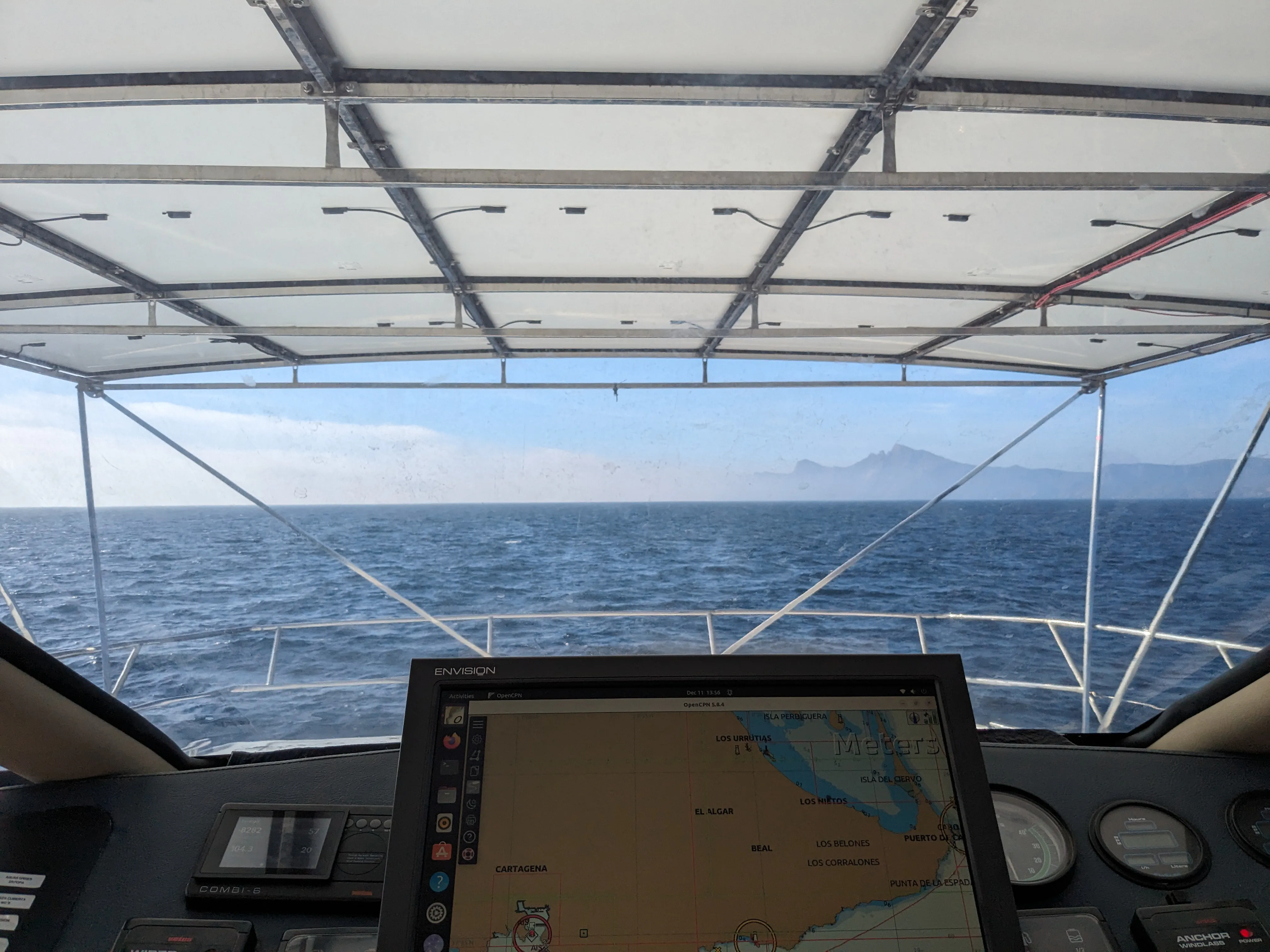
As we approached Cartagena, fog started to appear on the horizon. Cartagena is a busy commercial port with oil tankers, cargo ships, and fishing vessels. We knew we had to announce ourselves to Port Control on the VHF radio to get authorization to enter; seeing this fog while approaching an unknown, busy port was definitely worrisome. However, thanks to our AIS transponder, we knew other ships could see our position, and our computer displayed all nearby vessels, so we knew we were not at risk of collision.
The fog dissipated as we arrived and passed the oil tanker port.
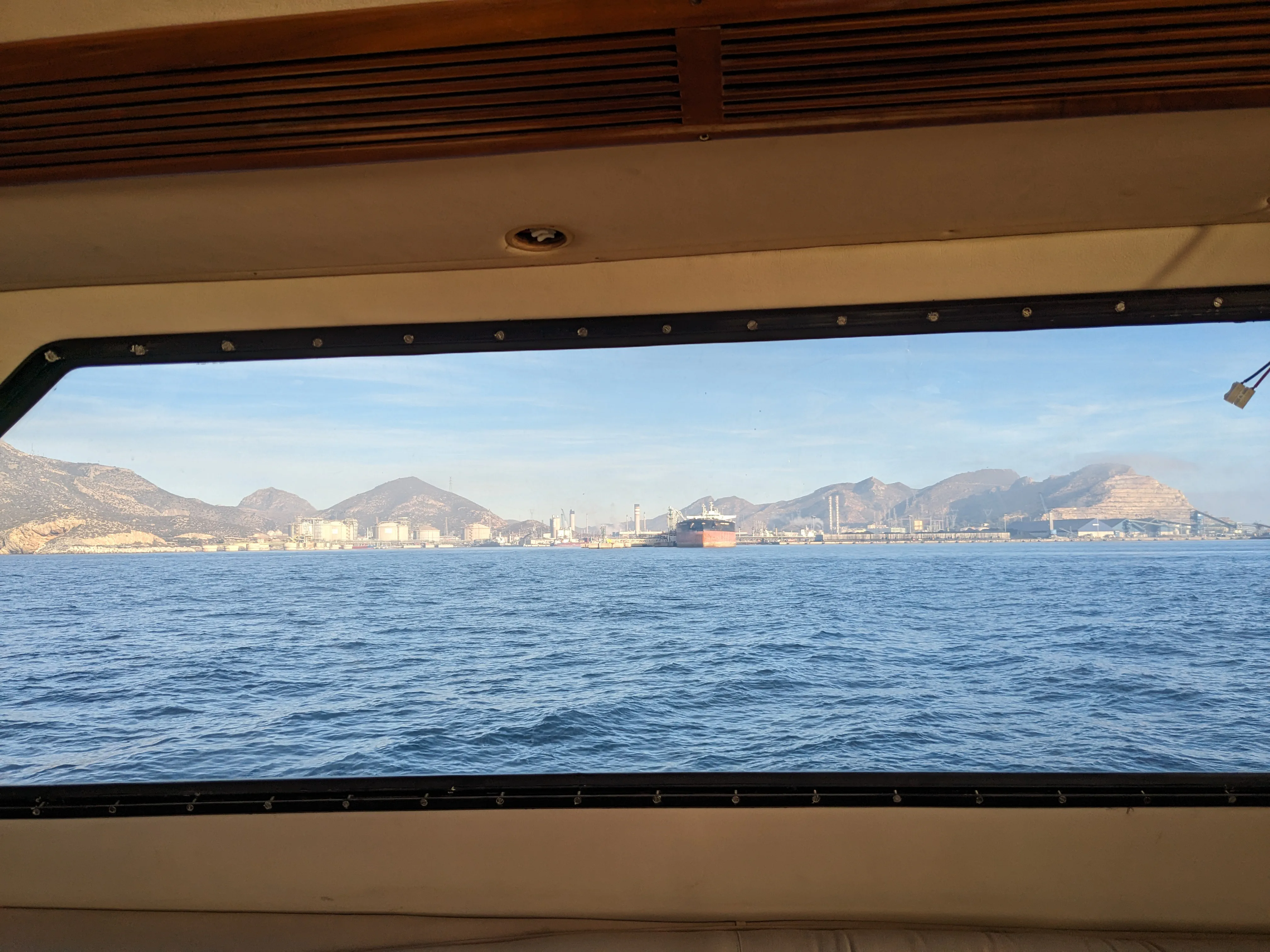
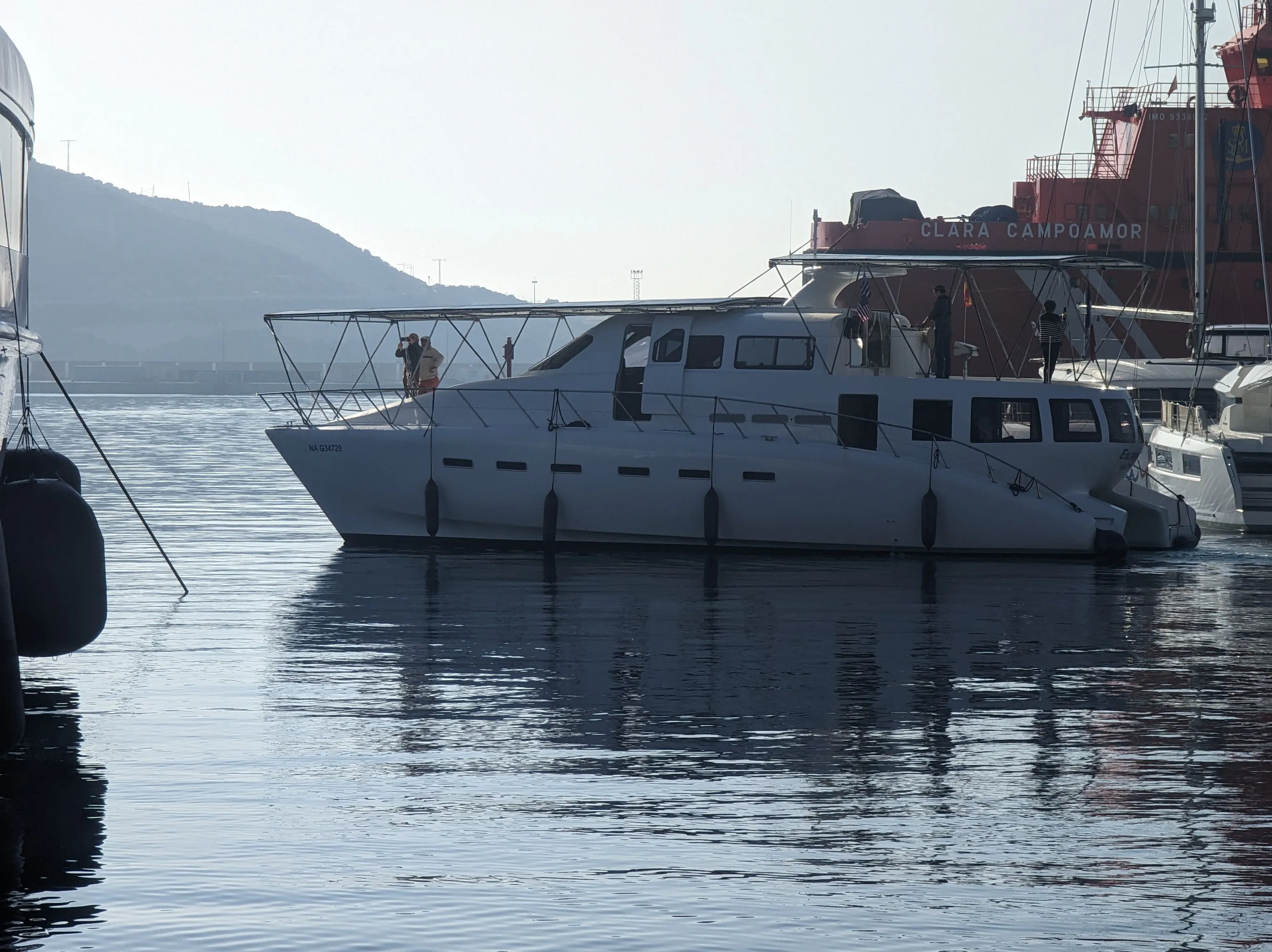
We arrived at Yacht Port Cartagena after our longest navigation to date, over 30 nautical miles, with 33% energy remaining. We probably could have pushed the engines a bit more to arrive half an hour faster. Tired from the long trip, we docked bow-in to ease the maneuver. The spot had a finger pier, allowing us to easily disembark. Soon after, the dense fog returned; we were lucky with our timing!
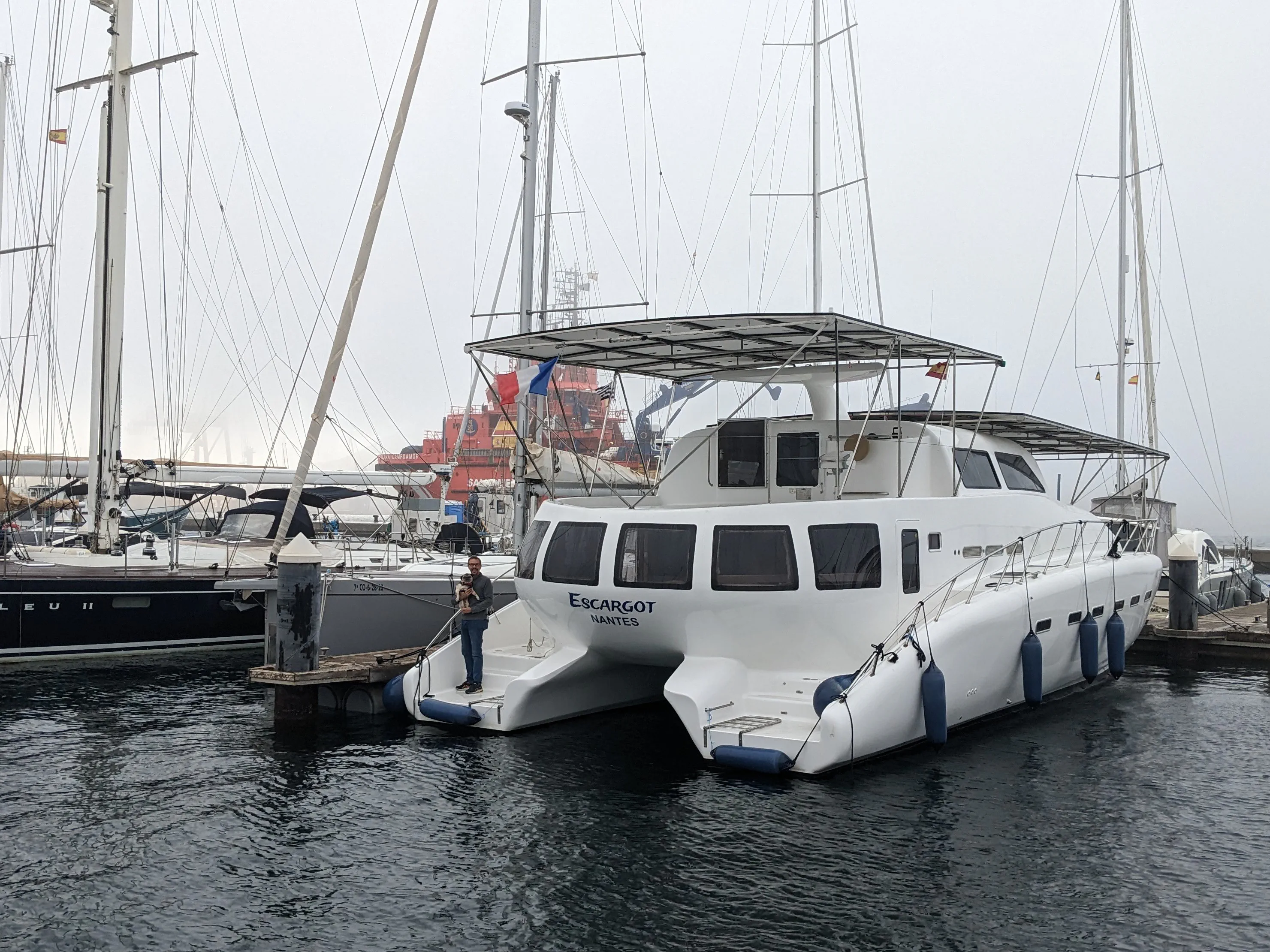
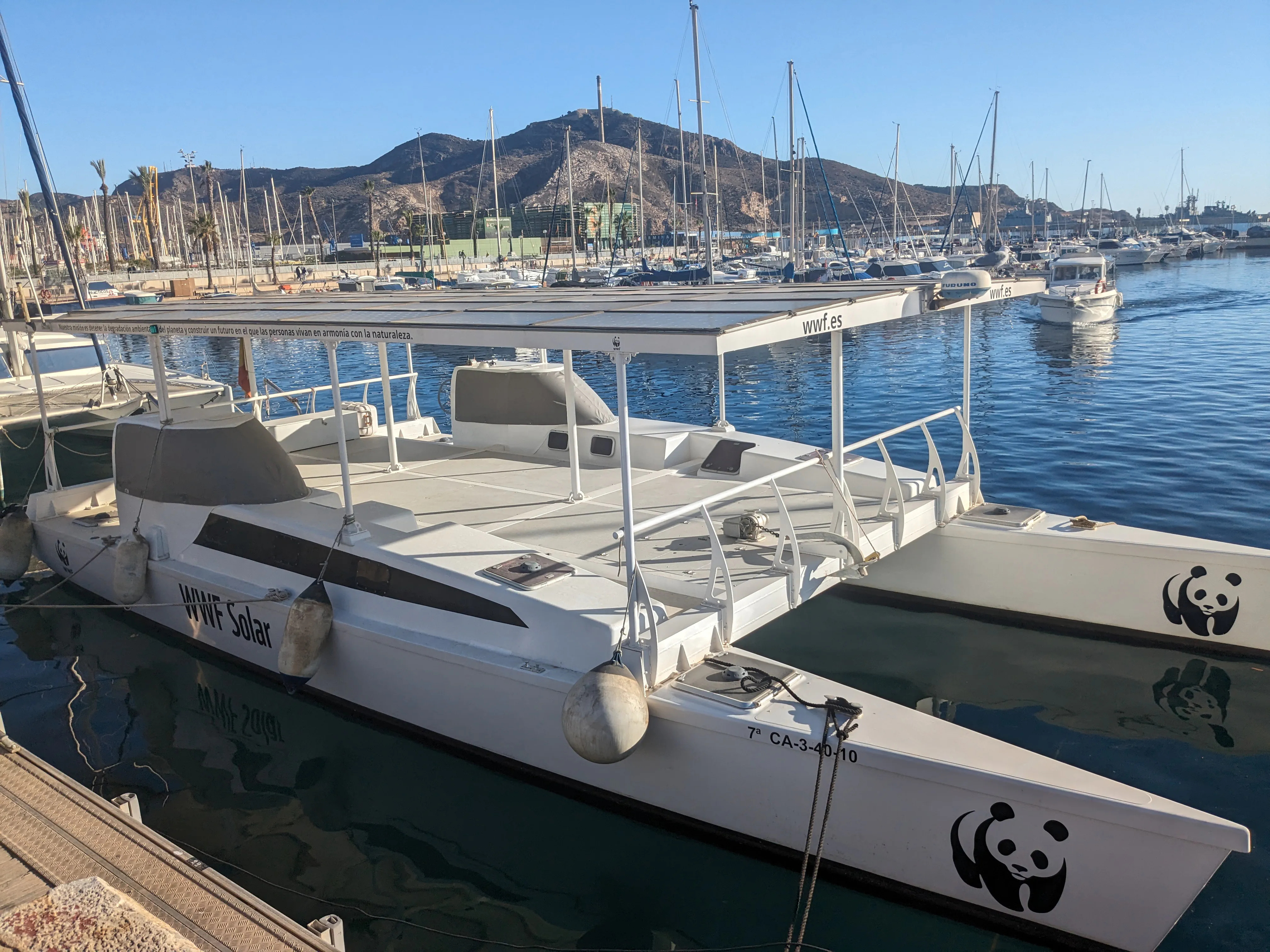
In our first blog post, we explained that the Sun21 catamaran, which crossed the Atlantic Ocean in 2007 on solar energy alone, was a major inspiration for Escargot. Imagine our surprise when we saw her docked back in Alicante! She has been donated to the WWF and is serving as a platform to promote renewable energy and the conservation of marine ecosystems.
We booked a berth for one month as we had a couple of work trips scheduled in the following two weeks, and then, visits from family and friends for the holidays.
We had some family visiting us aboard Escargot for the holidays. With a beautiful weather forecast for Christmas Day, we decided to take the family for a day cruise in the Bay of Cartagena.
The colors of the coastline, contrasting the blue of the sea and sky, were stunning.
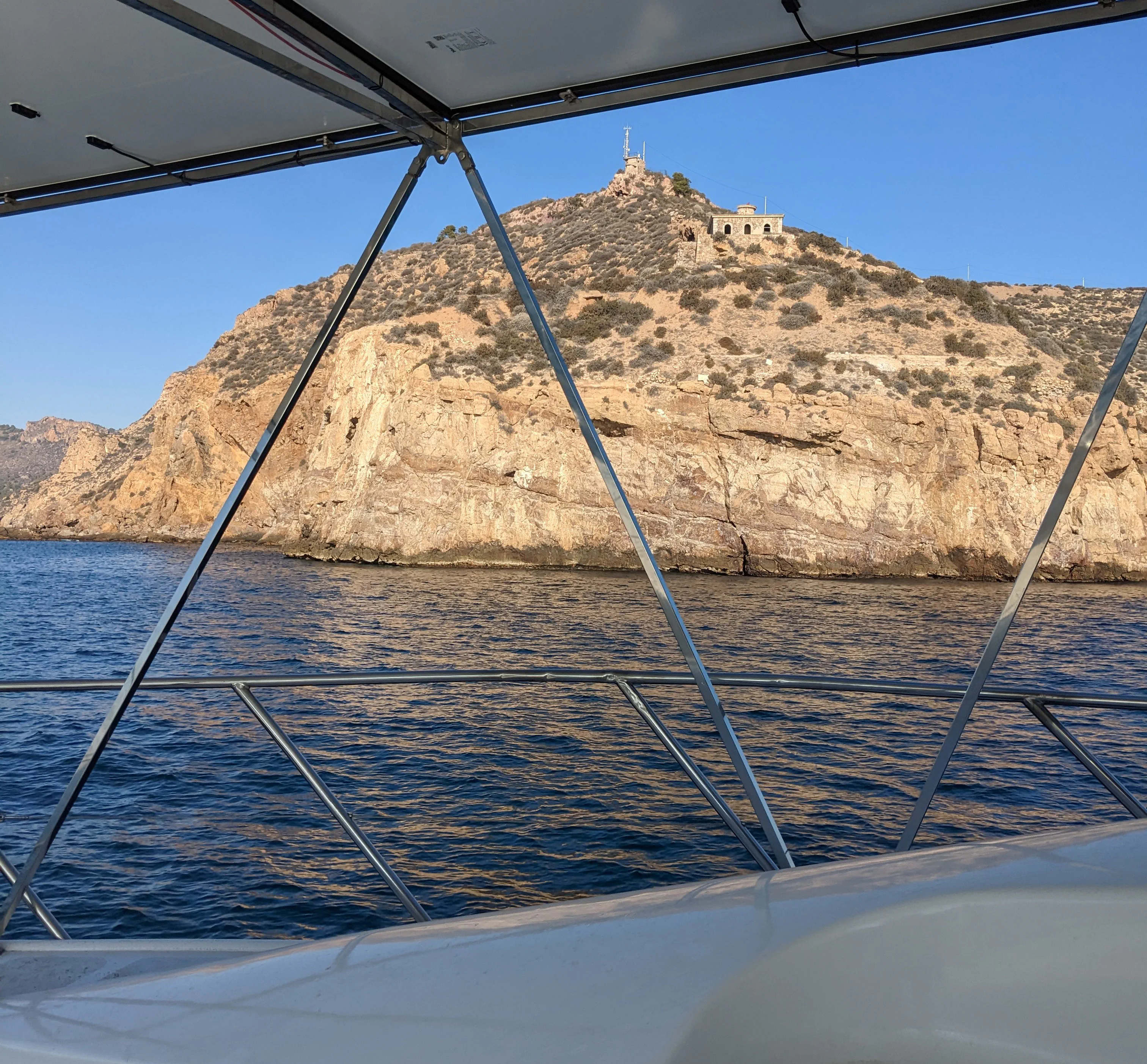
We enjoyed the landscape from the forward helm, which comfortably seats three or four people.
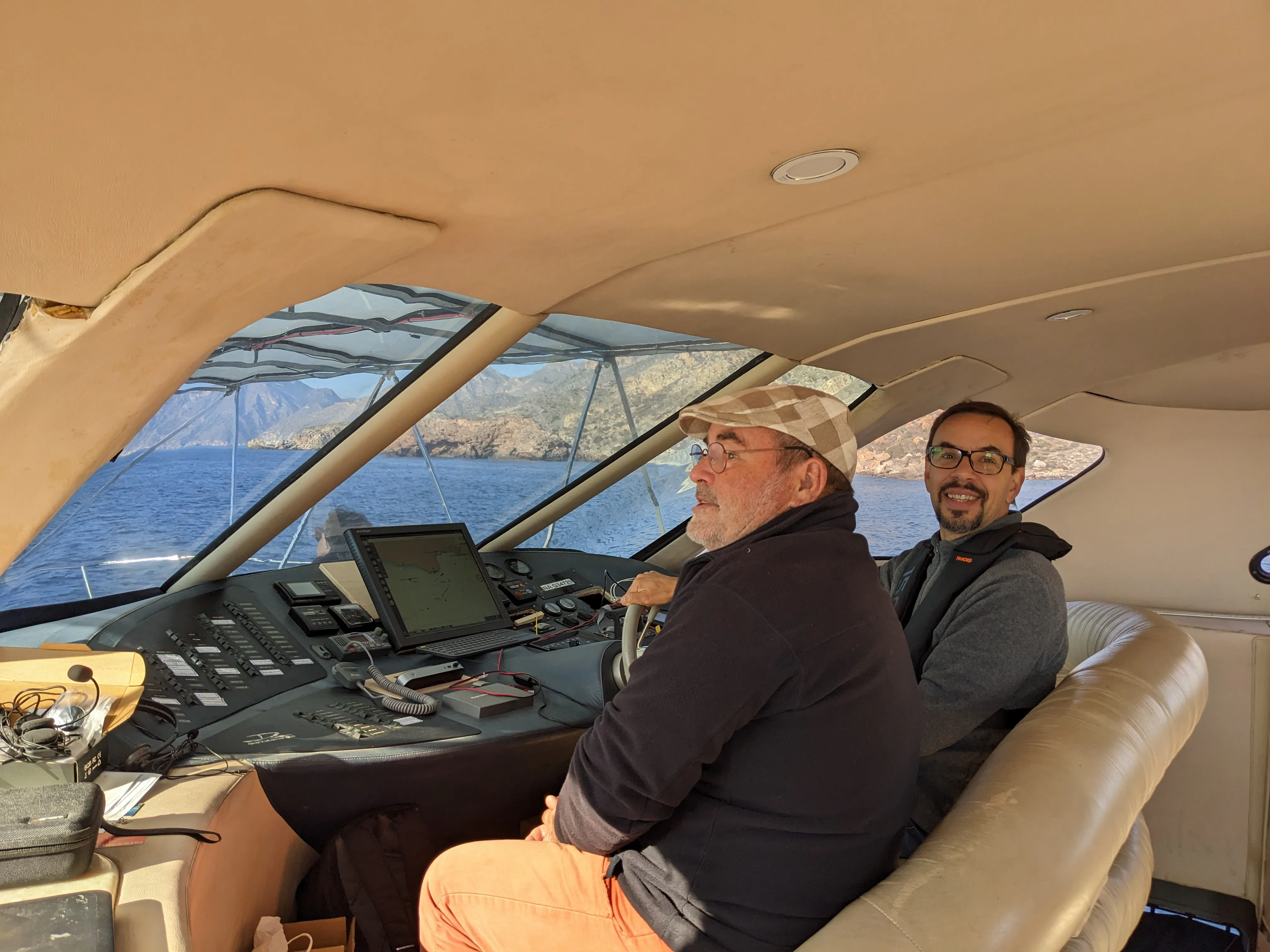
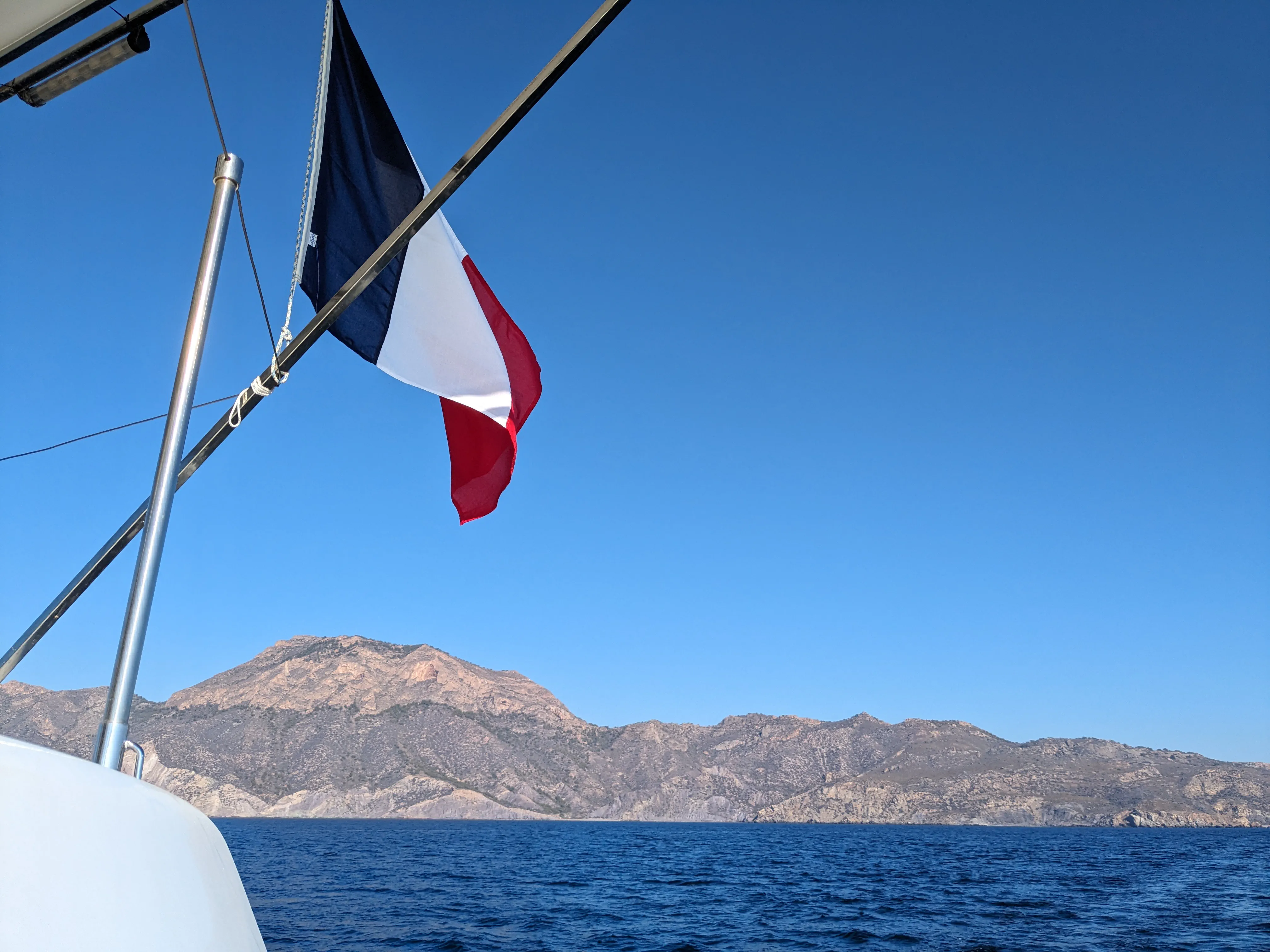
We had a family lunch while navigating, surrounded by the calm sea and the mountains of the Sierra de la Muela, Cabo Tiñoso y Roldán National Park. Even though Cartagena is a large commercial port, you don’t have to go far to reach beautiful natural scenery.
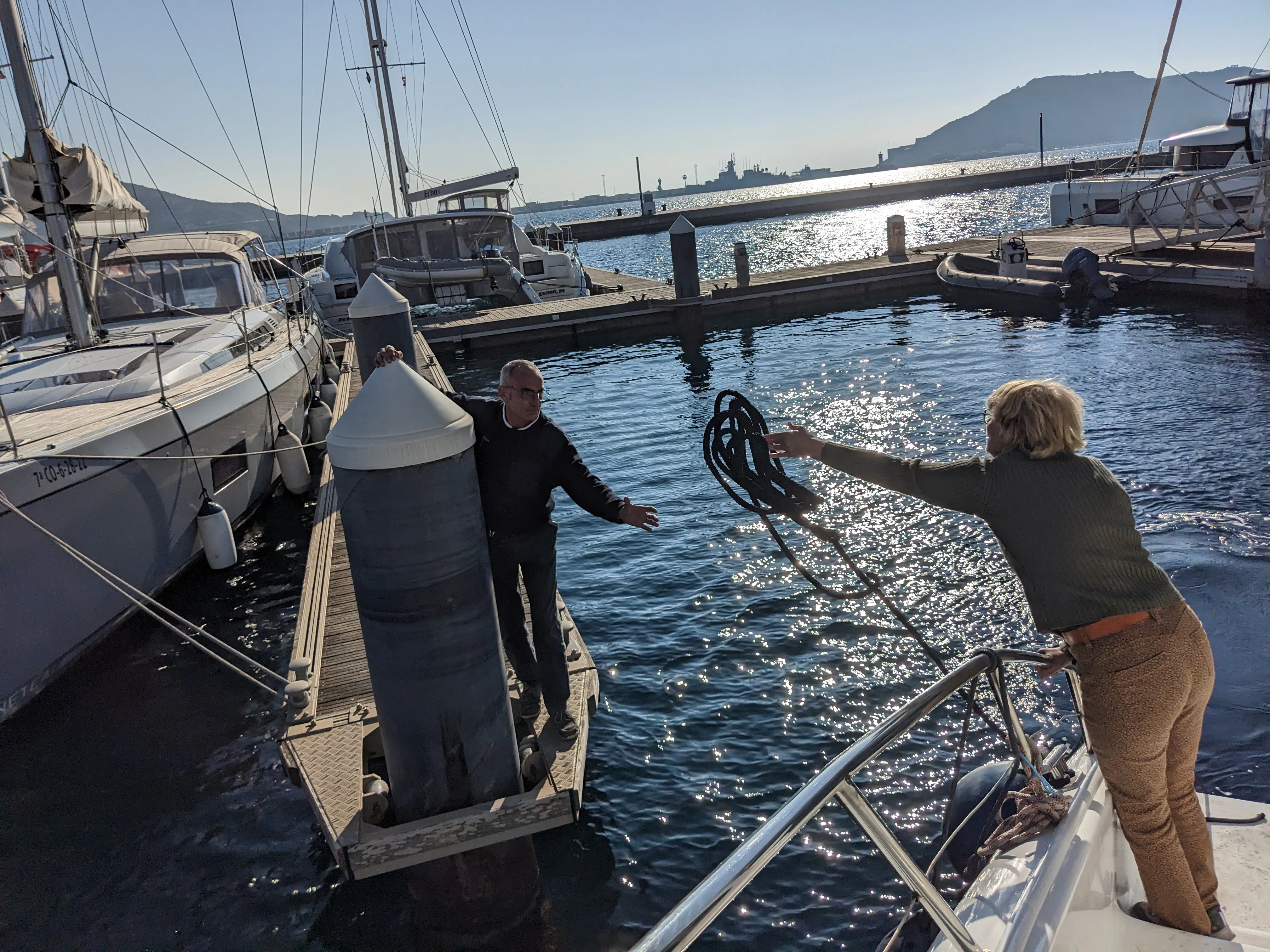
Upon return, we docked by backing into our berth, with the Yacht Port Cartagena marinero waiting to catch our lines. We had a great time with the family.
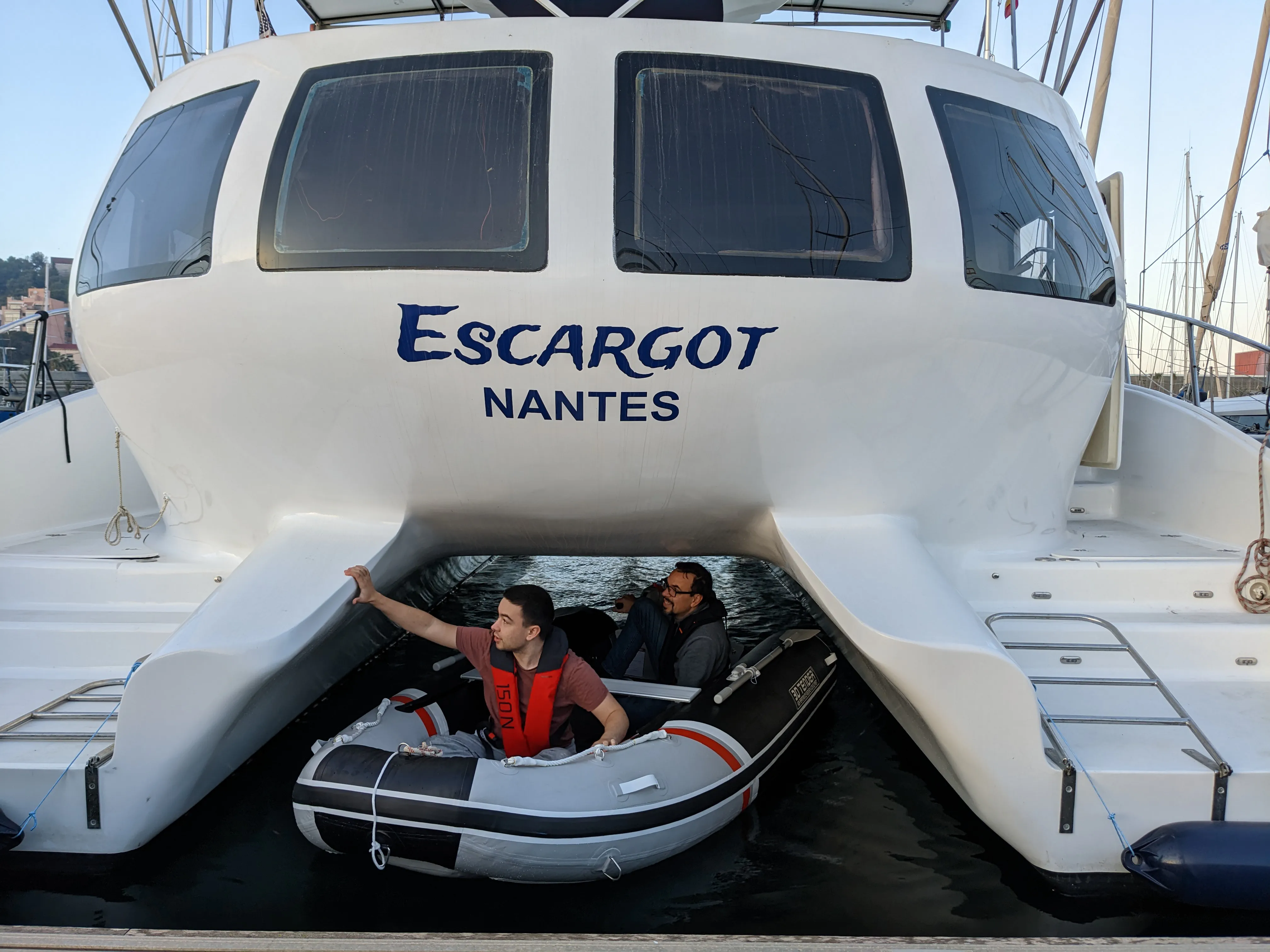
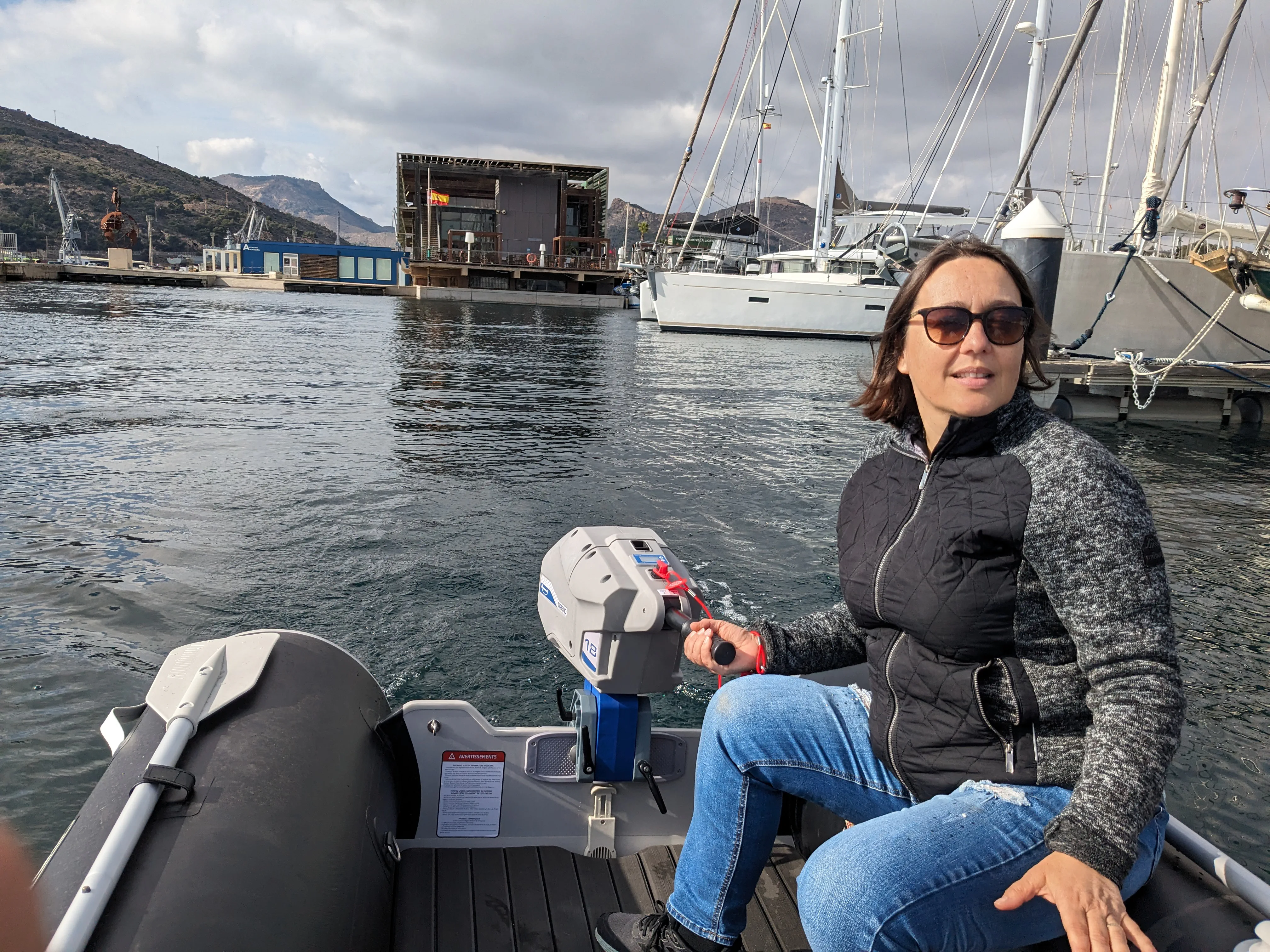
We also received our new dinghy from 3D Tender, along with its electric outboard engine from Aquamot. We will need it to reach the shore once we anchor in small bays, but for the time being, we navigated around and under our main ship.
We enjoyed a nice ride inside the port of Cartagena as well.
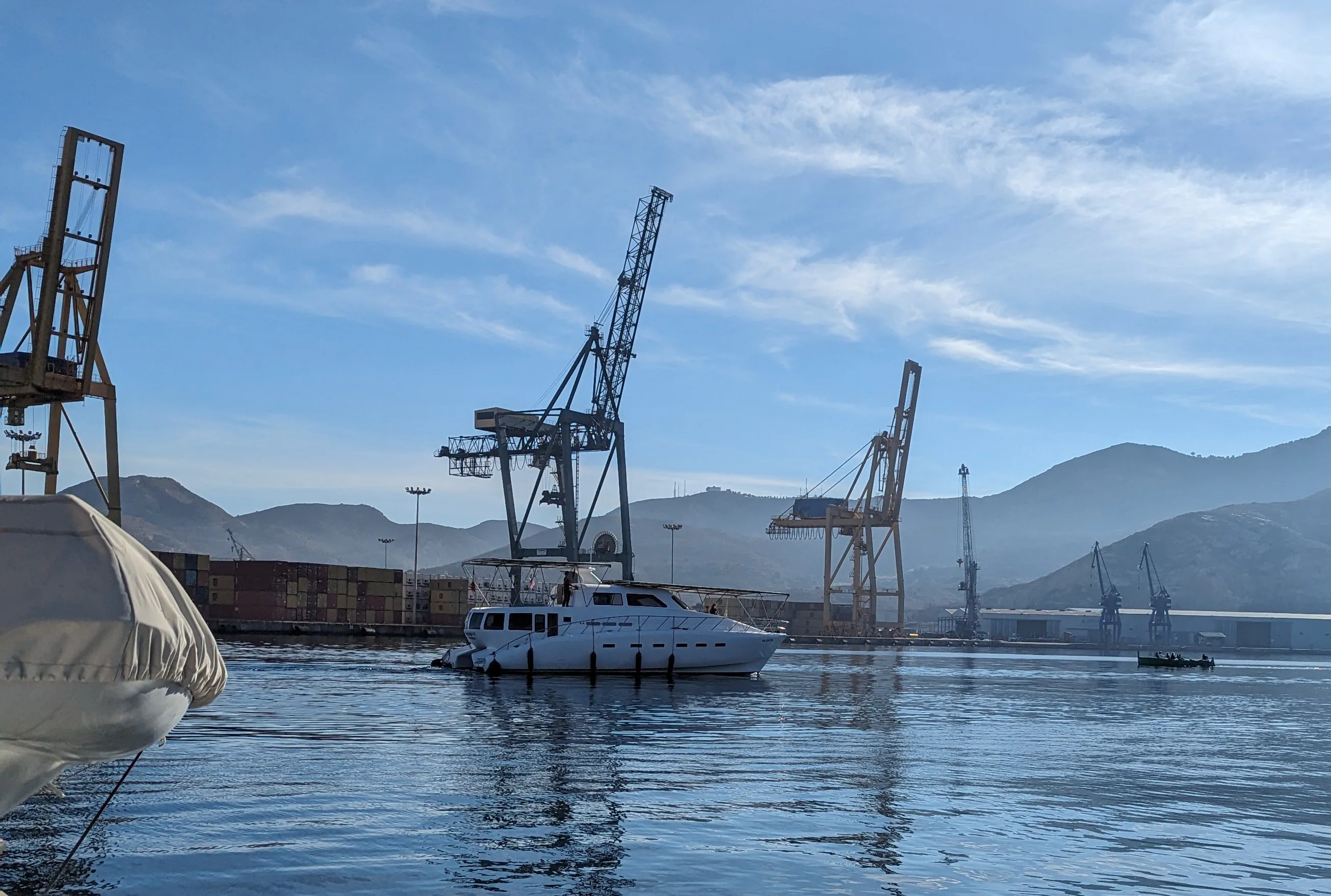
A friend visited us for the New Year, and we went for another short cruise in the Cartagena Bay.
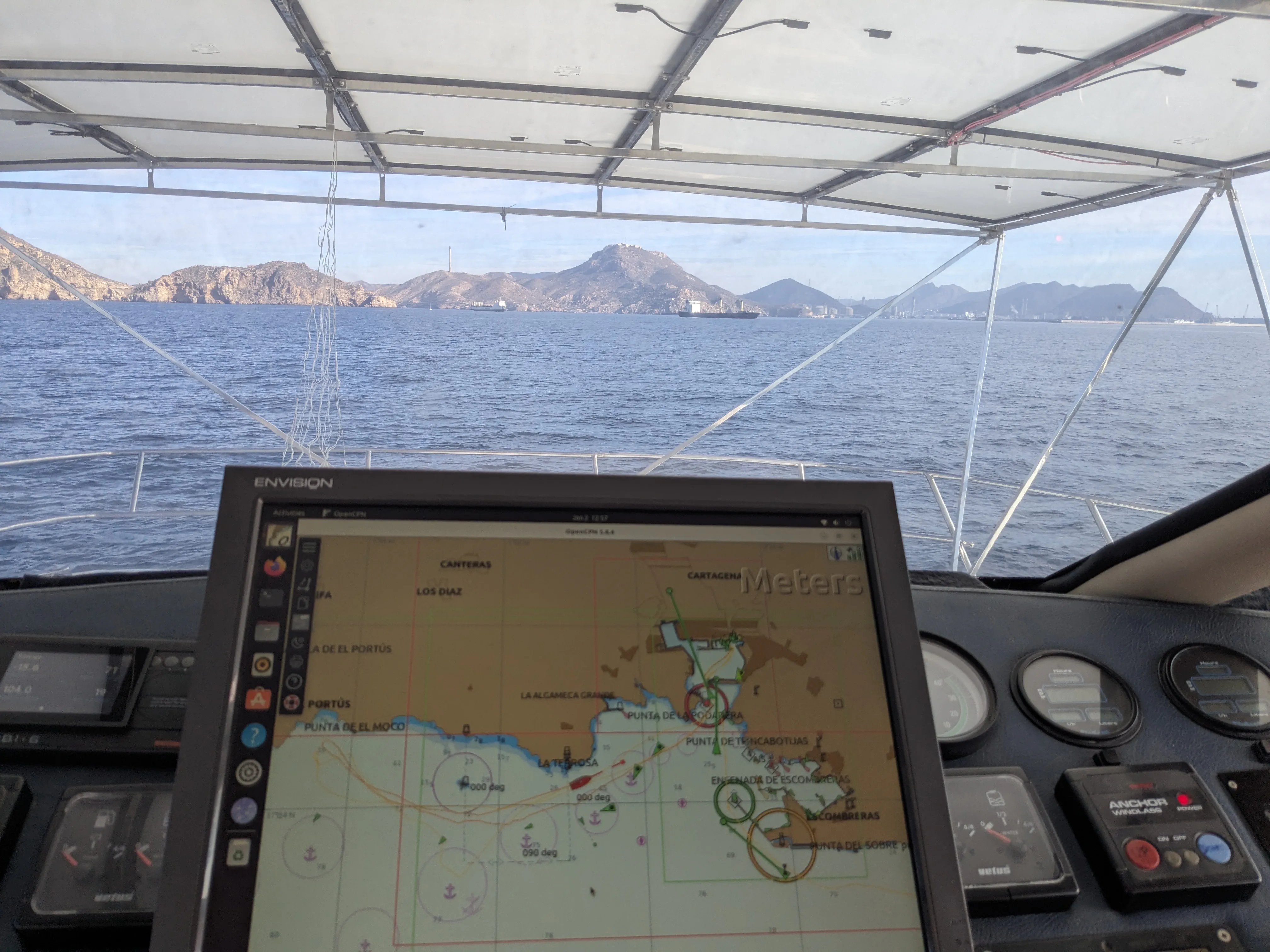
We use our instruments while navigating, especially to monitor commercial traffic, but we also use the very large chimney as a landmark to align our approach when returning to the port.
We docked successfully despite some crosswind. It was lovely to have such great weather in January!
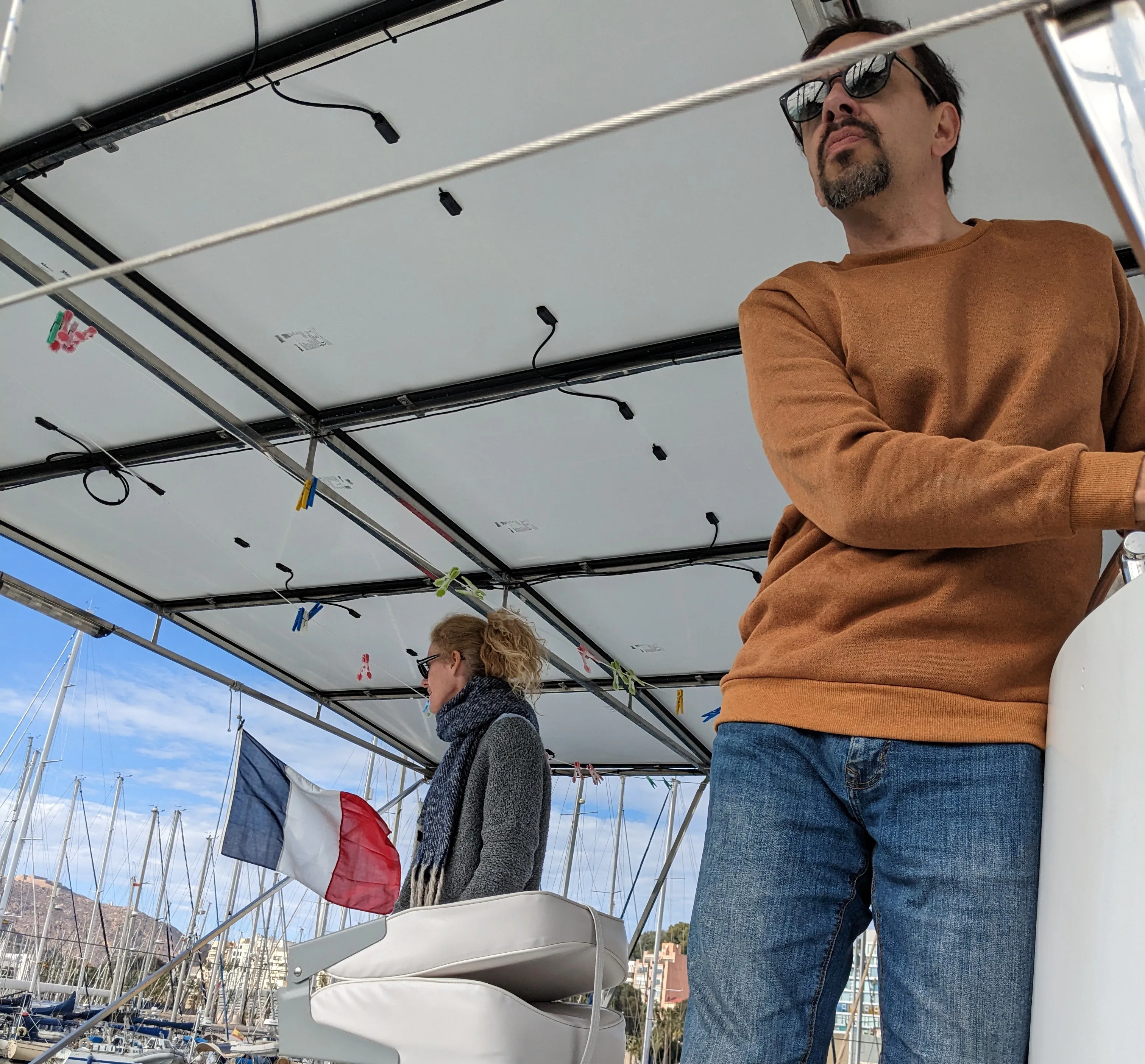
We decided to keep Escargot in Cartagena for another five months and extended our berth contract with Yacht Port Cartagena. We really enjoy the city and the liveaboard community here. However, we had to move from our transit berth to one more suitable for Escargot’s size. It was a very short navigation to move from berth K2 to berth K20.
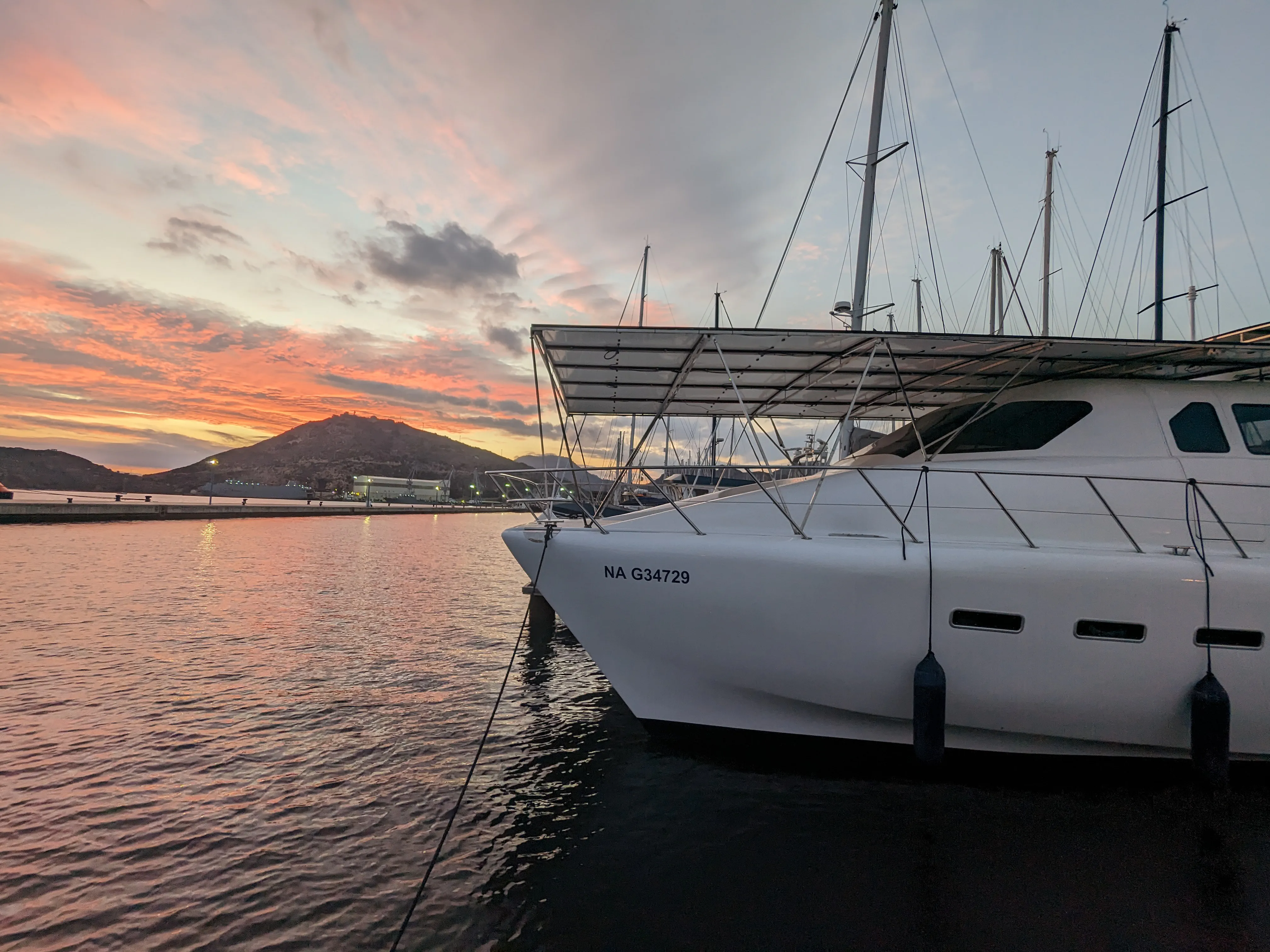
We spent the last six weeks with the Escargot on the water at the Varadero STA marina in south Alicante. We used this time to validate the …
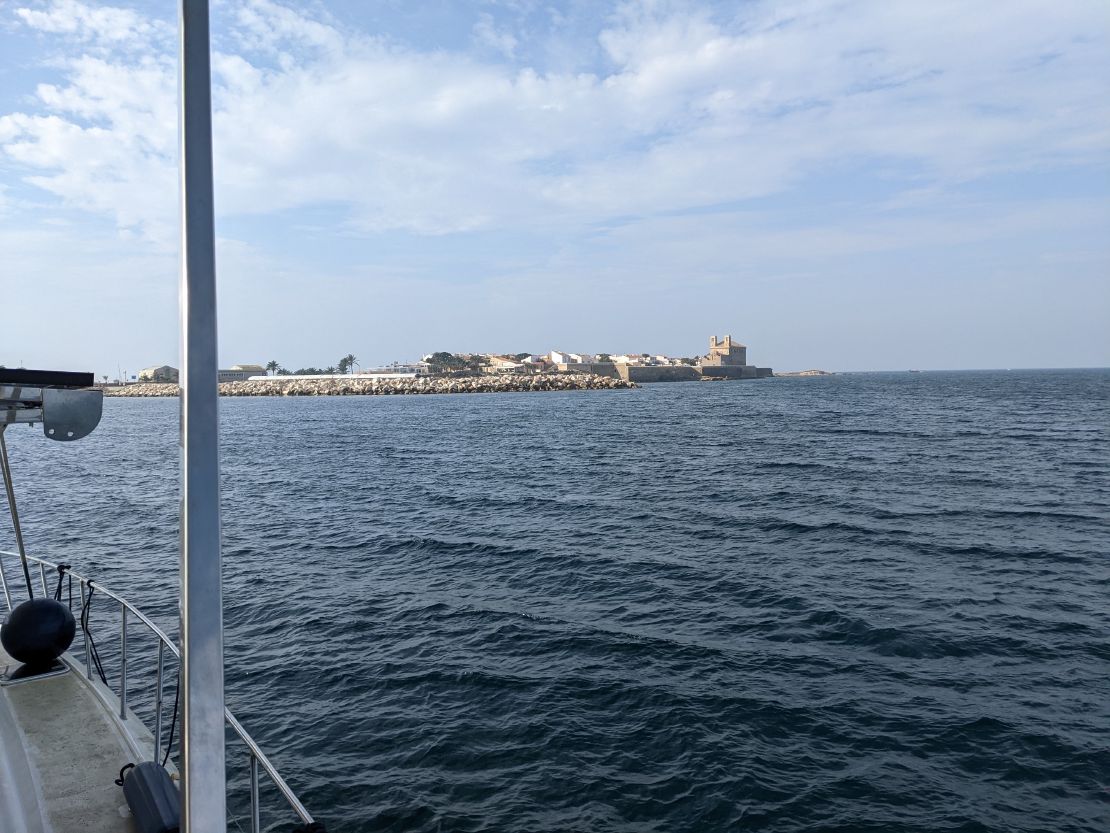
Until today, the Escargot had only been out to sea for trial navigations near the port of Alicante. This morning, we set sail for Tabarca, a small …