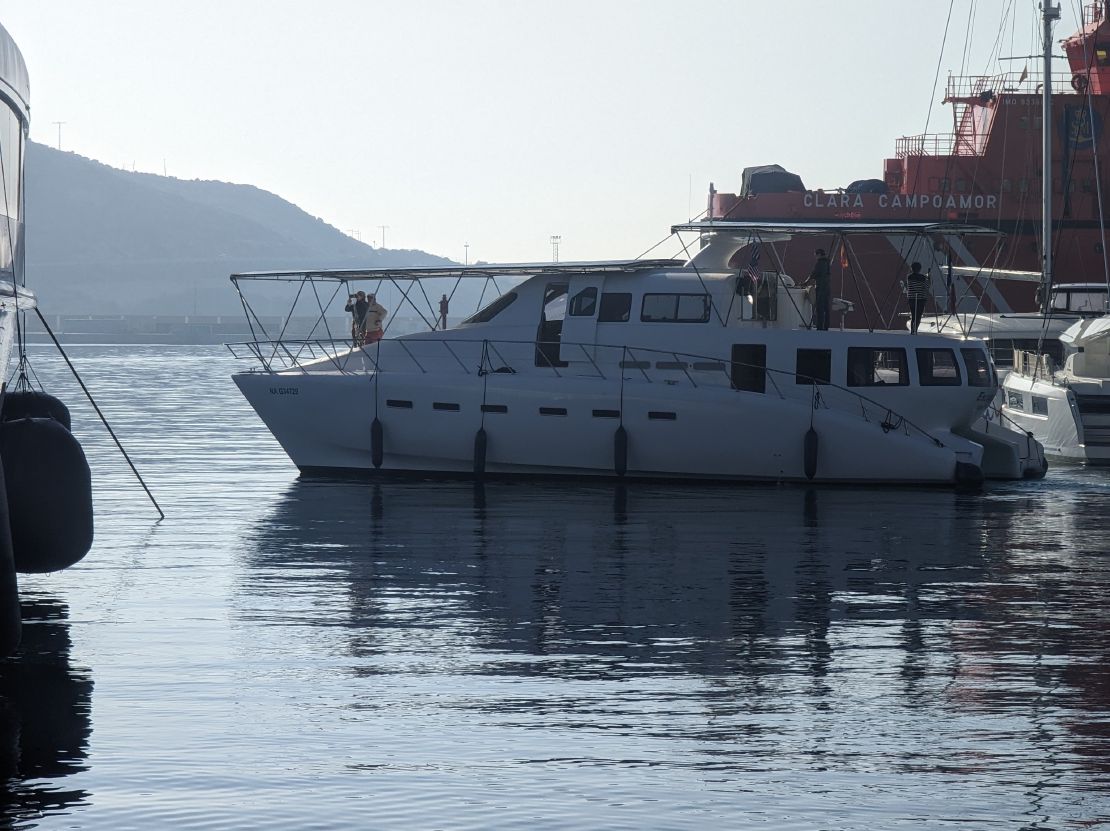
Fall and Winter 2023 Navigation Log
These past few months marked our first season living and navigating aboard Escargot. We left Alicante without a predefined destination, other than a …
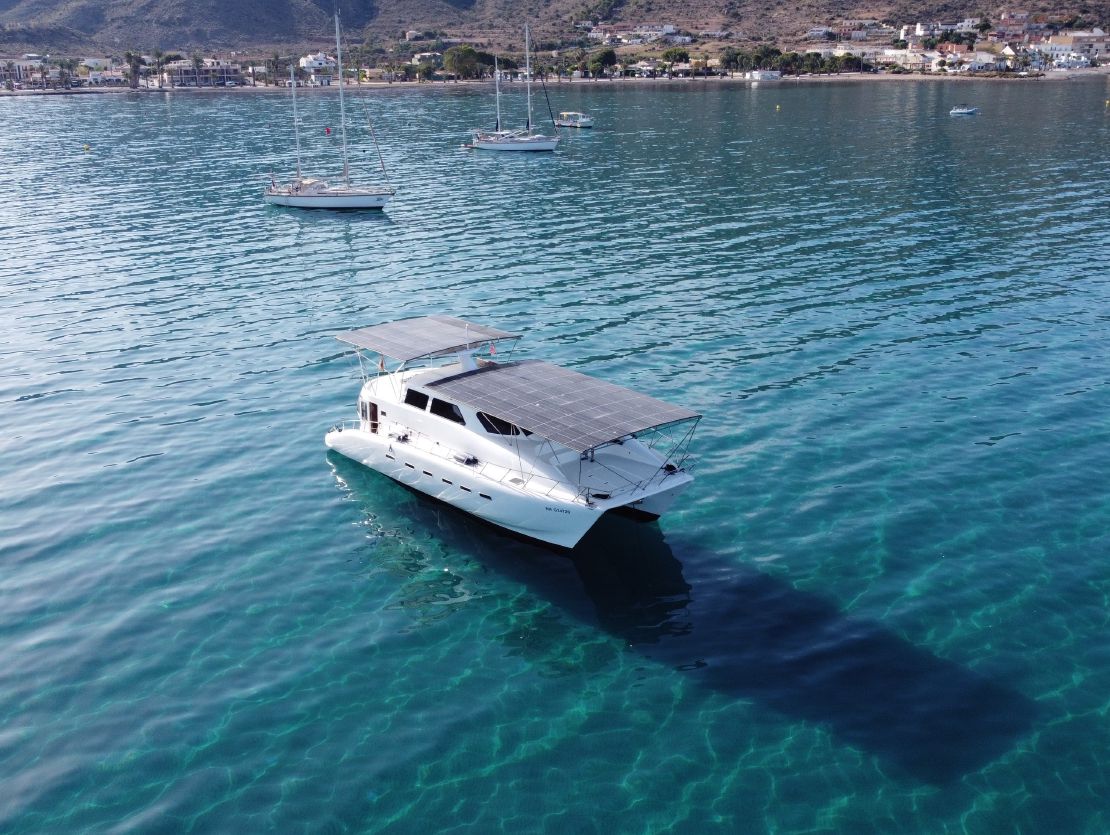
We returned early to Escargot for our spring season living aboard after being away for only two months. We started with a couple of short trips in the bay of Cartagena and some adjustments to our motor control electronics. Then, we began exploring the natural coast west of Cartagena and discovered the beautiful anchorage of La Azohía, where we finally experienced the total freedom of living at anchor for several nights.
| Date | Distance | Speed | Duration | Description |
|---|---|---|---|---|
| 2024-03-06 | 17.8 nm | 4.2 kts | 4.2 h | Loop in the bay of Cartagena |
| 2024-03-25 | 6.9 nm | 4.7 kts | 1.5 h | Loop in the bay of Cartagena with family onboard |
| 2024-05-26 | 9.3 nm | 3.0 kts | 3.1 h | Aborted passage to La Azohía |
| 2024-05-29 | 0.2 nm | 2.0 kts | 0.1 h | Moving from berth K20 to D06 |
| 2024-06-05 | 18.9 nm | 4.0 kts | 4.7 h | Passage from Cartagena, to Mazarron and to La Azohía |
| 2024-06-05 | 13.5 nm | 4.8 kts | 2.8 h | Passage from La Azohía to Cartagena |
| 2024-06-12 | 14.3 nm | 3.6 kts | 4.0 h | Passage from Cartagena to La Azohía |
| 2024-06-14 | 13.1 nm | 4.2 kts | 3.1 h | Passage from La Azohía to Cartagena |
| 2024-06-17 | 13.6 nm | 5.1 kts | 2.7 h | Passage from Cartagena to La Azohía |
| 2024-06-18 | 13.4 nm | 5.3 kts | 2.5 h | Passage from La Azohía to Cartagena |
Total distance: 120.9 nm
We kicked off our second season living aboard with a short loop lasting a bit over 3 hours. Our daughter was visiting us in Cartagena, and we wanted to show her El Portús and Cape Tiñoso.
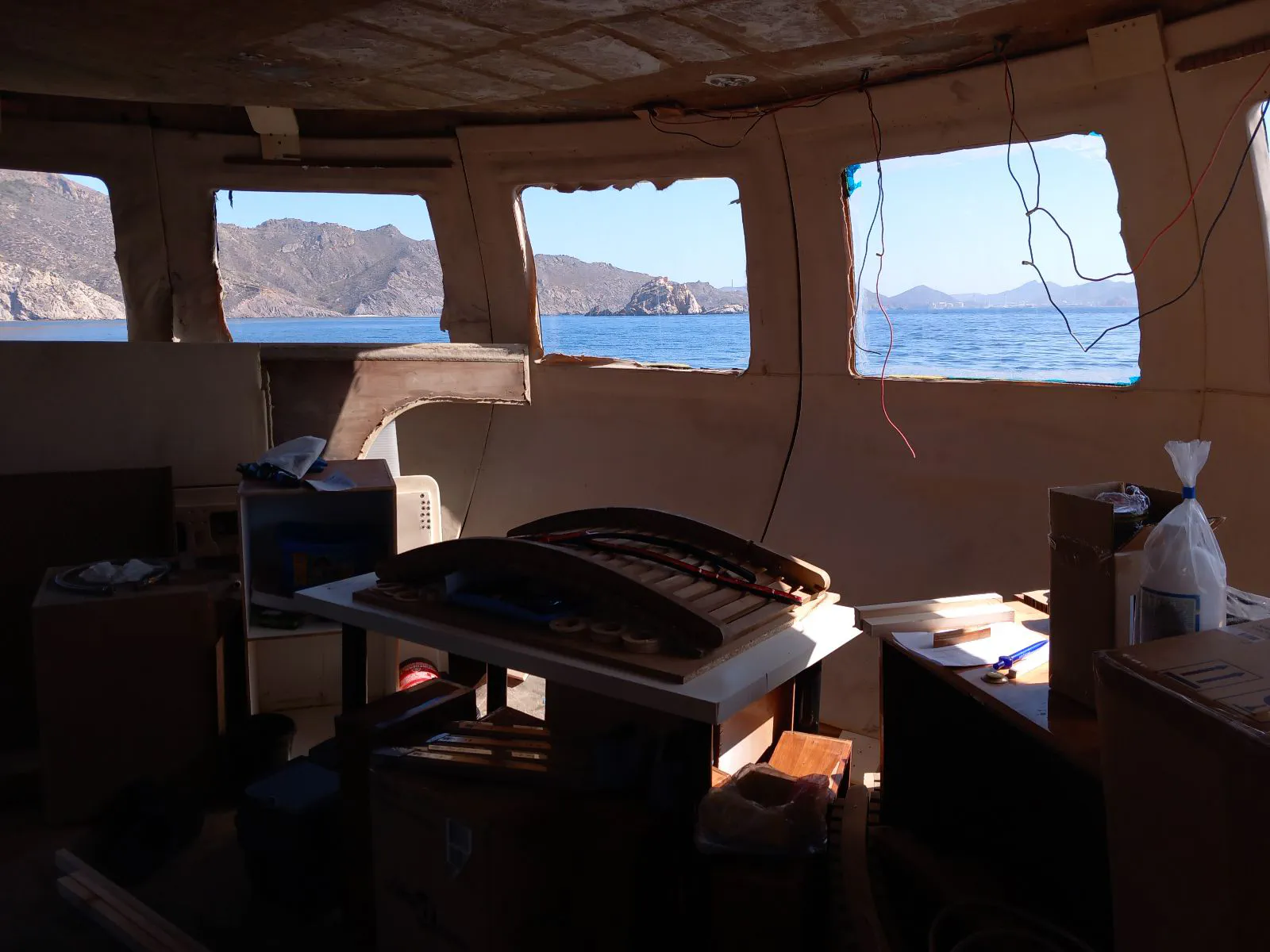
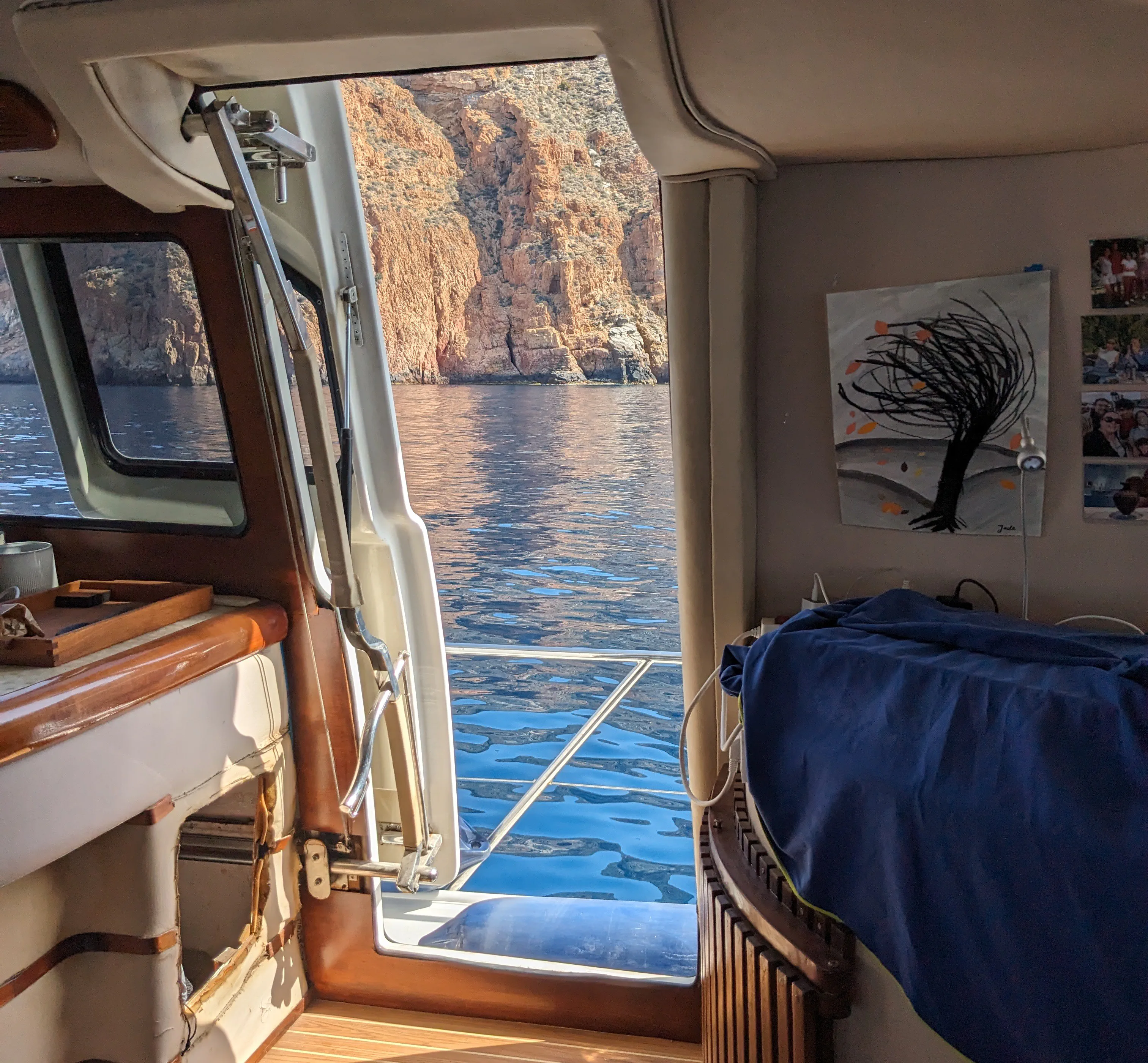
We had been working on some woodwork over the last few days, building an access hatch to enter the under-cockpit area and some rings for recessed lights, as seen here on the workbench of the aft cabin with the Isla de las Palomas in the background.
The scenery of the bay of Cartagena, mixing natural landscapes of mountains cascading into the sea with small forts perched above the water, is really beautiful.
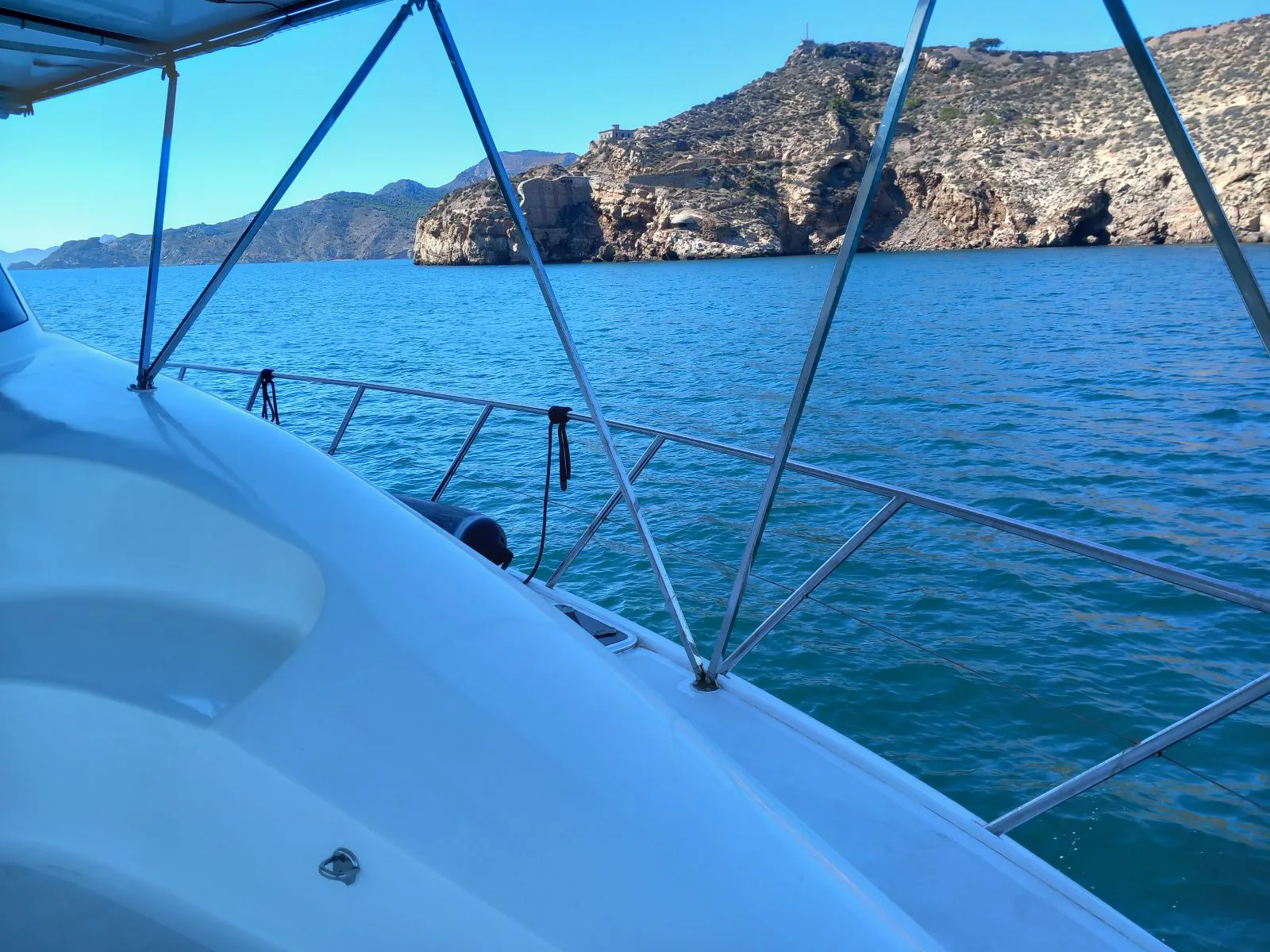
We left our berth with the battery full and returned with a 93% state of charge due to solar generation while navigating, and because we kept our speed around 4 knots to remain close to being fully solar-powered.
We had family visiting us in Cartagena, and even though the weather forecast was not great, we decided to go for a loop in the bay. There were 8 of us onboard for this short 90-minute trip, and it ended up being windier and colder than planned. We went almost to the Isla de las Palomas before turning back.
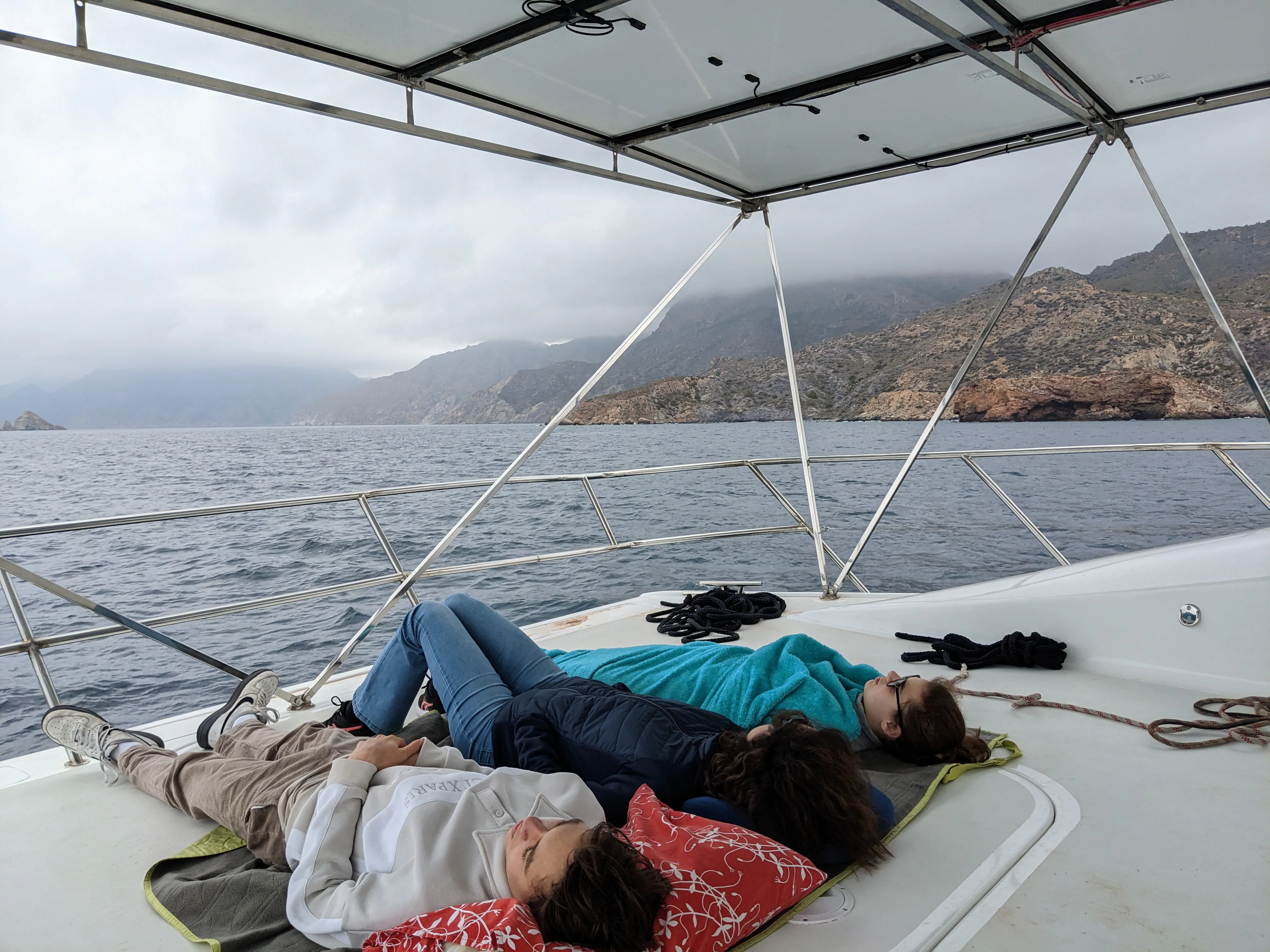
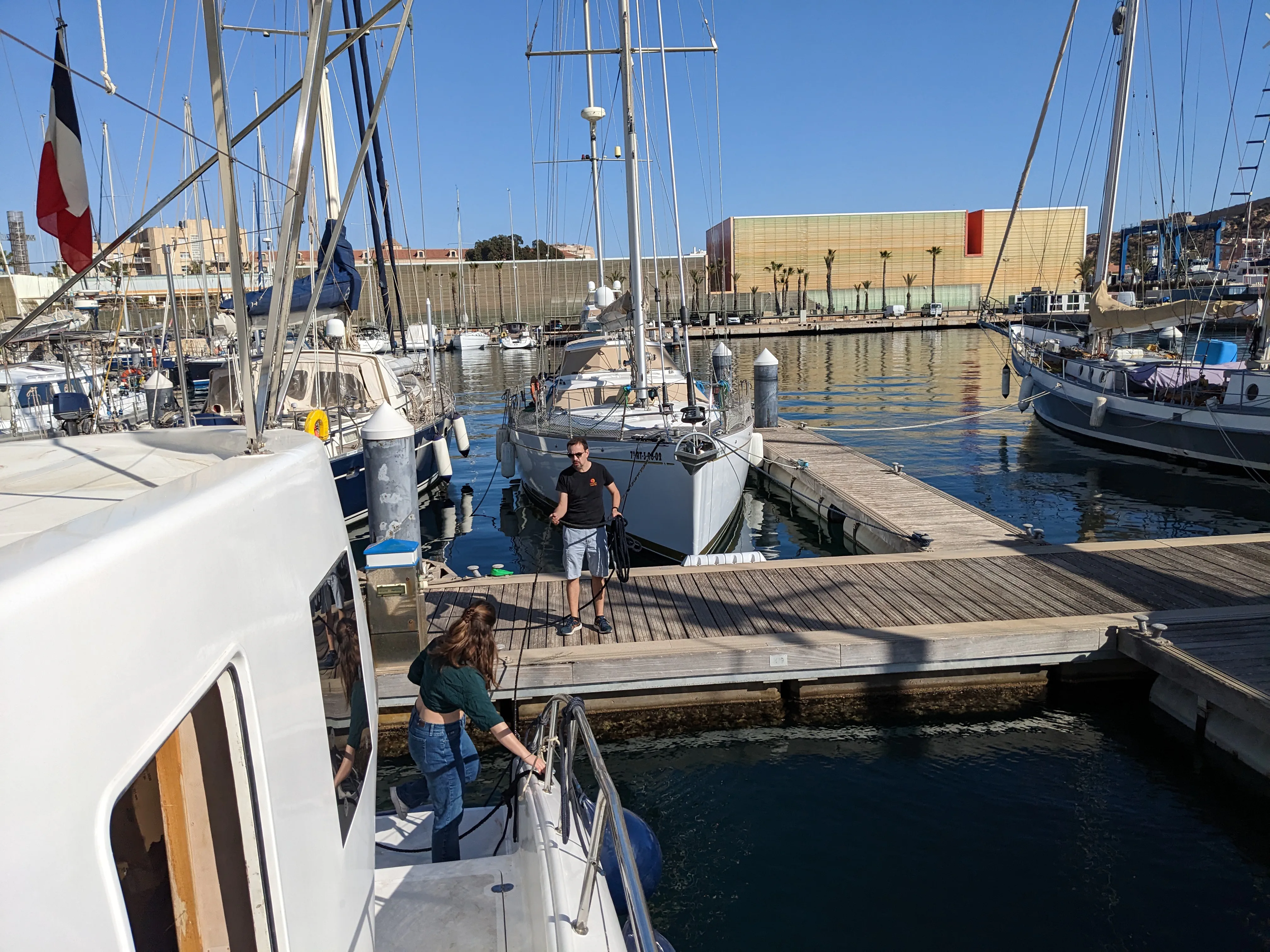
Upon return, as we approached our berth in Yacht Port Cartagena, we experienced strong cross-wind gusts. We had to move a bit faster than normal to maneuver in these conditions; otherwise, we couldn’t stay in control of our direction. Unfortunately, as we were 10 meters from the dock and tried to apply a strong forward pulse with both engines to break our backing speed, both electric motors stopped! We drifted with our momentum and were stopped by hitting the dock. These were our first scratches on the newly painted hull…
On this short trip, we went from 100% to 74% state of charge, as there was insignificant solar power generation due to clouds and fog.
Later that day, we reviewed the motor controller logs and saw that the controllers cut off propulsion because of error F28 S004: “wig-wag out of safety range.” After further research in the DMC controller documentation, we found that the throttle potentiometers must have an added 1Kohm resistor on each end to keep the voltage within range limits. This prevents triggering the “wire cut-off” detection, which causes the abrupt power loss we experienced.
After the incident with the motor throttles while docking on our previous trip, we modified the wiring and added the 1Kohm resistors to the circuits. It was time to test the systems again. With the nice weather, we decided to navigate west from Cartagena to La Azohía, 12 nautical miles away, to anchor there for a night.
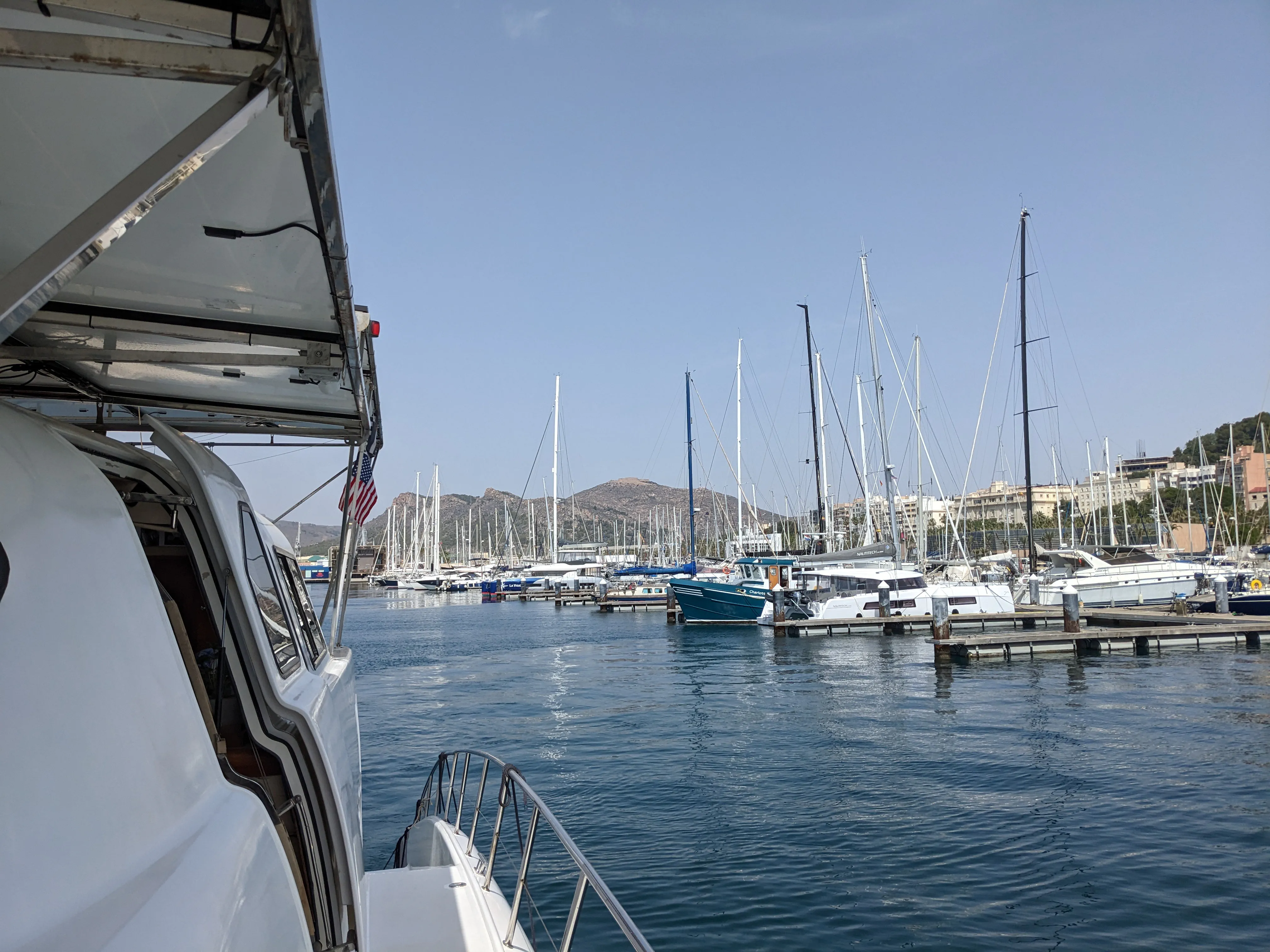
We left Yacht Port Cartagena and headed for the harbor exit, cruising at 6 knots.
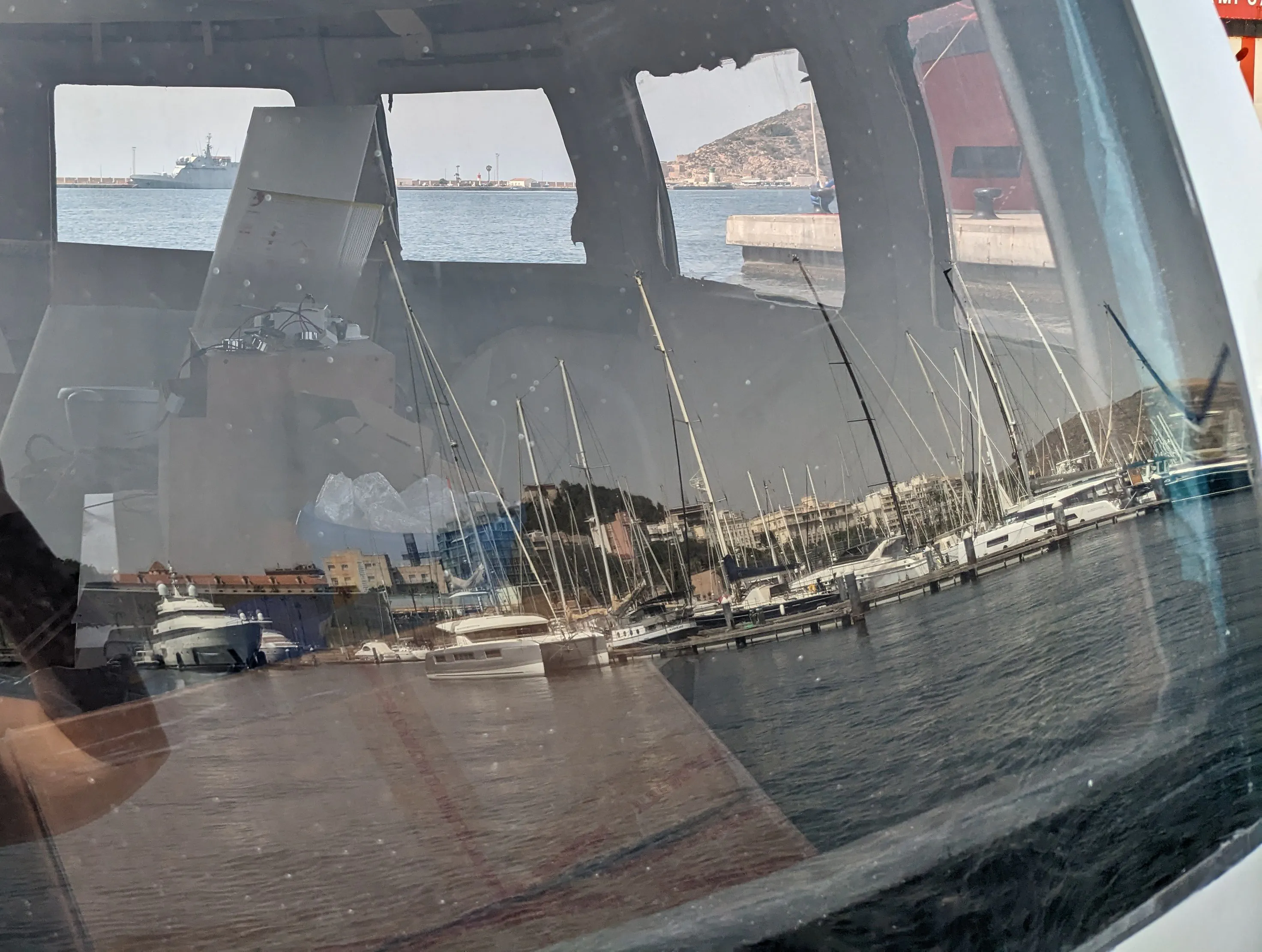
Very soon, we felt some vibration on the starboard propeller shaft. Less than an hour after leaving, the starboard motor controller stopped the motor.
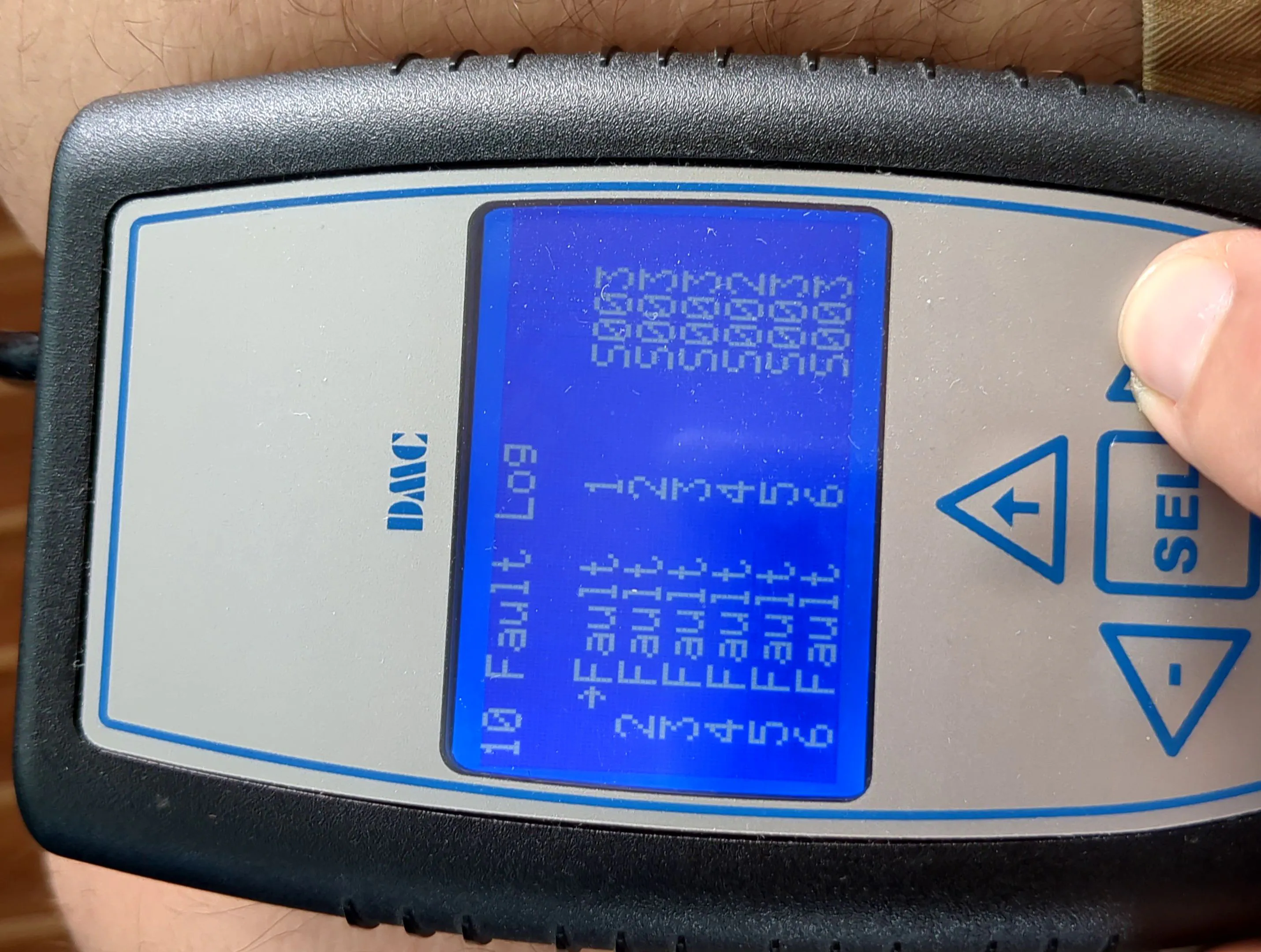
The motor controller handheld terminal displayed several F17 S003 errors: “Battery voltage below Low Voltage error adjustment,” even though our battery bank was almost full. We restarted the controller, and the motor ran again, but the controller was much warmer than usual, so we first thought we had caught something in the propeller. We decided to continue at 2 knots with only the port side motor running. Using our waterproof GoPro camera, we took some footage of the starboard propeller from the swim platform, but it appeared clear.
While we were troubleshooting and restarting the starboard motor, we started getting errors on the port side motor controller too. We had a hard decision to make: either turn back—though we had no confidence that both motors would work for the docking maneuver and the wind had picked up—or continue and anchor at La Azohía (easy to do with one motor) to troubleshoot there. As errors continued to stop the controllers, and we could not risk losing propulsion while passing Cape Tiñoso, we decided to turn back.
We called the marina ahead of our arrival to let them know we were coming back with propulsion issues. We requested a berth with easy access and asked for two marineros on the pontoon to catch our lines. As we entered the port of Cartagena, we requested permission to cross the harbor from “Port Control” on VHF channel 14 as usual, but we also informed them we would be progressing slowly at only 2 to 3 knots. We were lucky—there was no cargo traffic at that time!
As we were ready to dock, we turned the starboard motor back on, and both motors stayed functional without issue for the maneuver.
This was our first trip where we left and returned with 100% state of charge in our batteries. Since we navigated at extremely low speed, on one motor half the time, we were generating a lot more power than we were consuming.
The following day, while researching the problem, we found that the 0V of the internal 12VDC supply of both controllers were connected together through the control wire harnesses; this was the source of the throttle voltage control errors. We implemented yet another set of electrical wiring changes to address that. The source of the vibration on the starboard propeller shaft was not found, but we assumed marine growth on the prop was the cause. We had to plan a good scrubbing of the propellers soon.
The berth assigned to Escargot until now, near the marina entrance, experienced quite a bit of swell from fishing and cargo ship activity. Upon our request, the marina management assigned us a berth deeper in the marina that was better protected. As we had completed our motor control electrical fixes and some extensive successful static propulsion tests, we decided to go for a very short test run and maneuver to our new berth.
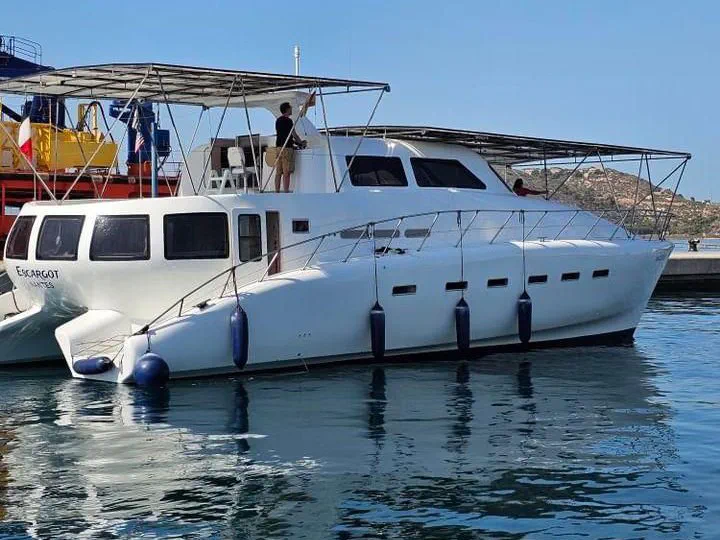
This very short trip gave us confidence in the latest electrical changes.
With great marine weather forecasted, we decided to attempt our trip toward Mazarrón and anchor at La Azohía again.
We left Yacht Port Cartagena with a full battery bank at 10:30 with the objective to navigate to Mazarrón and then follow the coast back to reach the anchorage—a planned trip of 20 nautical miles. We wanted to return to Cartagena before sunset, so we would do a total loop of 32 nautical miles.
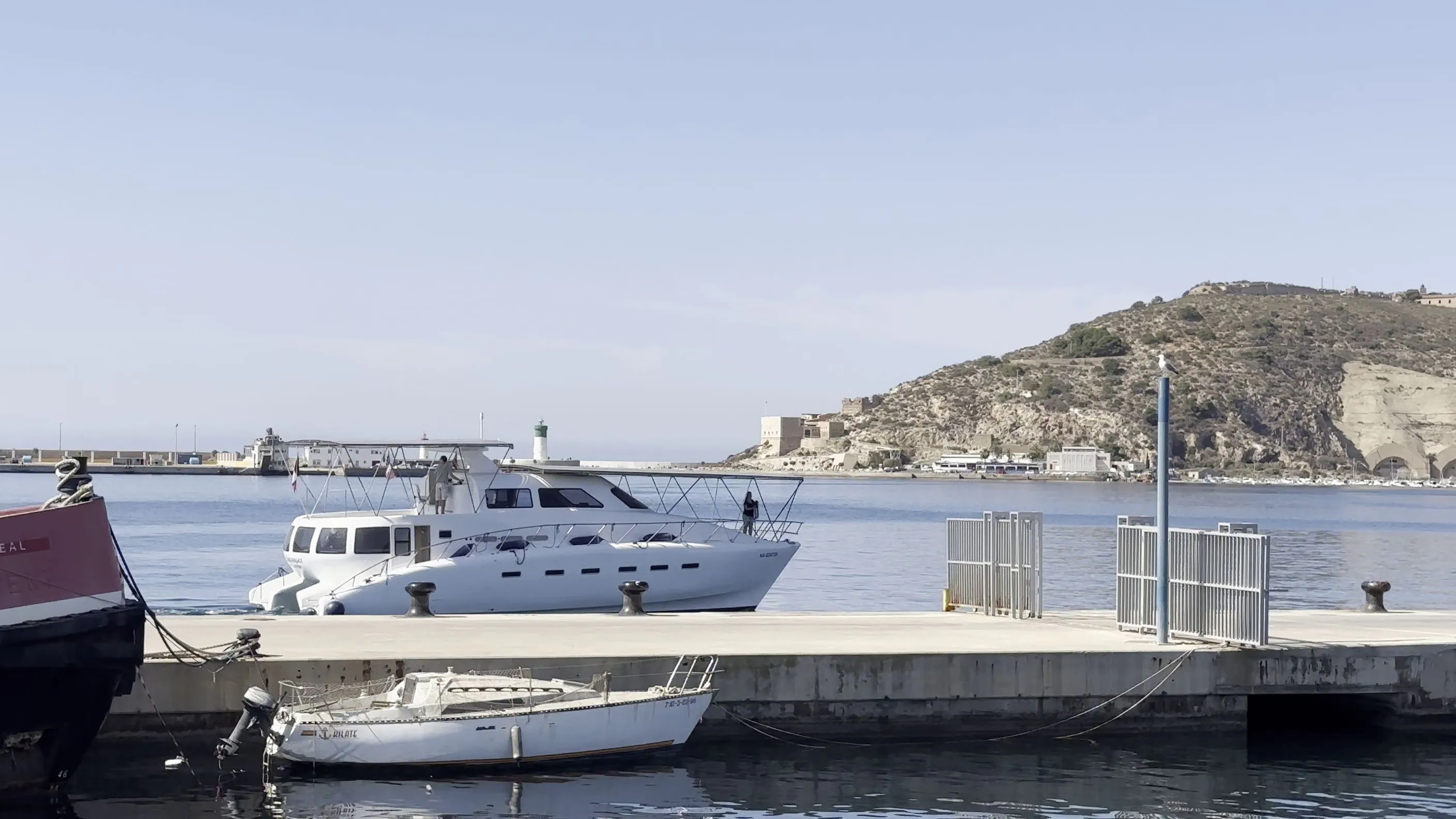
We sailed with our speed set to 4 knots to use only a small amount of energy from our battery while the sun was still low in the sky. We had a net consumption of around 5kW.
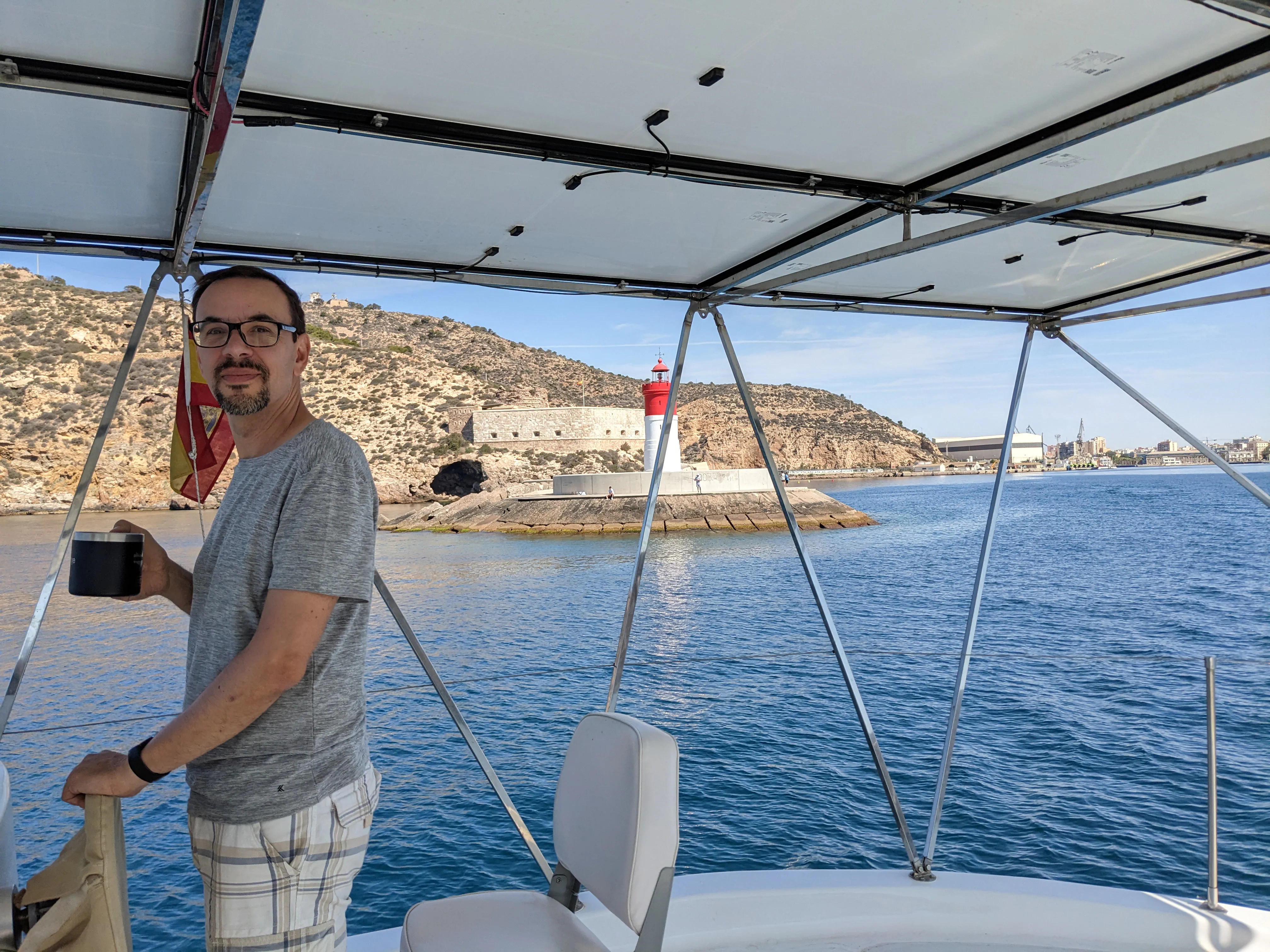
We snapped a picture in front of Mazarrón to send to a friend living there, then turned back following the sandy beach to reach our anchorage on the other side of the bay. At this point, with the sun shining and our reduced speed, we were generating a net 3kW going back into our battery bank.
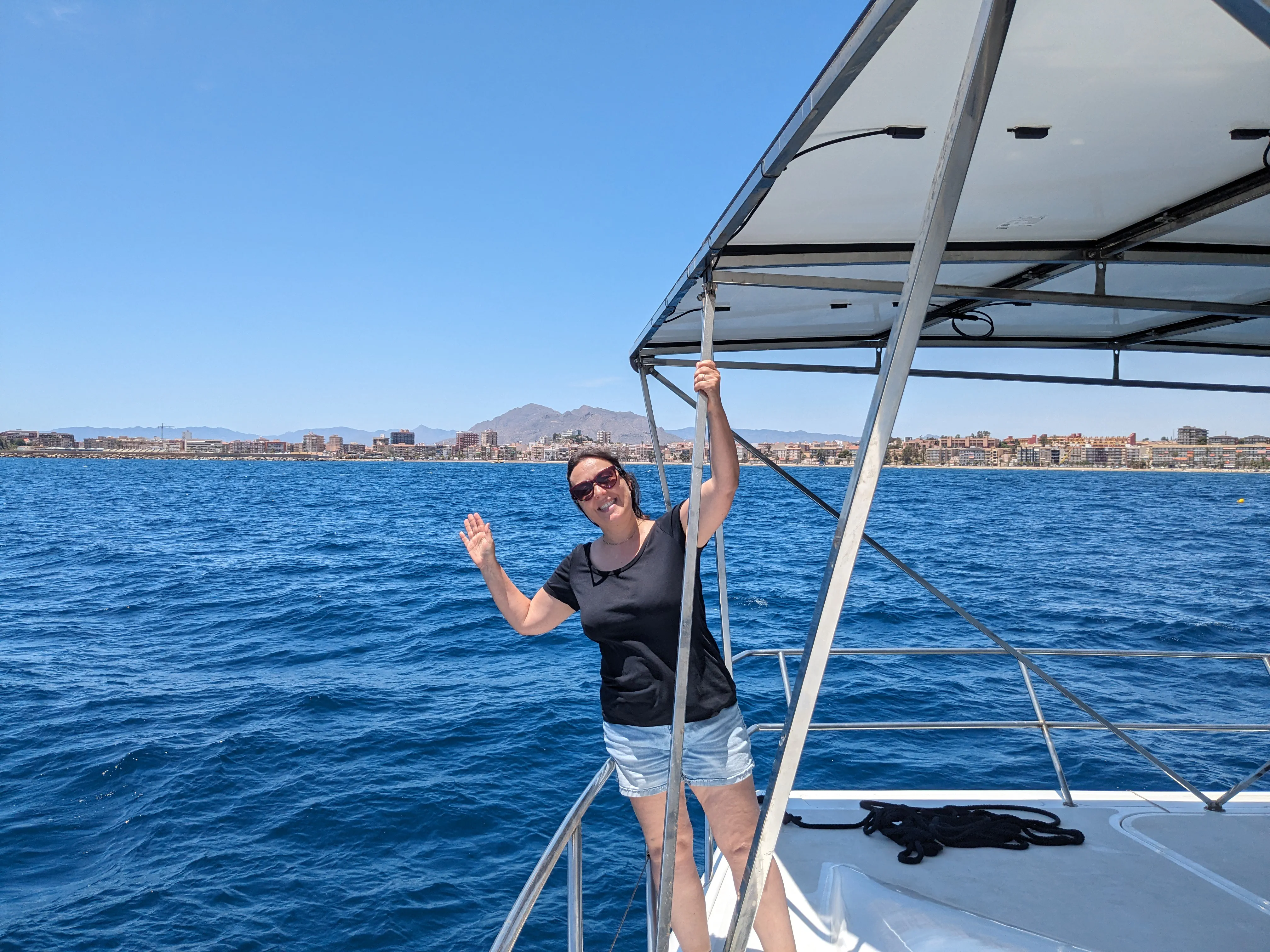
At 15:00, we dropped the anchor with the battery bank at 83% state of charge.
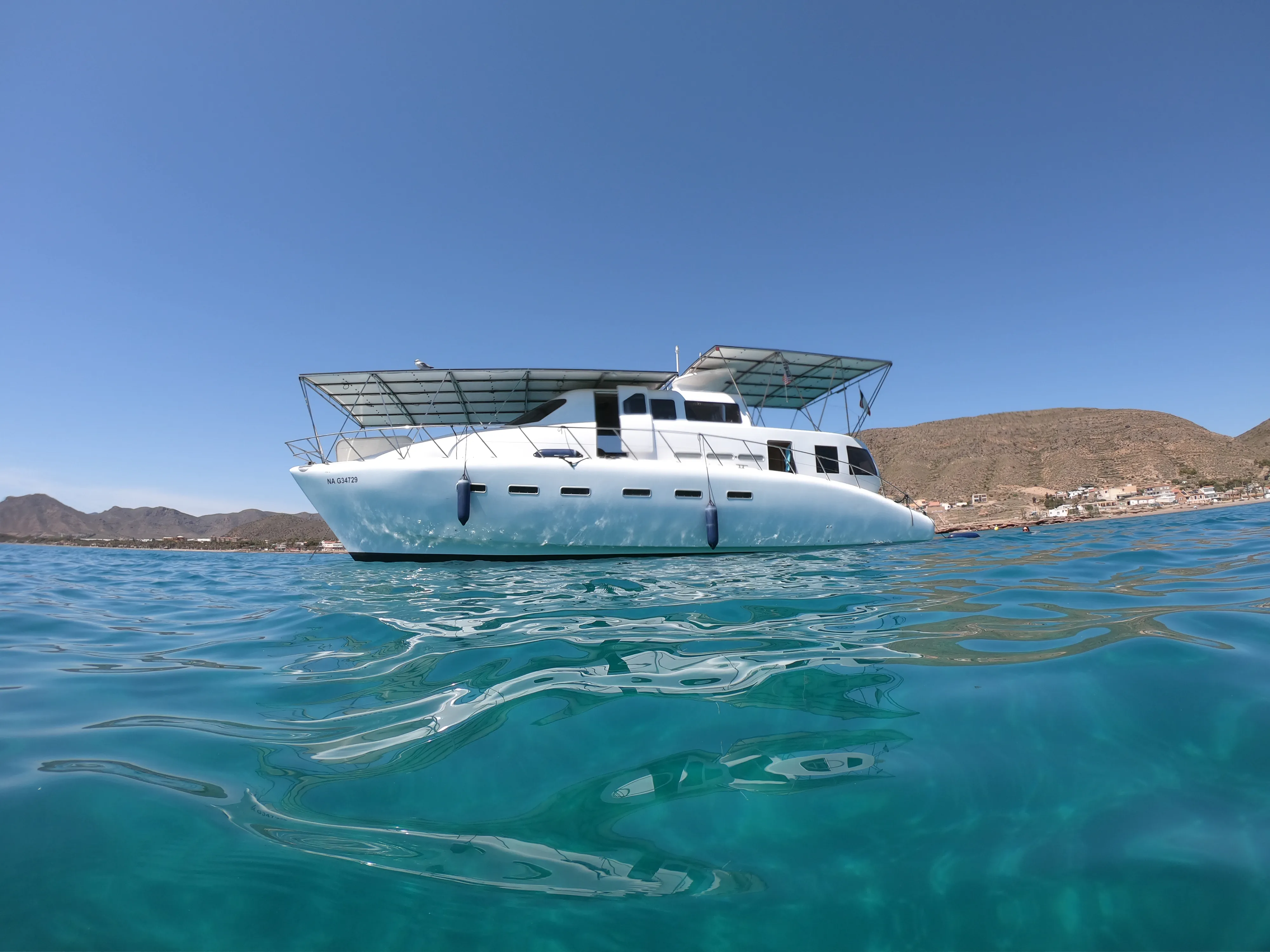
We took time to swim around Escargot in the clear turquoise waters, worked a bit to clean the propellers, and gave the hulls a light scrub.
After almost 3 hours at anchor, it was time to head back to Cartagena. We did not plan to stay for the night, as some swell was predicted to build up over the evening. We lifted the anchor at 17:40. Our battery bank had time to fully recharge thanks to the sunny day. We knew that from now on, we would mostly draw our propulsion energy from the batteries.
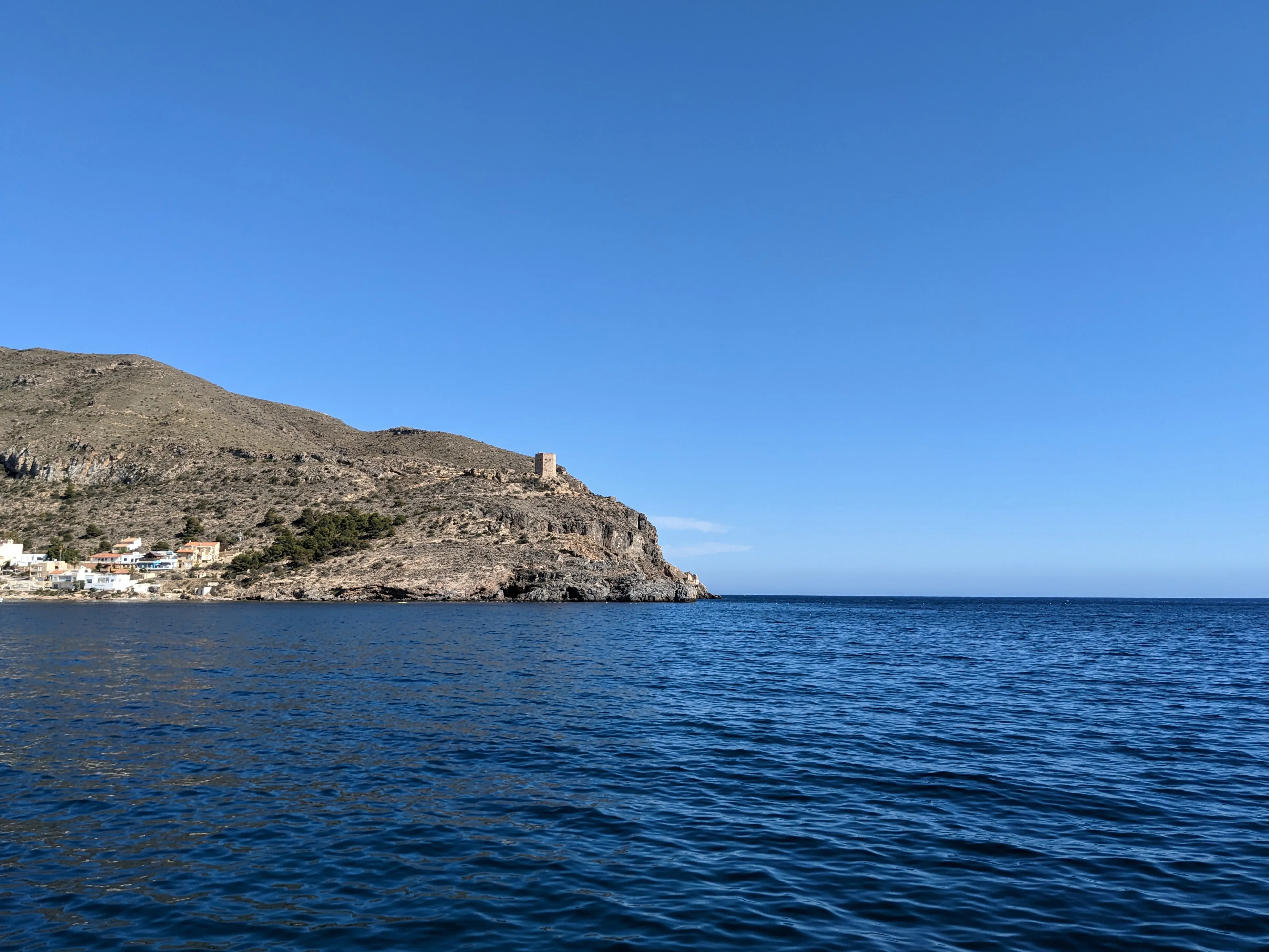
As the marine weather forecast predicted, we faced waves up to 1 meter as we passed Cape Tiñoso, after which the sea state became calmer with 0.5-meter waves. We kept our speed between 5 and 6 knots to push through the waves more easily, keeping our energy consumption around 20kW.
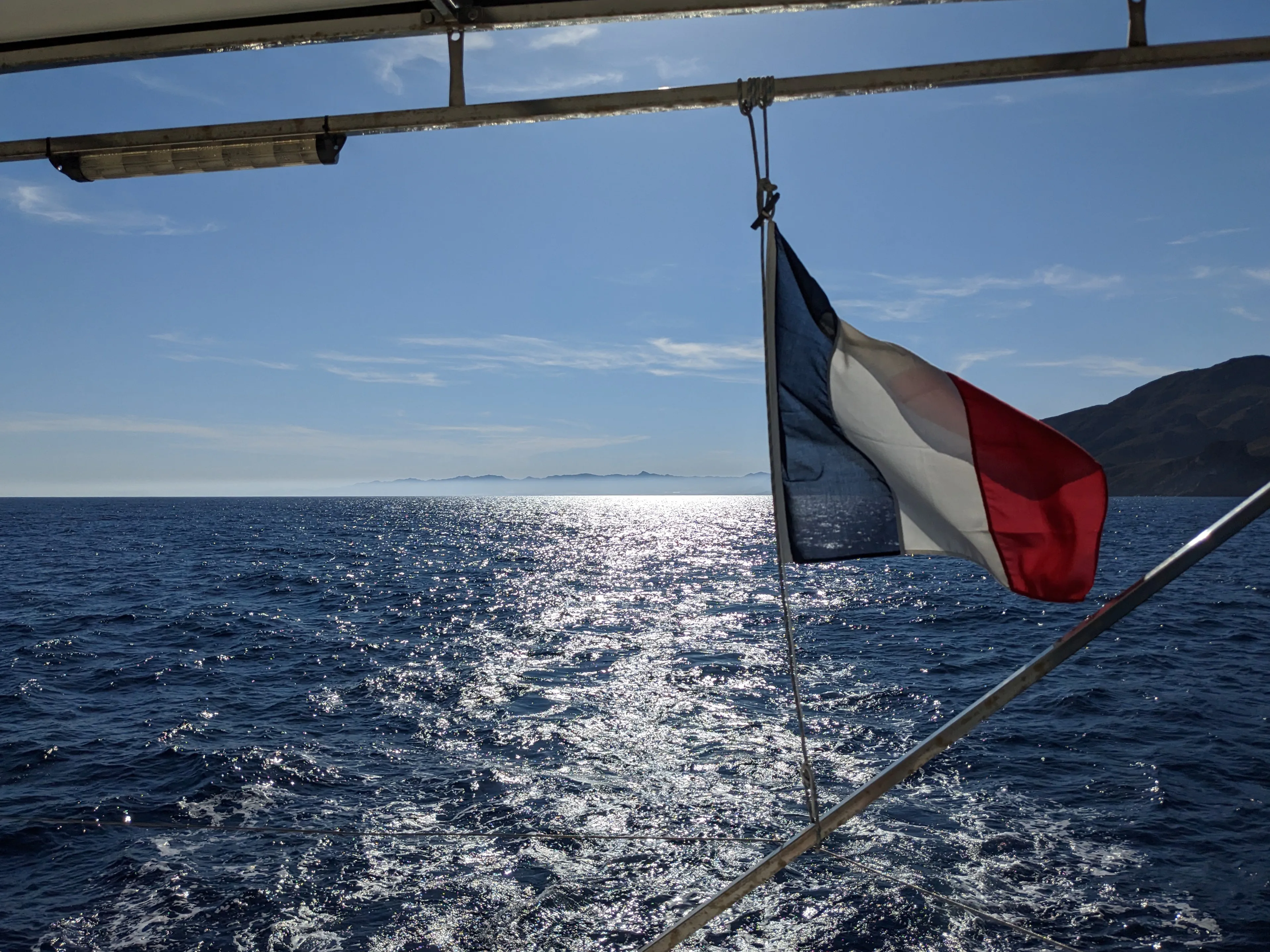
We arrived back at our berth at 20:20 with 41% SOC, filled with excitement for our first solo anchor experience aboard Escargot. Let’s watch the weather forecast to repeat this as soon as possible!
It was time for La Azohía take number two, with the forecast promising two nights of well-protected anchorage. After a day packed with boat work, including installing carpet on the bedside of the starboard cabins, we left our berth at 17:30 with a full battery bank.
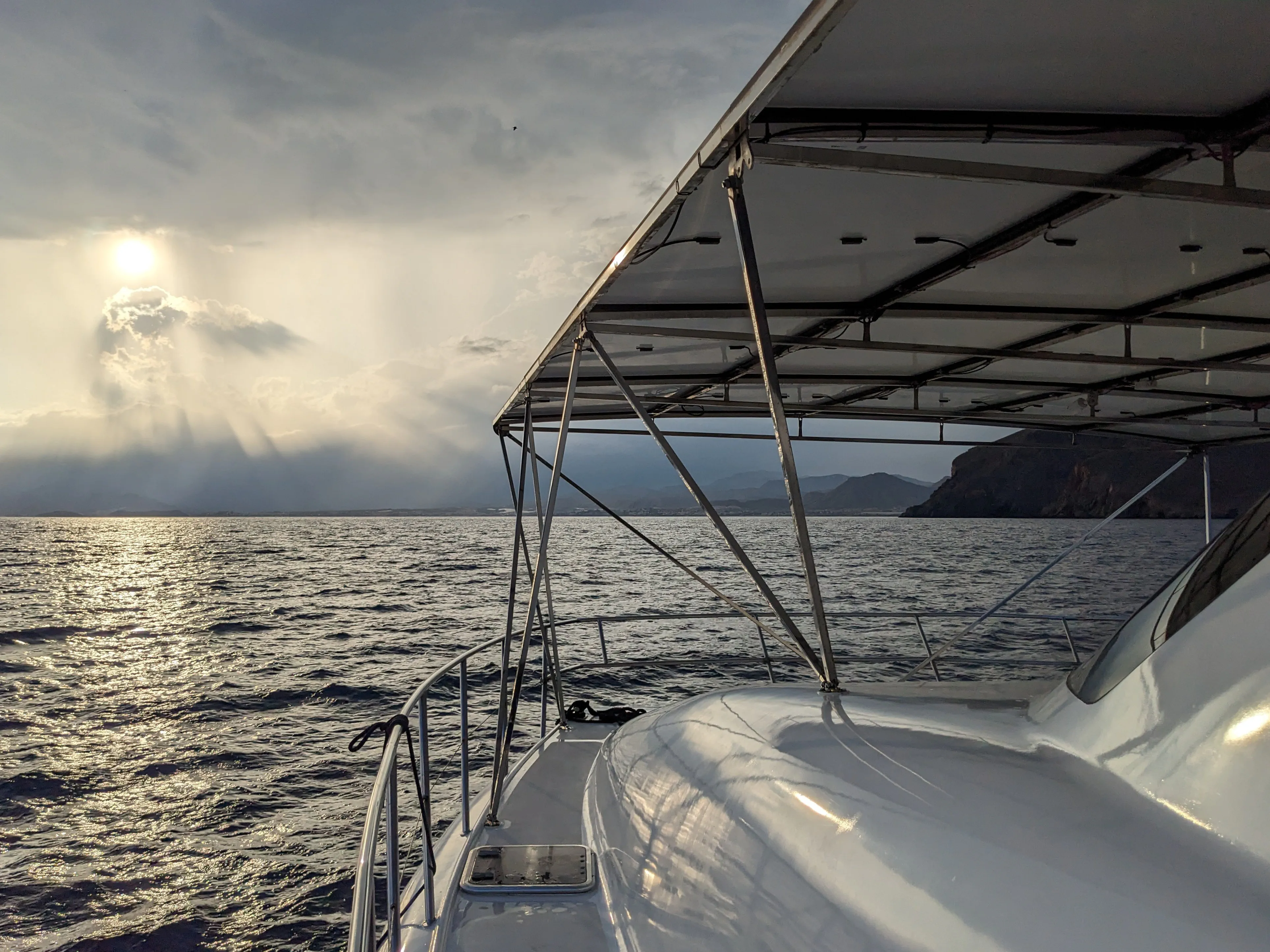
When navigating the same track as earlier, the trip is a bit easier, as we only have to watch for changes in sea conditions. There was only very small swell that day, and we cruised at 5 knots.
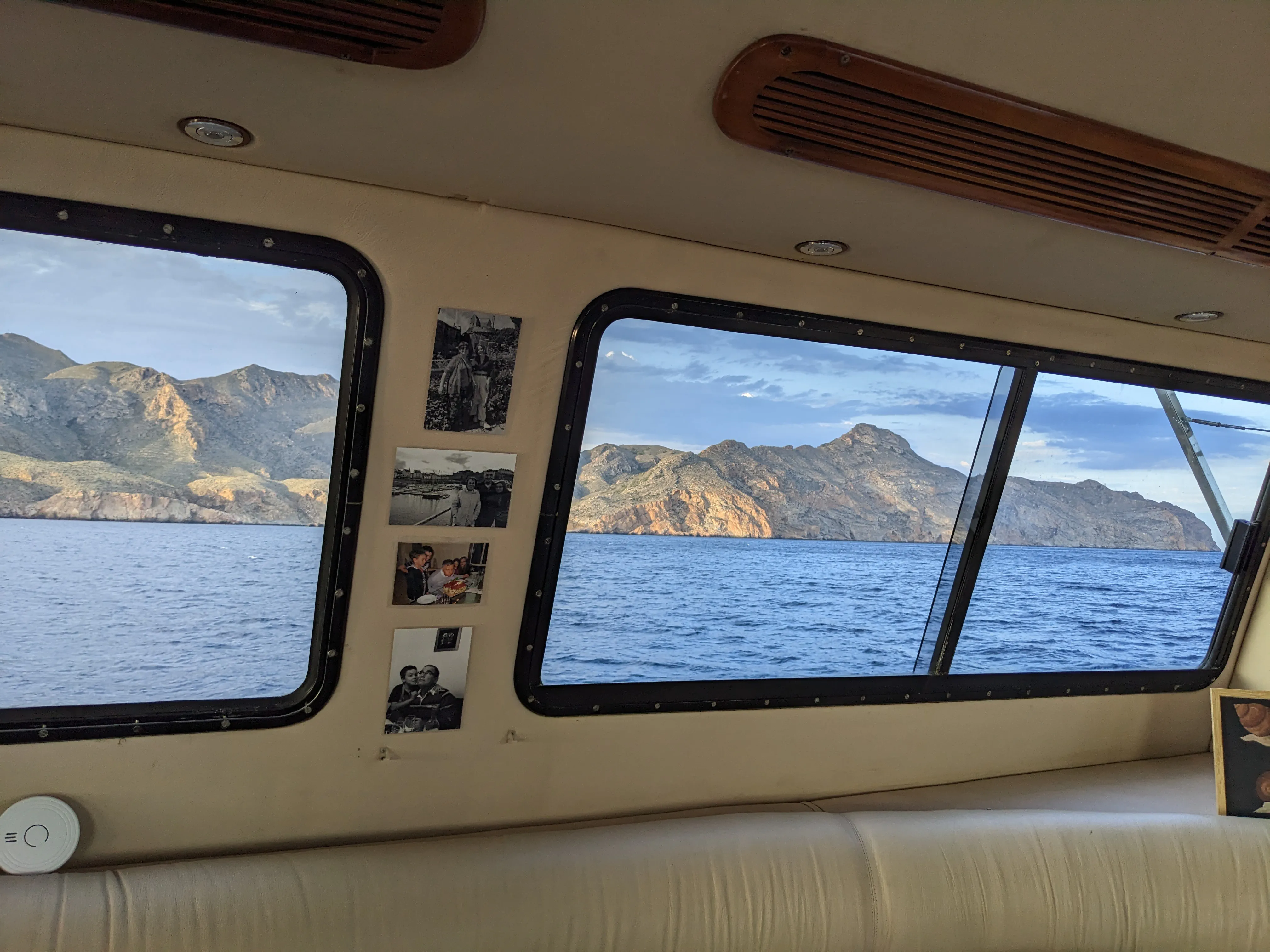
We tried to anchor closer to the small village of La Azohía this time, but we felt we were too close to another boat. We decided to lift the anchor and move back to the same GPS coordinates where we anchored a week prior in 4 meters of clear water. At 21:15, the anchor was set in the sand with 20m of chain, and we still had 55% state of charge in our batteries.
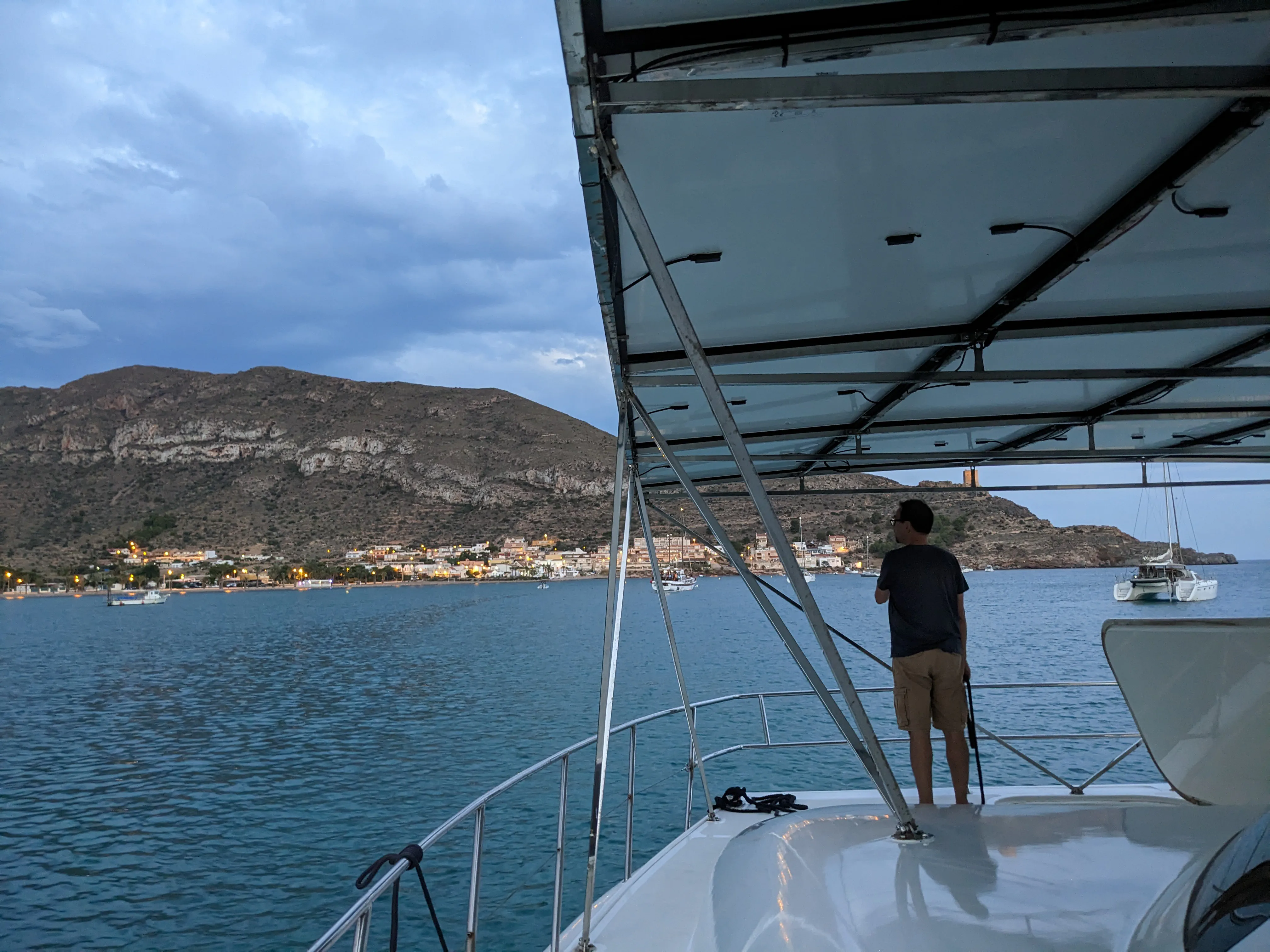
We experienced a beautiful sunset as the sun disappeared behind the mountains and the city of Mazarrón.
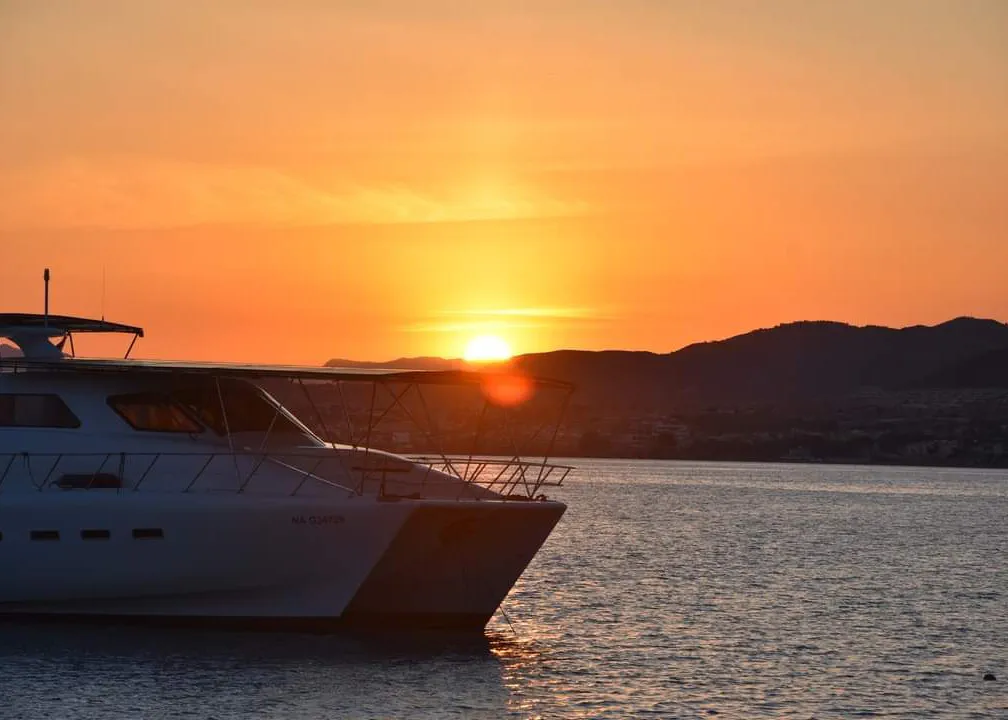
We set our anchor alarms on the phone and on the Raymarine Axiom+ chartplotter. It was our first night at anchor aboard Escargot, and even though a quiet night was forecasted, we had a bit of apprehension.
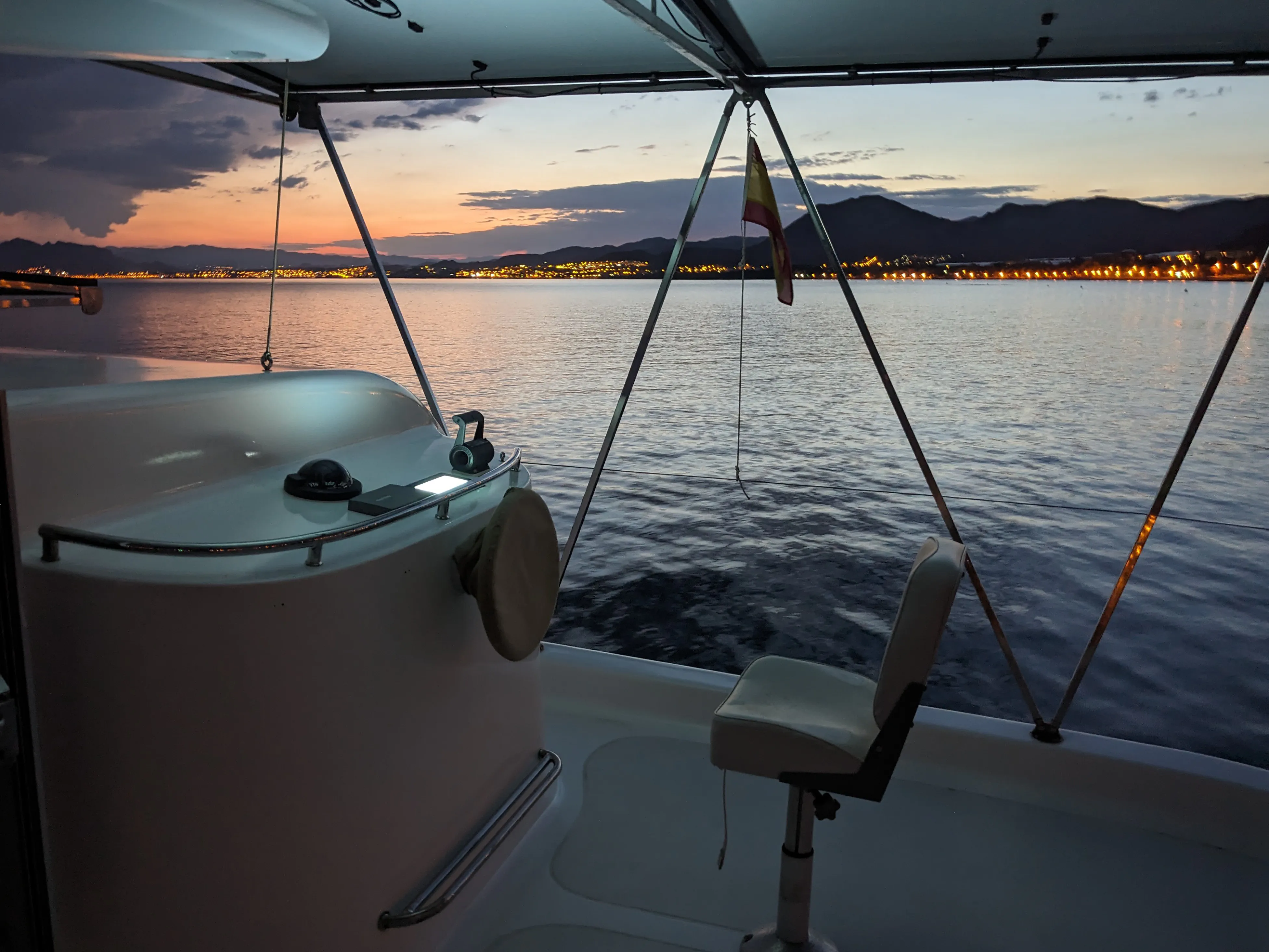
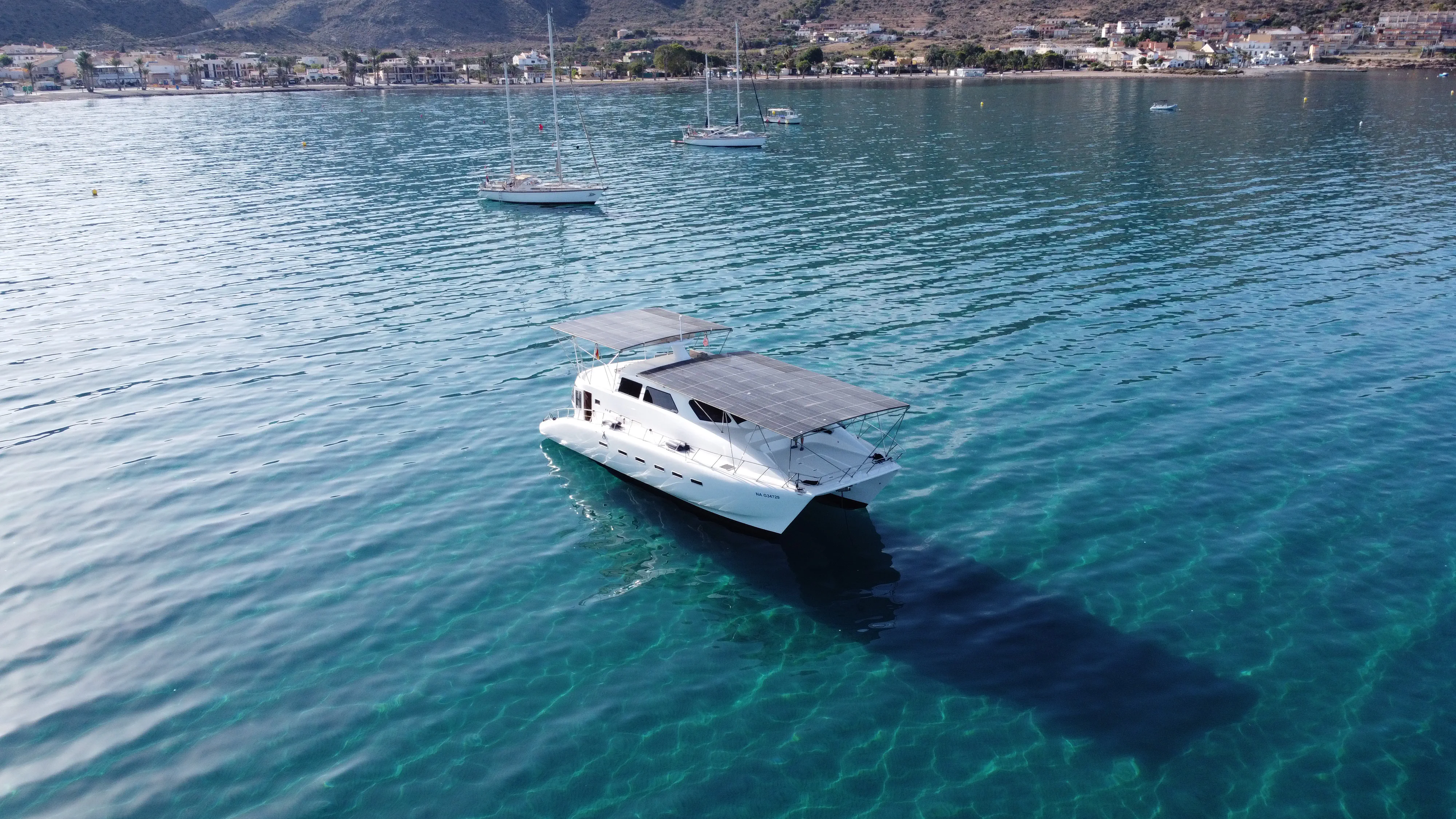
During our two-night stay at anchor at La Azohía, we were able to fly the drone to get some pictures and videos of Escargot on the beautiful turquoise water.
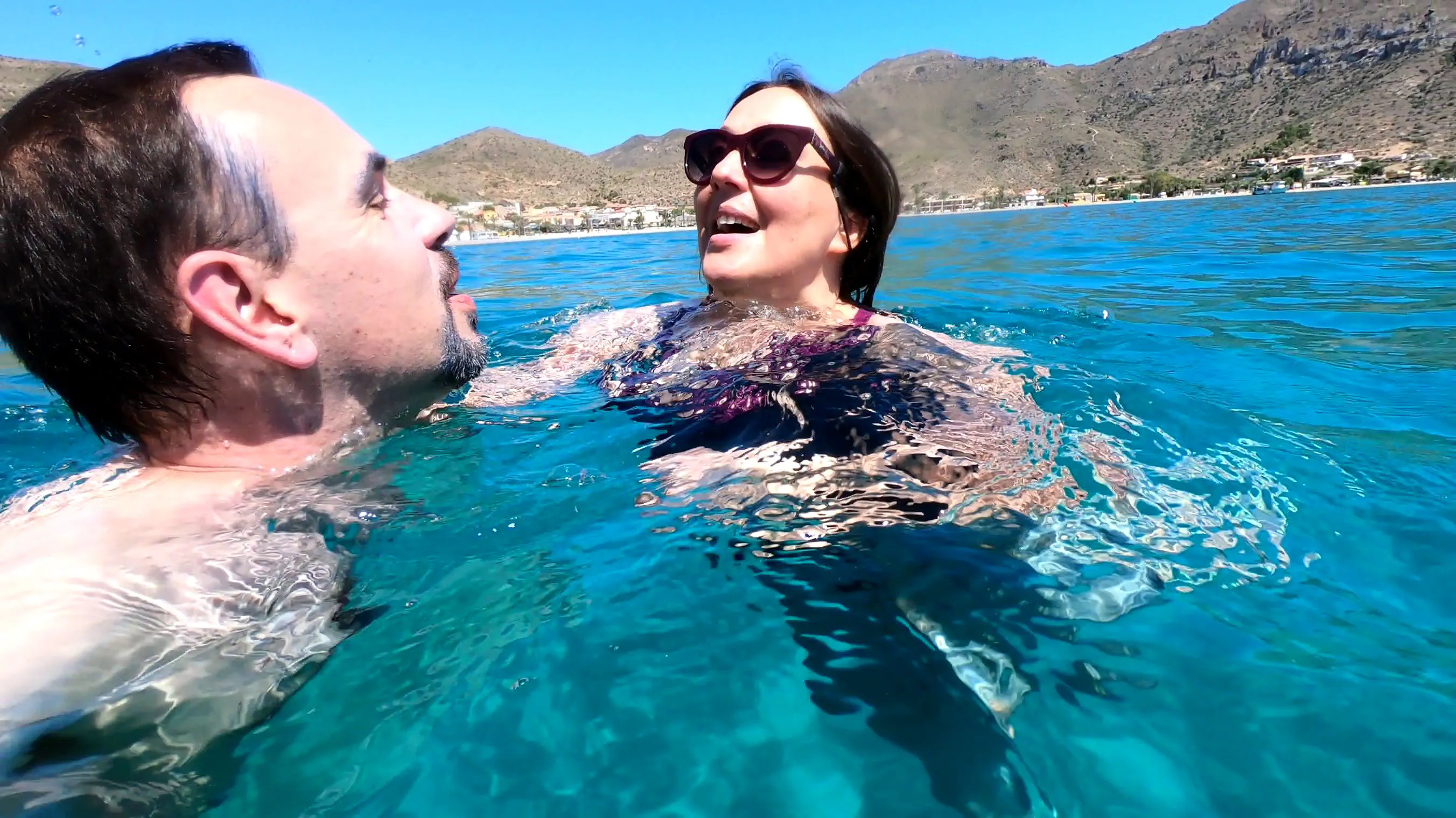
We swam around our “private island” and continued to work underwater, cleaning the propellers and the hulls.
Then, it was already time to lift the anchor and return to Cartagena. We left at 9:30 with our battery full after the previous day under the sun.
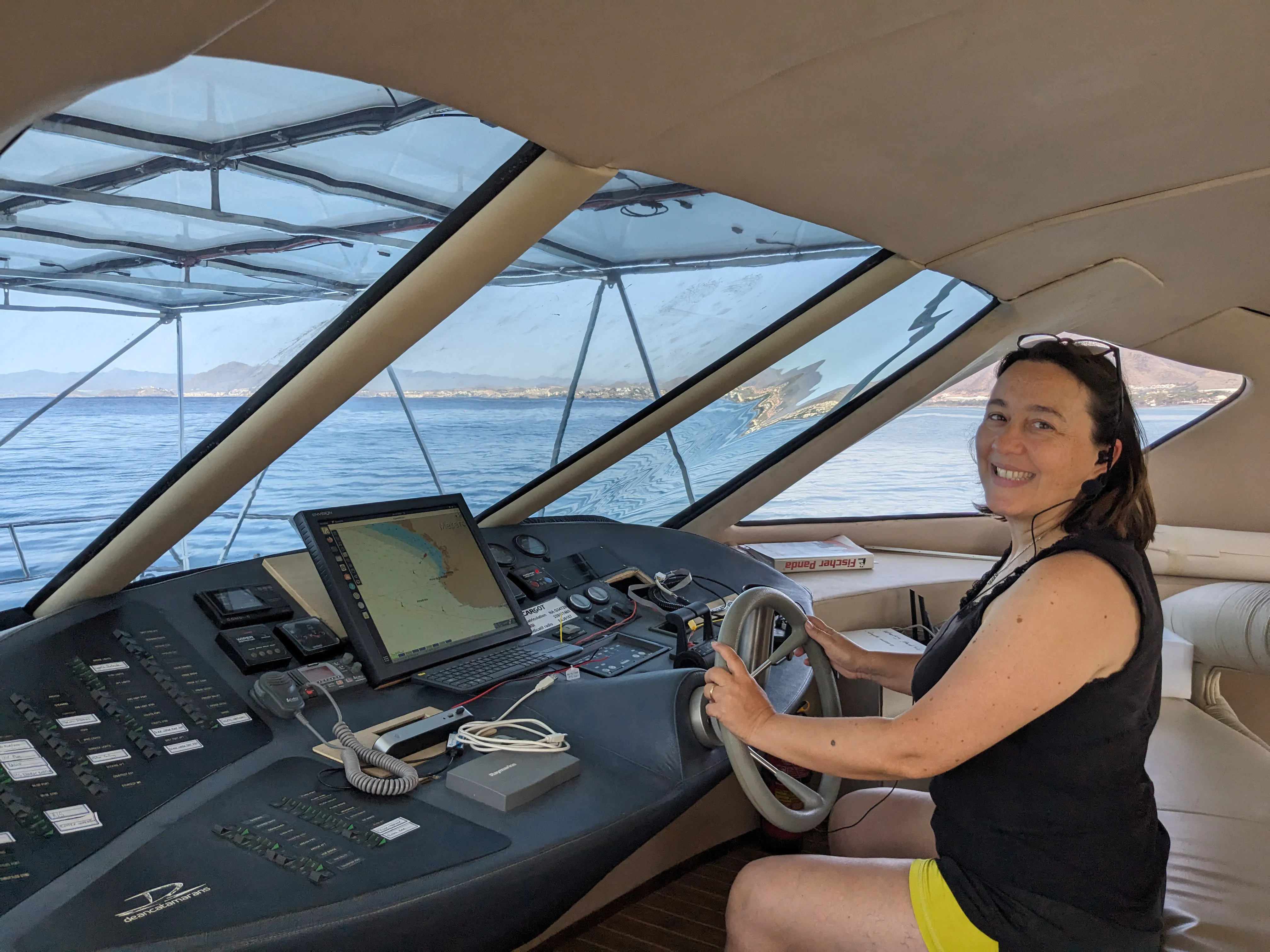
We had a beautiful, calm sea, so we were able to stay close to the rock formations of Cape Tiñoso while cruising at 5 knots.
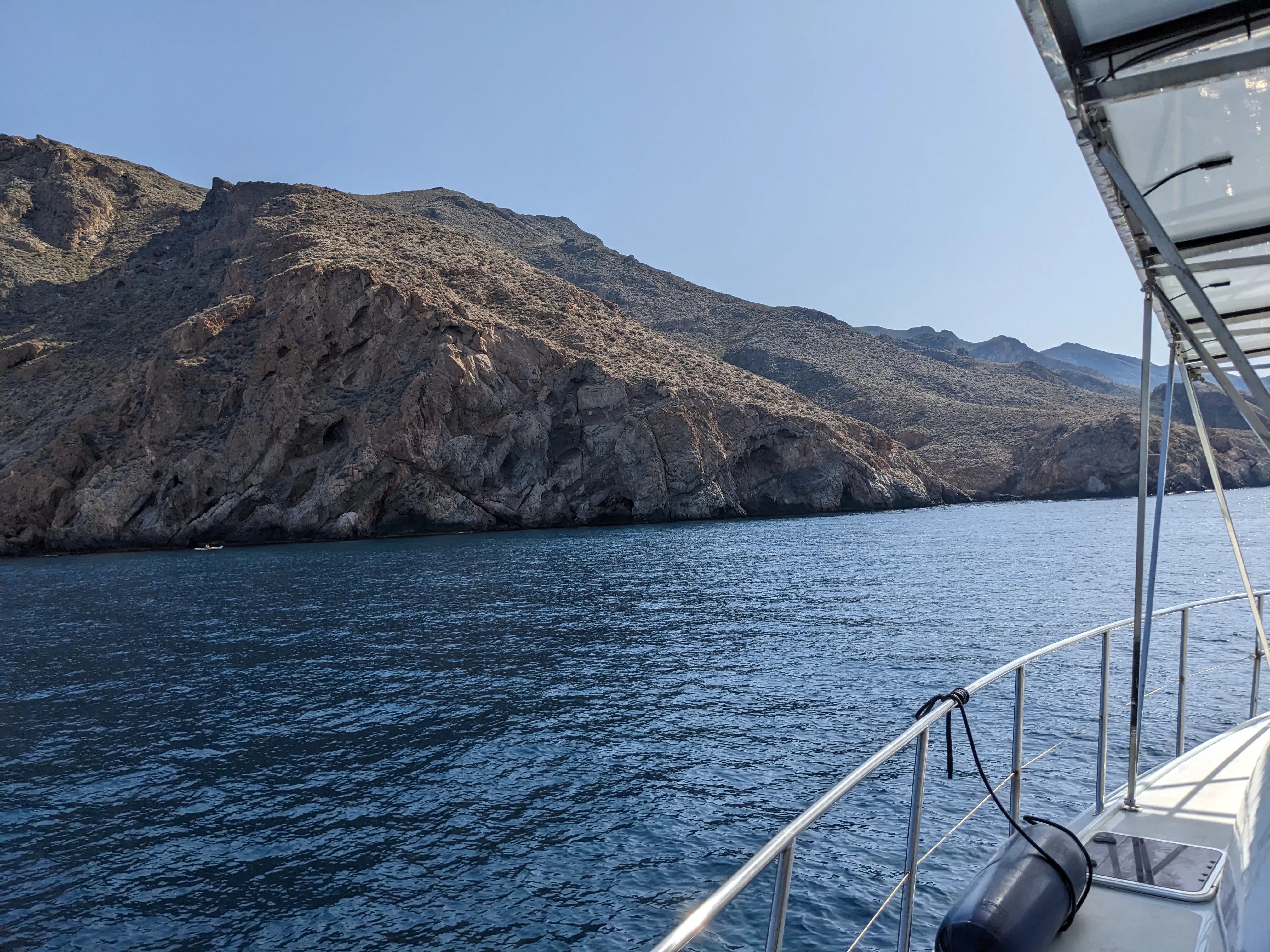
With the sun slowly rising in the sky, the cliffs displayed beautiful orange colors.
As we arrived in the bay of Cartagena, we reduced our speed to match our solar generation with our consumption, achieving beautiful net 0W cruising. We finally passed the small rock named Isla de la Torrosa right before entering Cartagena harbor.
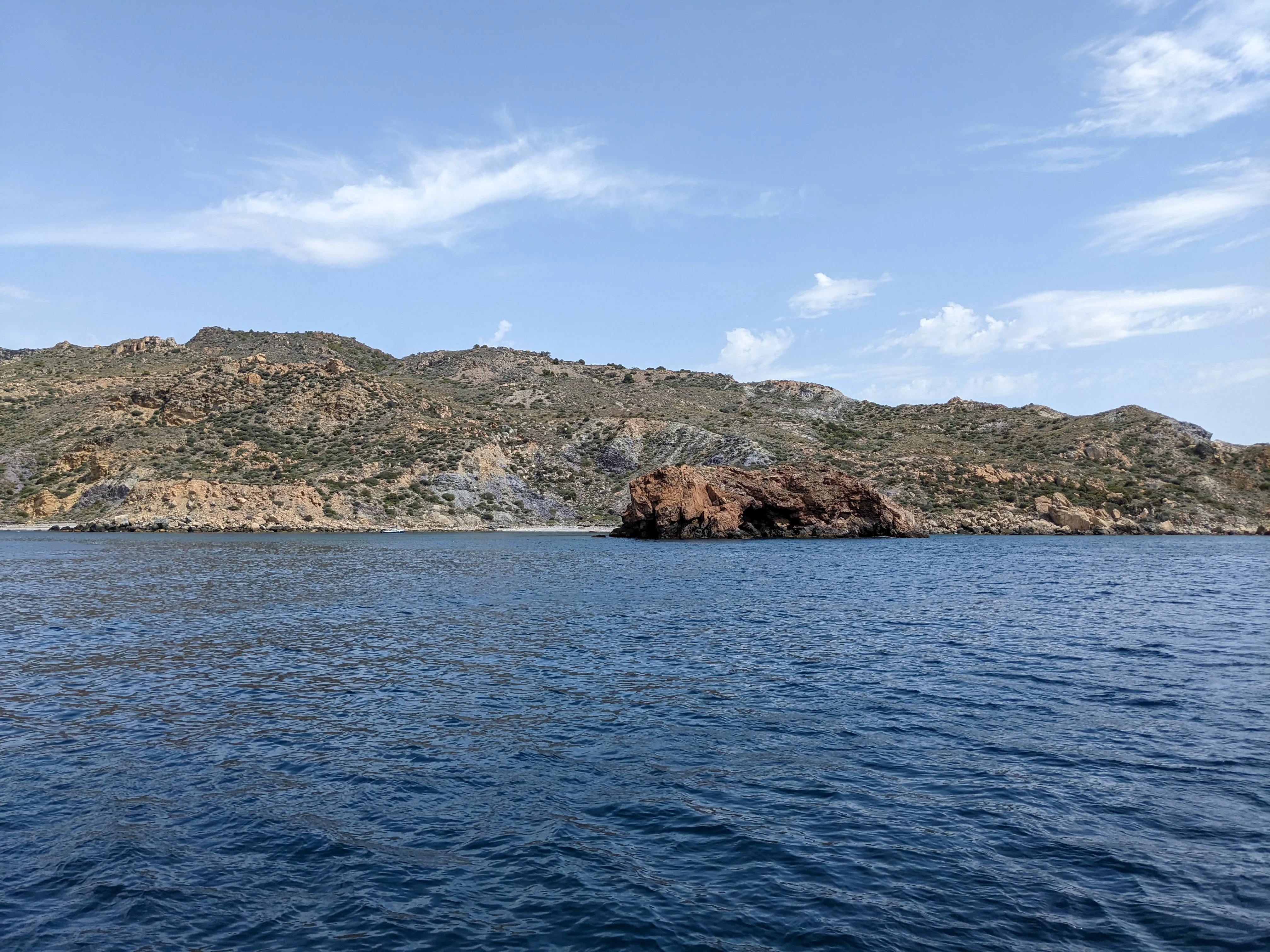
We arrived at Yacht Port Cartagena at 12:45 with 85% state of charge, due to consumption during the morning hours toward Cape Tiñoso.
The end of our spring season was getting near, but with another two days of good weather forecasted, we decided to go for a night at anchor at La Azohía. We left at 9:45 with our batteries at 95% state of charge (due to small consumption overnight) and navigated at an average of 5 knots.
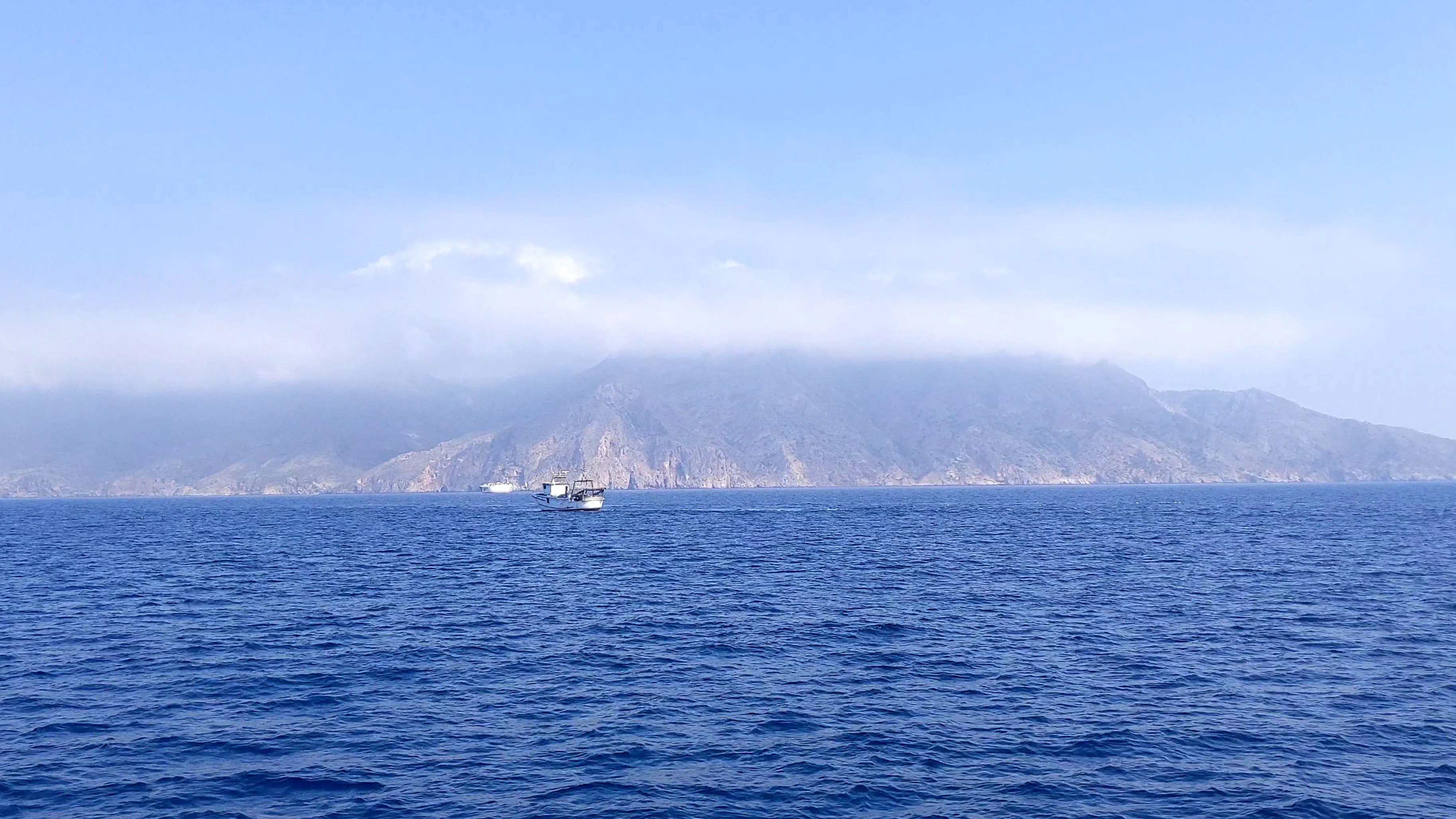
At 12:15, we anchored close to our usual spot in 4 meters of water with a 68% state of charge. We noticed that over our last three visits, there were more boats with us each time.
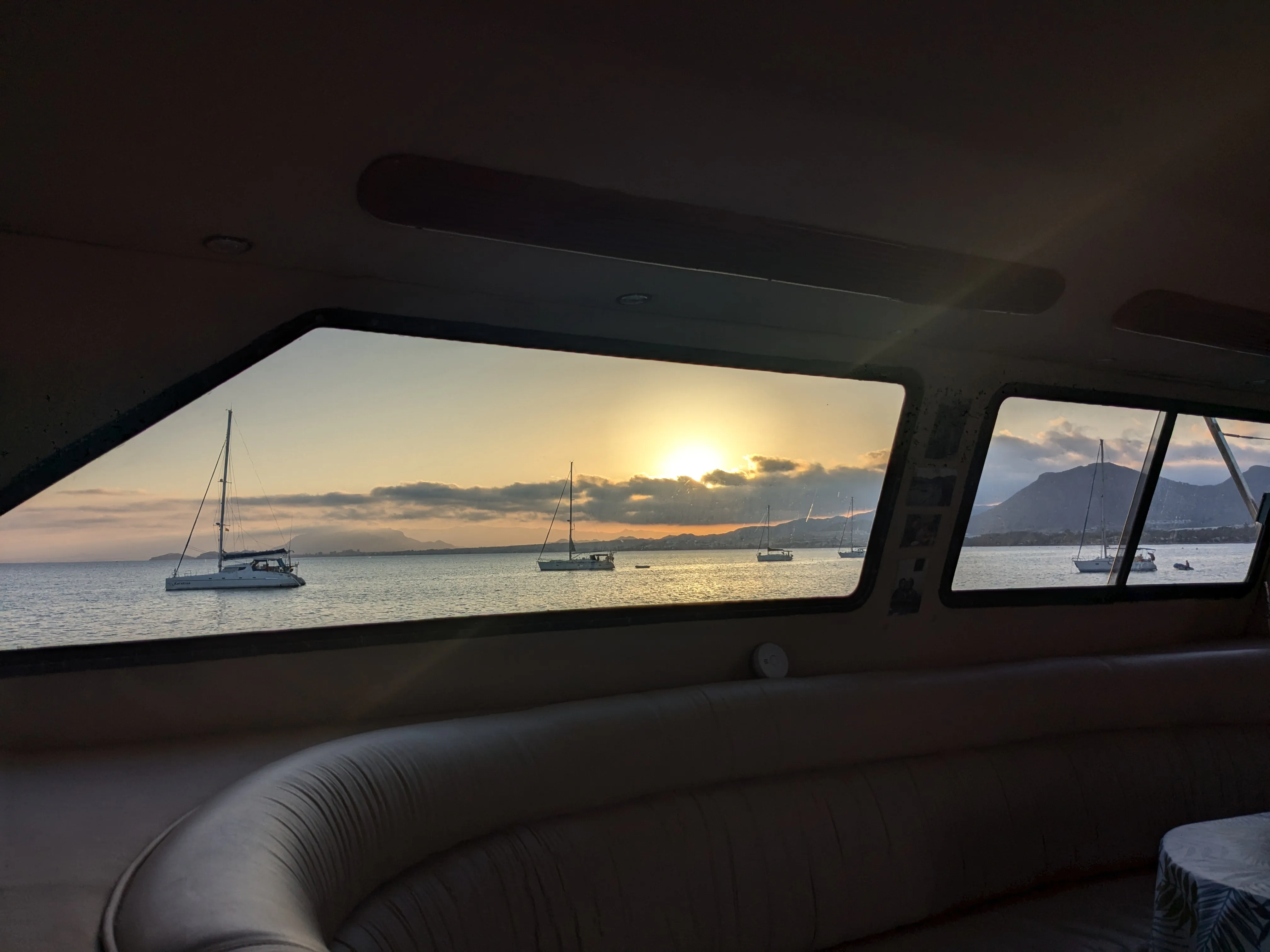
With the anchor alarms set on our phone and on the Raymarine Axiom+, we were ready for yet another beautiful sunset.
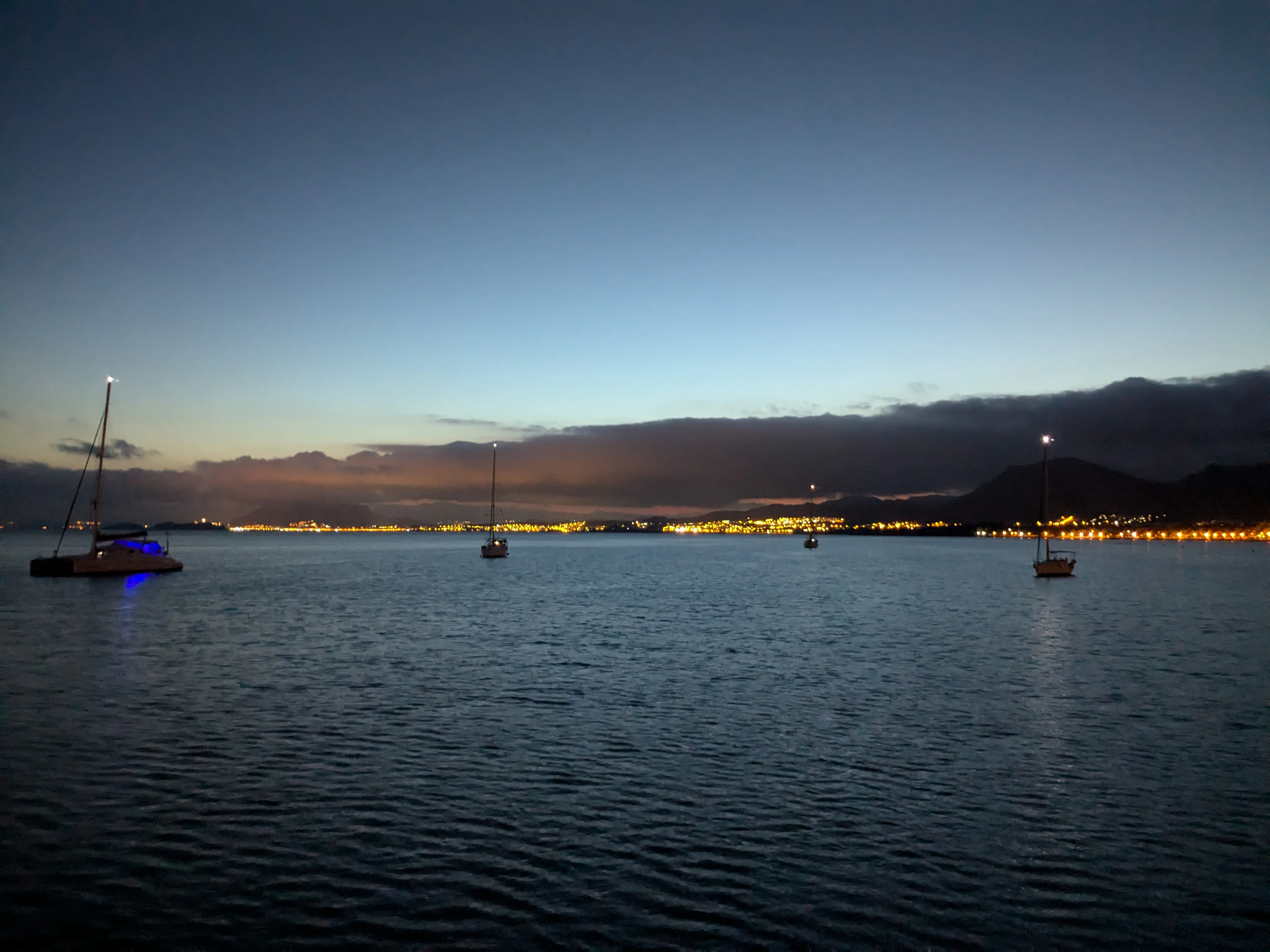
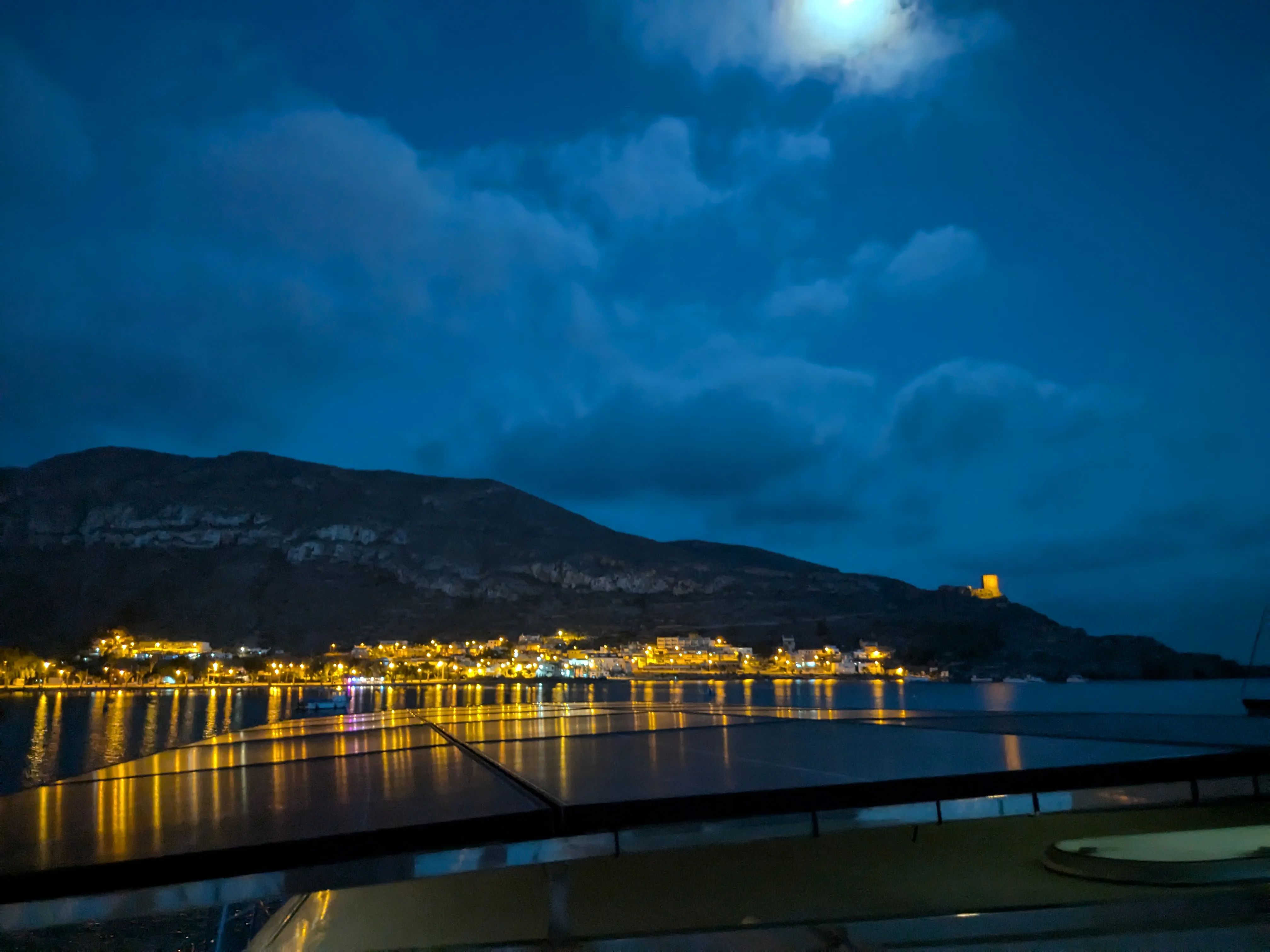
This night was especially beautiful with a big moon and some clouds.
The next morning, we lifted the anchor early, at 8:00, and left the anchorage, following the marine charts and buoys to avoid the fish farm as always. Early starts mean the battery is not fully recharged yet, so we left the anchorage with a 94% state of charge. The morning chill over the warm, calm water created steam fog.
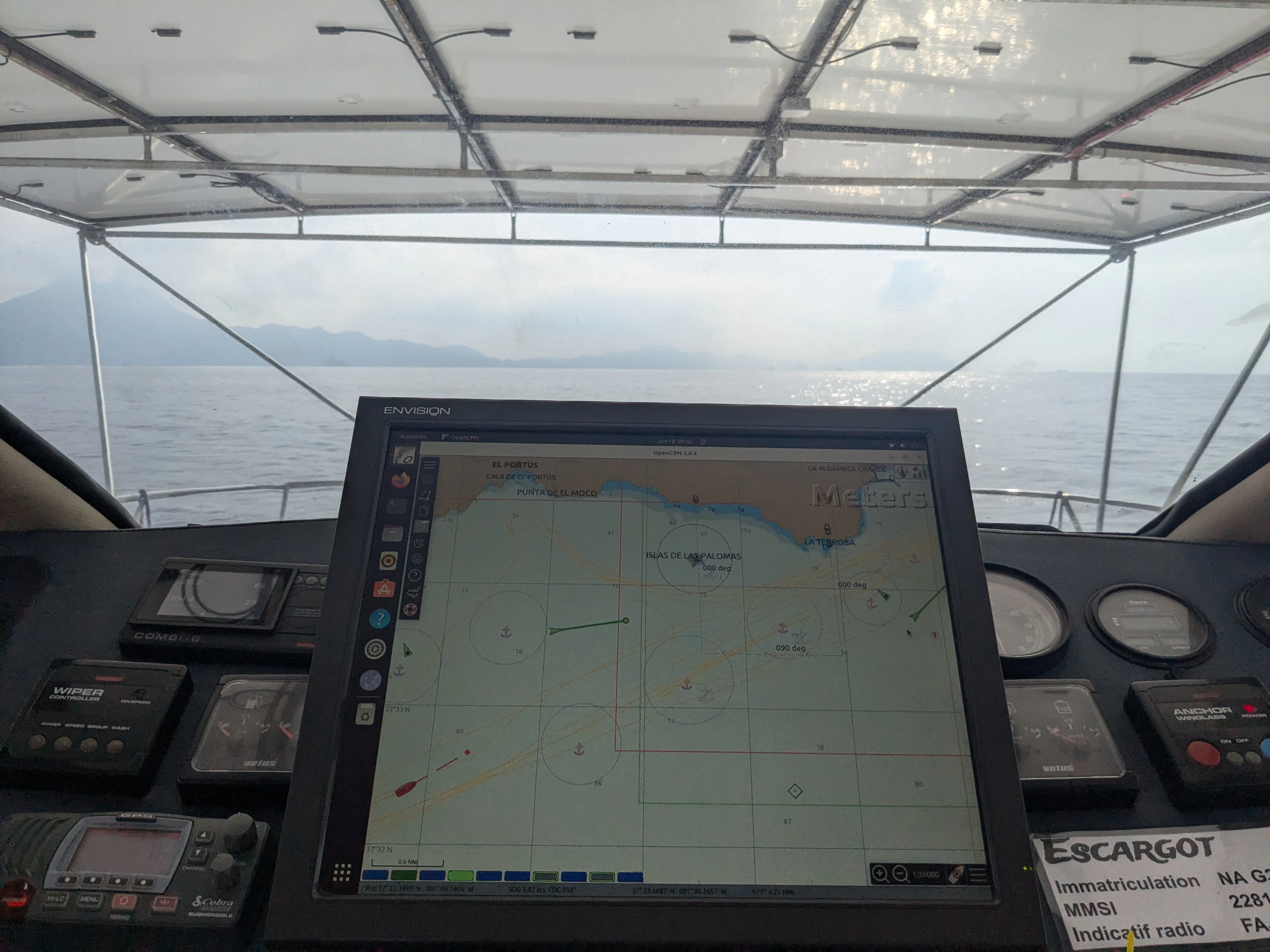
We cruised at an average of 6 knots on a very calm sea.
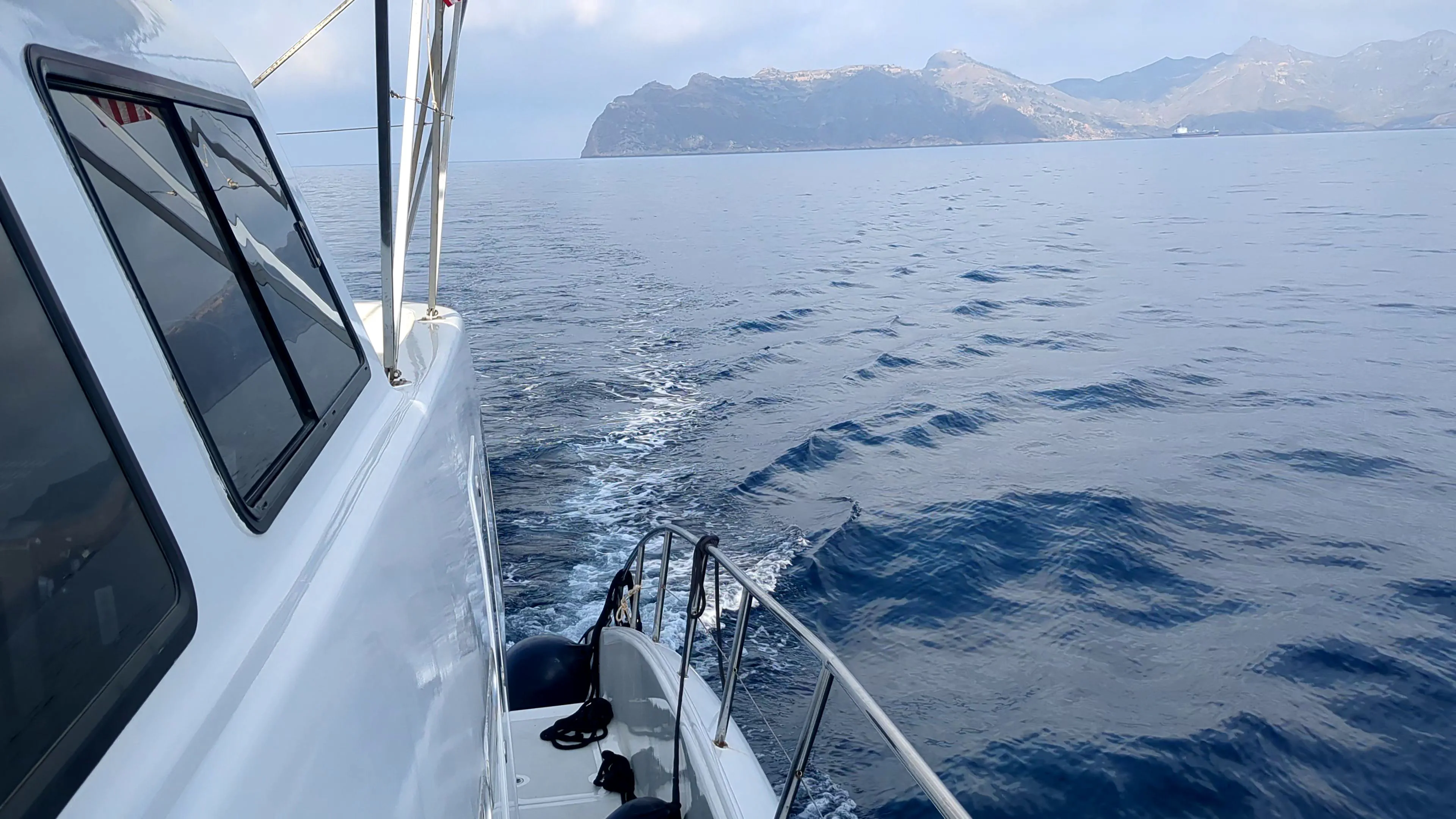
As we approached Cartagena, the fog was dissipating in the mountains. What a way to end our liveaboard season!
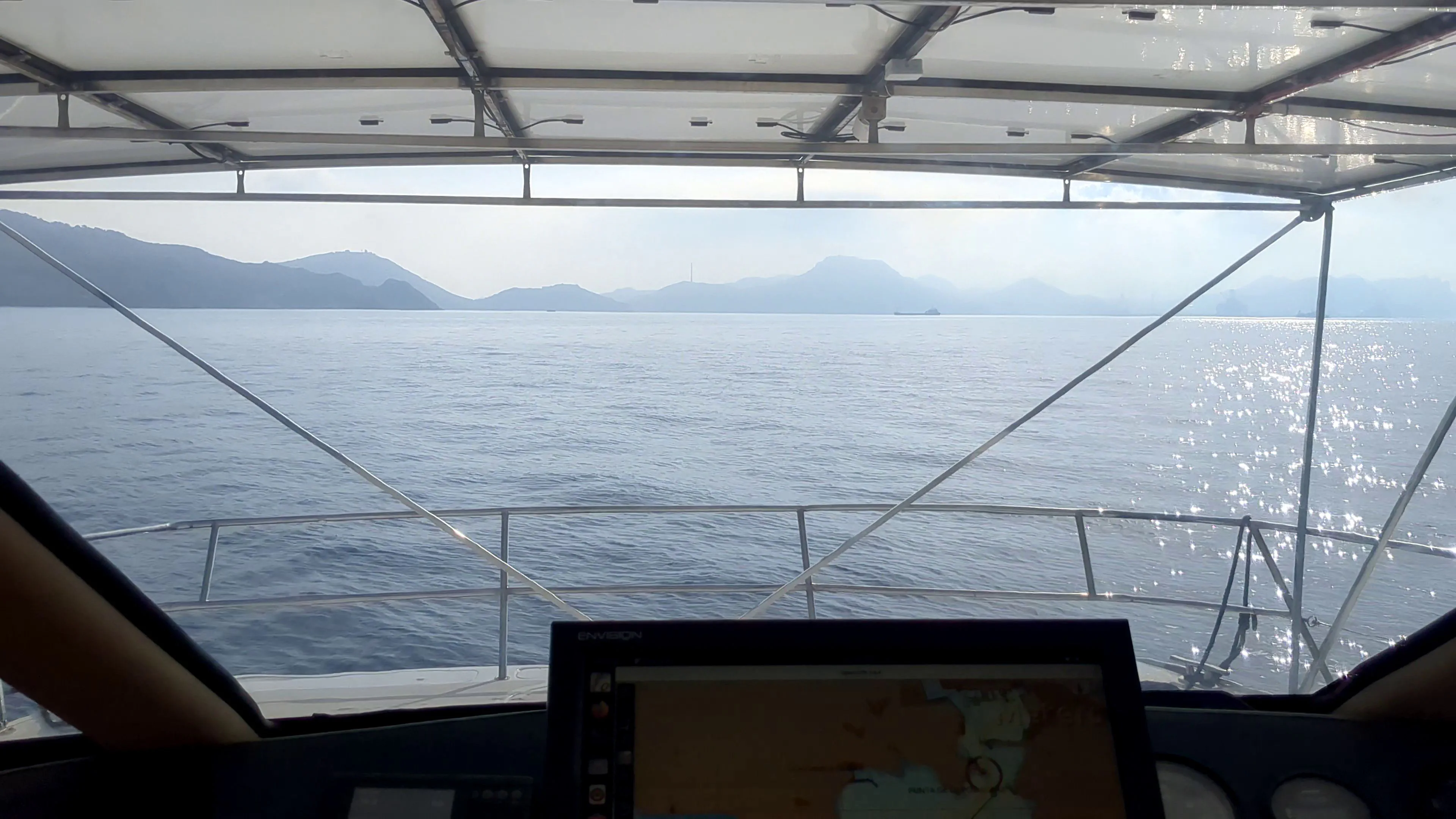
At 10:30, we were in our berth with a 44% state of charge, very pleased with our Spring 2024 aboard Escargot. It was time to sort things out, complete boat projects, and clean up Escargot before leaving her at the dock for the summer.
These past few months marked our first season living and navigating aboard Escargot. We left Alicante without a predefined destination, other than a …
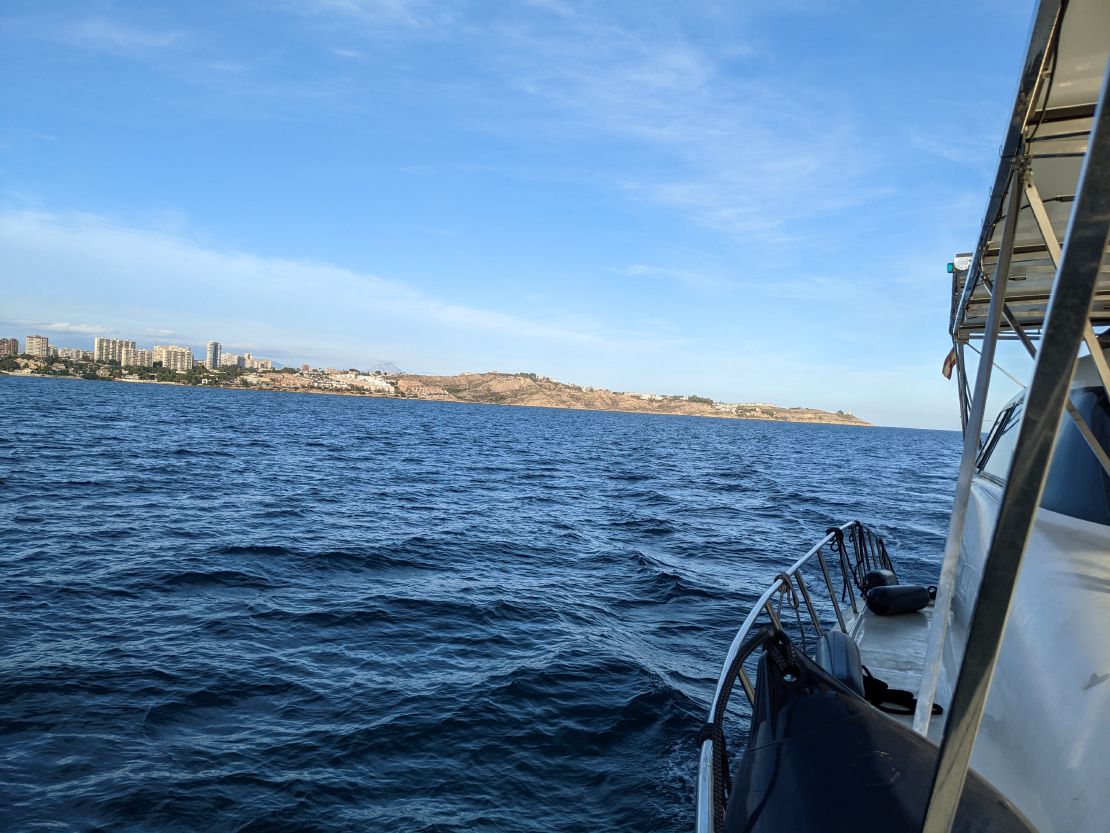
We spent the last six weeks with the Escargot on the water at the Varadero STA marina in south Alicante. We used this time to validate the …