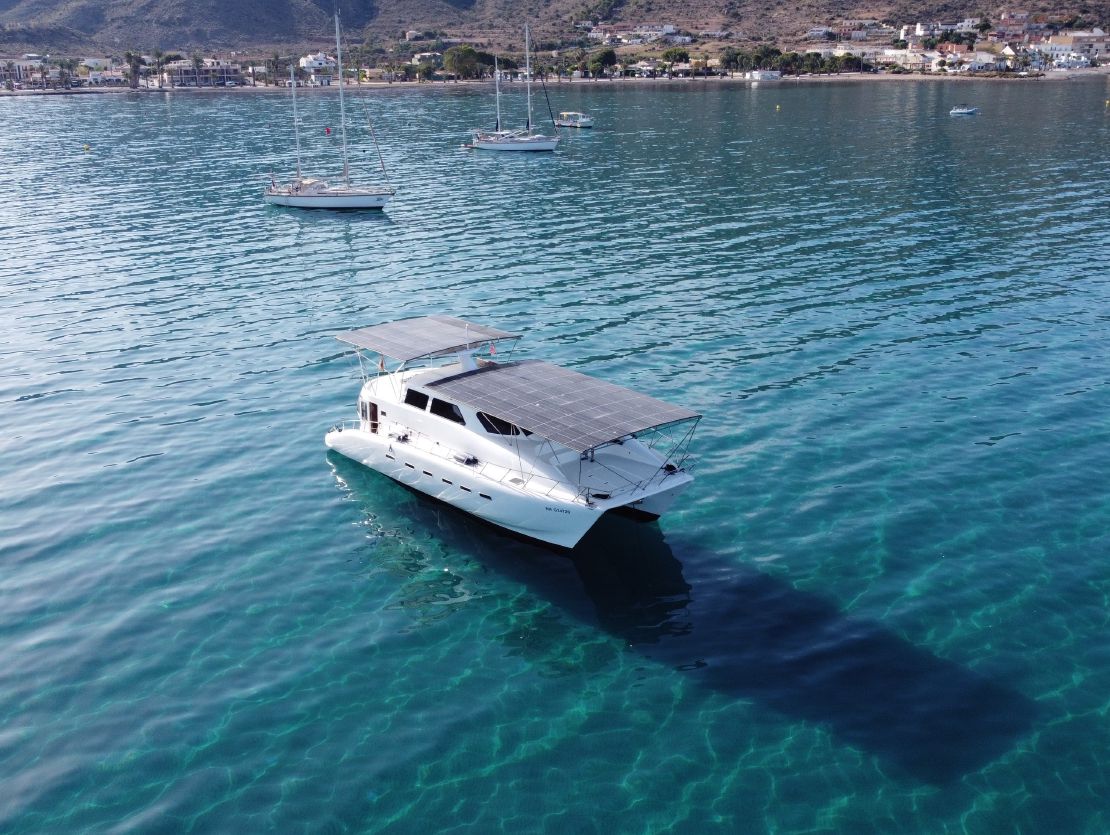
Spring 2024 Navigation Log
We returned early to Escargot for our spring season living aboard after being away for only two months. We started with a couple of short trips in …
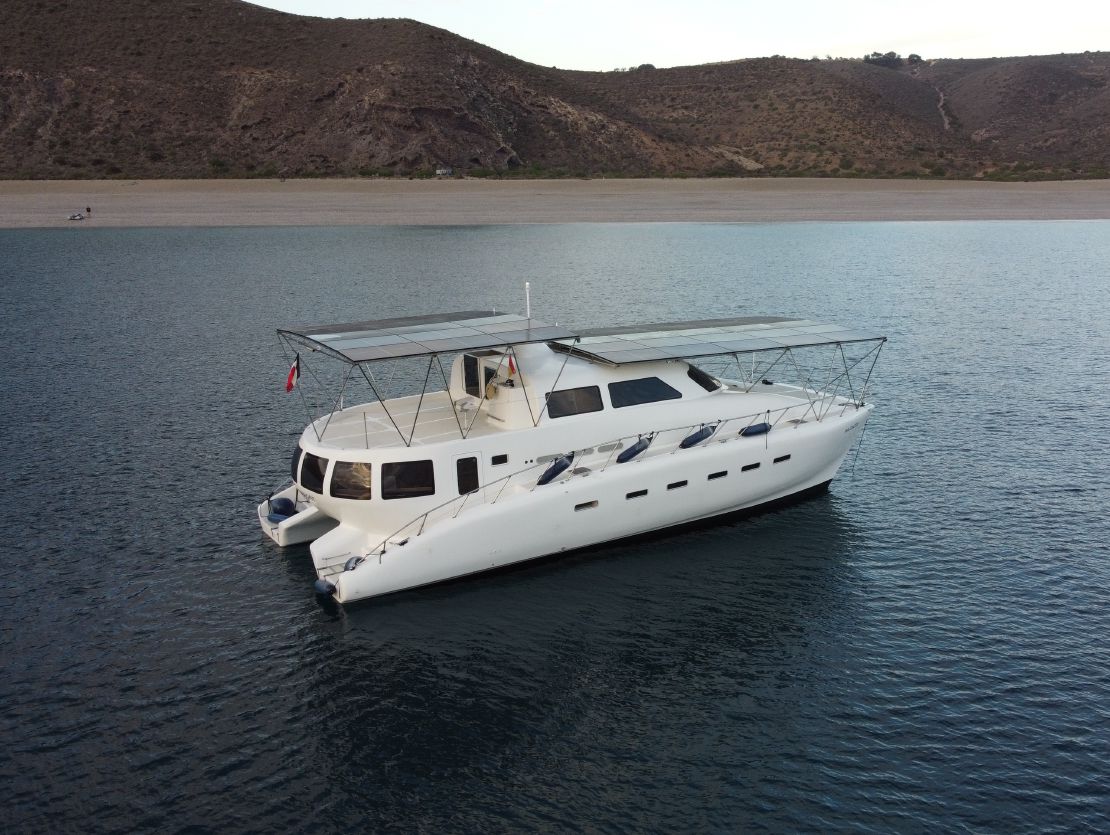
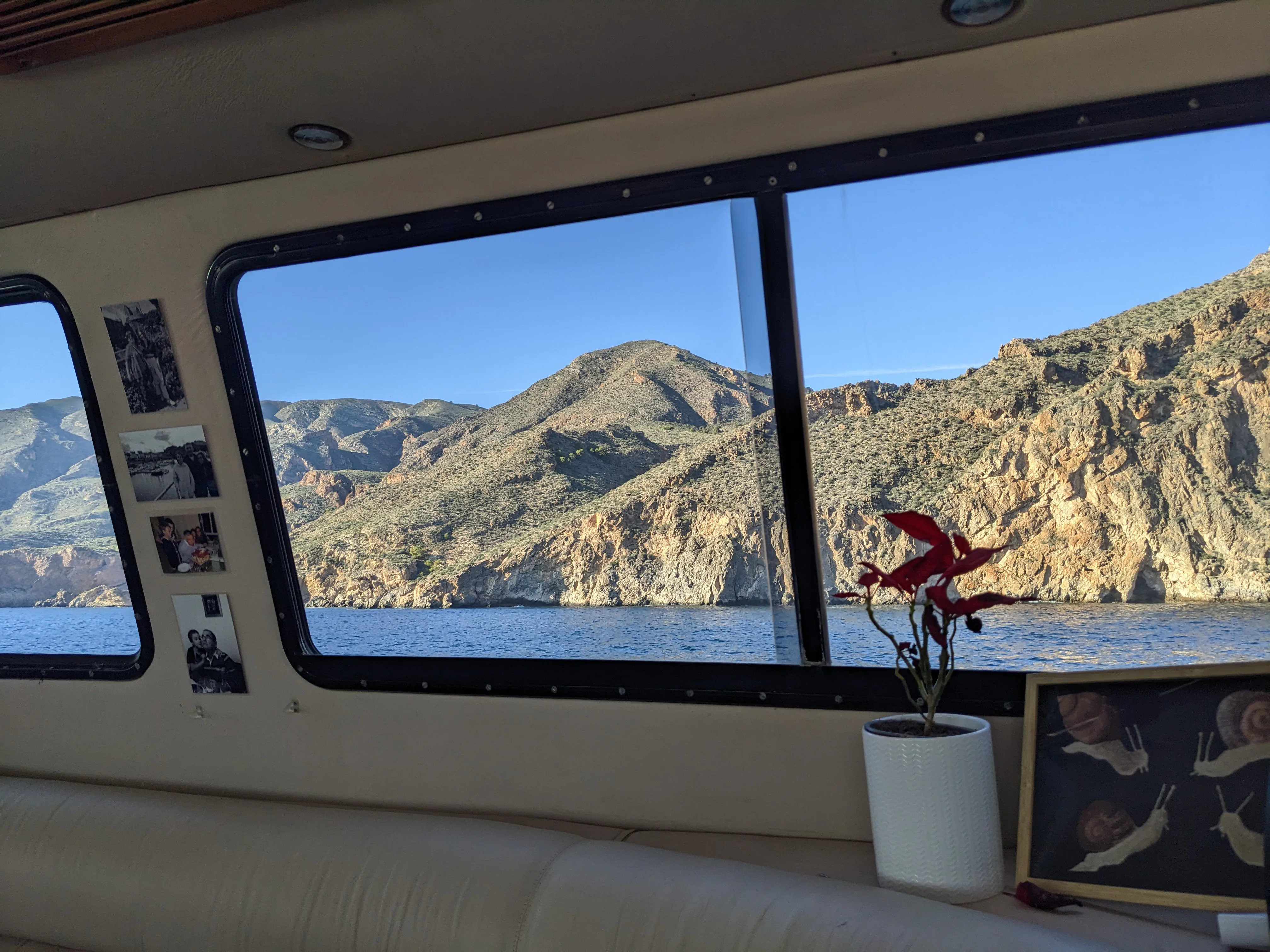
We kicked off our fall season by hosting several friends onboard before continuing our navigation along the southwest coast of Spain. Because we planned to celebrate the holidays in Cartagena, this leg was ultimately a round trip. Due to limited sunlight and back-to-back travel days, we had to rely on our diesel generator to supplement our solar energy generation on a few passages. Along the way, we discovered that the coastline southwest of Cartagena is absolutely stunning, especially the stretch leading to Cabo de Gata.
| Date | Distance | Speed | Duration | Description |
|---|---|---|---|---|
| 2024-10-30 | 13.3 nm | 4.4 kts | 3.0 h | Passage from Cartagena to La Azohía |
| 2024-11-01 | 11.9 nm | 4.6 kts | 2.6 h | Passage from La Azohía to Cartagena |
| 2024-11-05 | 33.4 nm | 4.3 kts | 7.9 h | Passage from Cartagena to Aguilas |
| 2024-11-08 | 29.1 nm | 4.0 kts | 7.2 h | Passage from Aguilas to Carboneras |
| 2024-11-09 | 25.1 nm | 3.8 kts | 6.6 h | Passage from Carboneras to Fabriquilla Beach on Cabo de Gata |
| 2024-11-10 | 18.5 nm | 4.1 kts | 4.5 h | Passage from Fabriquilla Beach to Aguadulce |
| 2024-11-18 | 40.7 nm | 4.8 kts | 8.5 h | Passage from Aguadulce to Playa de los muertos in Carboneras |
| 2024-11-19 | 32.5 nm | 4.4 kts | 7.5 h | Passage from Playa de los muertos in Carboneras to Playa del Hornillo in Aguilas |
| 2024-11-20 | 30.8 nm | 4.9 kts | 6.3 h | Passage from Playa del Hornillo in Aguilas to Cartagena |
| 2025-01-15 | 16.5 nm | 3.9 kts | 4.3 h | Loop in the bay of Cartagena |
Total distance: 252.0 nm
After a few weeks of boat projects, ranging from making our guest cabins more comfortable to building new propulsion dashboard software, it was time to resume our navigations for this second fall season aboard Escargot.
We left Yacht Port Cartagena in the early afternoon. At that time of day, our batteries were at a 100% state of charge (SoC).
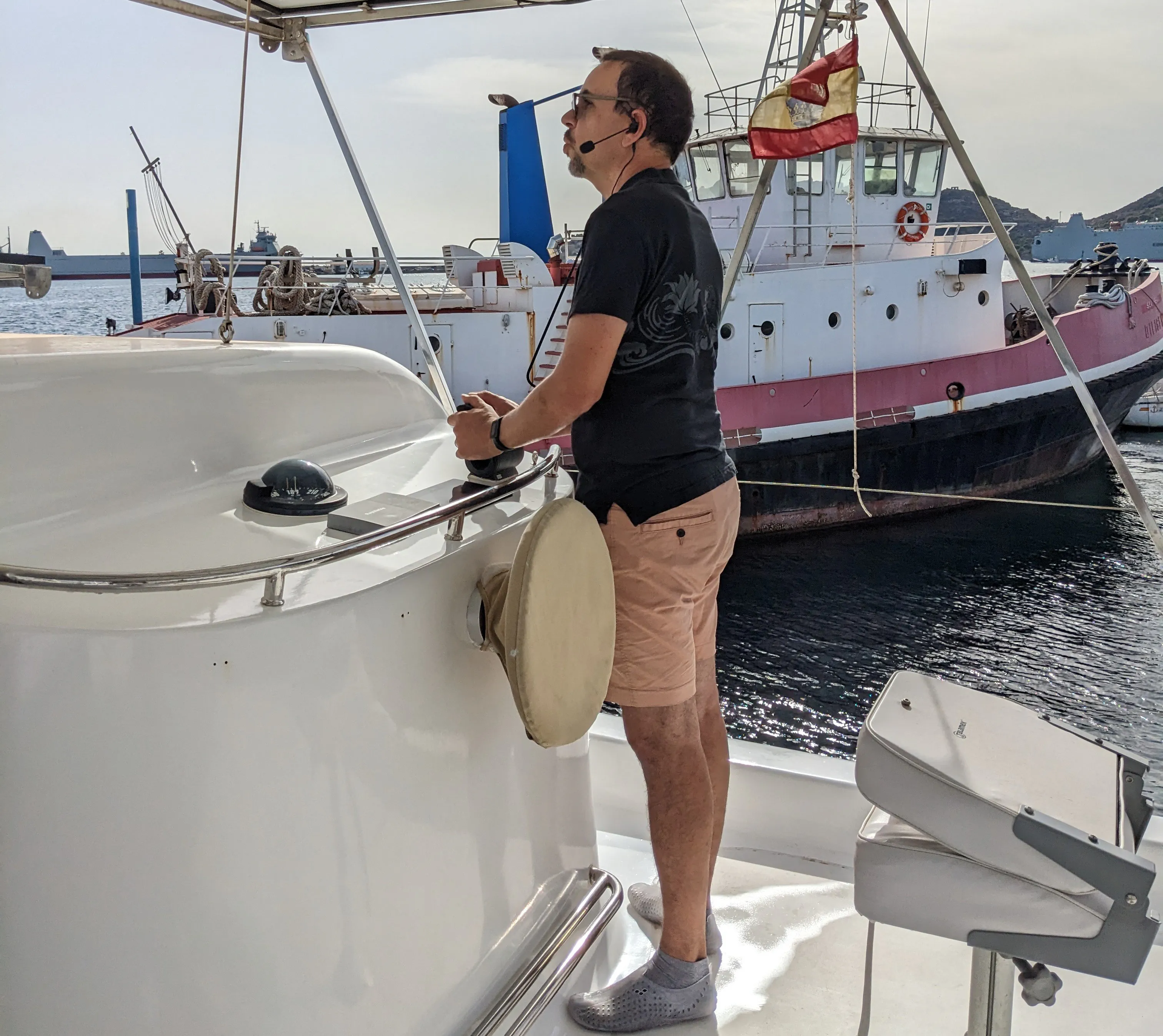
Our friends Valérie and Luc, along with their daughter, were visiting us in Cartagena, so we decided to take them to La Azohía for a couple of nights at anchor. We kept our navigation speed close to 5 knots.
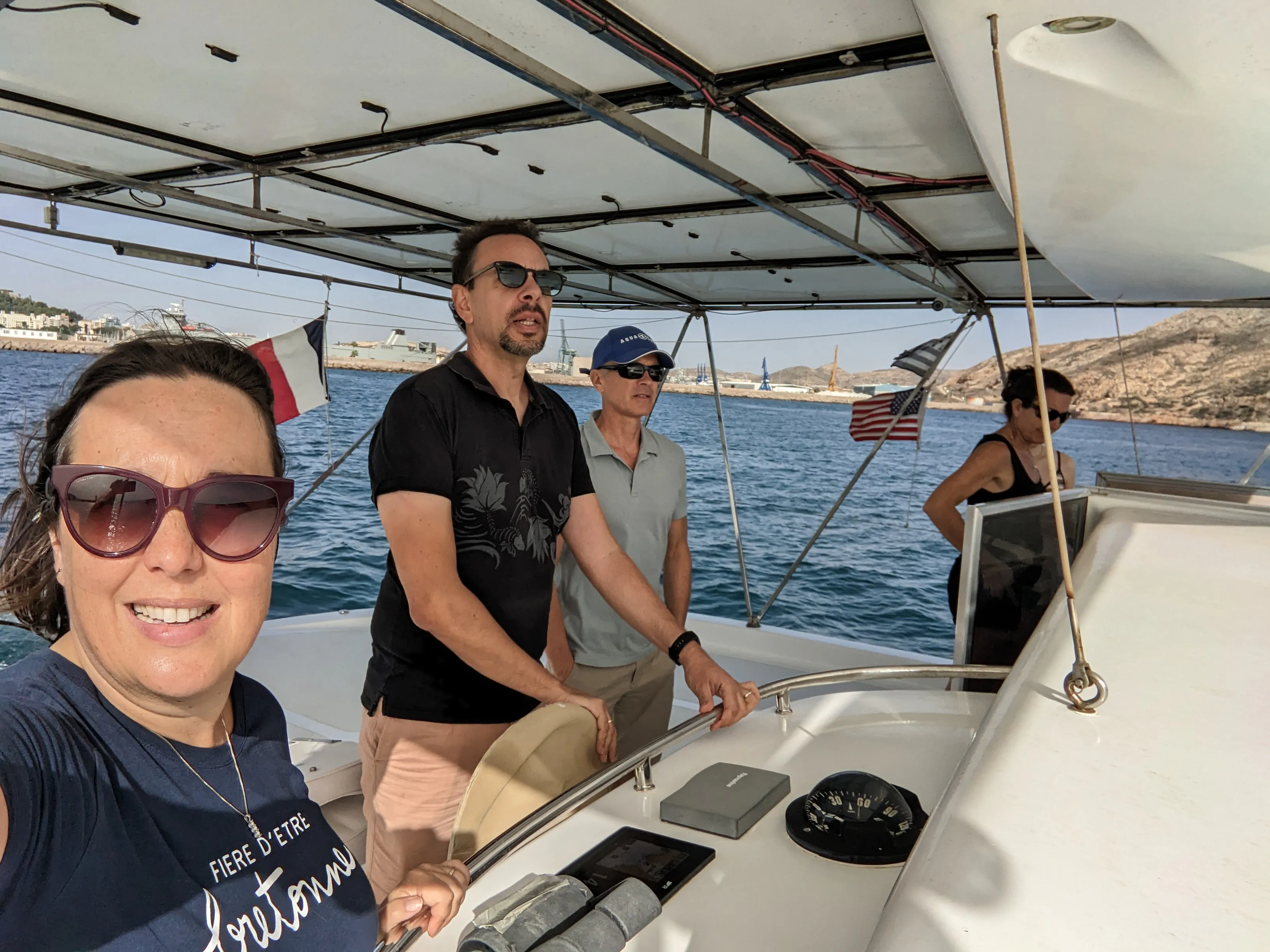
We dropped anchor in 3 meters of water with 30 meters of chain, leaving us with a 45% SoC. As the sun was going down, all five of us, plus BigBoy, went to shore in our dinghy, pushed by our electric outboard motor.
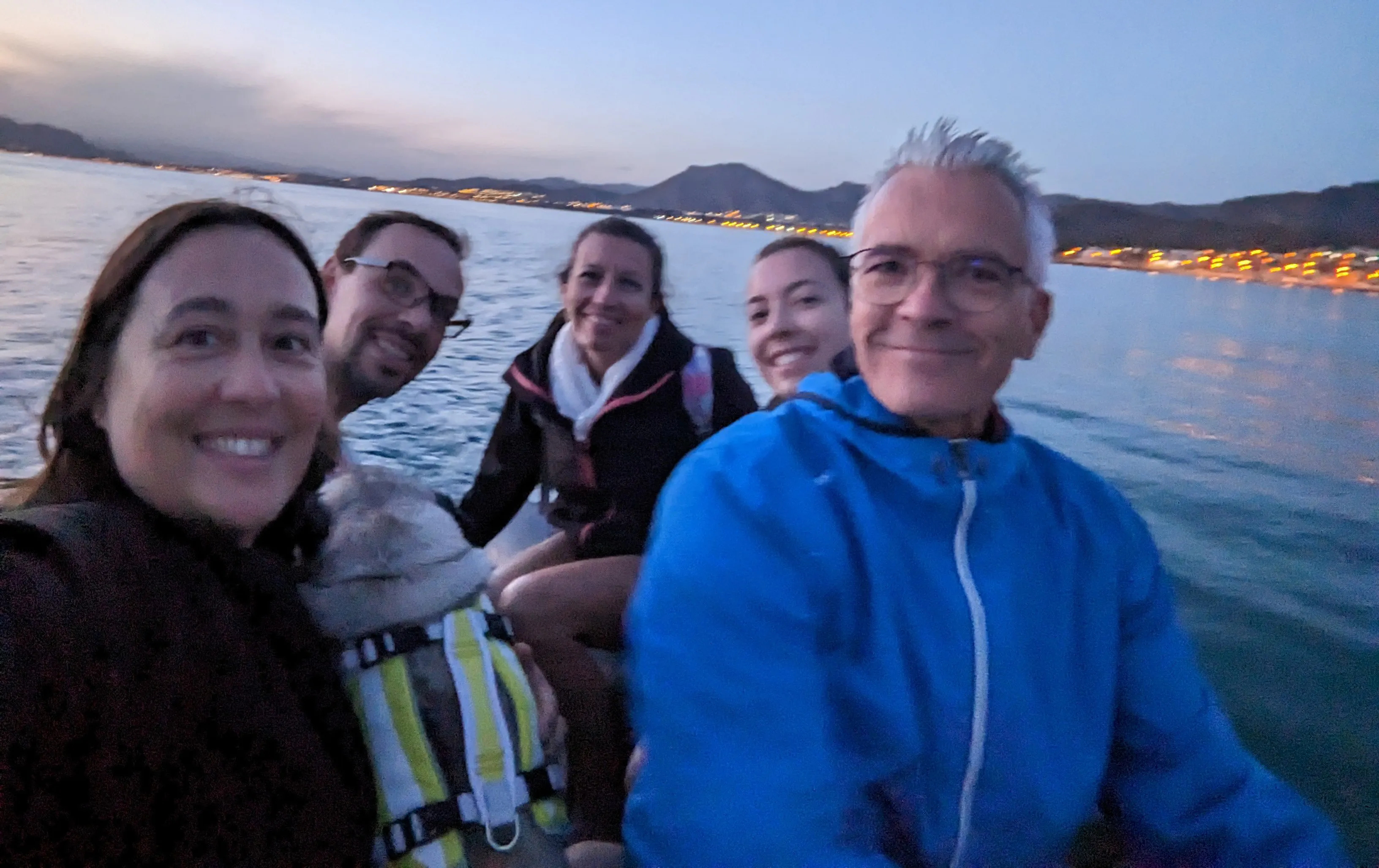
The next day, we had a fun time swimming around Escargot and headed to shore for some sightseeing and to allow BigBoy to do his business. I also spent some time giving the hulls and propellers a light cleaning.
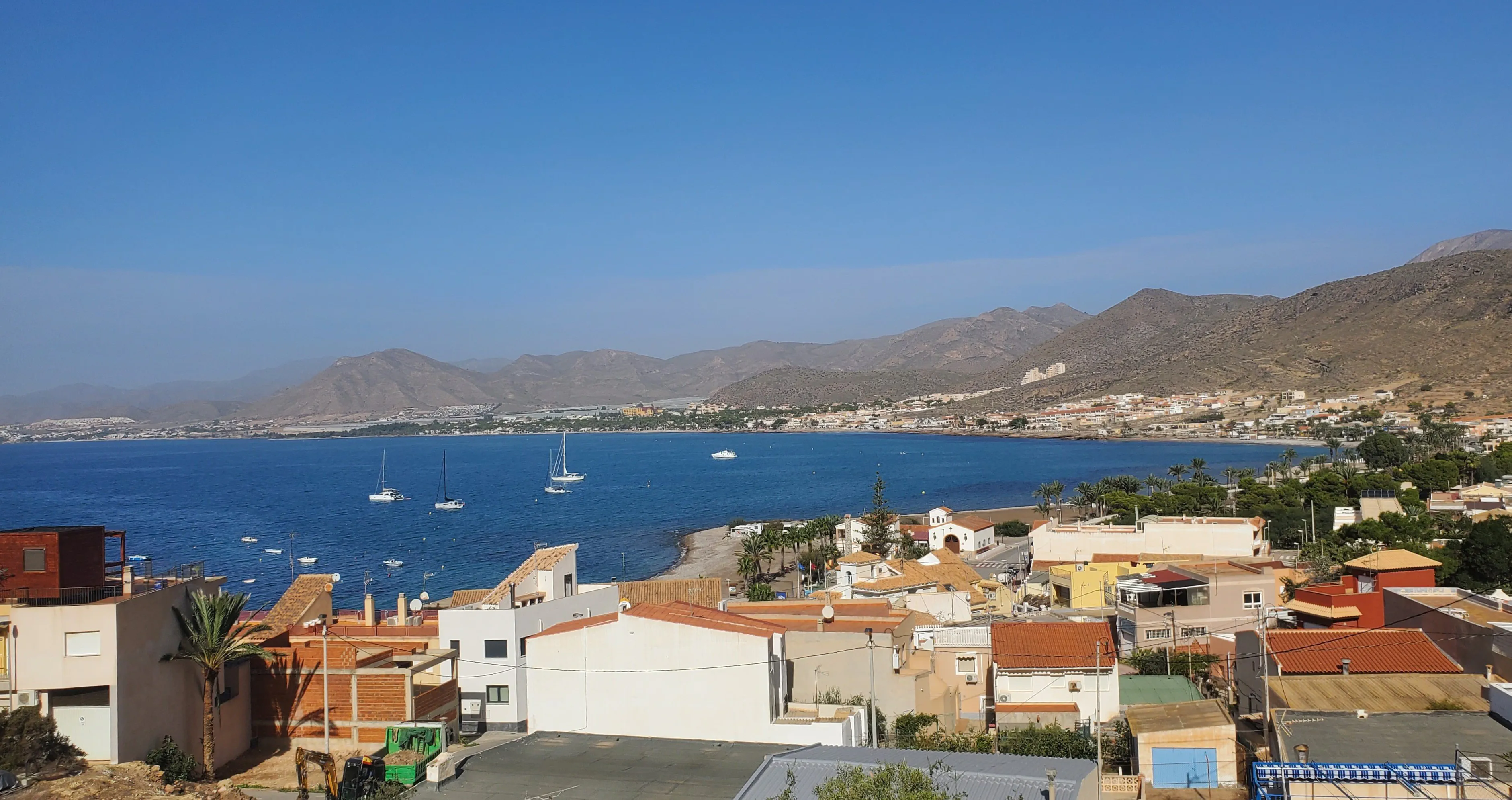
After two nights at anchor, it was time to take our friends back to Cartagena so they could head home. We lifted the anchor soon after lunch. The weather forecast indicated we should expect some waves and headwinds.
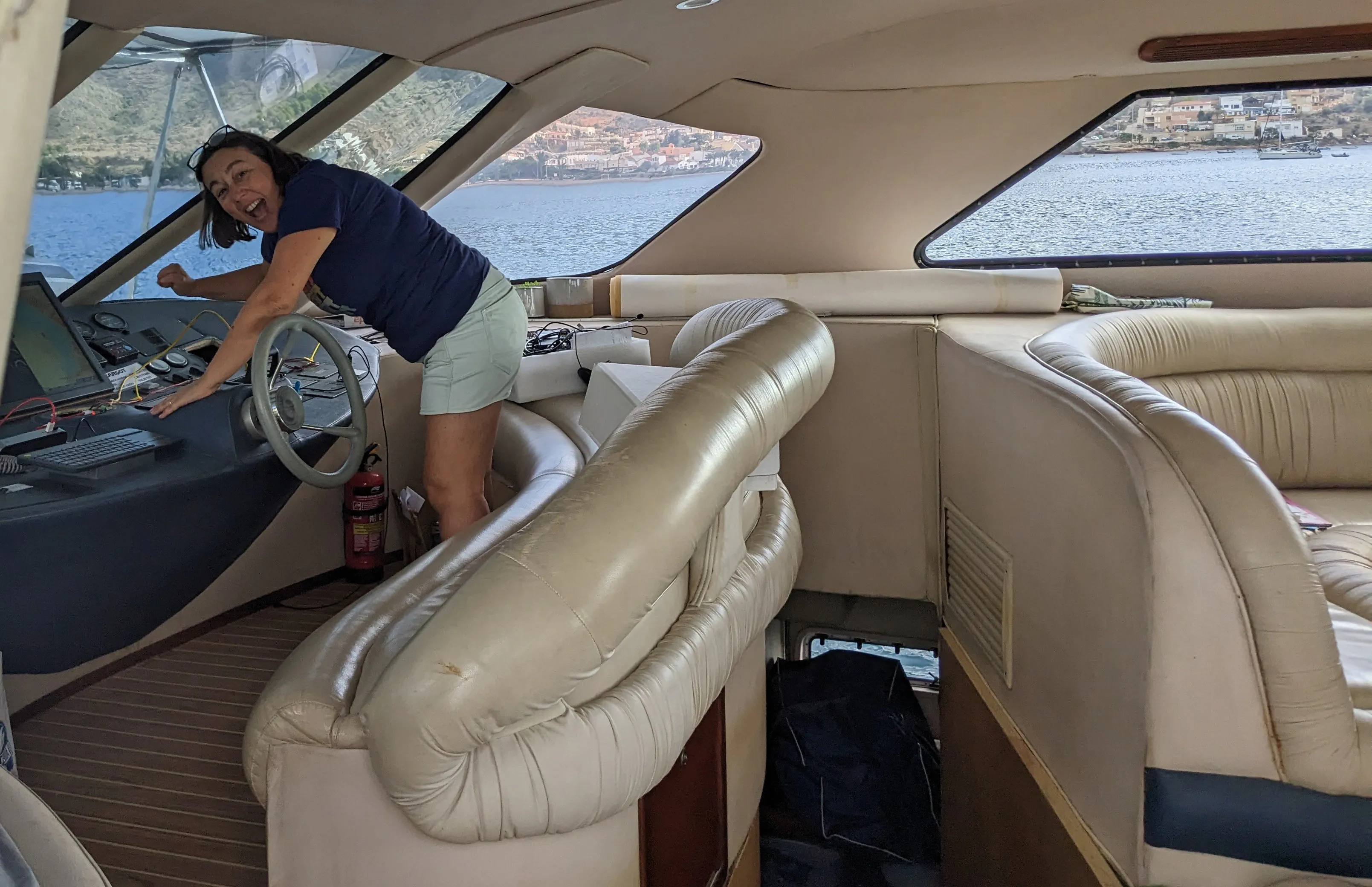
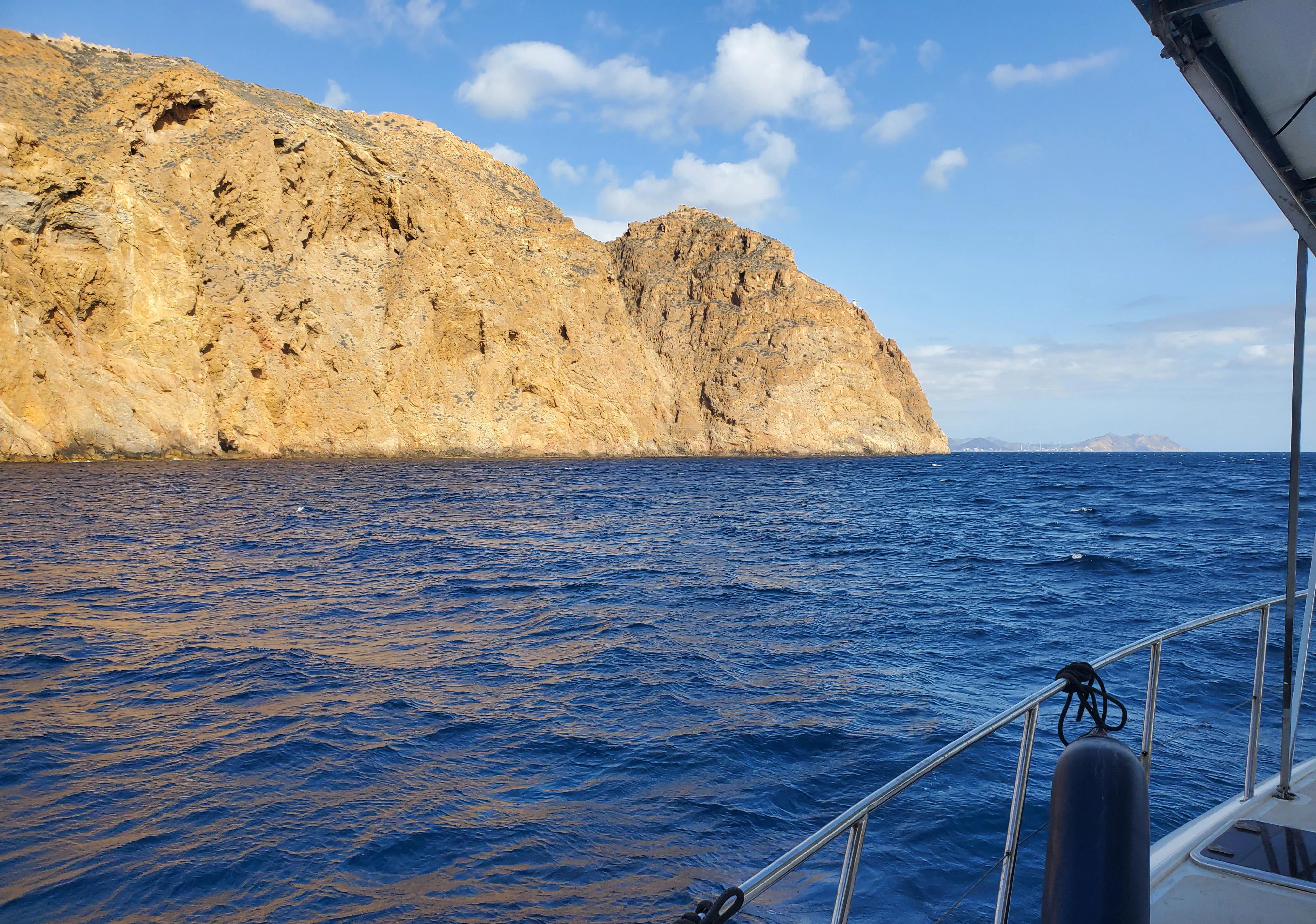
As long as we were protected by the Punta de la Azohía, the sea state was nice and calm. Once we passed it, however, we faced waves over a meter high and headwinds between 10 and 20 knots for most of the way back to Cartagena.
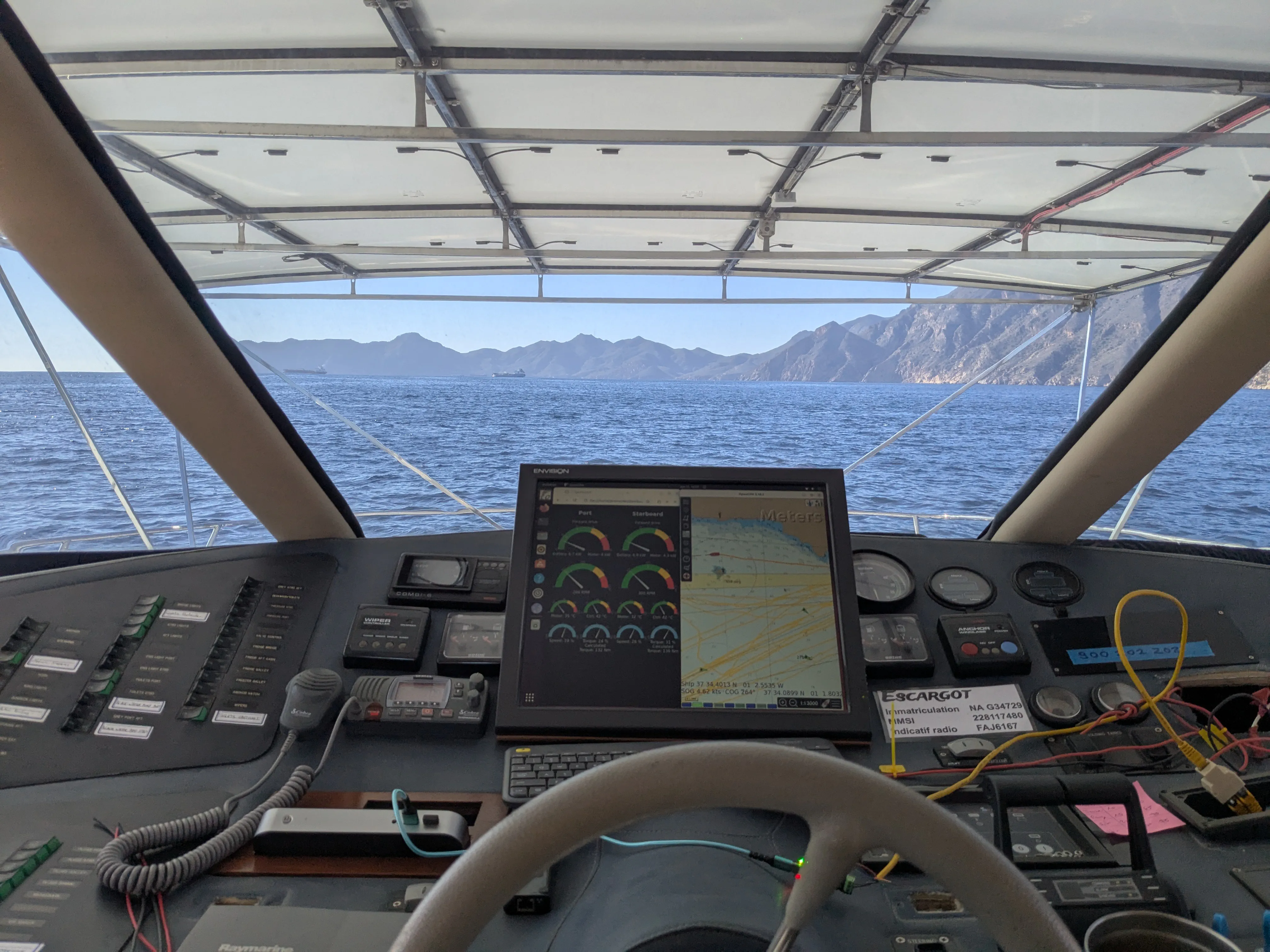
It was our second navigation using our newly developed monitoring web application on Escargot’s helm computer. It proved to be far more convenient than using the DMC handheld controller to query status parameters one motor controller at a time. While some of the crew were having fun bouncing in the waves on the aft deck, I was enjoying the new data monitoring and planning small improvements to develop in the coming days.
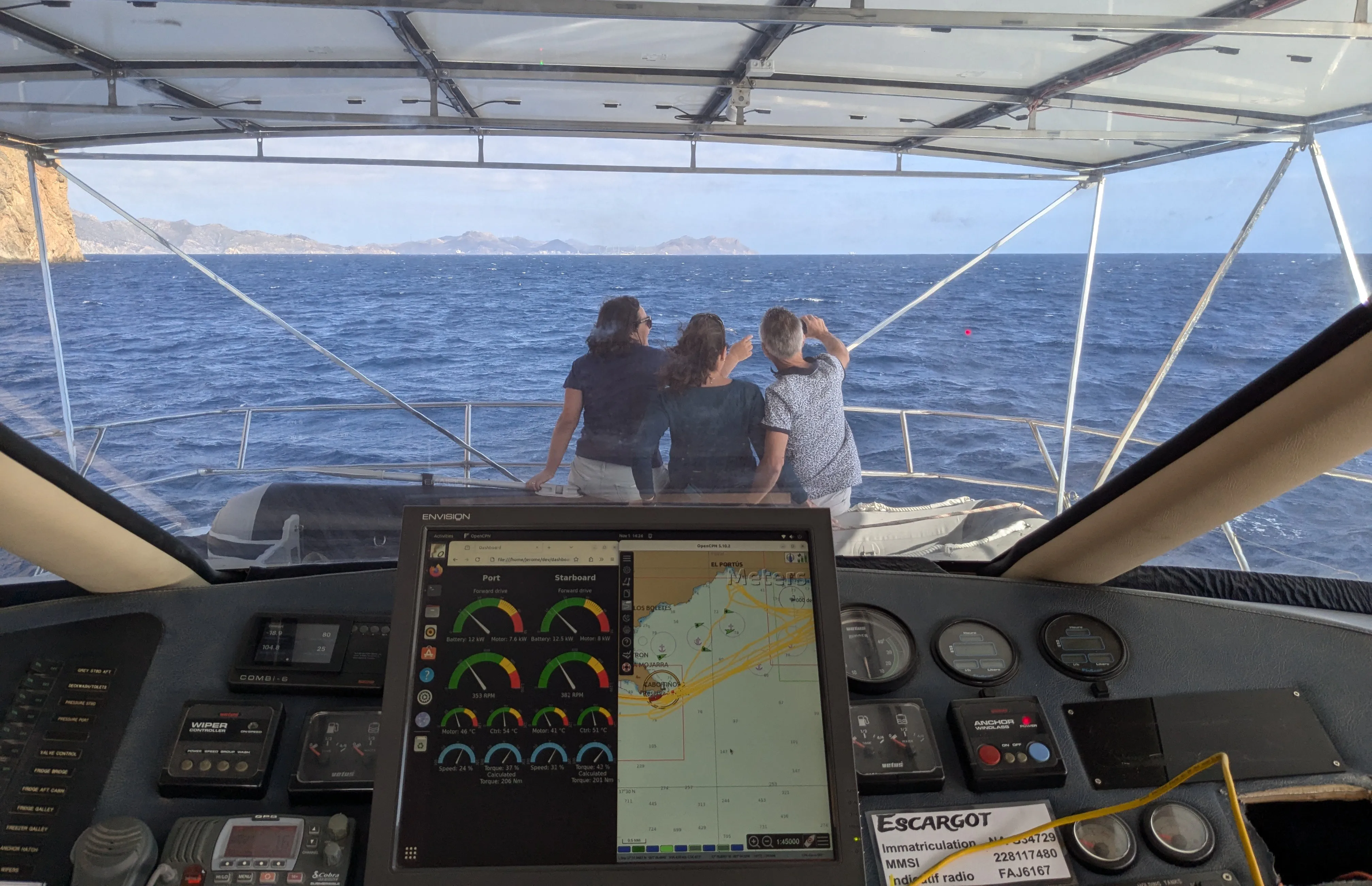
On this return leg, we left with a 100% SoC and arrived in Cartagena with a 45% SoC, maintaining a similar speed to our outbound trip. The wind and waves hitting our bow did not noticeably impact our energy consumption.
We had made plans to head toward the south of Spain for this fall navigation season, but it had to be a quick trip down and back to Cartagena in under a month. This was due to some work trips planned for early December, followed by Christmas celebrations with family aboard Escargot. Our southernmost destination wasn’t strictly defined. We wanted to go at least as far as Almeria, as we had heard it was a great city to visit, but if the weather permitted, we hoped to reach Adra to see a friend’s boat, and maybe Motril. It is great to have plans, but plans on a boat are made to be adjusted based on the weather!
For our first leg south, we booked a slip in the marina of Aguilas, as the weather forecast didn’t show many comfortable anchoring options. We left Cartagena in the morning with a 95% SoC and 33 nautical miles to travel.
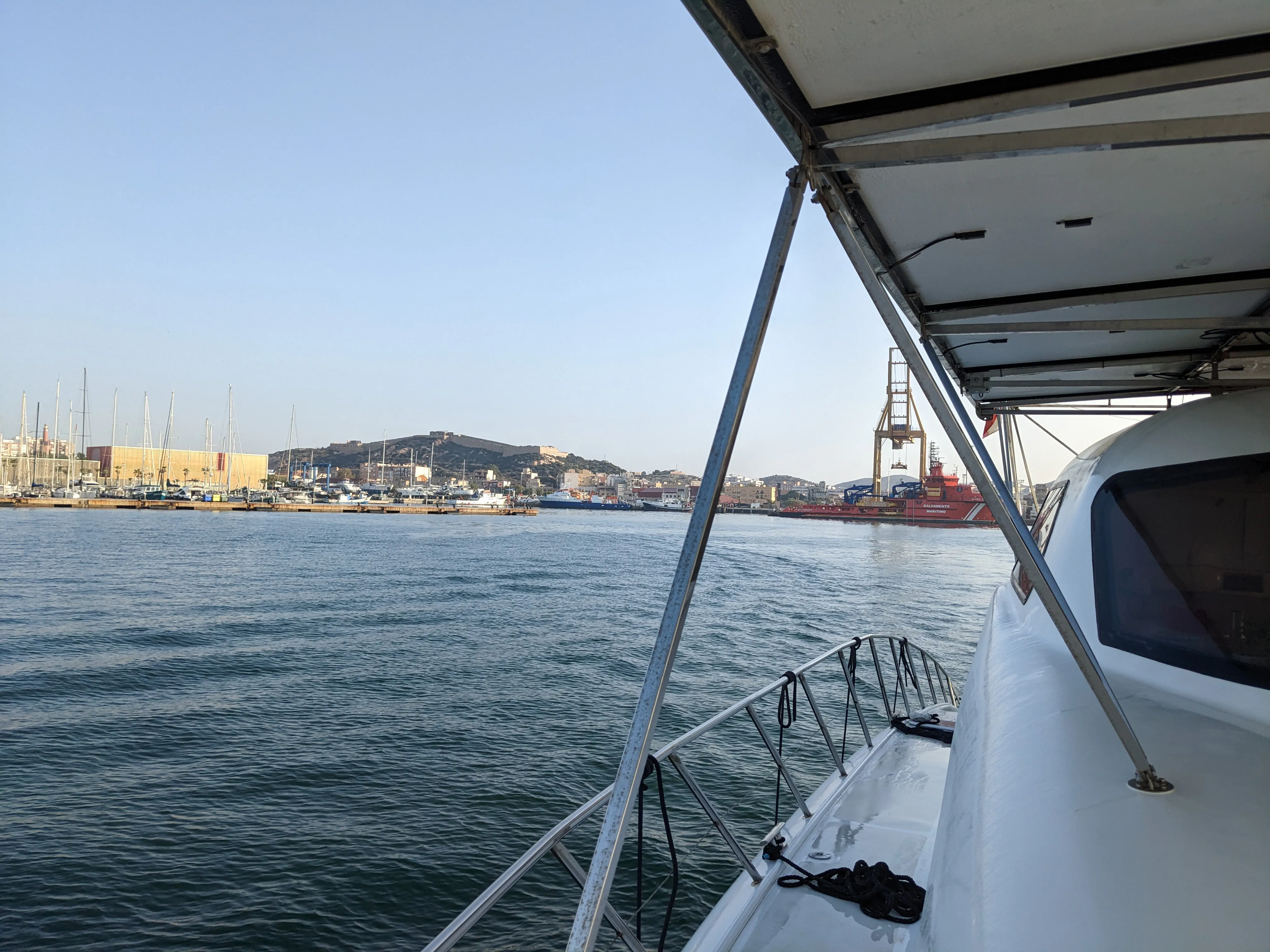
Having sailed to La Azohía several times, we knew the coastline west of Alicante was beautiful, and we were not disappointed. The sea state was much calmer than anticipated. We were even visited by two dolphins, and a swordfish jumped right next to Escargot.
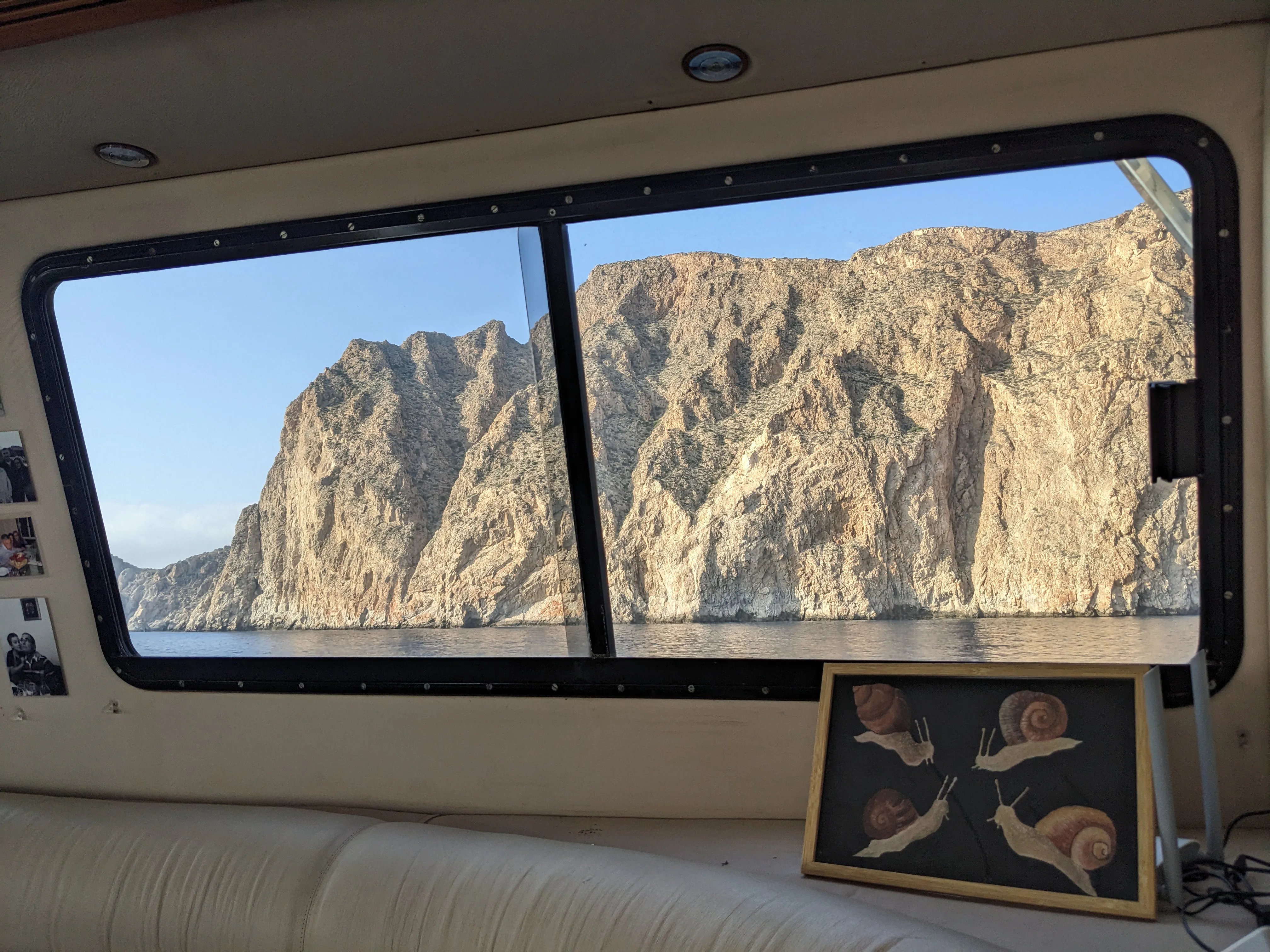
After 8 hours of navigation, we arrived at the Marina Puerto Deportivo Juan Montiel. The marinero wasn’t waiting for us on the dock to catch our lines, so Ludivine jumped off and we successfully moored all by ourselves. We still had a 58% SoC when we turned off the systems, having kept both motors below 5kW and our speed between 4 and 4.5 knots.
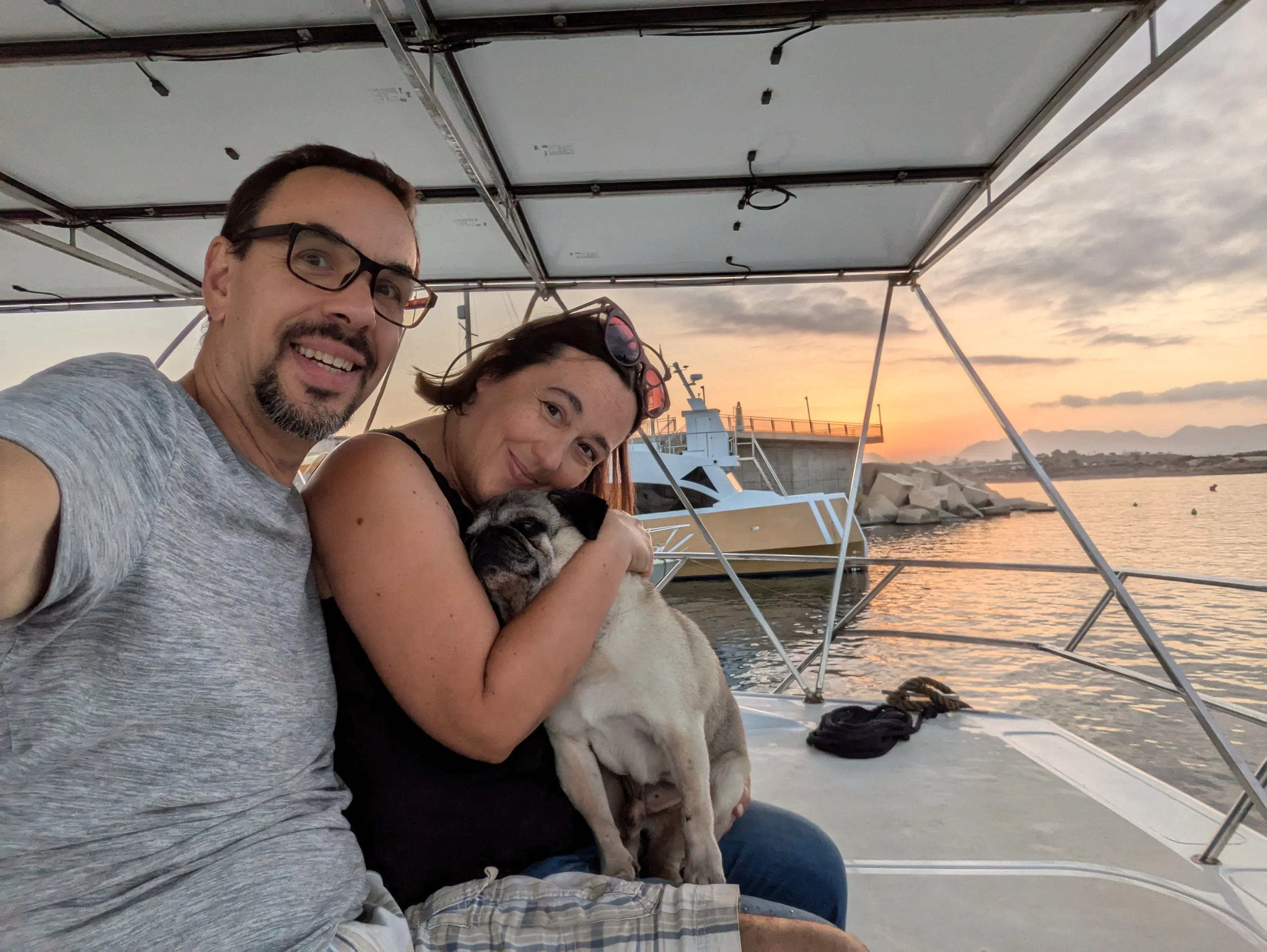
It was a fantastic start to our November cruising month! We spent three nights in Aguilas exploring this small, ancient Roman fishing port, full of beautiful old buildings and rich history. We also had a nice chat with Mr. Juan Montiel, the owner of the marina and nearby hotel, who came down to check out Escargot.
Since we usually cover about 30 nautical miles a day, our next waypoint was set for Carboneras. There is a small port there, but it is primarily for fishing vessels and cannot accommodate our 16-meter-long catamaran. Expecting decent anchoring weather, we left Aguilas in the morning without a berth reservation. We knew we could re-assess midway and divert to the port of Garrucha if anchoring became untenable. Our battery bank was at 96% SoC, the wind was very low, and we had gentle 0.4-meter waves pushing us on our port stern.
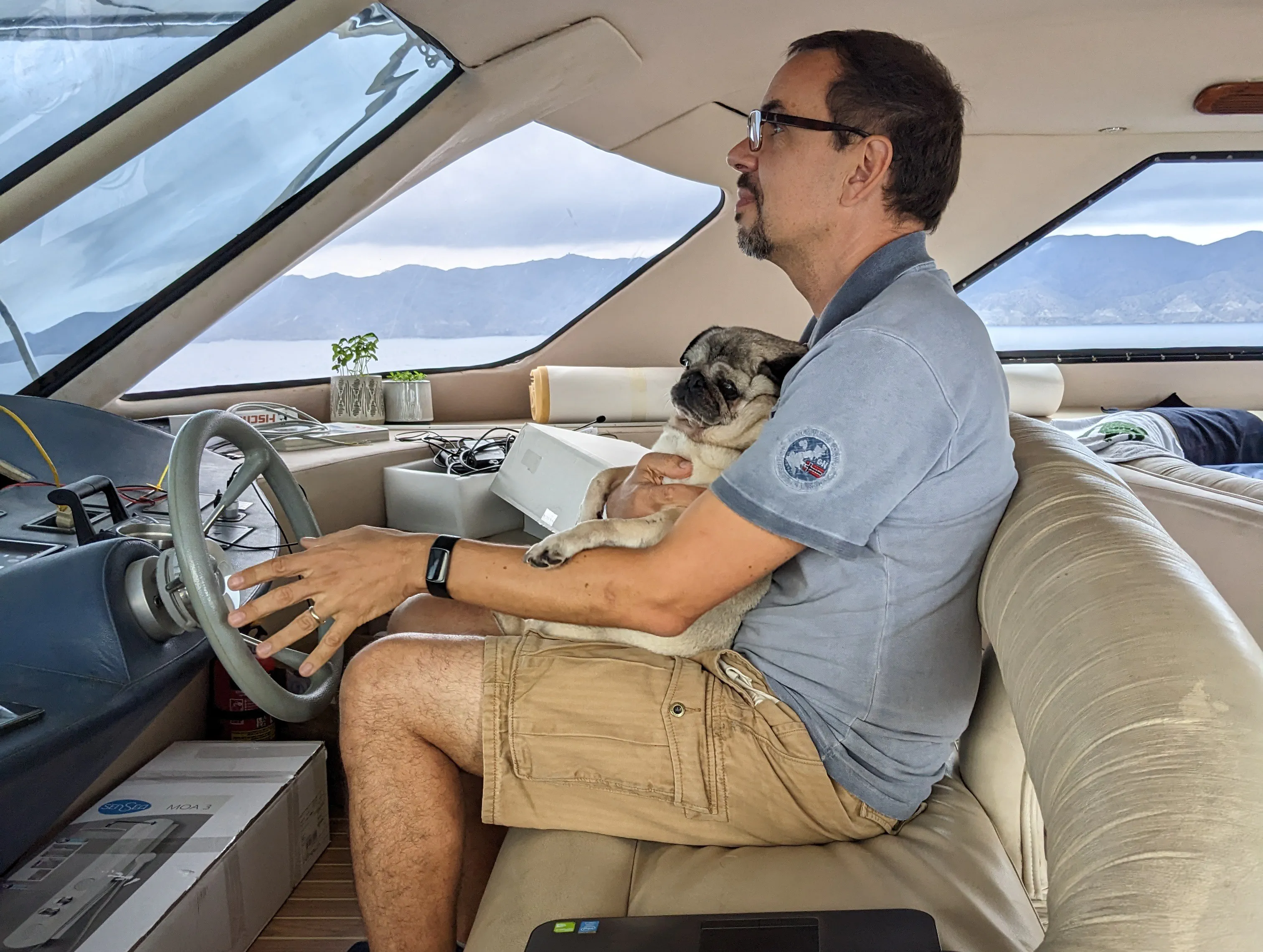
While the sky was overcast for most of the navigation (meaning limited solar generation), we had a highly enjoyable passage with great scenery.
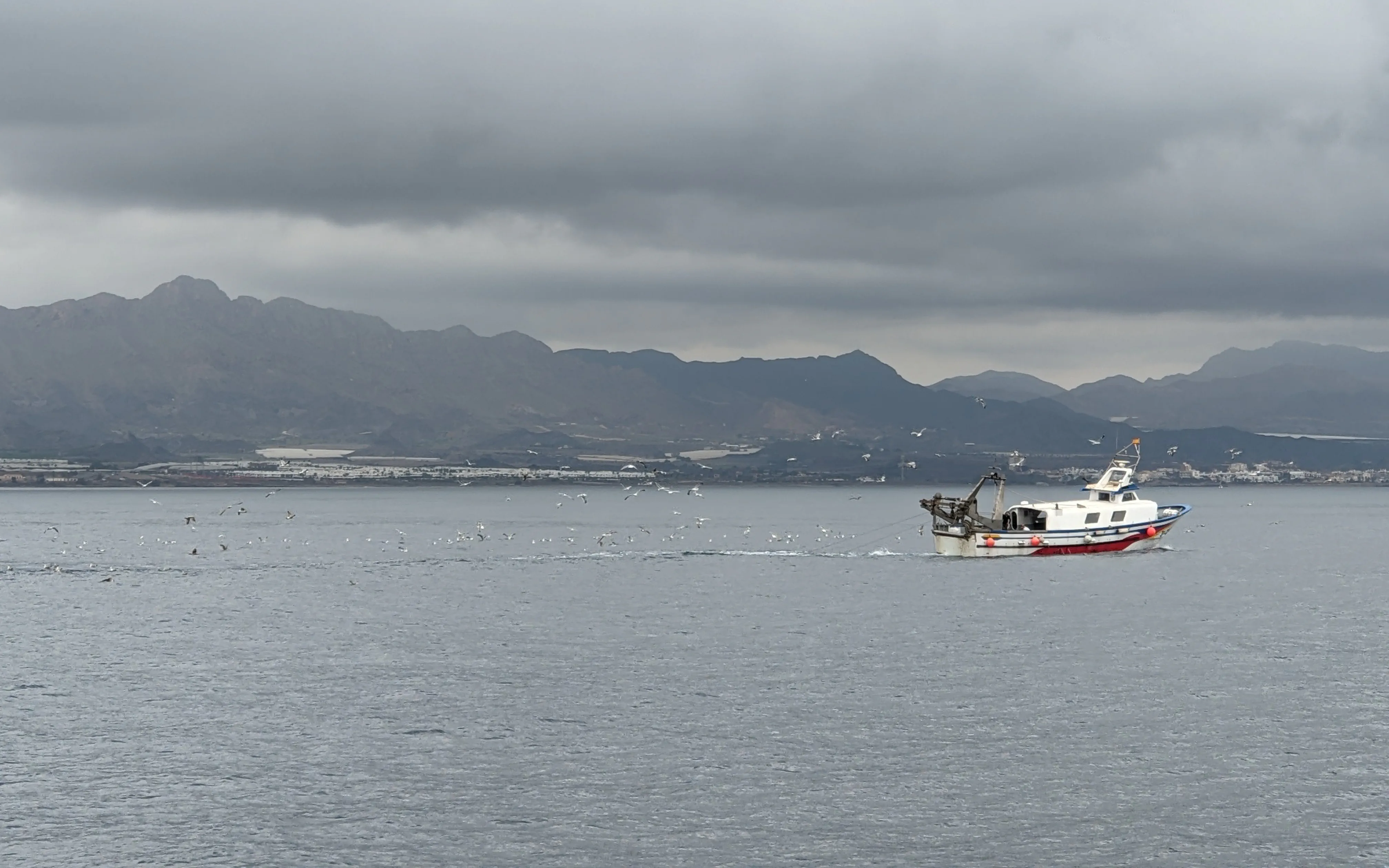
Upon arriving in Carboneras, we found a protected spot near the cement factory breakwater. We dropped anchor in 6 meters of water with a 59% SoC in our batteries. It was time to take BigBoy to shore for his evening walk before calling it a day.
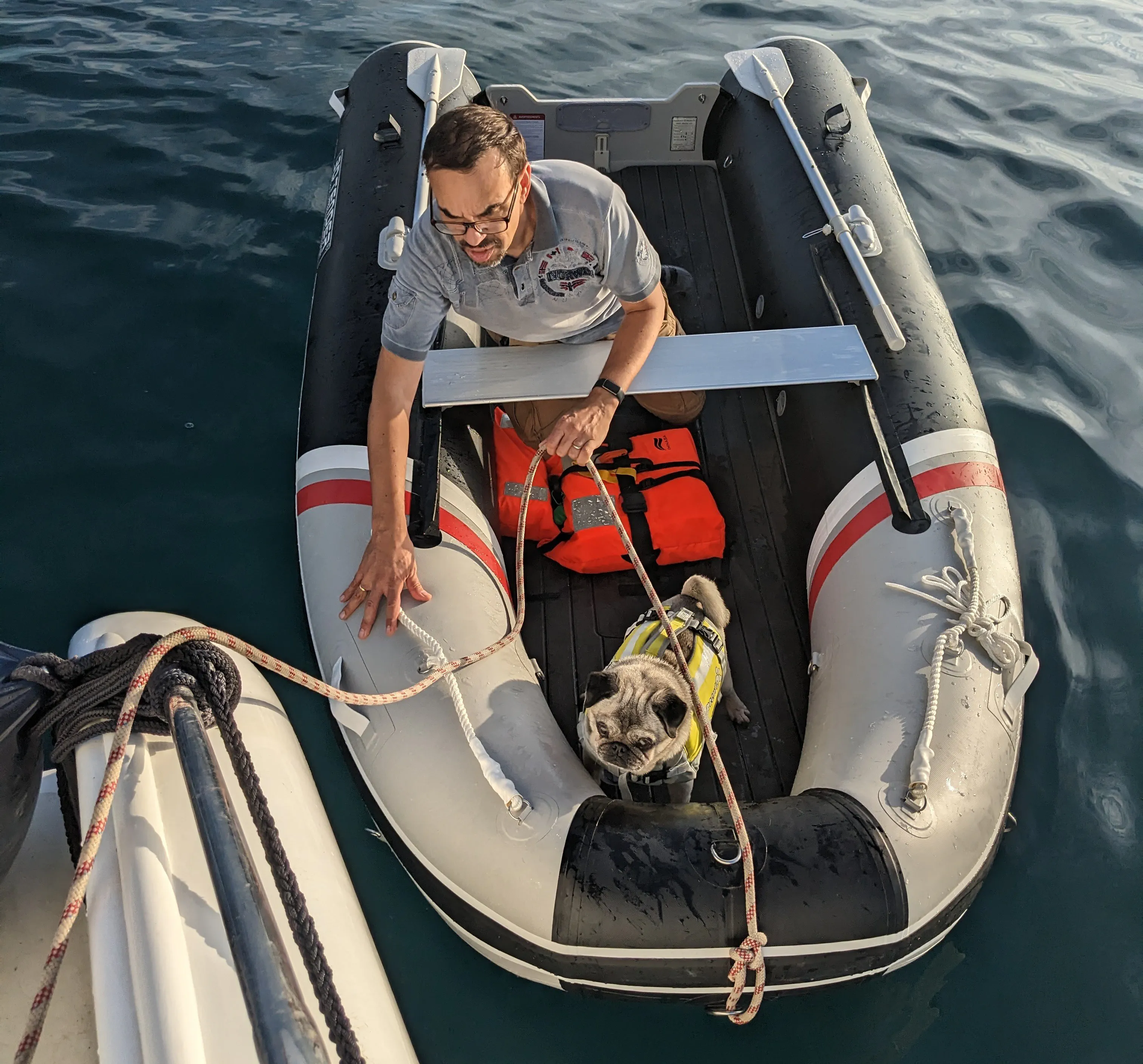
The following morning, we departed with a 58% SoC, aiming to pass Cabo de Gata and anchor on the east side of the Bay of Almeria. We knew that doing another 30 nautical miles on a second consecutive overcast day would likely require us to run our diesel generator—especially since we needed a third day of navigation to reach a marina past Almeria to shelter from incoming weather. Therefore, we decided to embark on our first hybrid navigation shortly after lifting the anchor. We passed the Bay of San Jose, once again treated to stunning coastal views.
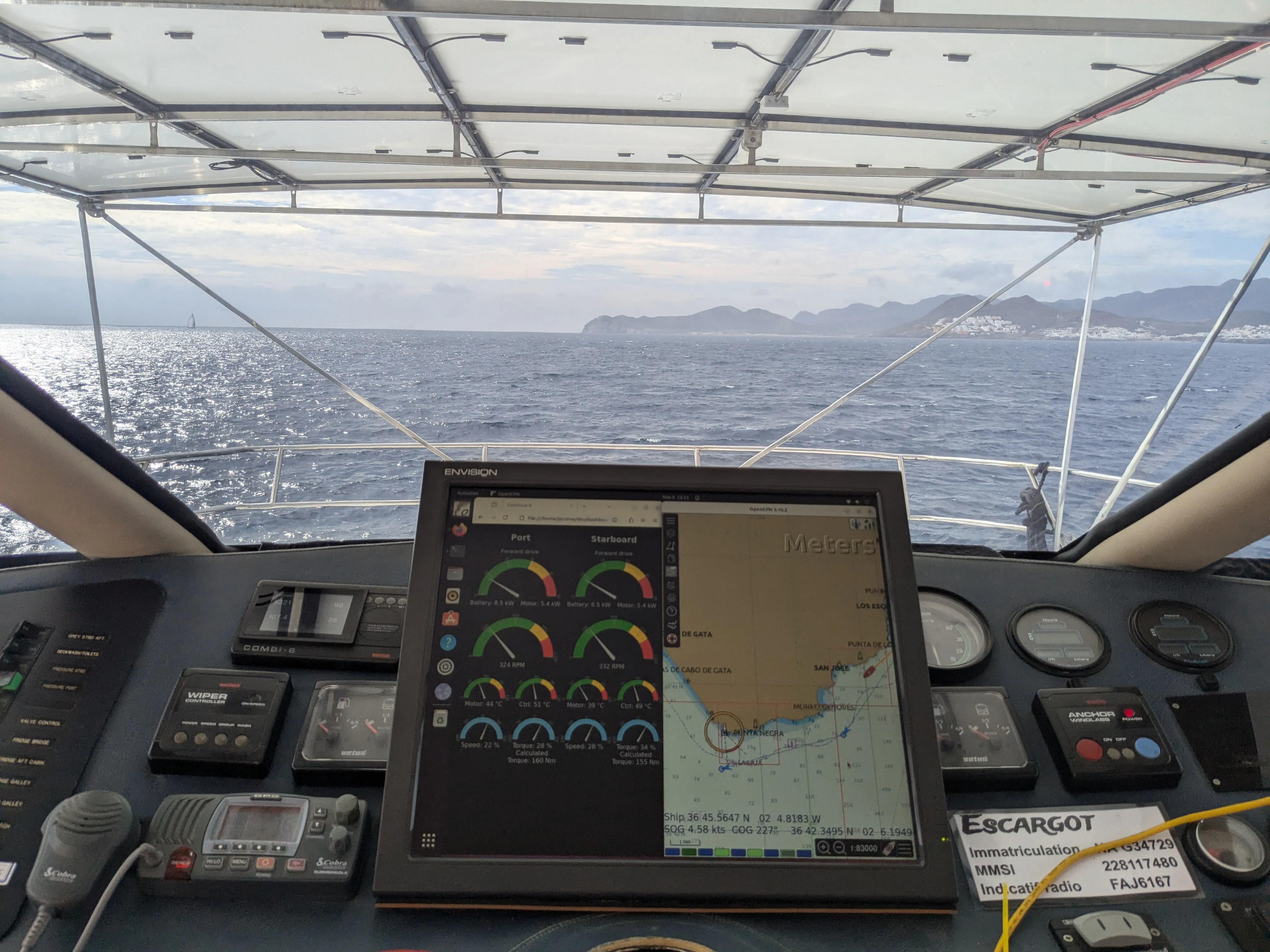
We faced 15 to 20 knots of headwinds for a while, but as forecasted, the wind dropped significantly as we approached Cabo de Gata. After 5 hours of diesel generator runtime, and with our batteries back up to 96% SoC, we turned off the generator to continue on battery and solar alone. Cabo de Gata is a well-known point for its natural beauty, multi-colored rock formations, and shifting maritime currents. We timed our passage perfectly and enjoyed an ideal sea state that day.
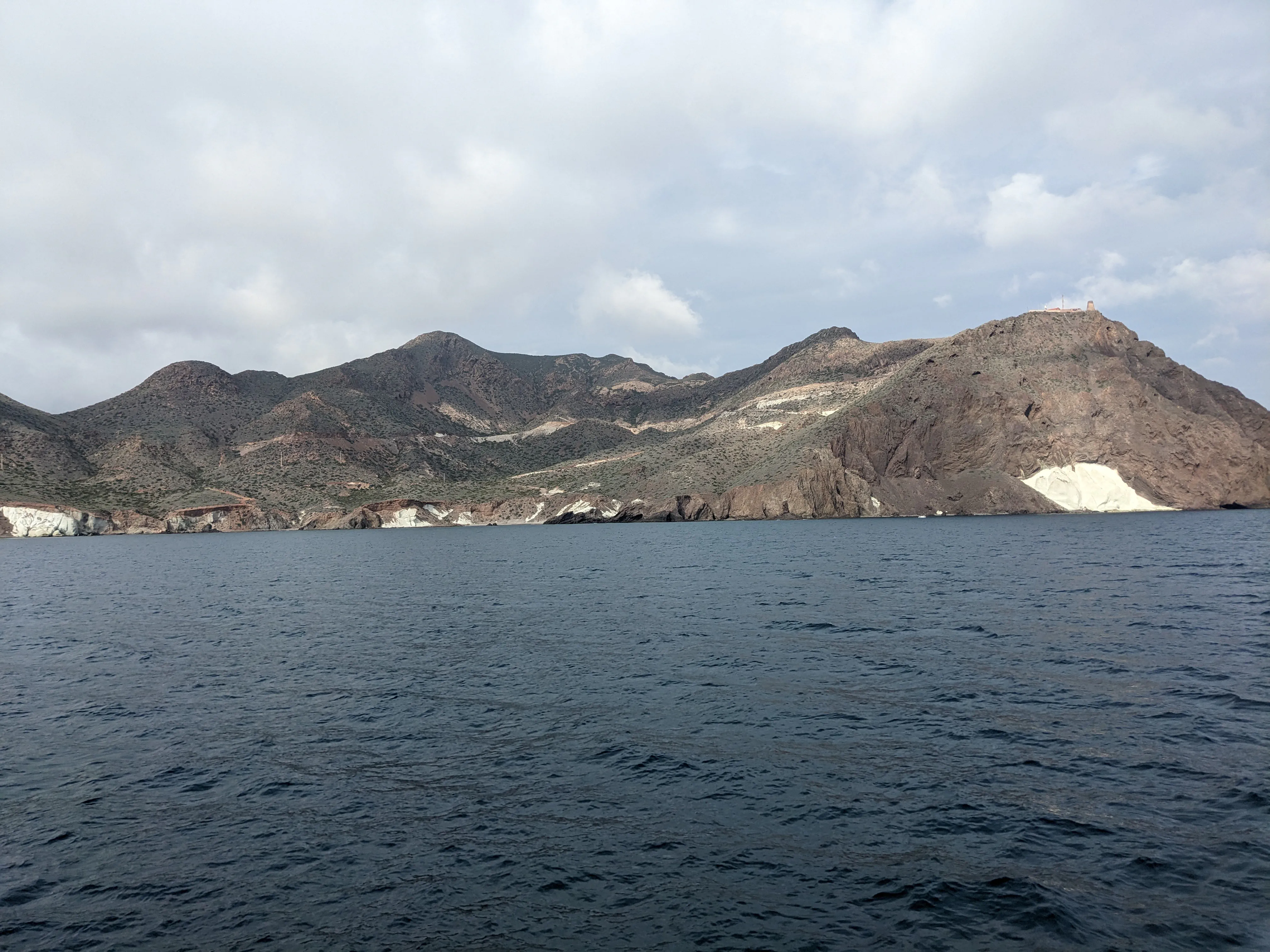
We decided to anchor right after passing Cabo de Gata at Fabriquilla Beach. It was protected, as the beach is tucked behind a large rock formation. We anchored in 5 meters of water with a 96% SoC remaining.
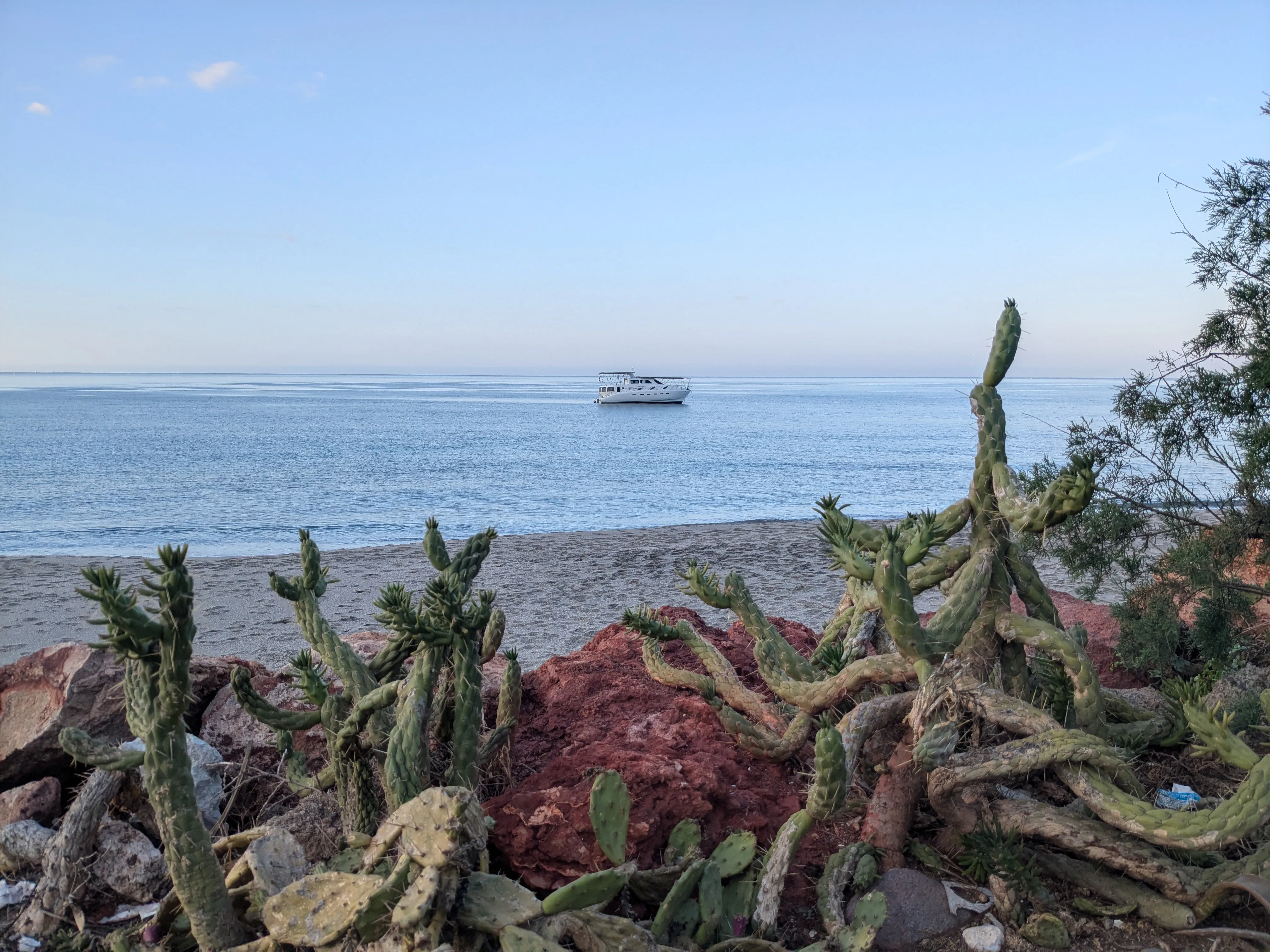
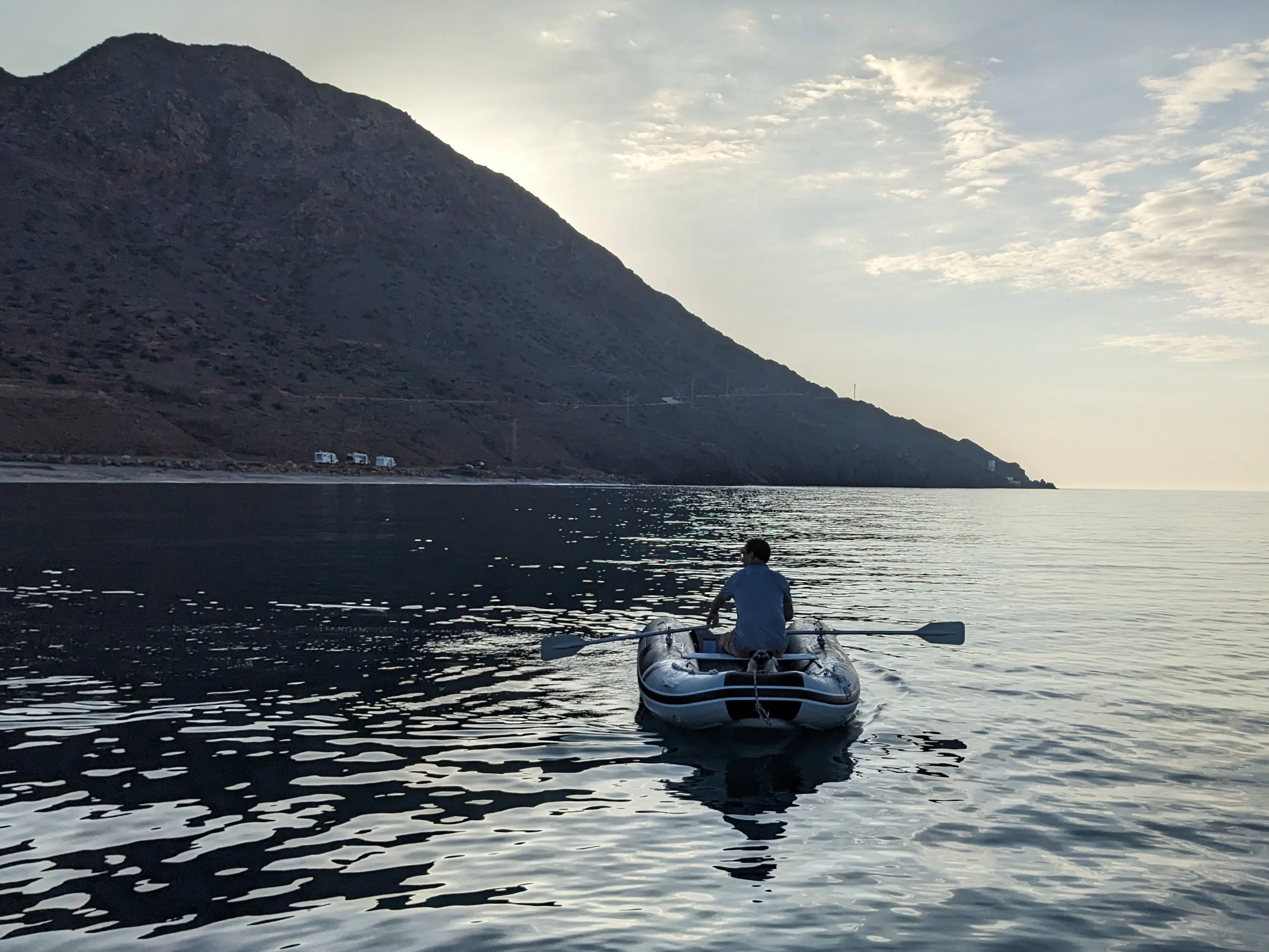
The next morning, as the sun peeked out from behind the rocks, it was time to give BigBoy his ride to shore.
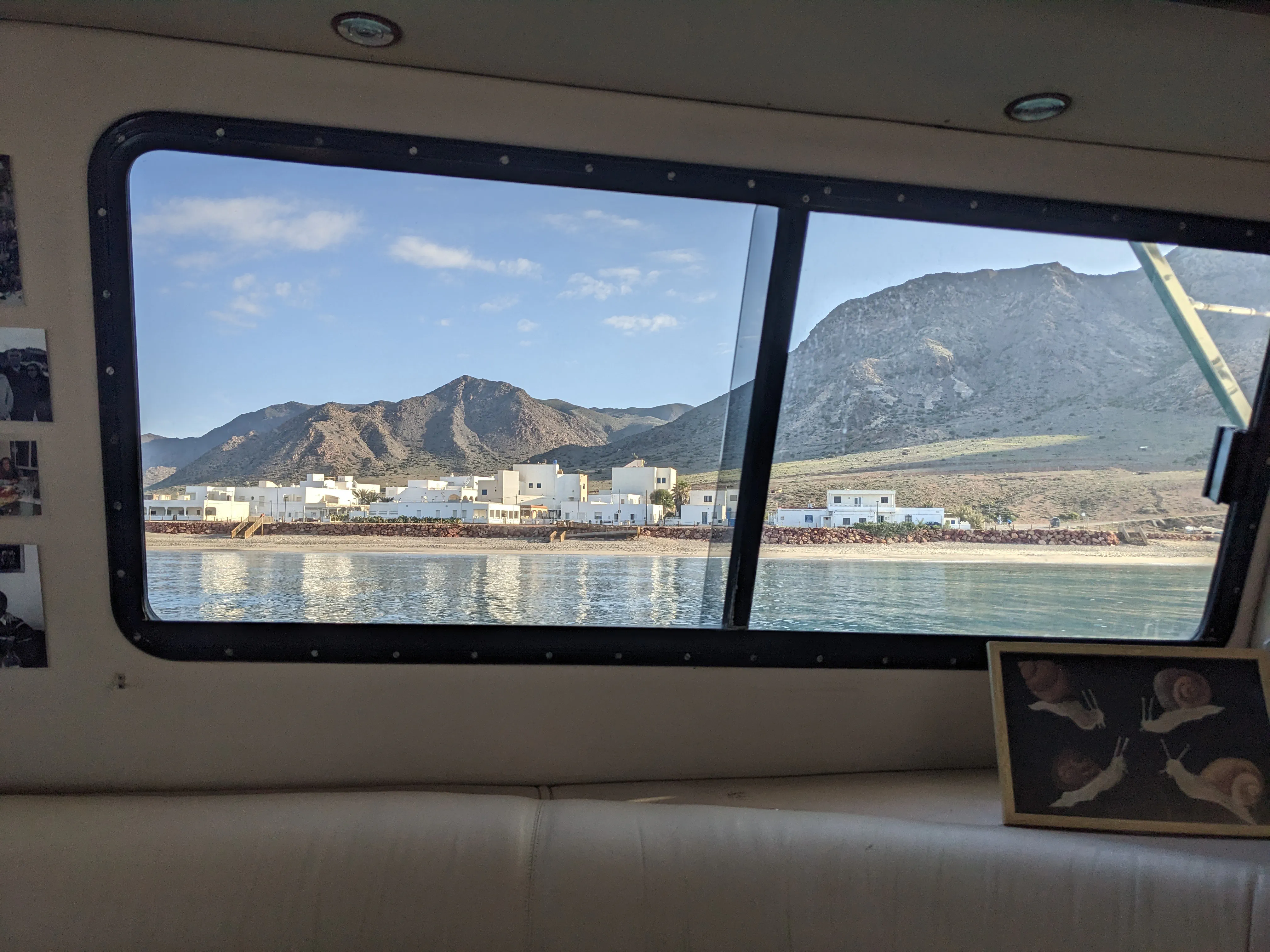
We enjoyed a quiet morning contemplating the beautiful village of white houses on the west shore of Cabo de Gata, capped off with a quick swim from Escargot.
It was time to continue our journey south. We had booked a couple of nights in the marina of Aguadulce for our next stop. We lifted the anchor just before noon with only 18 nautical miles to go.
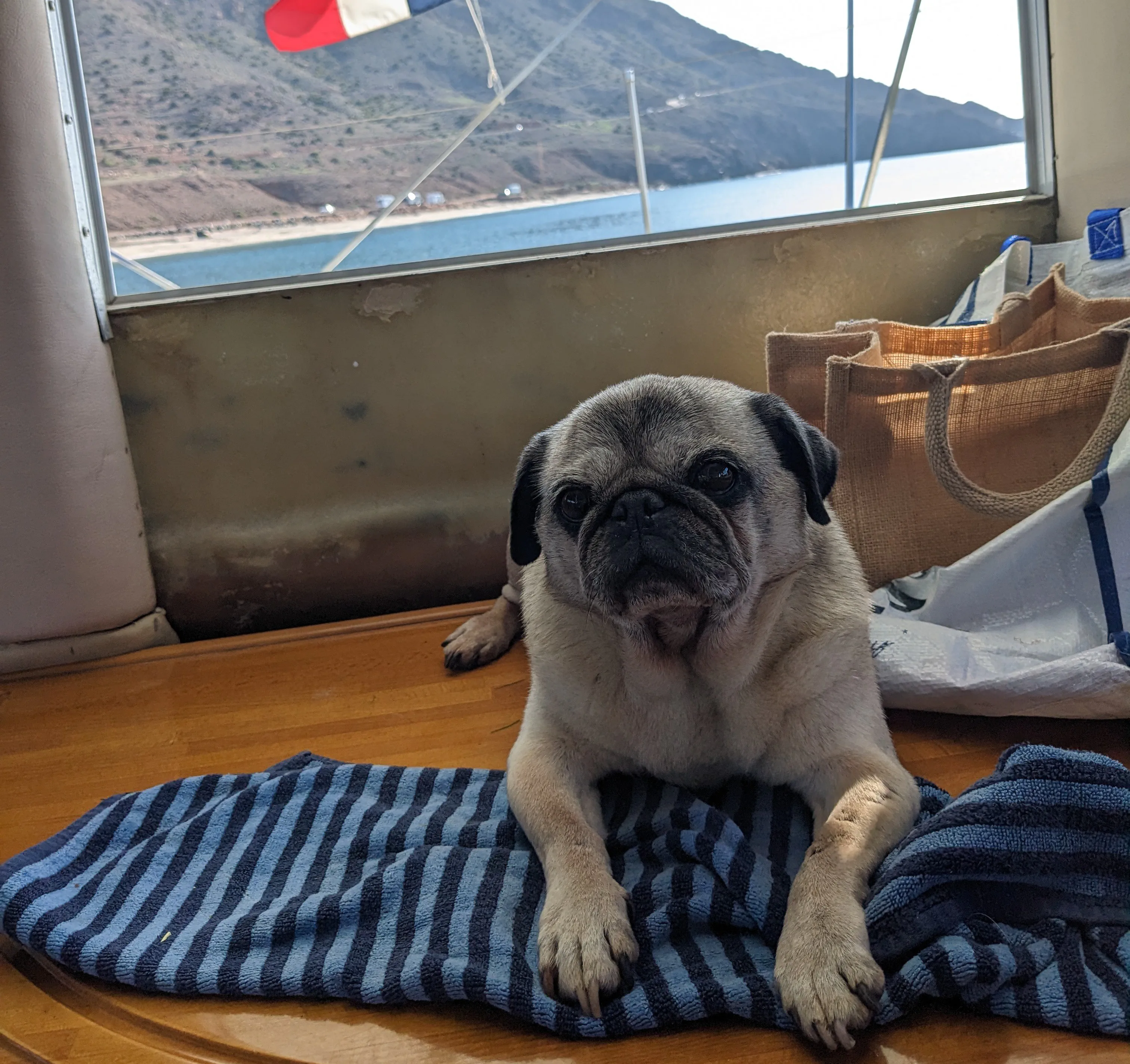
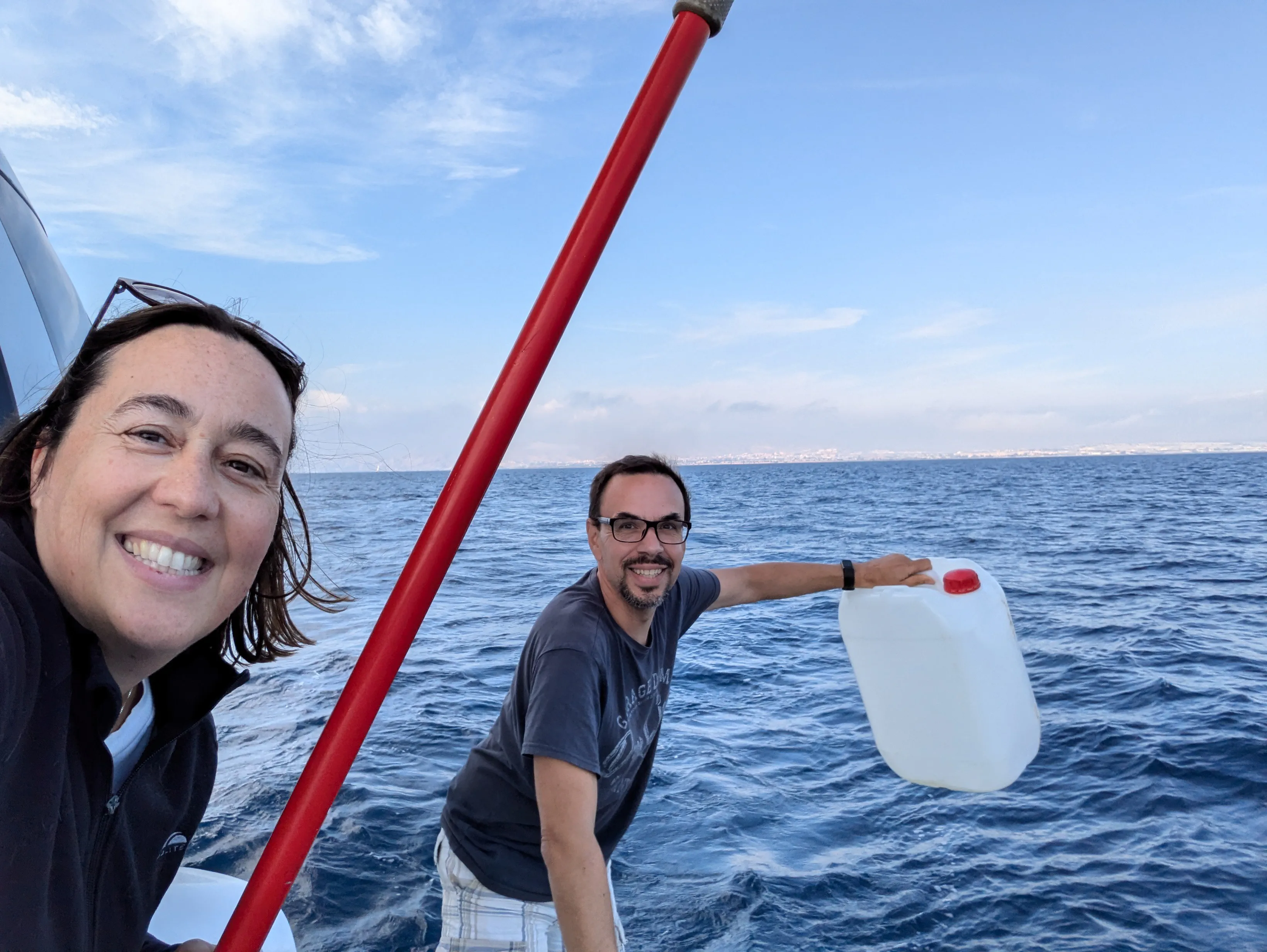
The sea state was quite calm, and we even managed to spot and retrieve two pieces of plastic trash along the way: a container and a birthday balloon. We kept our speed around 4.5 knots most of the time, but we also tested our electric motors at higher speeds, pushing up to 32kW per motor. We measured a top speed of only 7.5 knots, which was significantly below our previously recorded 8.5 knots. The hulls, propellers, and rudders definitely weren’t as clean as during our initial tests, and we likely had a small counter-current in the Bay of Almeria.
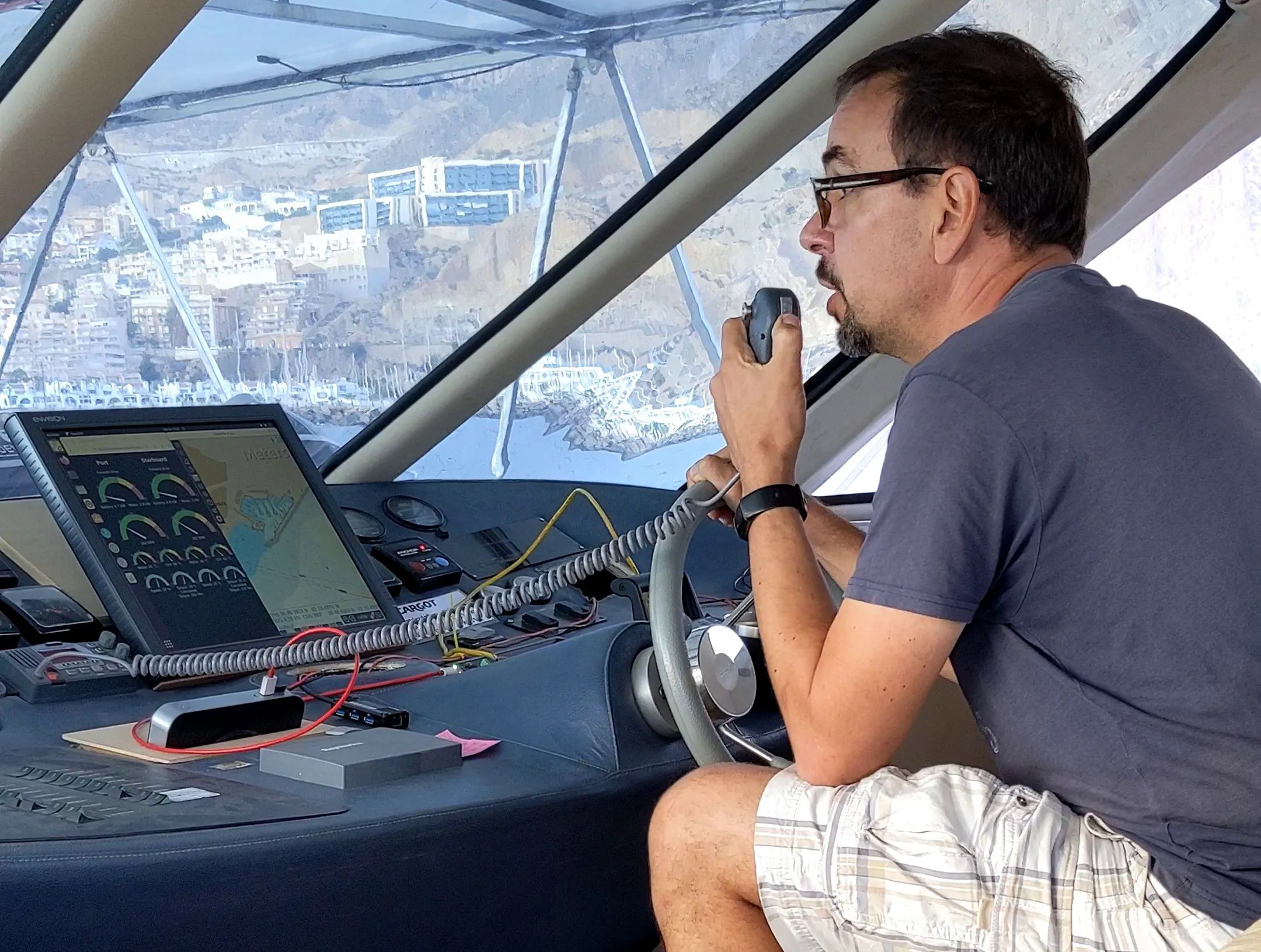
As we approached the marina of Aguadulce, the steering from our rudders felt sluggish and a bit off. For the docking maneuver, we switched from using the wheel to steering entirely with the motor throttles, which is our standard docking procedure anyway. However, we knew something wasn’t right with our rudders and that it would require investigation.
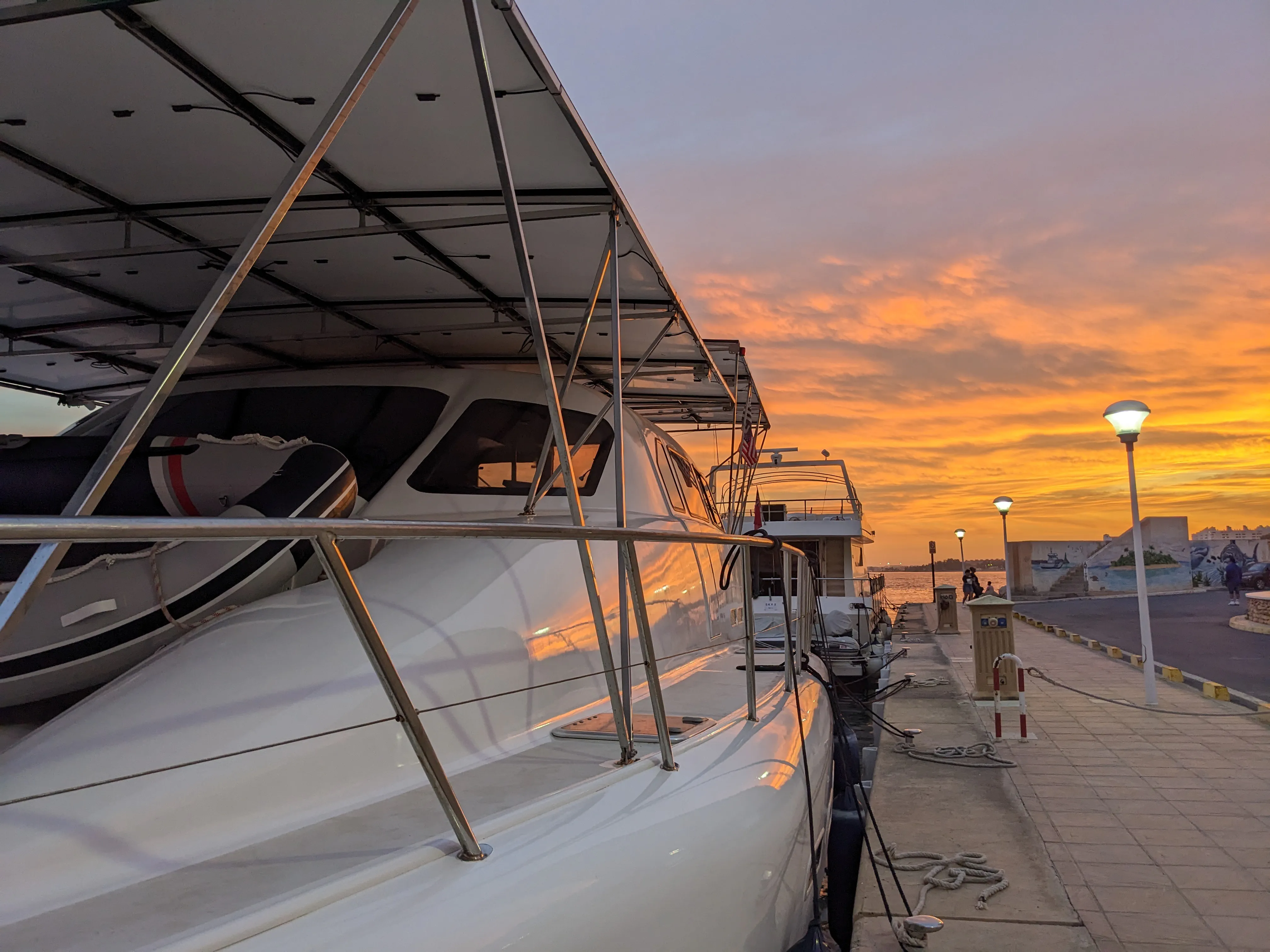
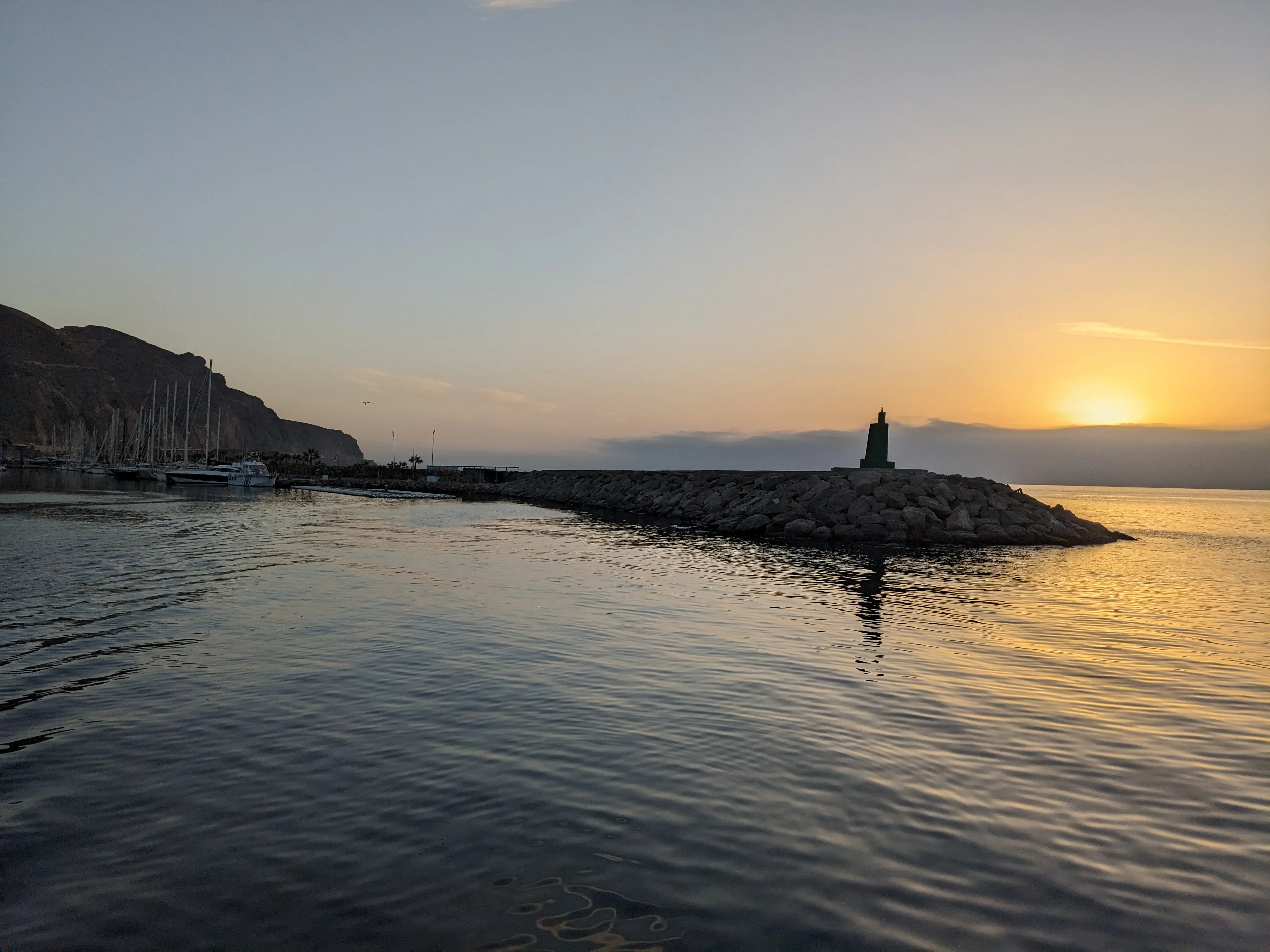
We arrived at our guest berth to a beautiful sunset and a 52% SoC in our batteries.
The following day, we inspected the rudders and noticed that the starboard side rudder’s top screw was almost completely loose, and the port side had significant play as well. We knew we couldn’t continue our navigations until both were safely secured.
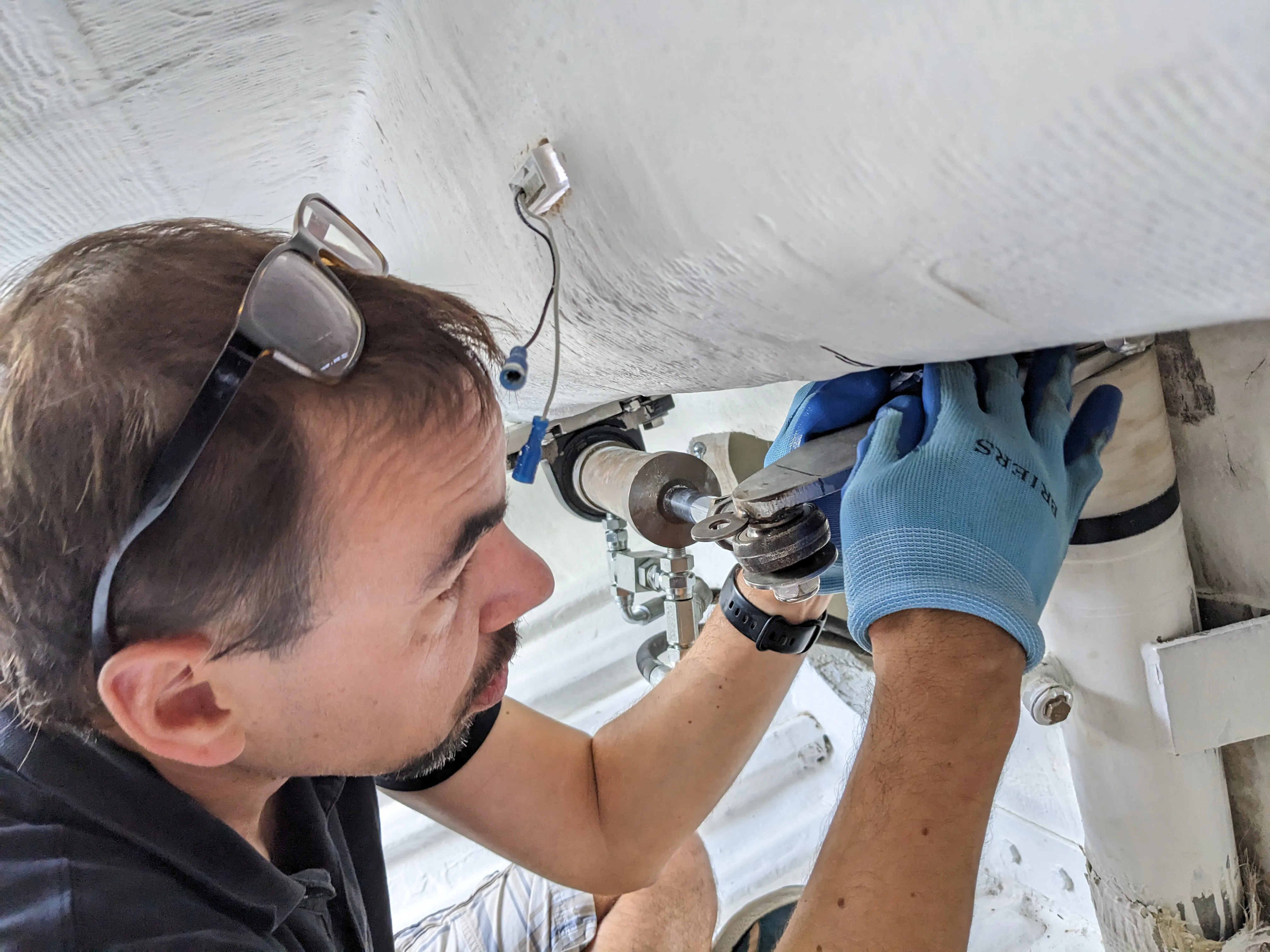
Our planned two days in Aguadulce quickly turned into eight days, involving several trips to local hardware stores. We first secured the starboard rudder to eliminate the risk of it dropping to the bottom of the marina. Then, we went through several iterations of fabricating custom tools to tighten the top screw, as we only had 25mm of clearance between the top of the screw and the fiberglass to fit an Allen key!
We made the most of the extended stop, visiting Almeria’s history museum, the old town, and its impressive Alcazaba. It proved to be a very enjoyable city to explore.
With the rudders finally secured, we checked the weather forecast to replan our itinerary. We realized that continuing toward Almerimar, Adra, or Motril was no longer feasible due to our commitment to be back in Cartagena by early December. We had a brief weather window that would allow us to jump from Aguadulce back to Cartagena over three navigations and two nights at anchor. Back-to-back travel without rest days for solar charging isn’t ideal in late November, but the 10-day forecast showed this was our best opportunity to get home on time.
We left Aguadulce in the morning with a 96% SoC, aiming for Carboneras, 42 nautical miles away. We had a few backup anchorages planned, such as Rodalquilar, in case we needed to cut the passage short.
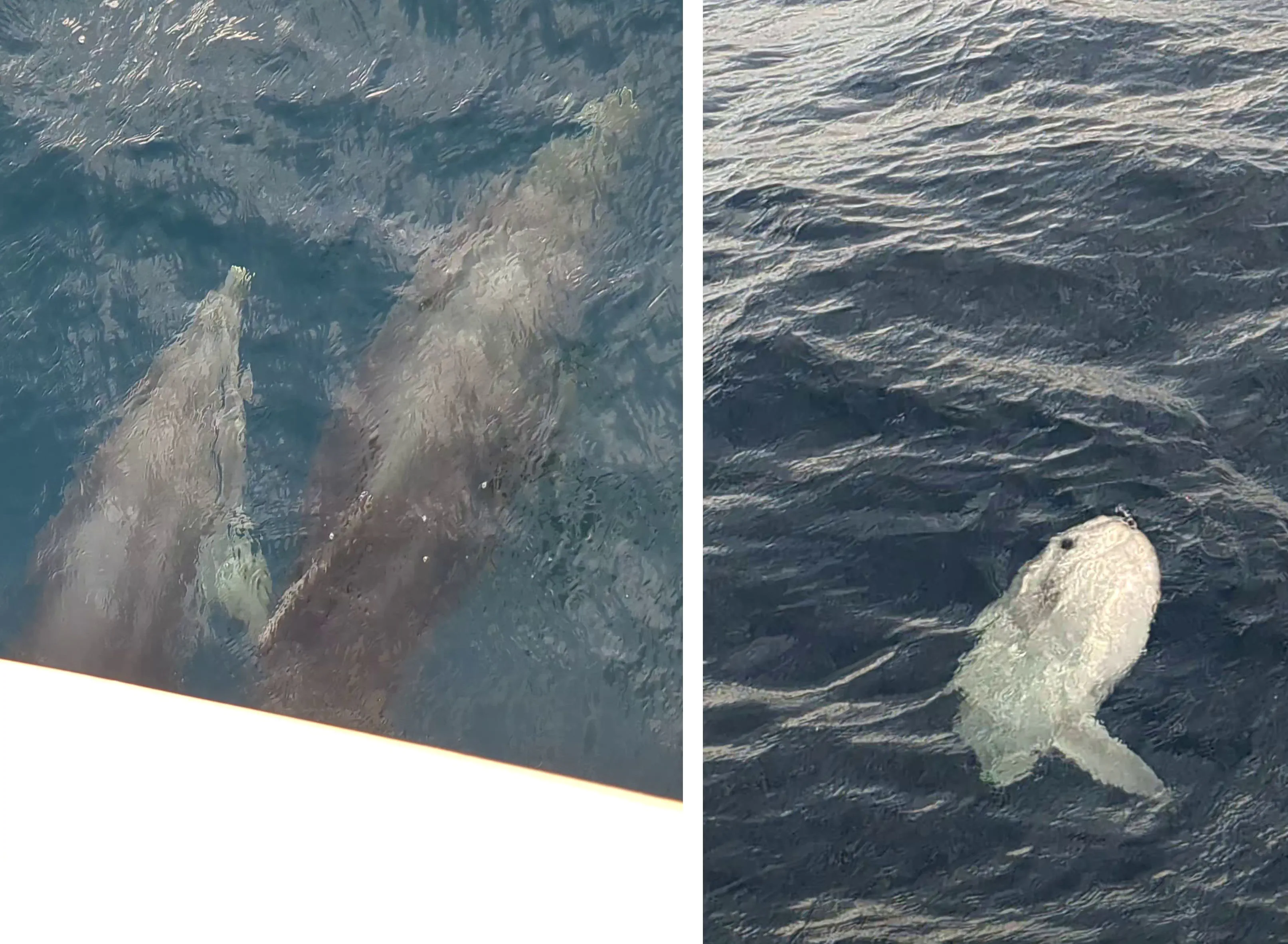
As we rounded Cabo de Gata, dolphins paid us a visit, and later in the day, a mola mola (ocean sunfish) flapped its fin right next to Escargot.
We ran the generator for just over 3 hours to ensure we’d have enough energy for the following day. After 8 hours underway, we reached the south beach of Carboneras and decided to drop anchor before the sun fully set. The surroundings were even more beautiful than the nearby anchorage we used on our way down, and stopping here cut down our planned navigation by one big nautical mile.
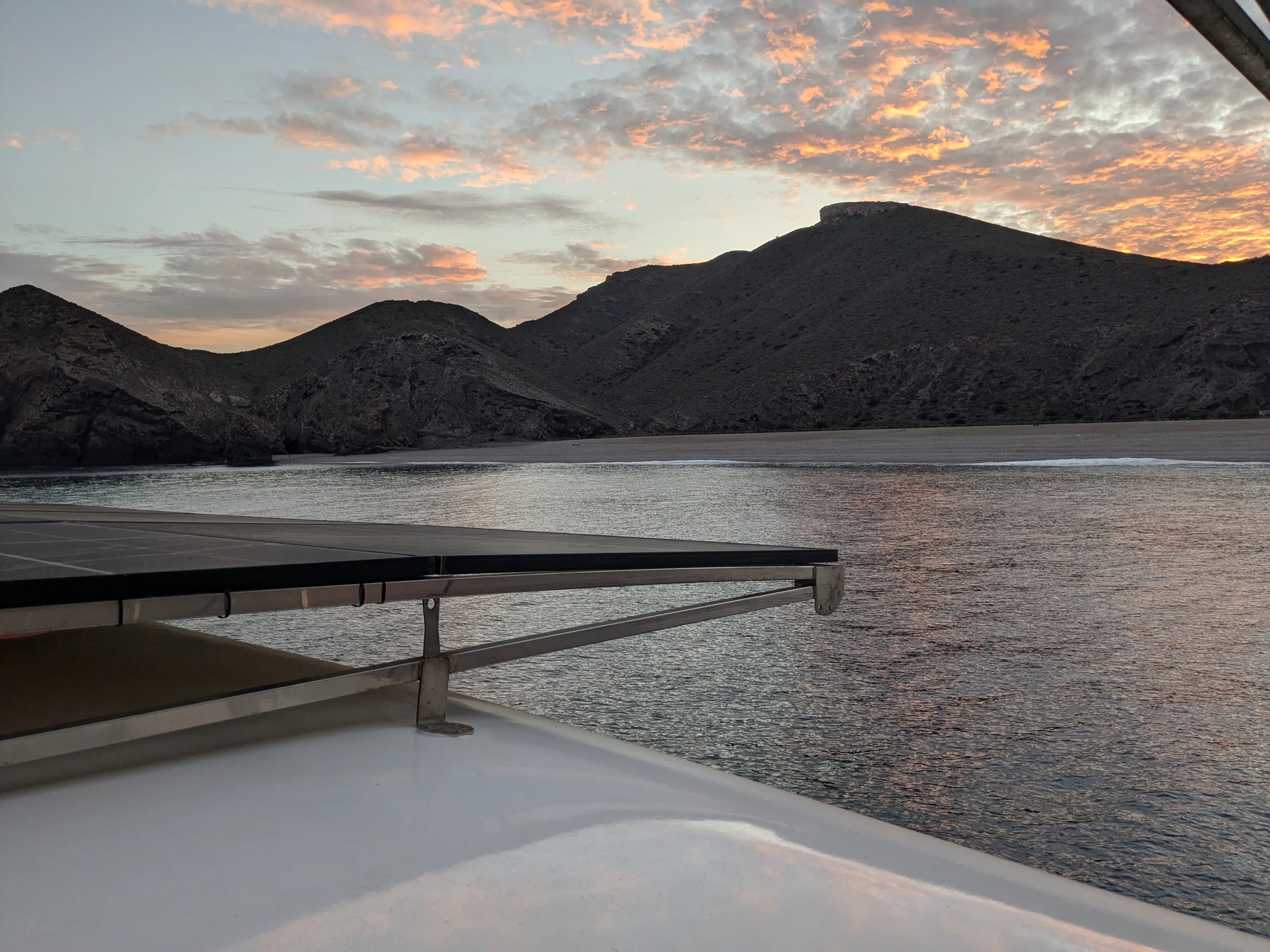
We dropped anchor in 8 meters of water with 40 meters of chain. With a 76% SoC (thanks to the generator run), we splashed the dinghy to give BigBoy a ride to the beach.
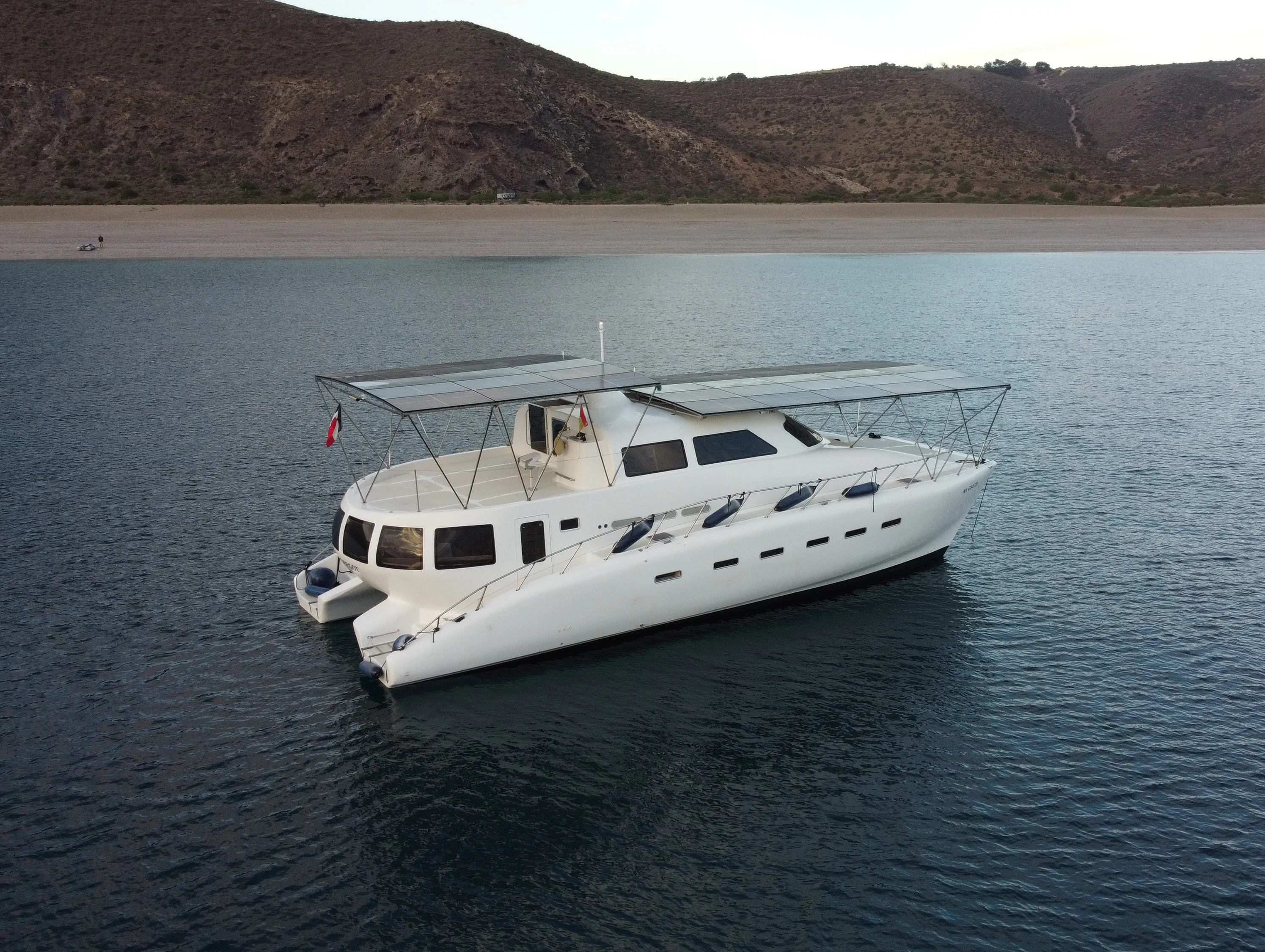
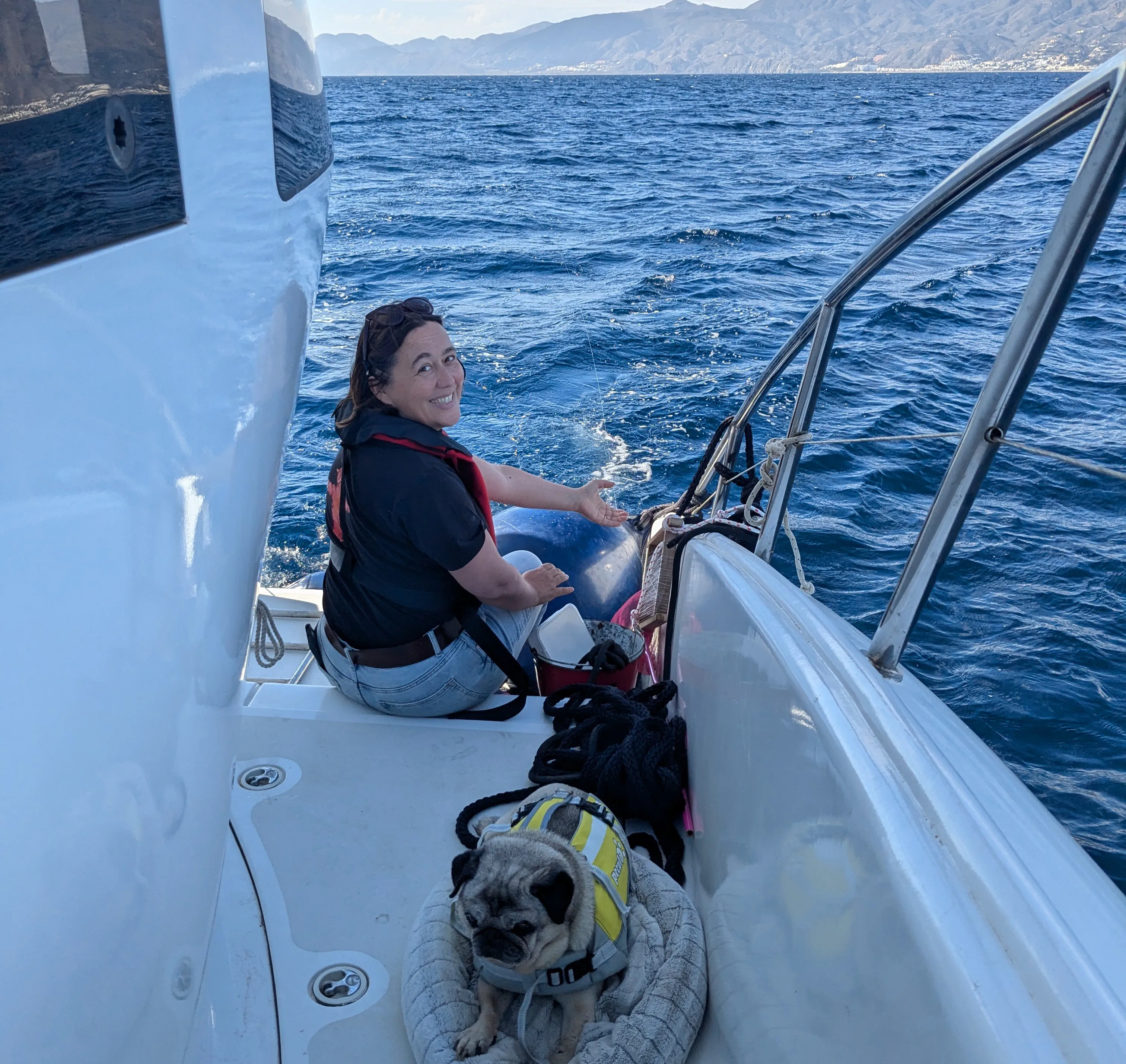
The next morning, after a quick dinghy trip to shore for BigBoy, we weighed anchor with our sights set on one of the bays in Aguilas. We left with a 72% SoC. Knowing we had another full day of navigation ahead, we decided to run the generator for 2 hours. Since we were underway and outside the boundaries of the nature reserve, we decided to troll a fishing line. Unfortunately, we didn’t get any bites that day.
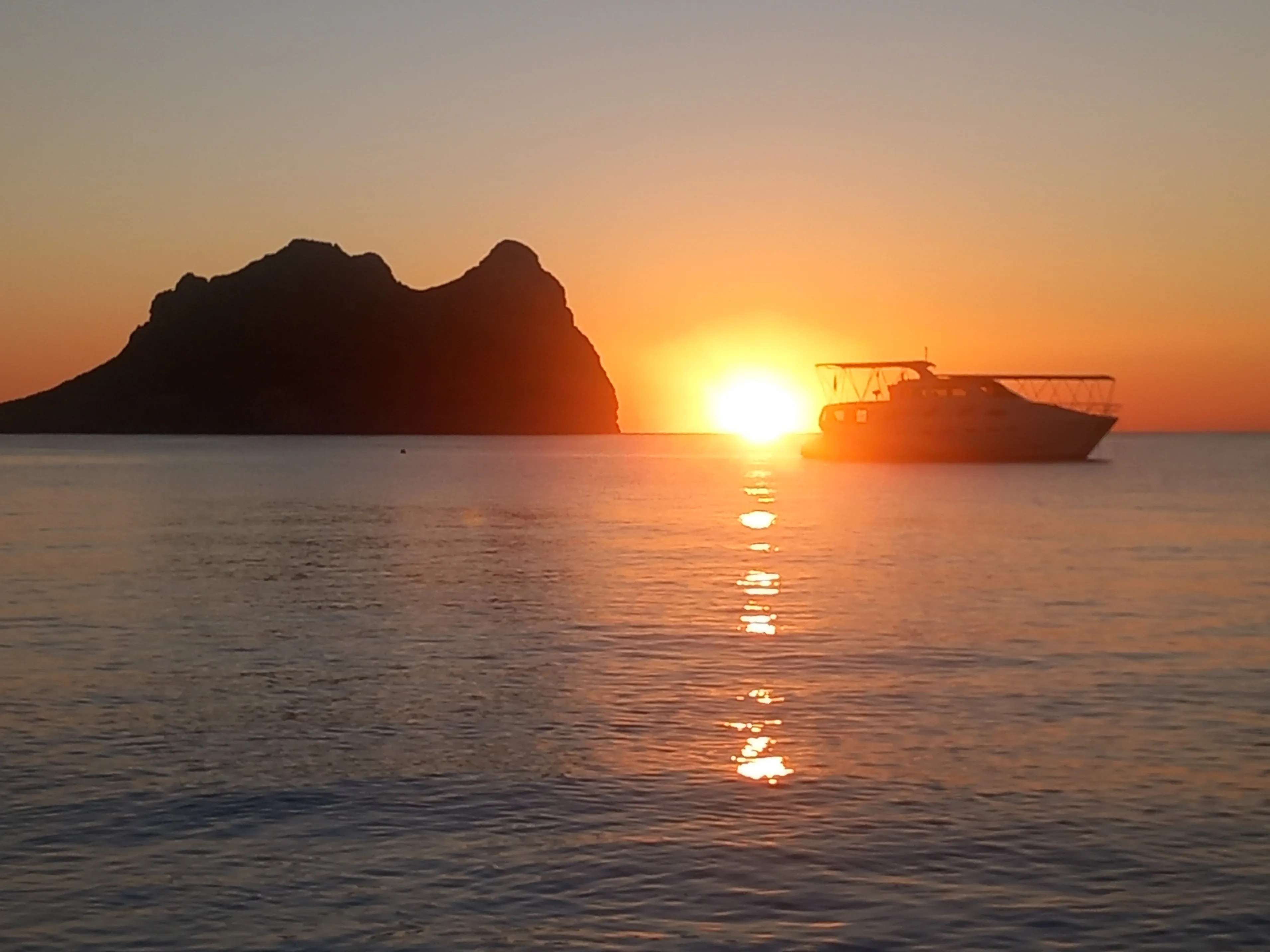
As we approached Aguilas, we decided to anchor in front of Playa del Hornillo. It’s a small beach situated in a bay protected by a large rock, featuring an old structural ruin once used to load large ships. Upon arrival, we found the bay littered with fishing nets and crab pots, making the maneuver to drop our anchor on a clean patch of sand quite challenging. We finally found a safe spot and dropped anchor in 6 meters of water. We turned off our systems with a 71% SoC.
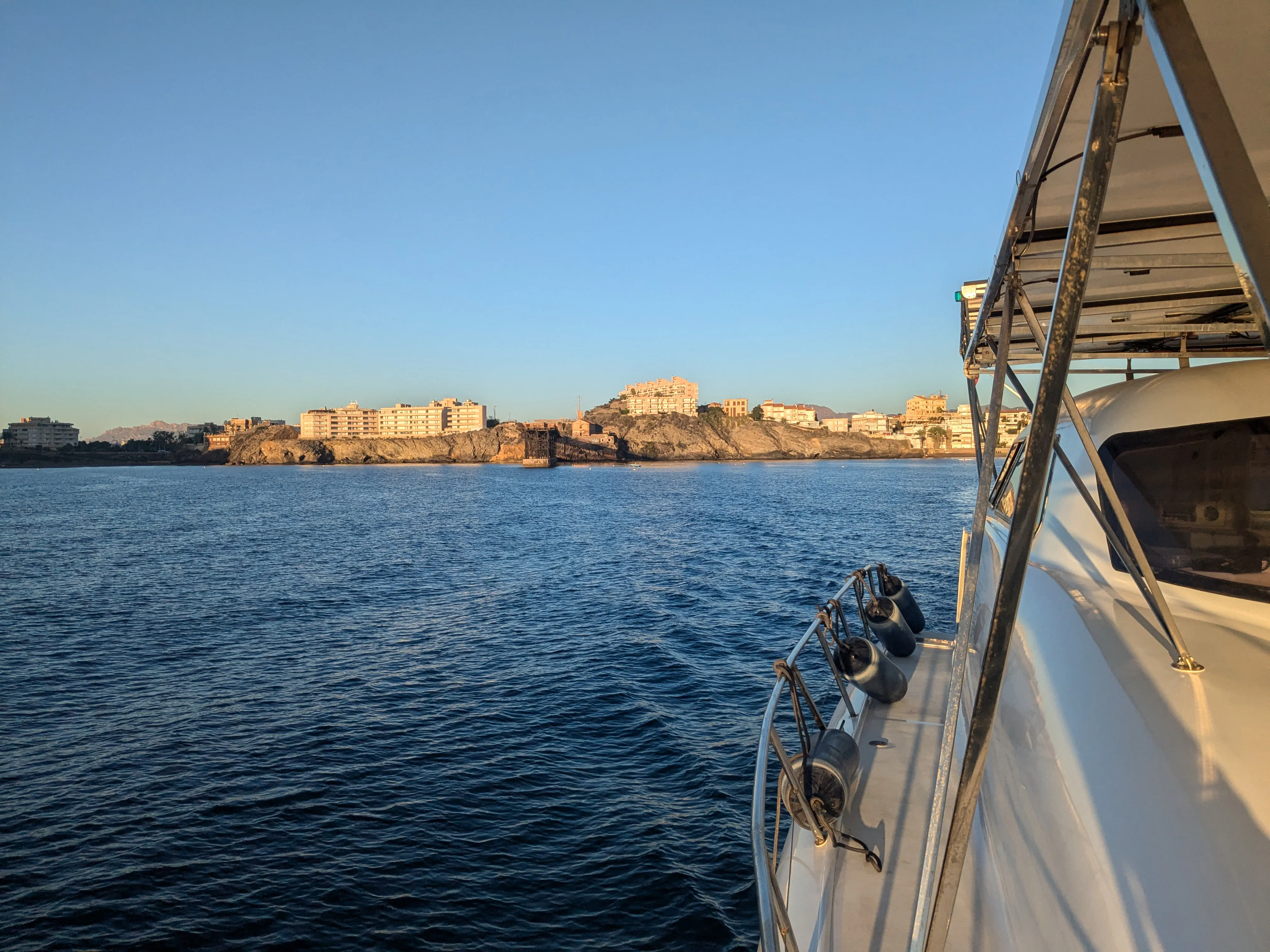
On our third consecutive day of navigation, we lifted the anchor early to leave the beautiful Aguilas anchorage. We had another 32-nautical-mile stretch ahead of us and started with a 67% SoC.
We estimated that given our remaining energy, the minimal sunlight, and the distance, we would arrive in Cartagena with a 20% to 25% SoC. However, because the forecast showed deteriorating sea states near Cartagena, we opted to run the generator for 2 hours to build a safety margin into our battery bank.
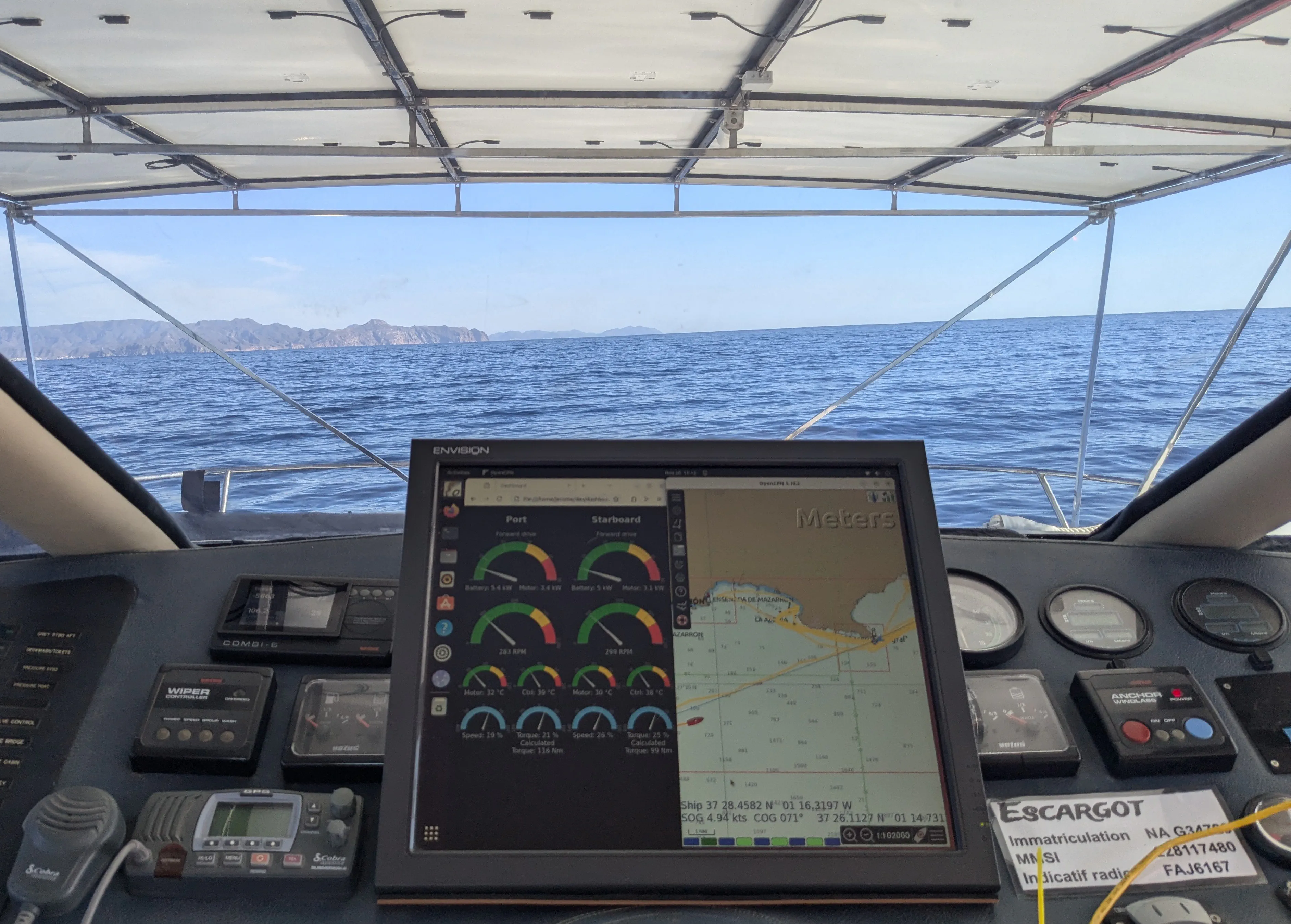
We arrived in Cartagena mid-afternoon with a comfortable 53% SoC, very pleased with the successful trip we had just completed. We were now fully ready for the holiday celebrations and family visits awaiting us!
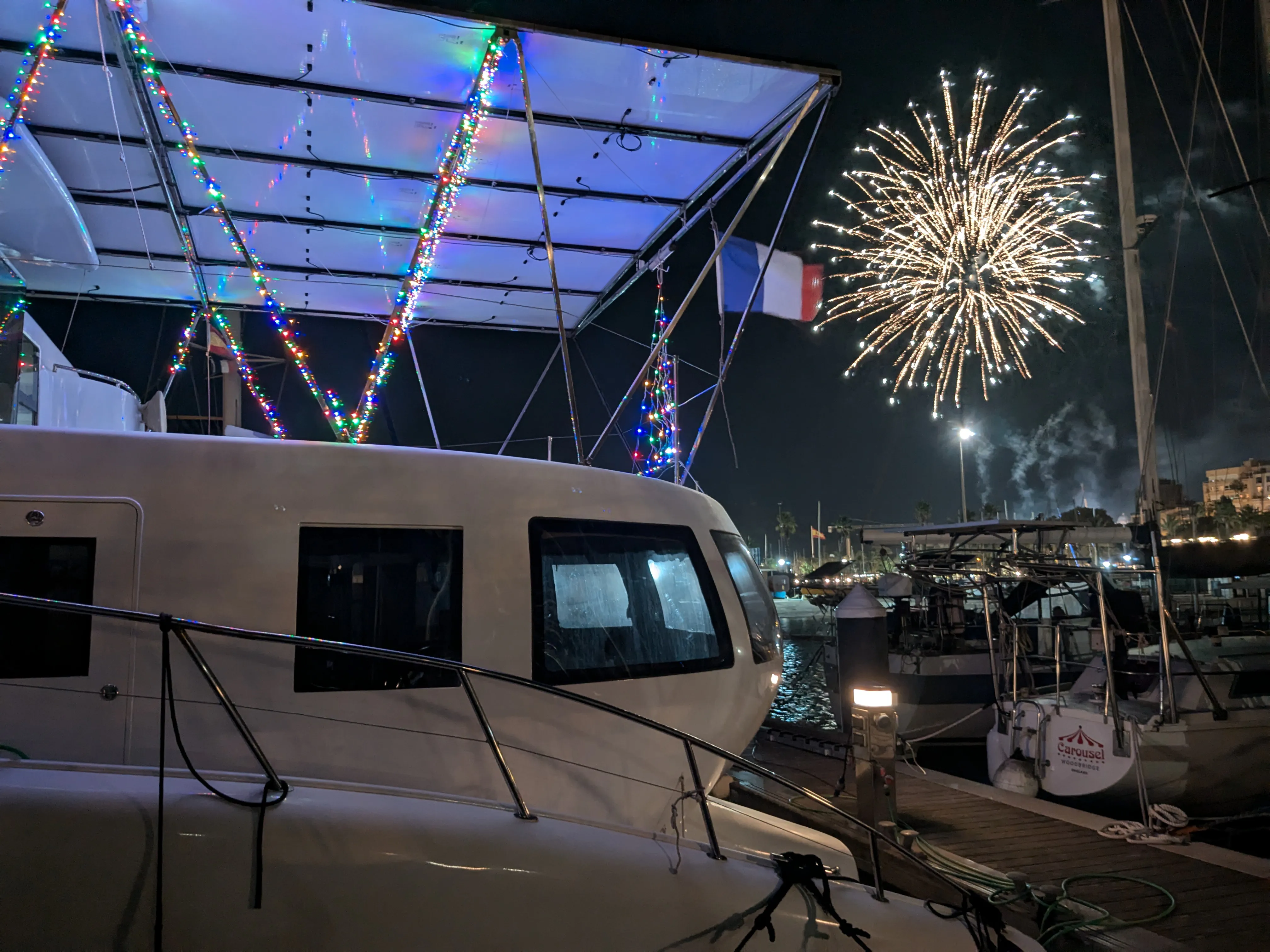
We hadn’t been able to get back out on the water until today. Upon returning from our previous trip, we discovered that one of our motor cooling seawater pumps was on the verge of failing. We used the downtime to tackle a few major projects: restoring our old autopilot to work with our electric-hydraulic steering system, and building new data-capture microcomputers to monitor temperatures at various points across our systems. By mid-January, the seawater pump was finally fixed, and Escargot was fully seaworthy once again.
Our daughter joined us for a few days aboard Escargot, so we took advantage of a beautiful sunny day to do a scenic loop in the Bay of Cartagena. We left our berth with a full 100% SoC.
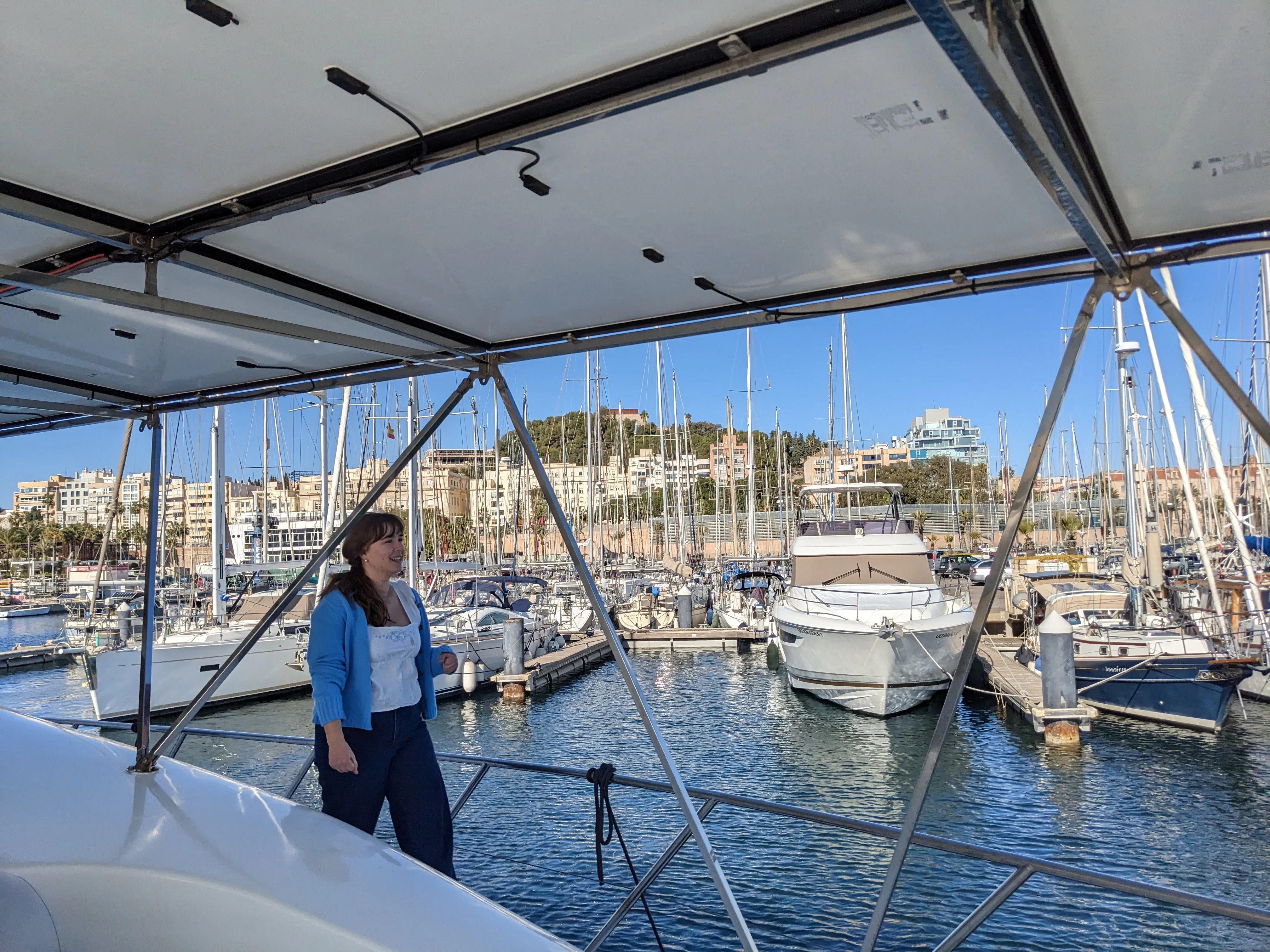
We decided to stay very close to the shore to get a seaside perspective of the areas we had been hiking just a few days prior, including the charming village of La Algameca.
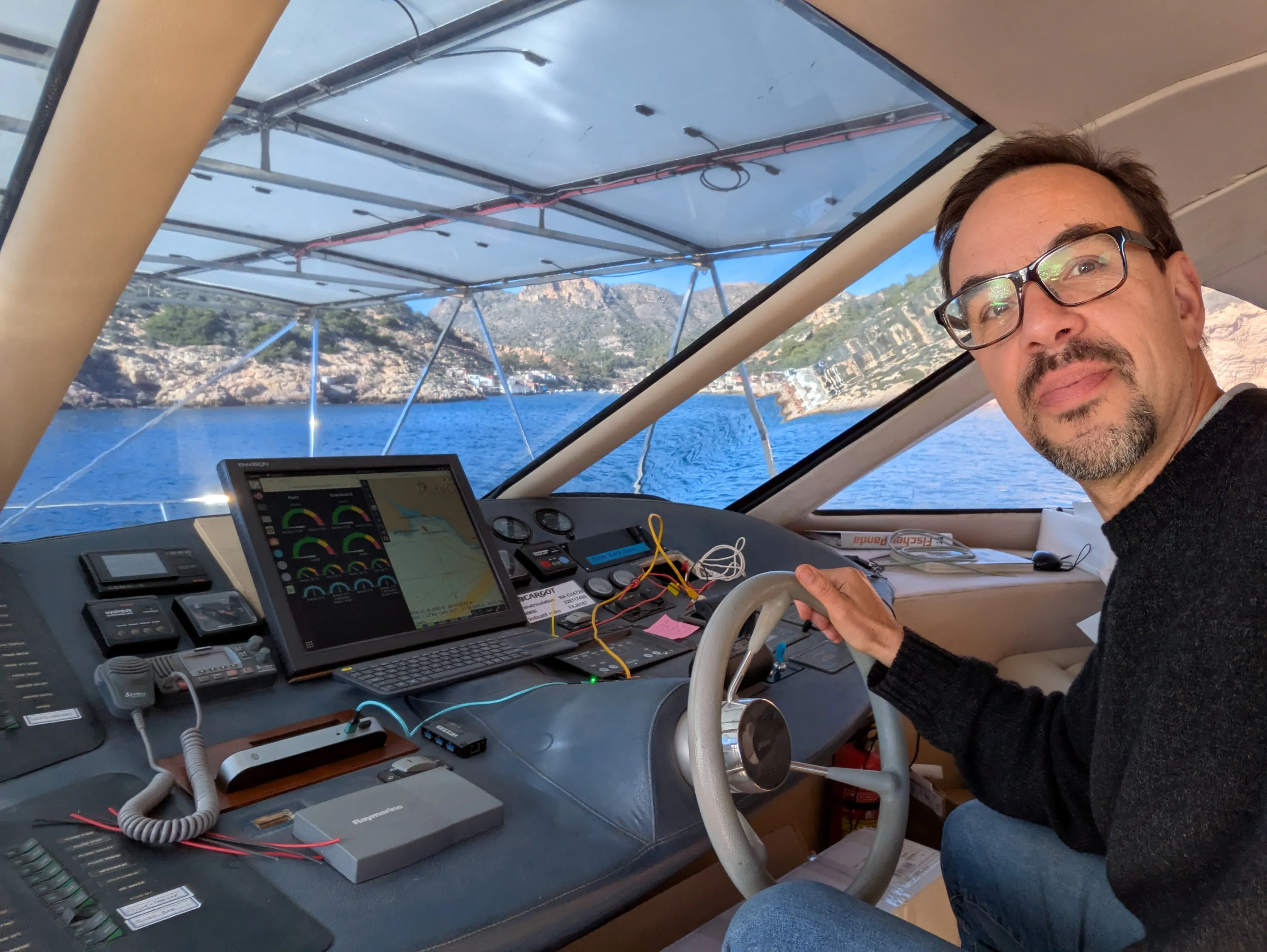
We had absolutely perfect sailing conditions, with winds between 5 and 10 knots and a gentle swell of only 0.2 to 0.5 meters.
We returned to our berth with a 50% SoC, officially closing out this navigation season and preparing Escargot to rest comfortably at her berth in Yacht Port Cartagena.
We returned early to Escargot for our spring season living aboard after being away for only two months. We started with a couple of short trips in …
These past few months marked our first season living and navigating aboard Escargot. We left Alicante without a predefined destination, other than a …