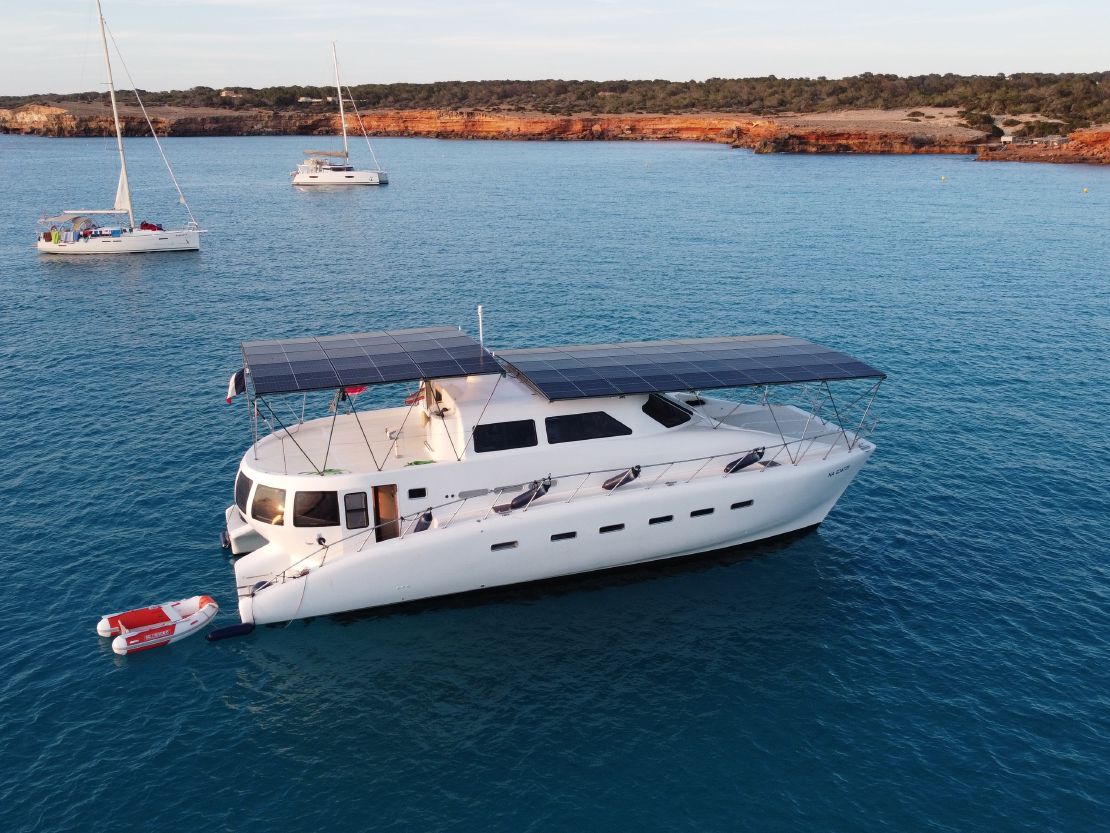
Spring 2025 Navigation Log
Our spring season was defined by a bold ambition: crossing to the Balearic Islands. Before setting off, we focused on finalizing our autopilot …
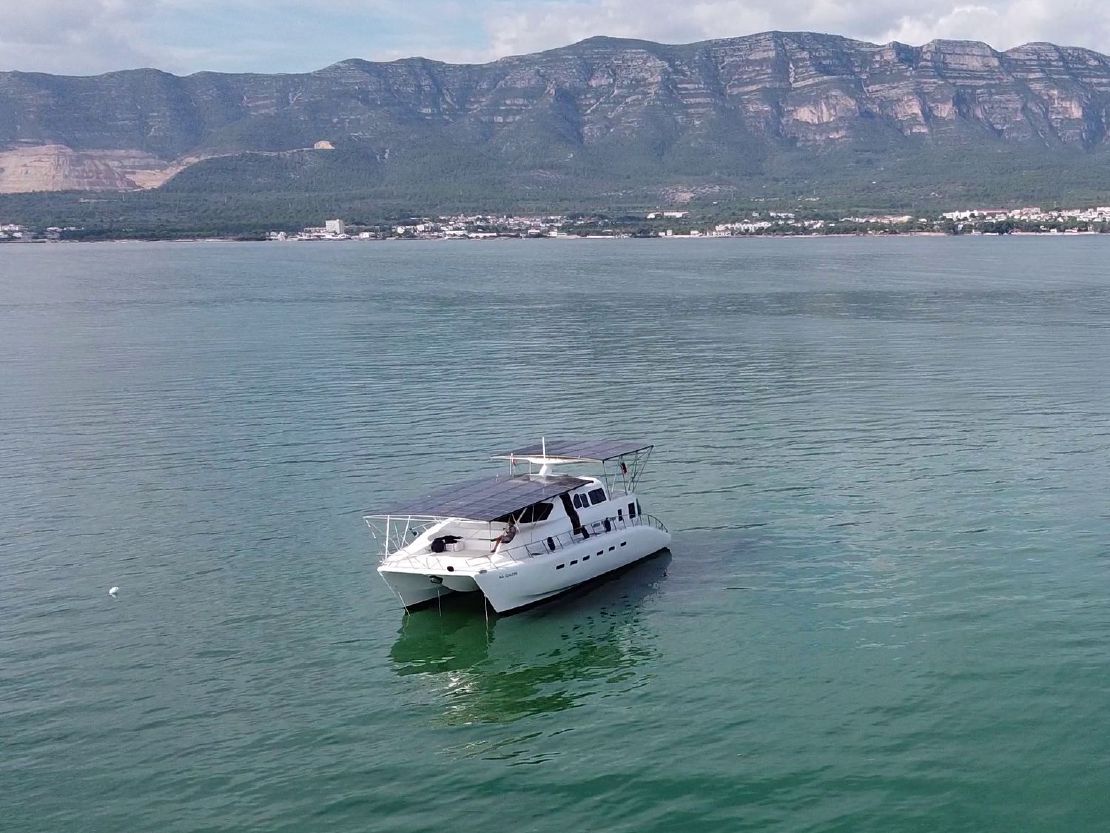
Our fall season was set to take us from Spain to France, where Escargot would be put on drydock for the winter. We had thoroughly enjoyed our time in the Balearic Islands during the spring, so we originally planned to make a stop there along the way. However, days of torrential rain over Spain and Ibiza forced us to reconsider our plans and take a coastal route instead. We visited many interesting port cities, explored the delta of the Ebro River, and anchored in several beautiful natural reserves along our journey north.
| Date | Distance | Speed | Duration | Description |
|---|---|---|---|---|
| 2025-09-14 | 31.9 nm | 4.1 kts | 7.9 h | Passage from Torrevieja to Alicante |
| 2025-09-27 | 28.5 nm | 4.6 kts | 6.2 h | Passage from Alicante to L’Albir |
| 2025-09-28 | 27.0 nm | 4.6 kts | 5.9 h | Passage from L’Albir to Denia |
| 2025-10-04 | 44.0 nm | 4.5 kts | 9.7 h | Passage from Denia to Valencia |
| 2025-10-08 | 37.1 nm | 4.0 kts | 9.2 h | Passage from Valencia to Castelló |
| 2025-10-15 | 34.9 nm | 4.3 kts | 8.1 h | Passage from Castelló to Benicarlo |
| 2025-10-18 | 14.7 nm | 3.6 kts | 4.1 h | Passage from Benicarlo to La Rapita |
| 2025-10-21 | 33.9 nm | 3.9 kts | 8.8 h | Passage from La Rapita to L’Ampolla |
| 2025-10-23 | 1.1 nm | 2.2 kts | 0.5 h | Navigation from L’Ampolla to Club Nautico L’Ampolla |
| 2025-10-25 | 31.2 nm | 4.7 kts | 6.6 h | Passage from L’Ampolla to Tarragona |
| 2025-10-28 | 17.5 nm | 3.7 kts | 4.7 h | Passage from Tarragona to Segur de Calafell |
| 2025-11-02 | 16.0 nm | 4.4 kts | 3.7 h | Passage from Segur de Calafell to Port Ginesta |
| 2025-11-04 | 37.2 nm | 4.3 kts | 8.8 h | Passage from Port Ginesta to Arenys de Mar |
| 2025-11-10 | 42.3 nm | 3.6 kts | 11.9 h | Passage from Arenys de Mar to Cala Sa Riera |
| 2025-11-11 | 35.4 nm | 3.8 kts | 9.2 h | Passage from Cala Sa Riera to Banyuls-sur-Mer |
| 2025-11-16 | 39.7 nm | 4.0 kts | 10.0 h | Passage from Banyuls-sur-Mer to Gruissan |
| 2025-11-17 | 32.8 nm | 4.1 kts | 7.9 h | Passage from Gruissan to Sète |
| 2025-11-23 | 33.5 nm | 4.0 kts | 8.3 h | Passage from Sète to Saintes-Maries-de-la-Mer |
| 2025-11-29 | 30.5 nm | 4.1 kts | 7.5 h | Passage from Saintes-Maries-de-la-Mer to Port-de-Bouc |
| 2025-12-01 | 1.2 nm | 4.0 kts | 0.3 h | Navigation to Chantier Naval de Provence for haul-out |
Total distance: 570.6 nm
Following a deep cleaning of the solar panel arrays and the deck, we were ready to kick off our fall sailing season. With our haul-out scheduled at Alicante Varadero STA the following morning, we left our summer dock shortly after 11:00 AM. The weather forecast predicted a half-meter swell on our starboard beam and winds around 10 knots. If we hadn’t been on a tight schedule, we would have delayed our departure to avoid the side swell, which makes for very uncomfortable sailing conditions.
As soon as we cleared the port of Torrevieja, we set our heading for the island of Tabarca to take the waves at a 30- to 40-degree angle on our forward starboard bow. We set our power consumption at 20kW for a slow 3.5 to 4 knots—the hulls were quite fouled after three months at the dock, creating significant drag.
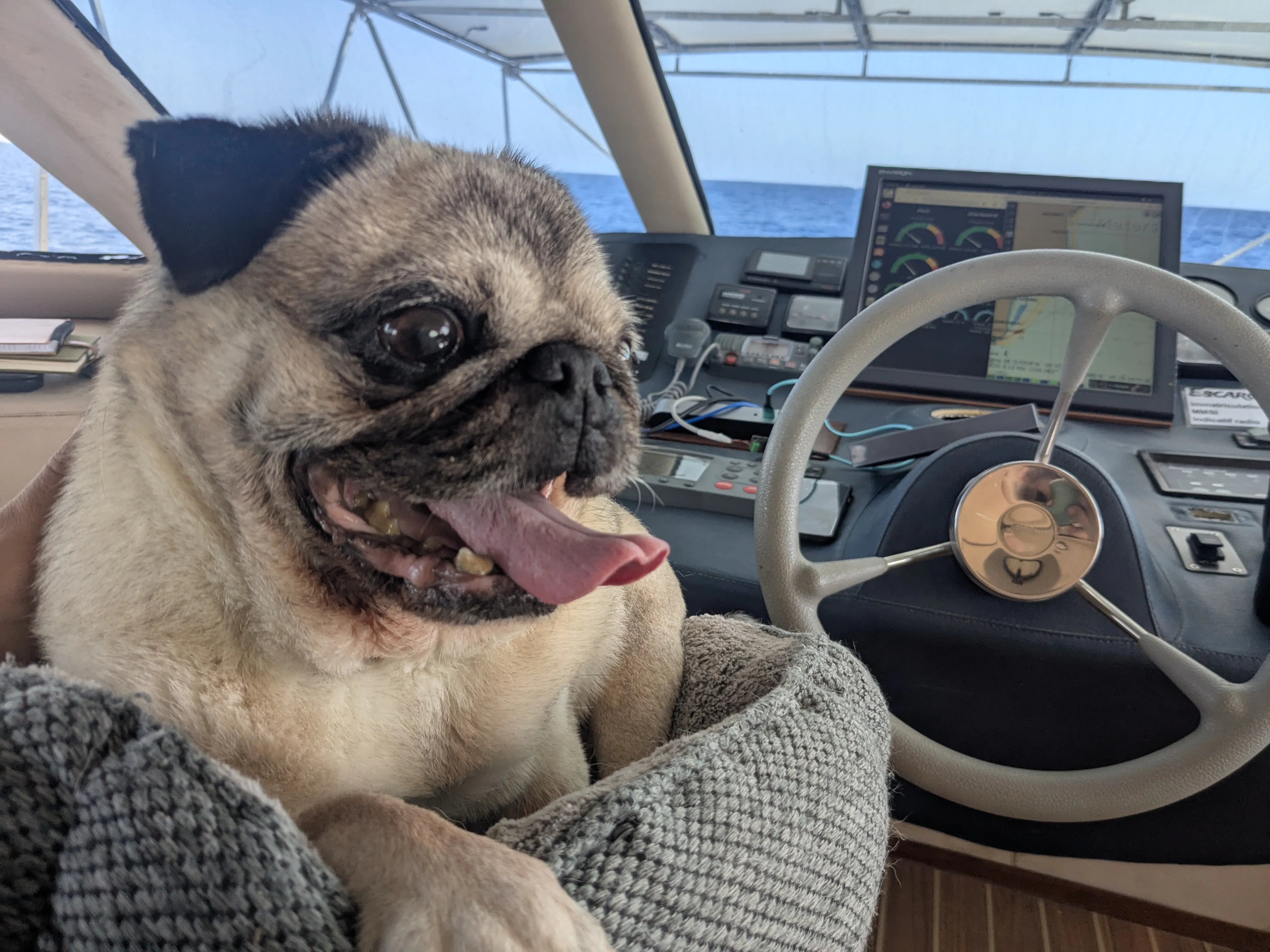
Our heading to mitigate the waves was taking us too far east, forcing us to tack 90 degrees to the west to point back toward land. This necessary maneuvering extended our planned navigation time, as we were not longer on a straight line to our destination.
After two hours underway with surprisingly low solar yield, we realized we had forgotten to turn on half of our solar arrays. When leaving the boat unattended for an extended period, we always cap our solar generation at 8kWp rather than our usual 16kWp. Initially, we blamed the low power on dirty panels, but once we activated the remaining arrays, generation jumped to between 6 and 10 kW, putting us right back in line with expectations.
Following another 90-degree tack to the east, we adjusted our heading to thread the needle between the coast and Tabarca. Shortly after, a mechanical issue cropped up: our starboard rudder, which we had tightened prior to departure, was coming loose again. We had to turn off the autopilot and hand-steer while addressing the problem.
By 3:30 PM, our batteries’ state of charge (SOC) had dropped to 26%. The combination of running at 50% solar capacity earlier in the day, pushing 20kW just to maintain 4 knots against a dirty hull, and the extra distance from tacking had drained our reserves. With three hours remaining to Alicante, we fired up our backup diesel generator.
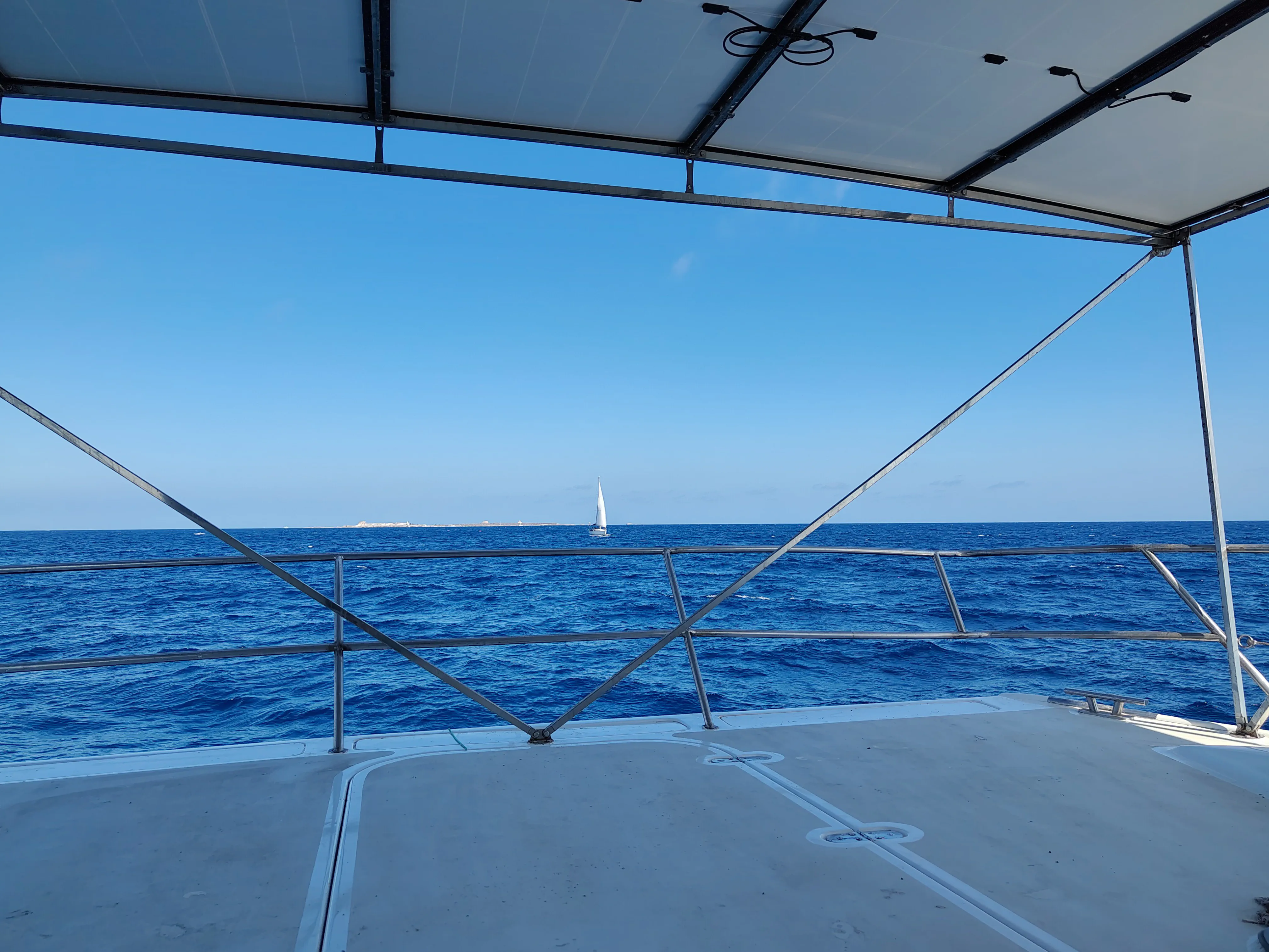
Three hours later, we turned off the generator as we approached the southern port of Alicante, docking right in the travelift pool to prep for our early-morning haul-out. We were happy to be back in Alicante, but this rough first leg confirmed that we enjoy our solar cruising much more when we have the luxury of waiting for optimal marine and solar conditions.
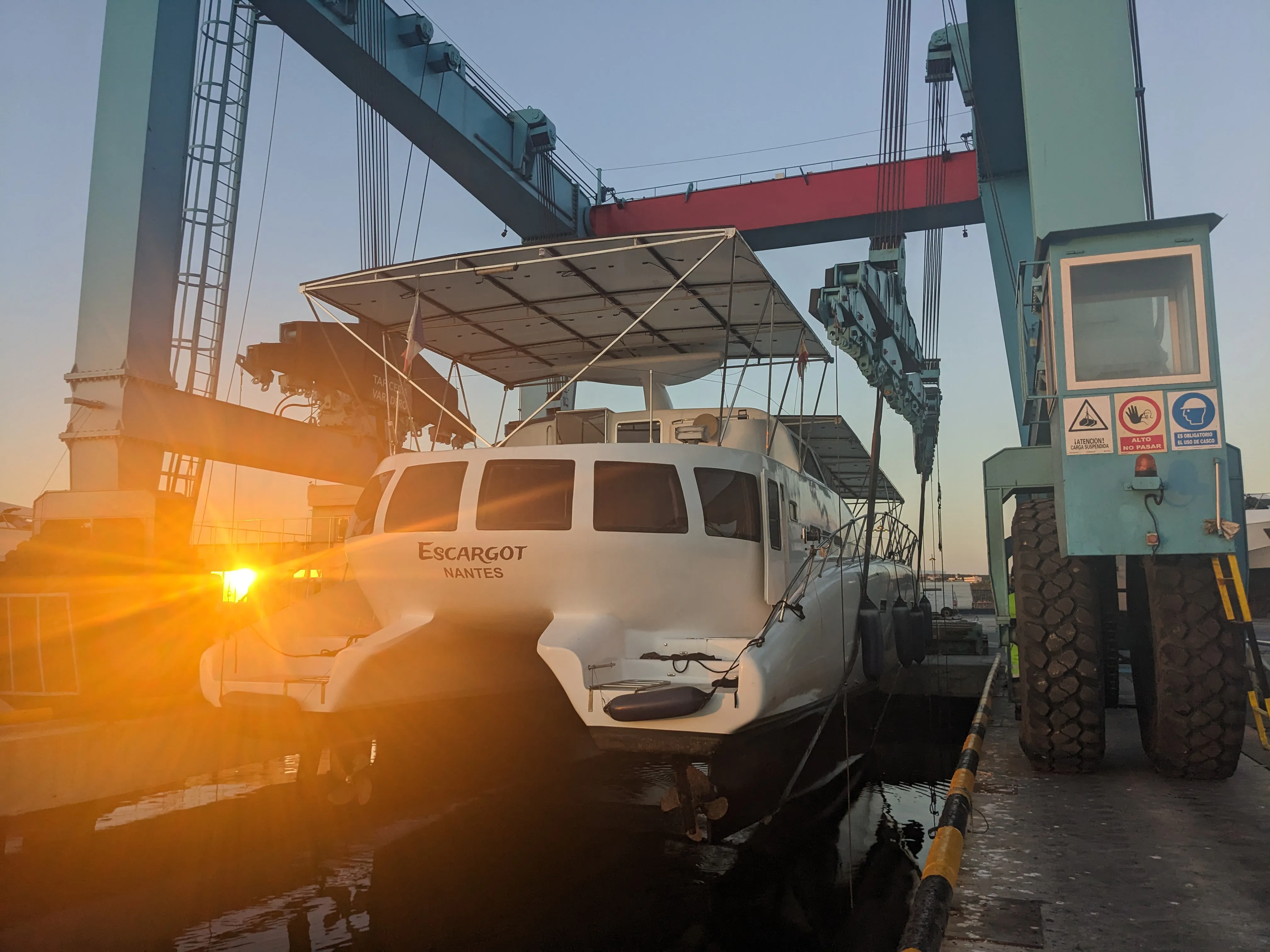
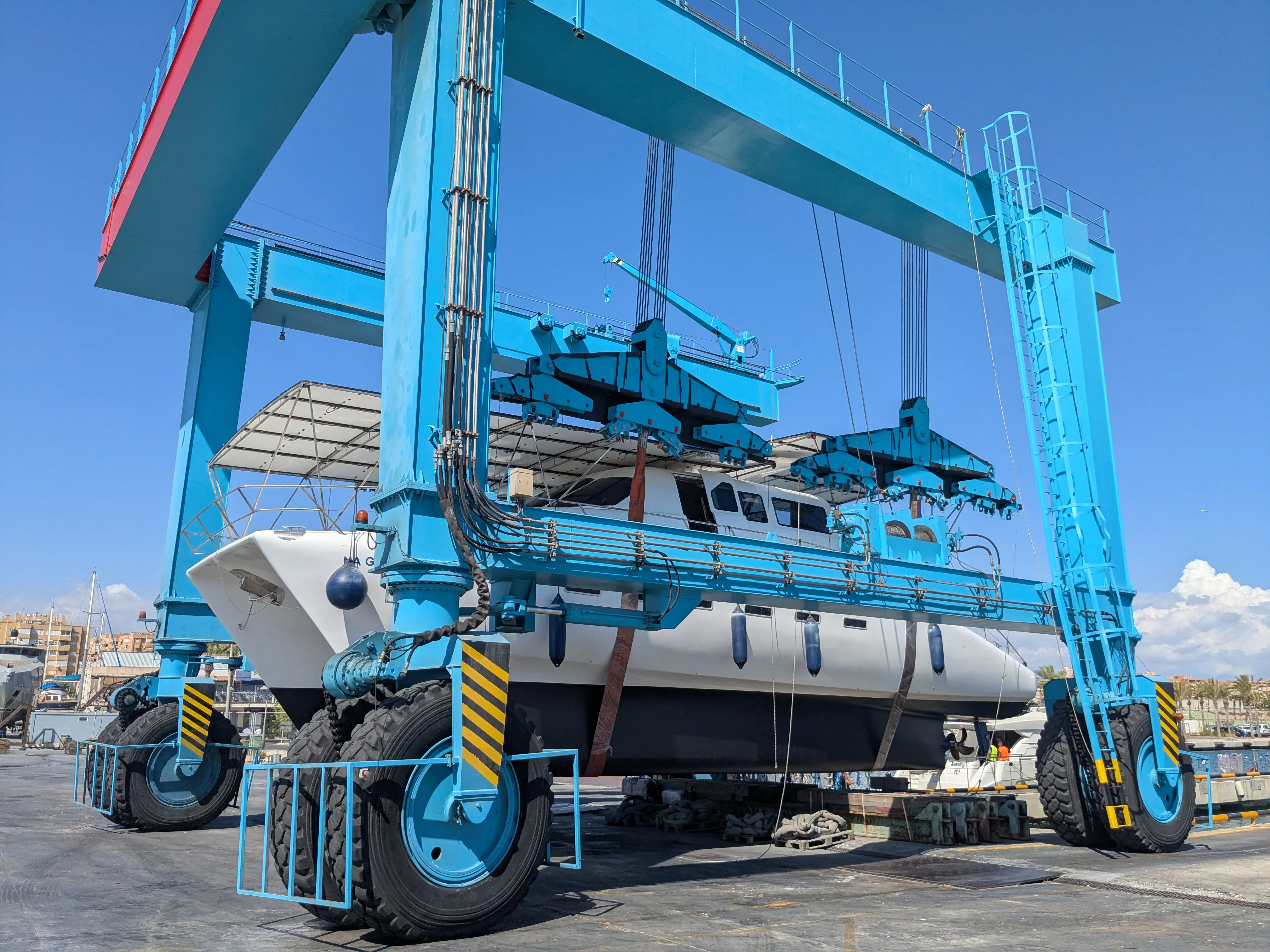
Escargot had been in the water for two years prior to this haul-out, and we had an extensive maintenance list: cleaning the hulls, rudders, and propellers; applying primer and antifouling to the rudders and hulls; changing the generator oil and filters; and, most importantly, rebuilding our rudder fixture mechanism.
During the hull inspection, we noticed a few small blisters—an unfortunate early sign of osmosis. Faced with this finding, we had two options: cancel our fall season to undergo a full, six-month osmosis treatment, or sand down the localized blisters, let the substrate dry for a week, and apply a new coat of underwater primer. Because the issue was highly localized and we didn’t want to forfeit our cruising season, we opted for the latter. We applied a coat of International Primocon, followed by two coats of Ecofleet 530 antifouling.
With fresh anodes installed on the shafts, propellers, and rudders, we were ready to splash again.
During our pre-departure checks, I checked the anchor locker and turned on the hydraulic pump to open the hatch. Suddenly, a loud “bang” echoed under the cockpit: one of the sealed lead-acid batteries powering our 24VDC anchor windlass and hatch opener had suffered a dramatic explosion. A spark inside the battery likely ignited accumulated hydrogen gas. We delayed our departure from the travelift pool to replace the three batteries under the forward cockpit. Because they are constantly trickle-charged from our 96VDC main battery bank, we downsized them, installing a 2.3kWh buffer bank for the 24VDC windlass and a smaller 500Wh buffer bank for our 12VDC electronics. With that sorted, we were finally ready to go.
Our goal was a direct offshore passage from Alicante to Ibiza, sailing through the afternoon and night. The forecast predicted swell that we could comfortably take on our forward port quarter. We left the Varadero STA pool at 1:30 PM with a full 100% SOC.
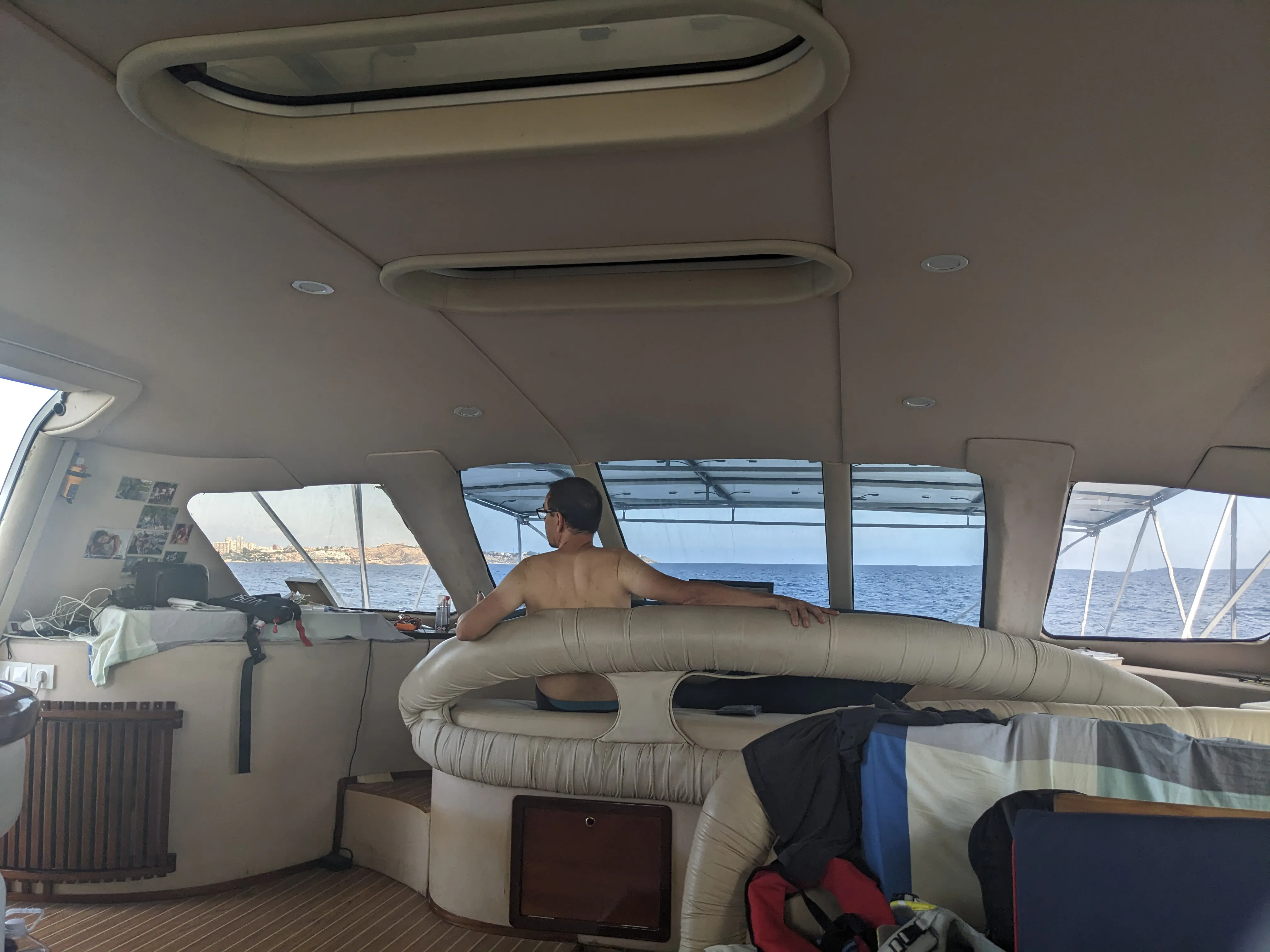
However, as we approached Benidorm, the waves were rolling in from a much more northerly direction than forecasted, making our northeast heading far too uncomfortable for a night passage. We diverted to our familiar anchorage at L’Albir for the night to reassess in the morning, dropping the hook in 5 meters of water with 70% SOC remaining.
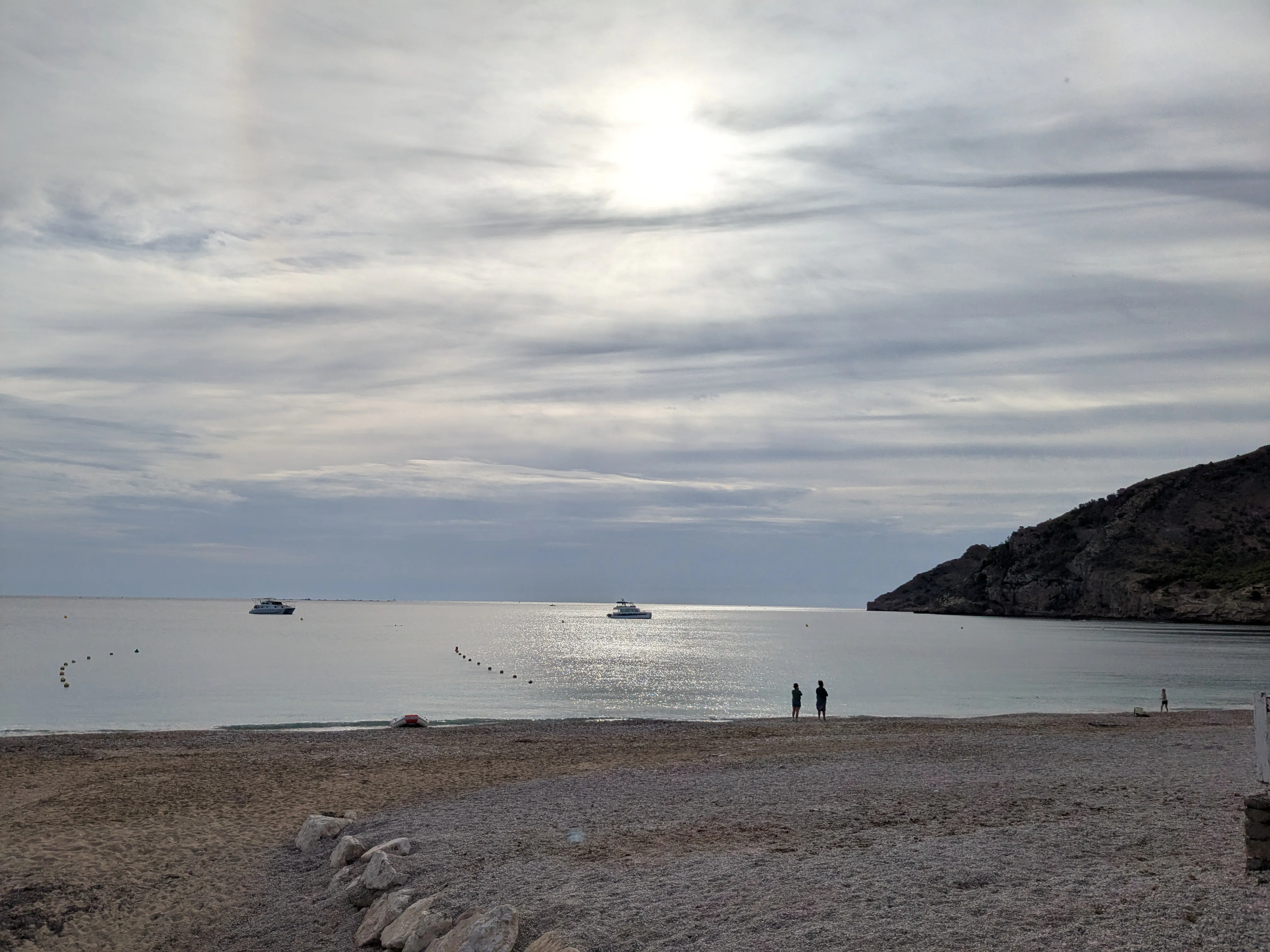
Crossing to Ibiza remained impossible the next day due to the bumpy sea state. We decided to hop up to Denia to wait for better weather. We left the anchorage midday under an overcast sky, carrying a 74% SOC.
By the time we passed Moraira, the sky had cleared. Cruising comfortably at 7kW of power, our batteries were still sitting at 70%.
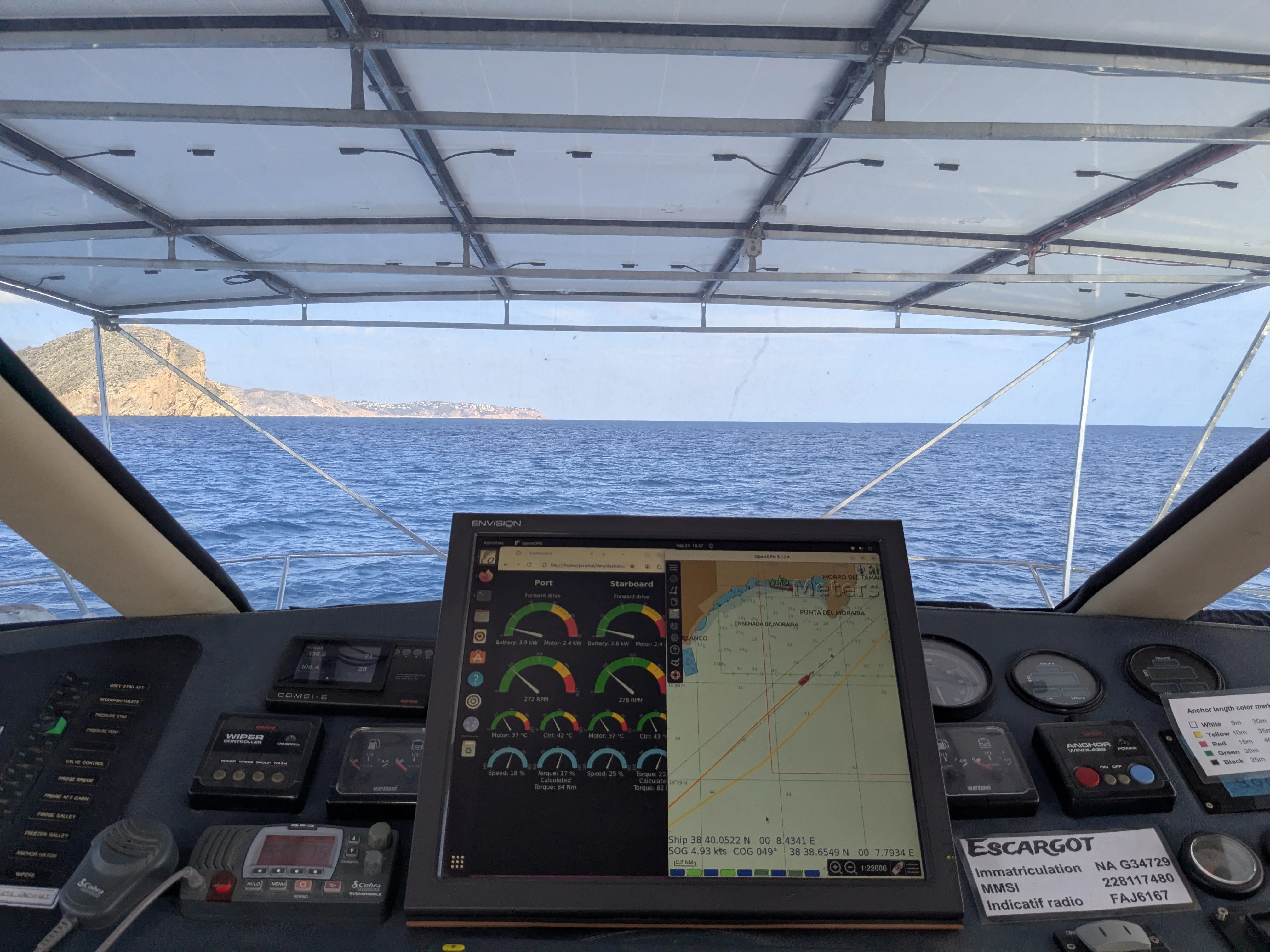
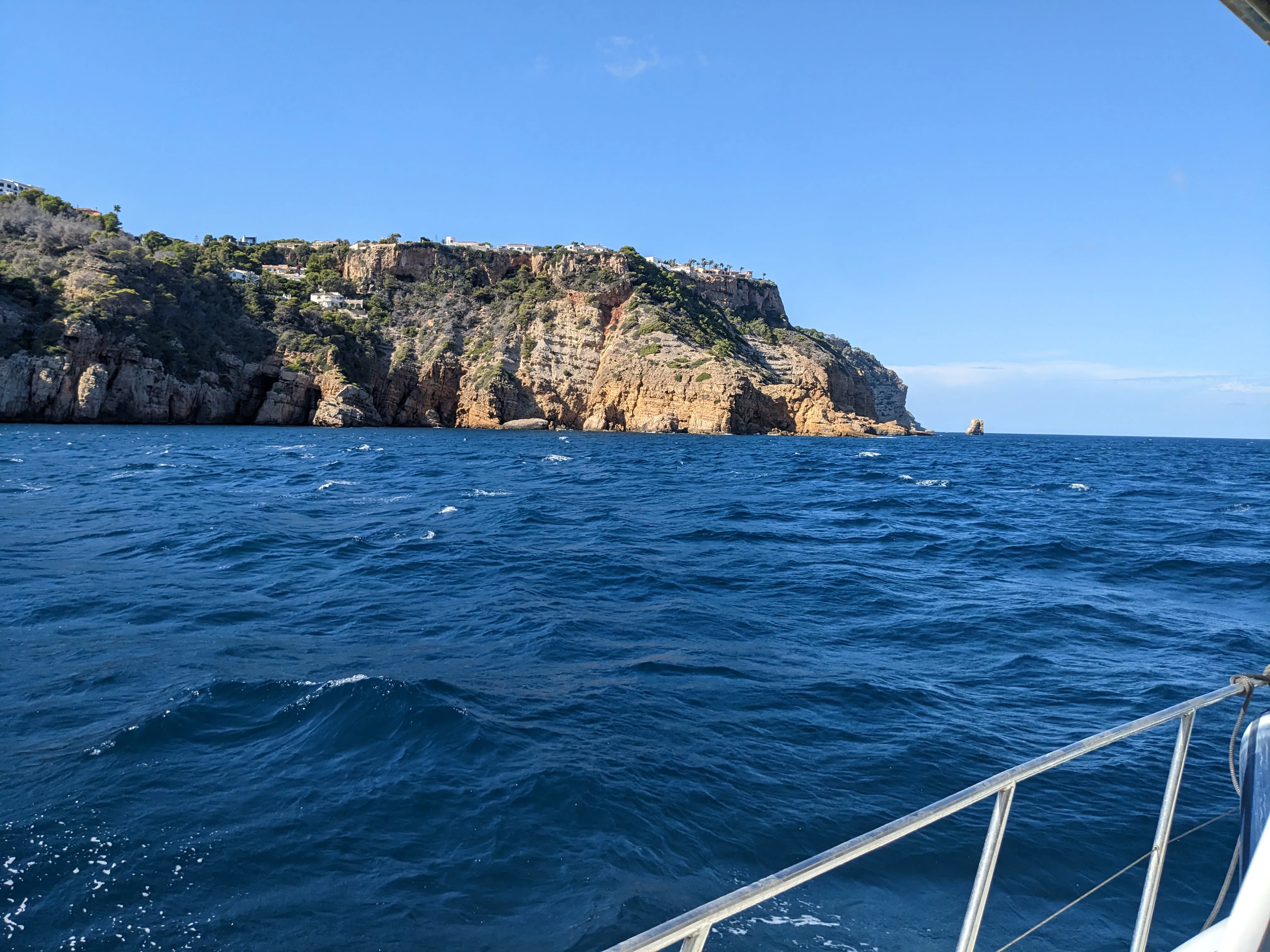
As we approached Cap de la Nau, the wave height increased, prompting us to push the propulsion up to 12kW to maintain momentum.
We arrived in Denia amid 20-knot gusts, making our docking maneuver a bit challenging, but we secured our lines and caught the mooring lines without issue. We shut down with 45% SOC remaining.
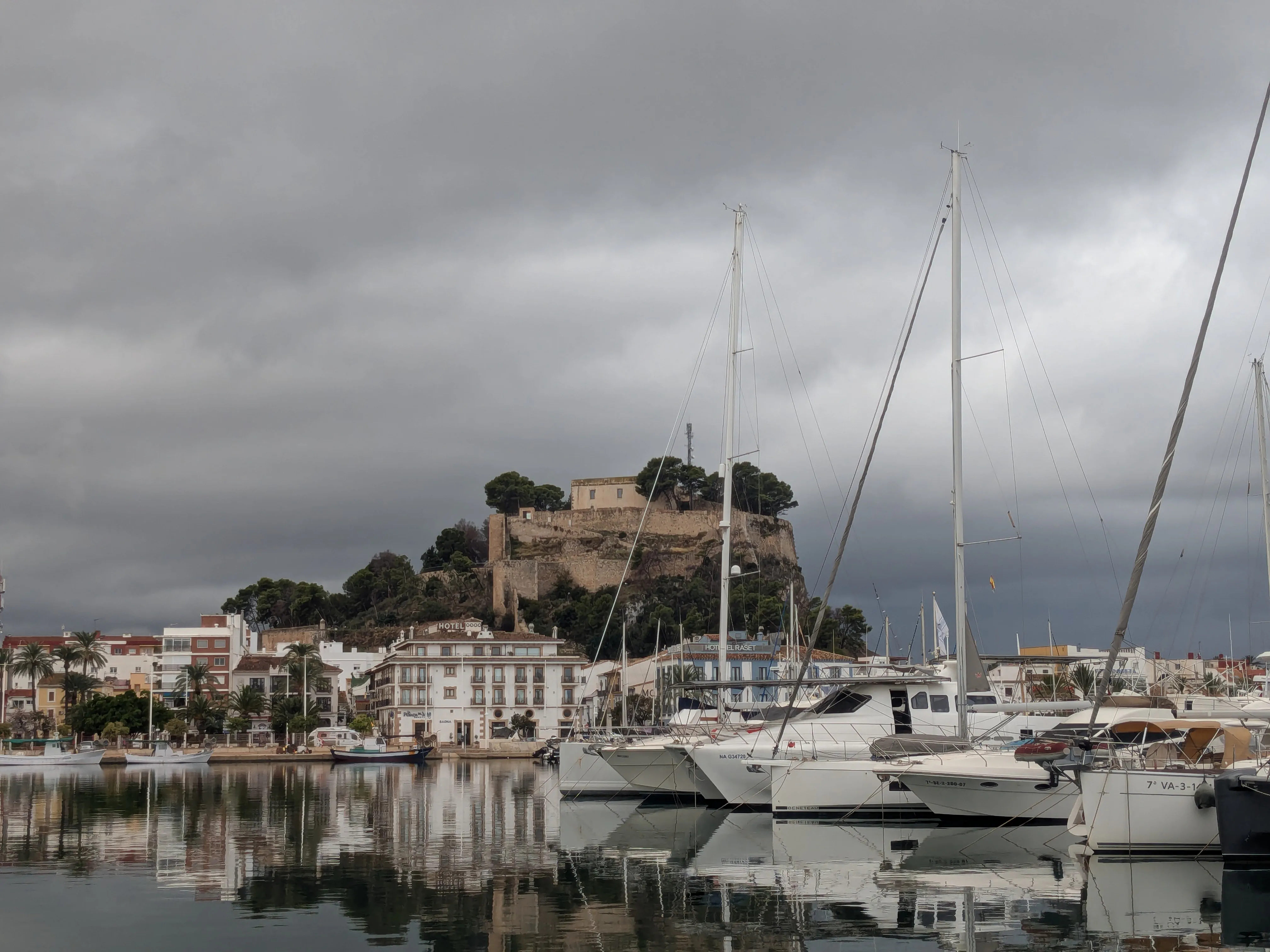
While we were in Denia, severe storms brought heavy rain to large stretches of the Spanish Mediterranean coast and the Balearic Islands. Ibiza experienced severe flooding, receiving a staggering 180mm of rainfall in just 12 hours. With forecasts predicting another two weeks of heavy rain, we decided it was unwise to cross over to the islands. We officially changed our itinerary to cruise the mainland coast all the way to France.
Our next destination was Valencia. We departed Denia at 8:00 AM with a 95% SOC.
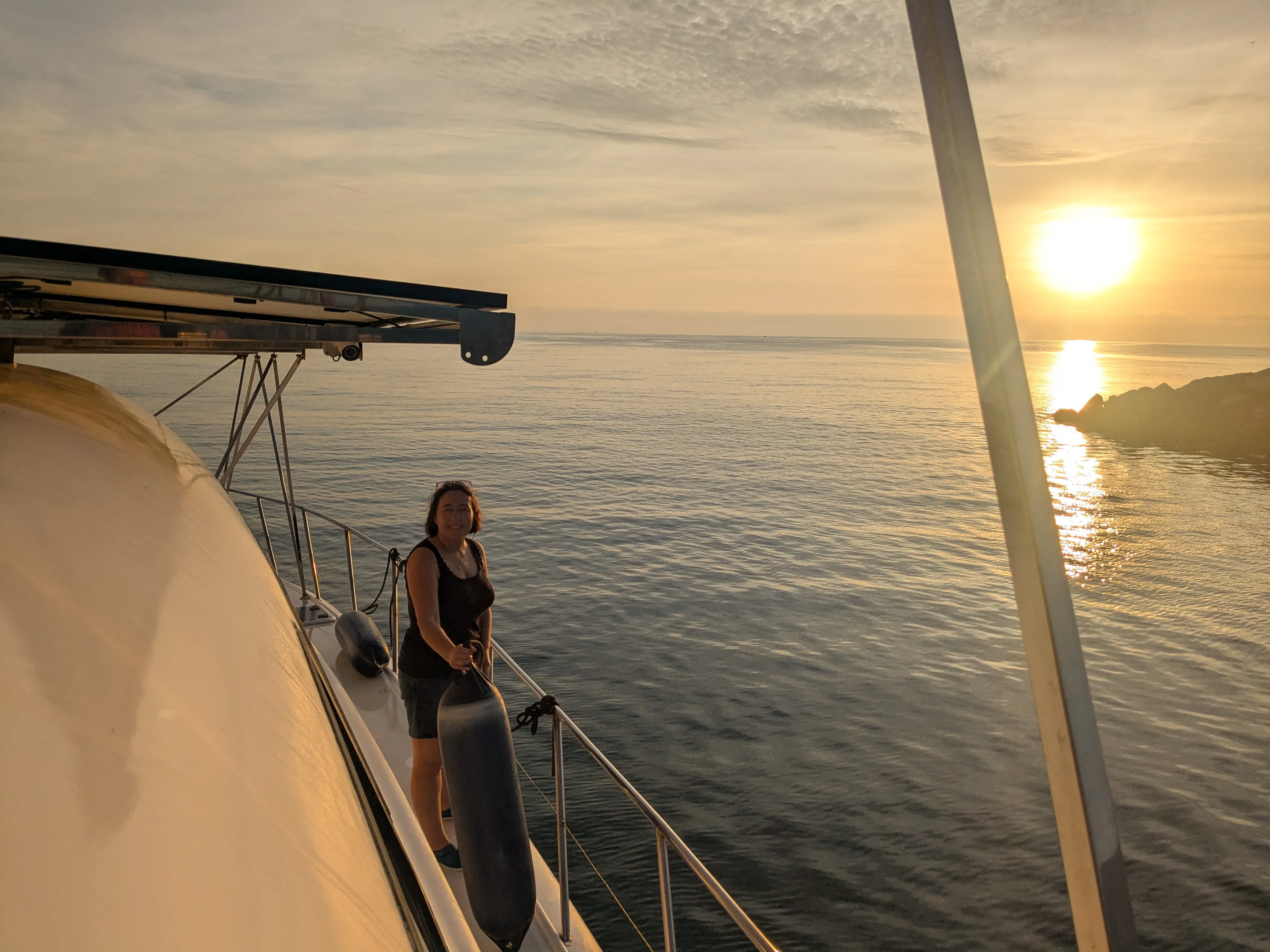
As we slowly navigated the outbound channel, a high-speed Balearia ferry overtook us. Being passed by such a large, fast vessel in a narrow channel was intimidating, but aside from her massive wake rolling Escargot a bit, everything went smoothly.
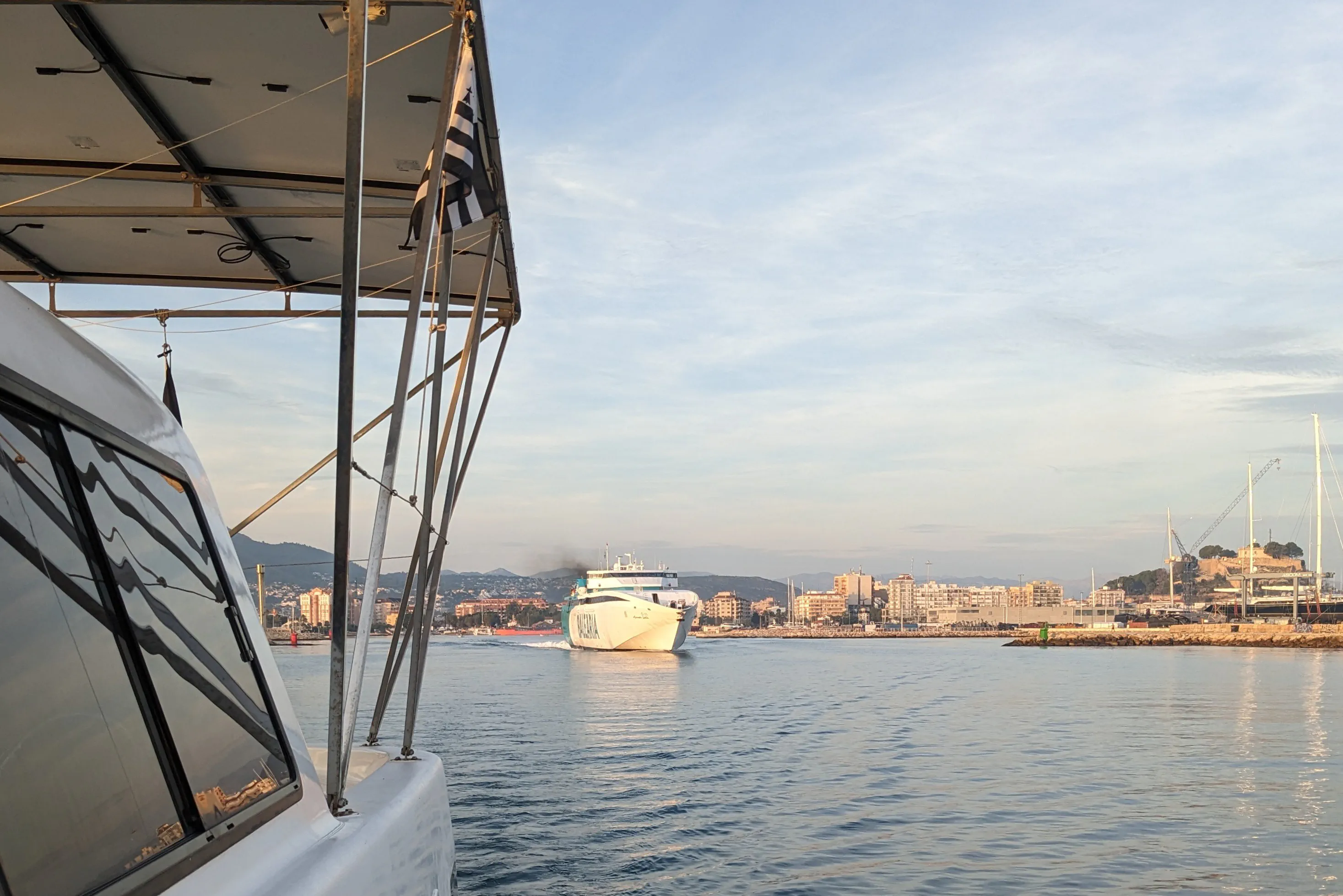
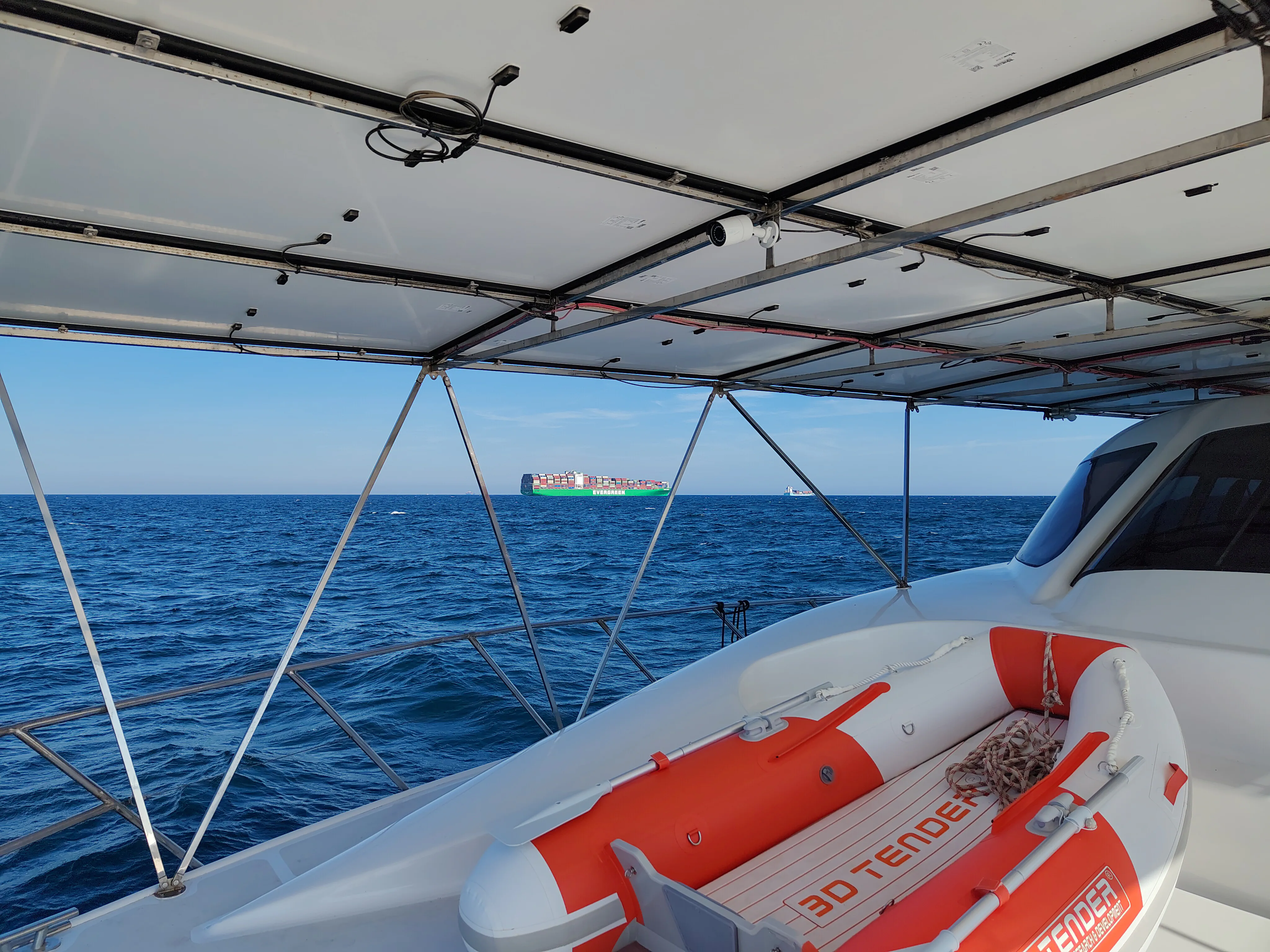
We kept our propulsion at 8kW for most of the day, holding our speed above 4 knots and occasionally hitting 4.8 knots with a favorable current. We crossed the busy cargo anchorage outside the port of Valencia and continued toward the marina on the city’s north side. When we made our port turn, we temporarily pushed the motors to 20kW to quickly punch through an area of steep side waves.
Upon arriving at Marina Port Valencia, a marinero guided us to our berth via dinghy. We tied up with an excellent 67% SOC remaining.
The quickest way to reach the marina office for check-in was to drop our own dinghy and cross the harbor. Afterward, we extended our ride to explore the city side of the marina.
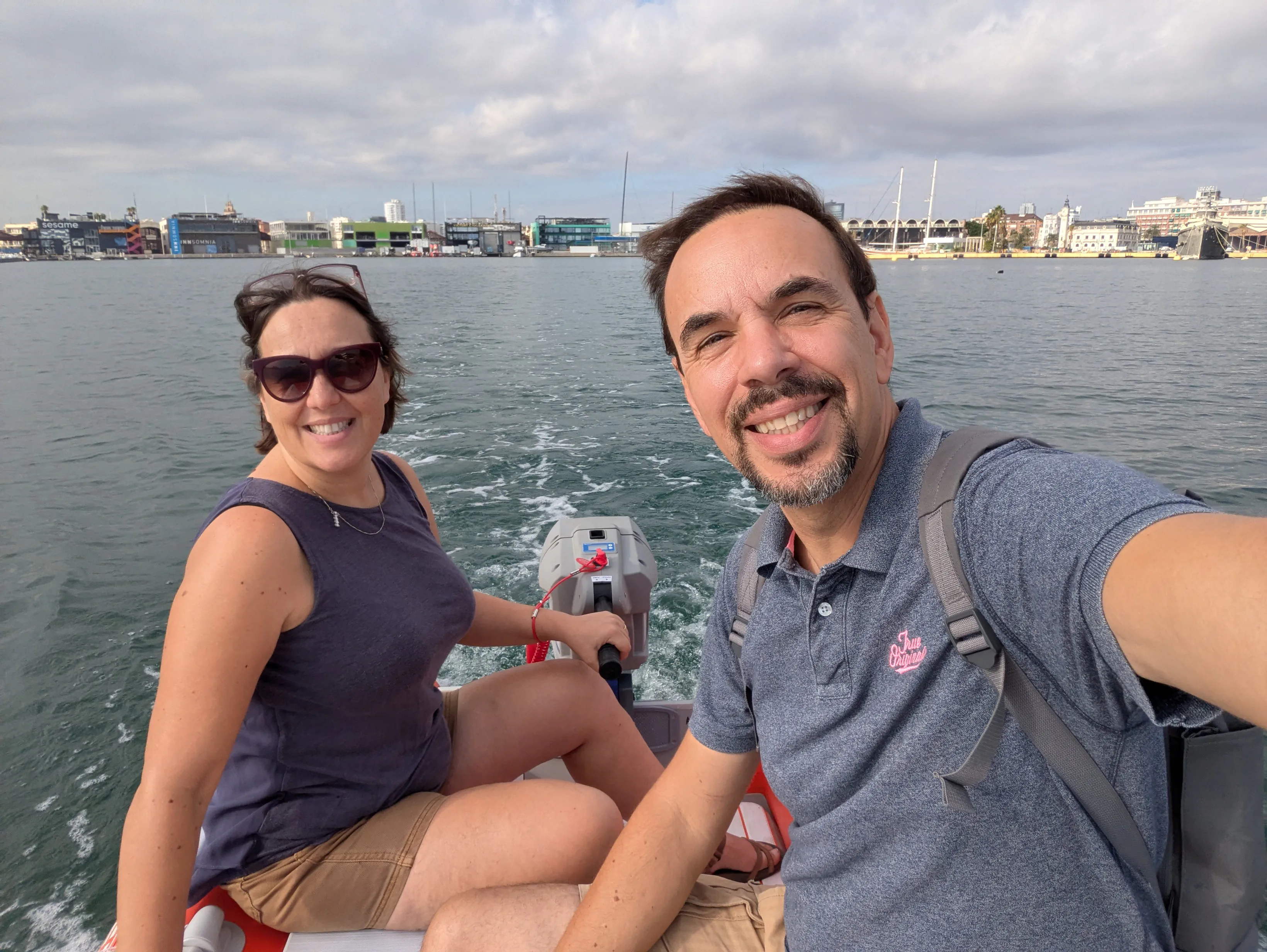
Valencia turned out to be a fantastic city to explore.
Our next hop took us to Castelló. We left Marina Port Valencia with a 96% SOC. With under 40 nautical miles to cover, we started at a leisurely 3.8 knots, drawing only 5kW.
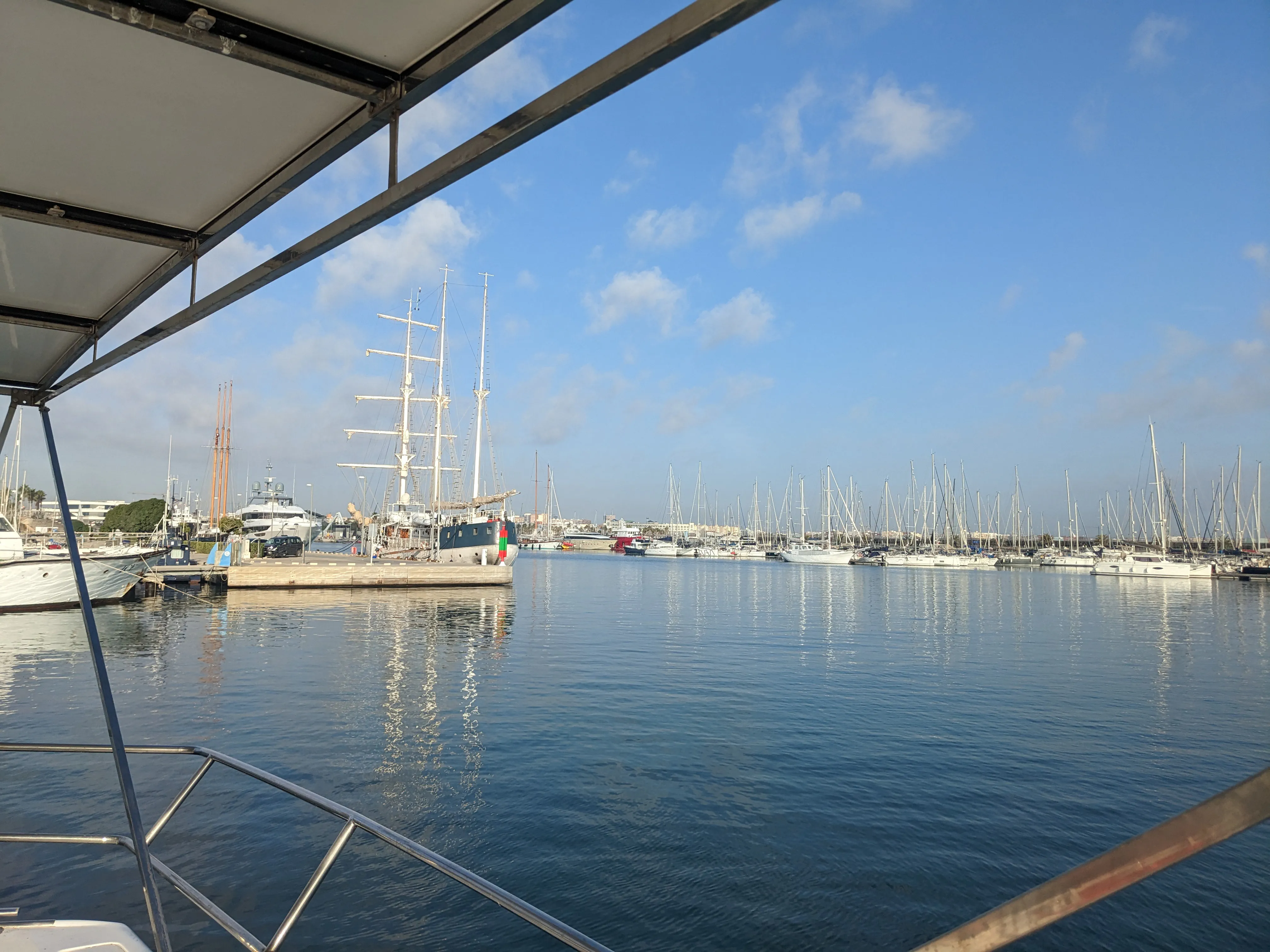
Four hours in, our batteries topped off at 100% SOC because our solar generation completely outpaced our consumption. Taking advantage of the surplus, we increased propulsion to 8kW, bumping our speed to 4.5 knots for a couple of hours. Later, hoping to improve our odds of catching a fish, we slowed back down to 3kW (3.8 knots). Unfortunately, we didn’t get any bites.
Castelló is a bustling commercial port. Approaching the harbor, we had to carefully cross the main channel, yielding to outbound cargo traffic and slotting ourselves in behind an inbound ship.
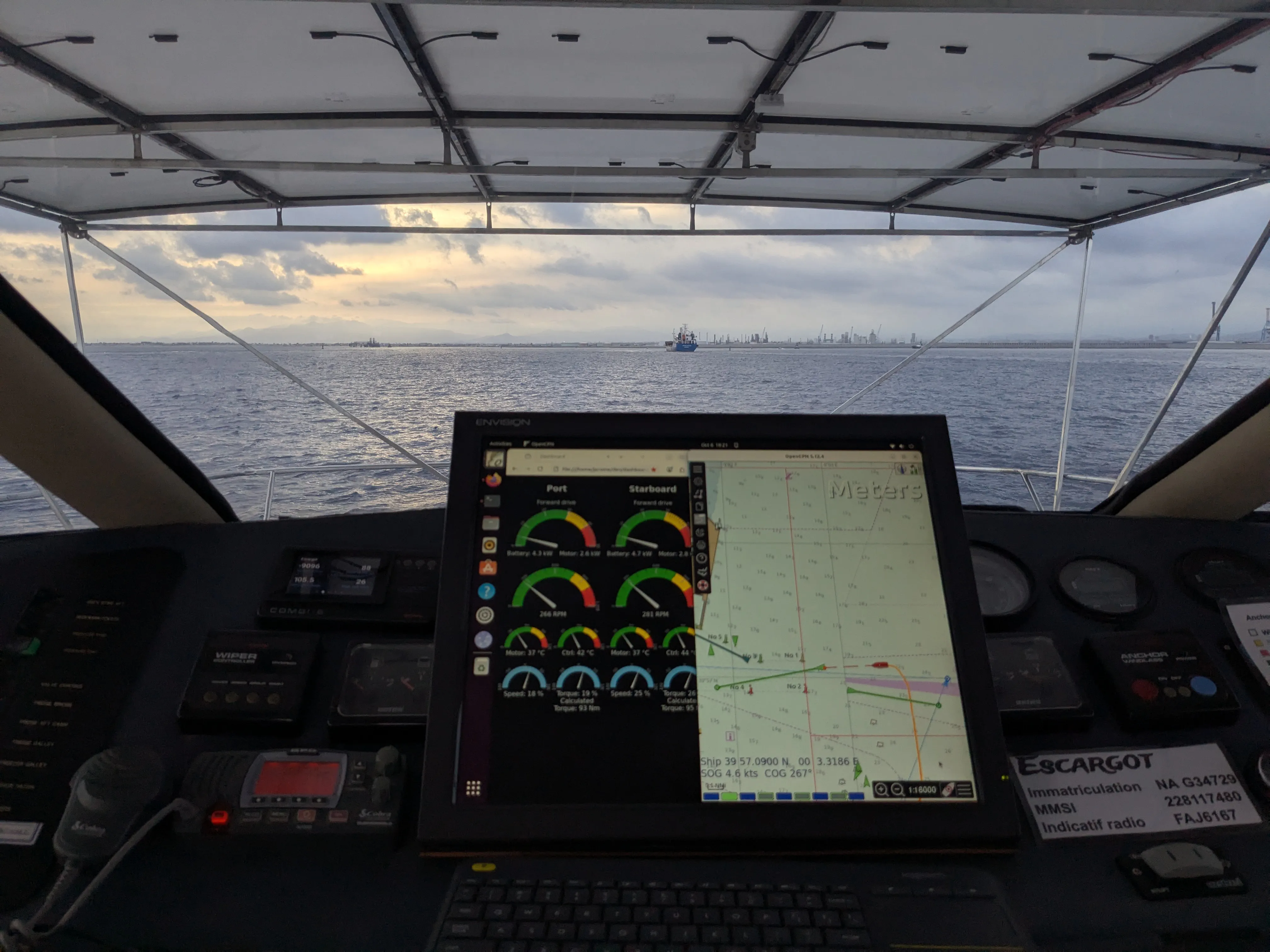
Once inside the massive, protected breakwaters, we found ourselves alone, so we took the opportunity to run some speed-versus-power performance tests with our freshly cleaned hulls. At 5, 10, 15, 20, and 30 kW, we recorded speeds of 3.8, 5.0, 5.5, 6.0, and 6.7 knots, respectively. These figures were a massive improvement over tests conducted a year prior en route to Aguadulce. A clean bottom truly makes all the difference!
We docked at Marina Port Castelló with a very healthy 81% SOC.
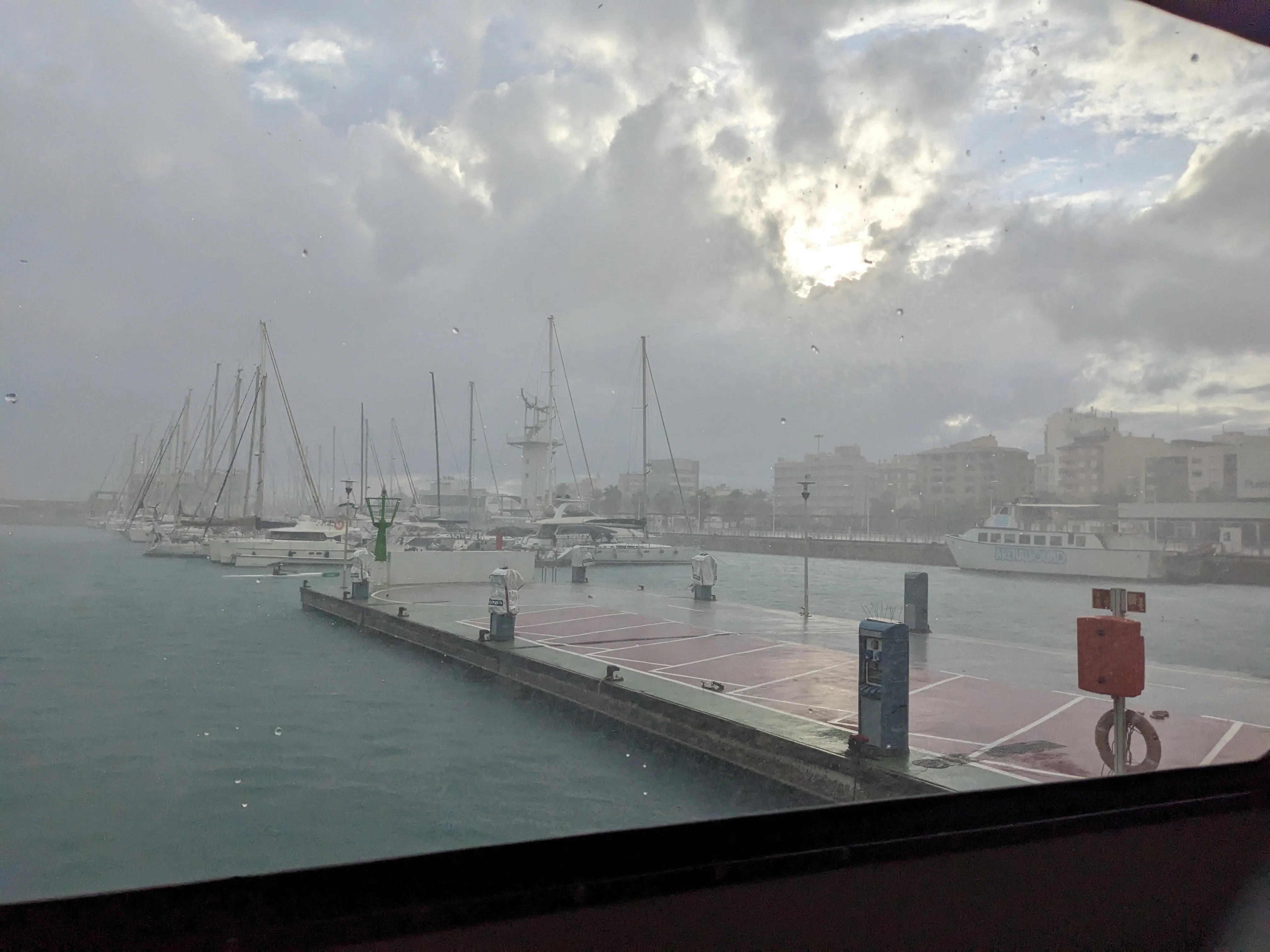
We experienced several episodes of heavy rain again while in Castelló, and we quietly waited for better weather to return.
A week later, the storm systems finally cleared, and we set off for Benicarlo with a 95% SOC.
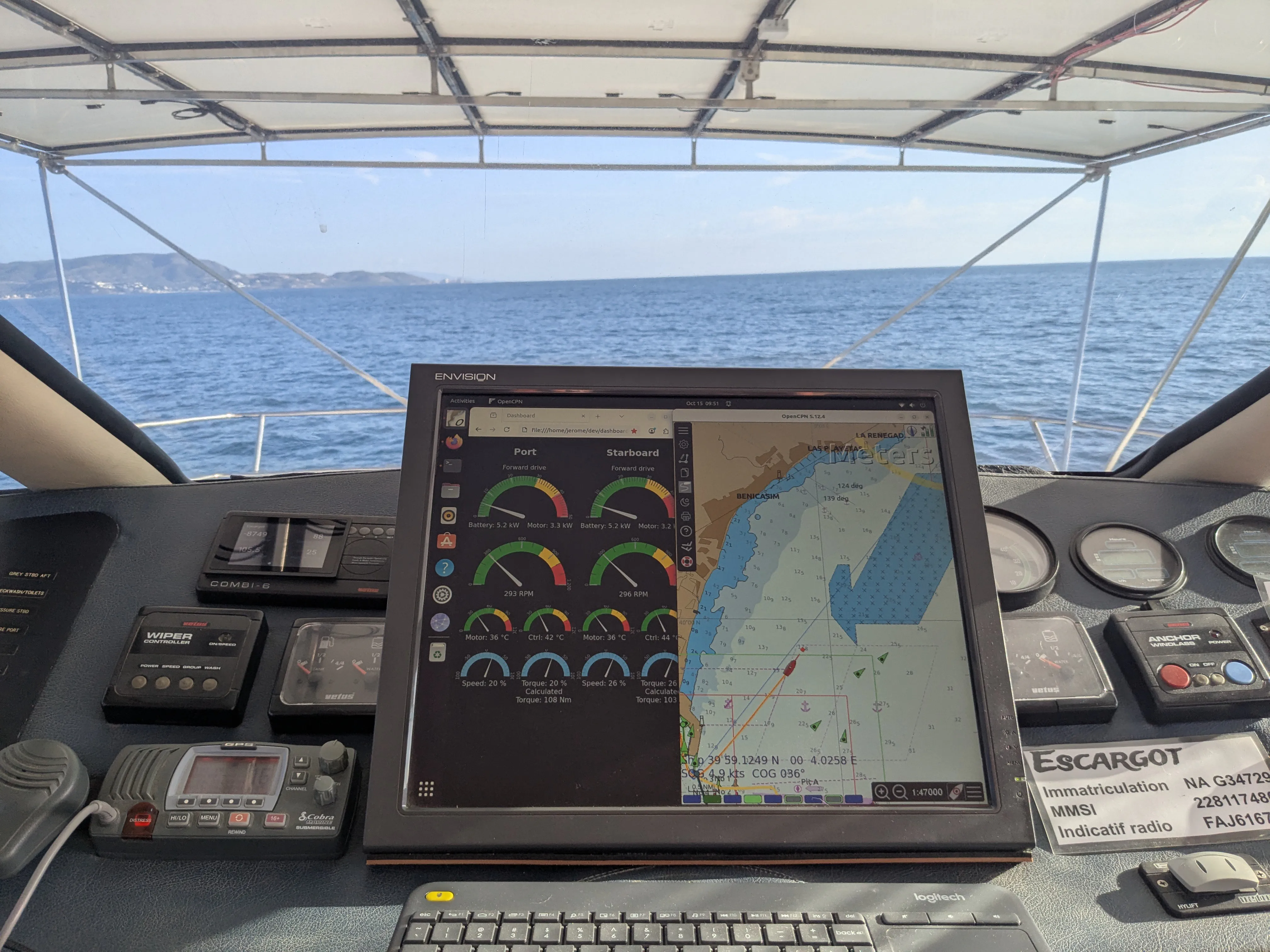
Unlike the previous leg, we held a steady 10kW draw to maintain roughly 4.5 knots all day. The coastline here was stunning, featuring much more vibrant greenery than the arid landscapes south of Valencia.
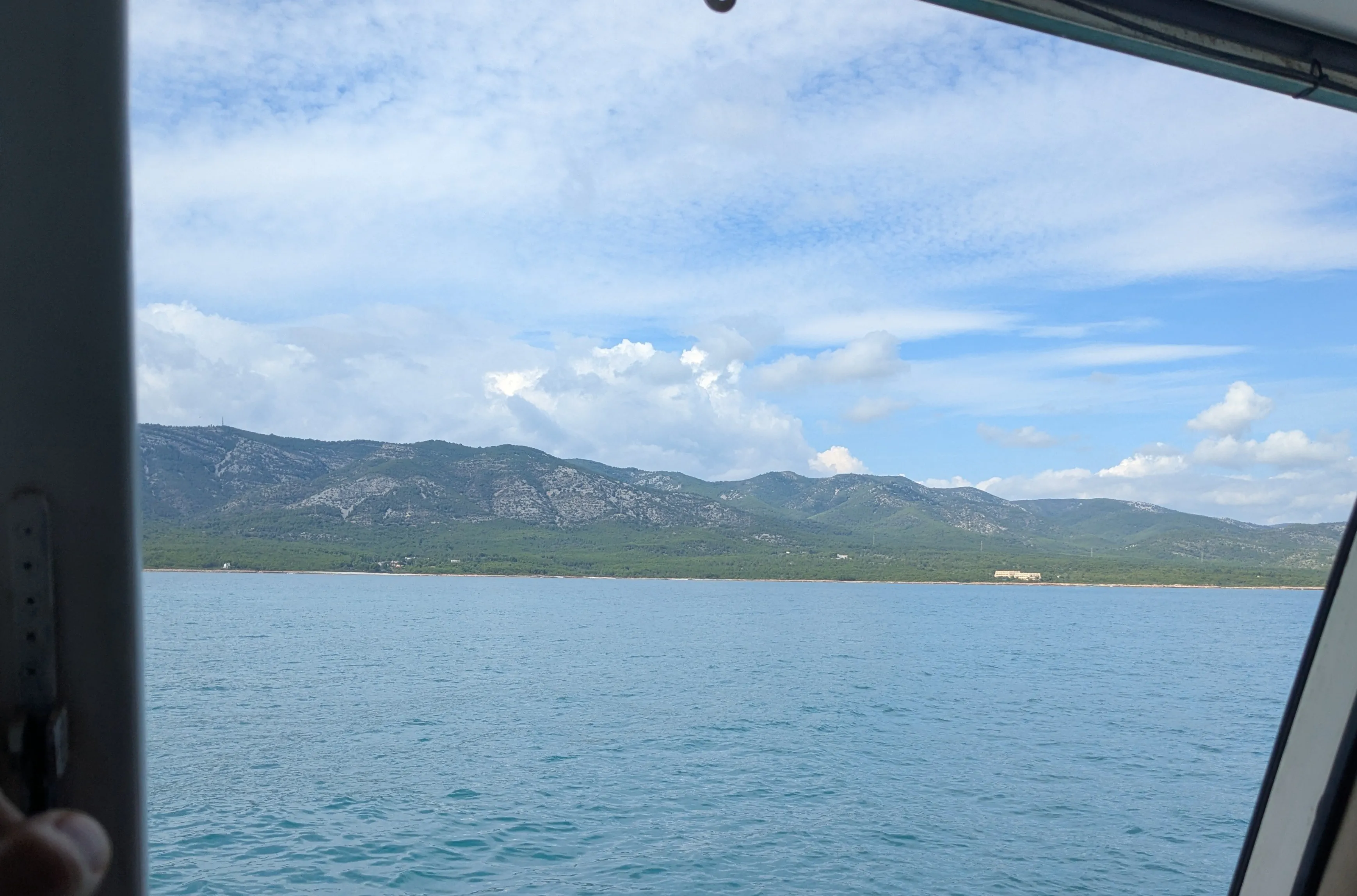
Before arriving in Benicarlo, we sailed past Peñíscola. Its walled old town, crowned by the Papa Luna Castle, is built on a rocky promontory overlooking the sea—a picturesque setting famously used in Game of Thrones. We had considered anchoring outside the old town, but the prevailing swell left it unprotected. Instead, we decided we would visit by bus from Benicarlo.
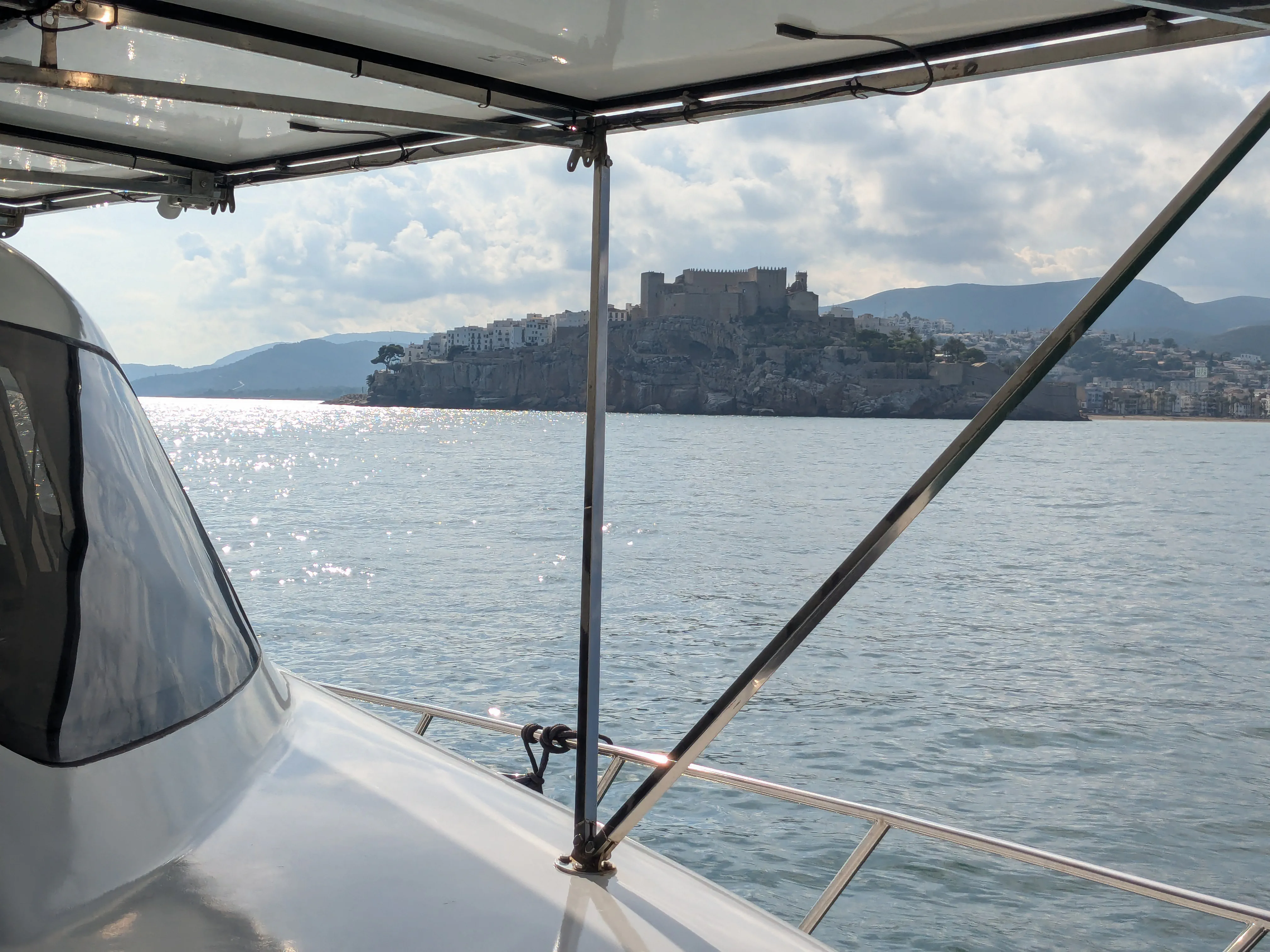
We tucked into the small marina in Benicarlo with 53% SOC remaining.
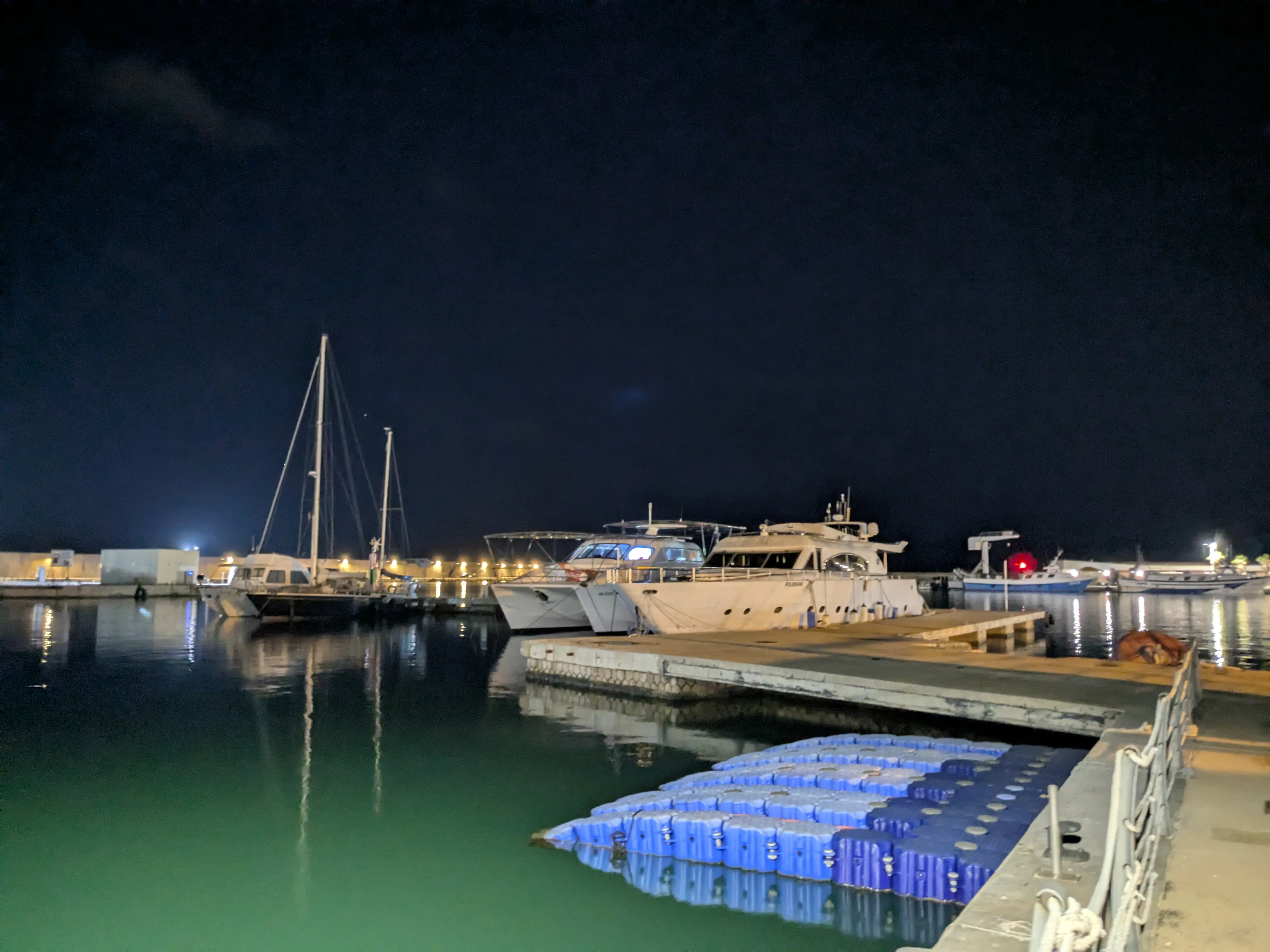
We waited a couple of days for favorable conditions to anchor south of the Ebro River delta, right in front of La Rapita. Leaving Benicarlo at noon with full batteries, this was meant to be a very short transit.
En route, we spotted two fishermen in an inflatable boat waving frantically for help. We altered course to assist. Albert and Juan explained they had suffered an outboard motor failure and couldn’t get back to shore. We caught their line and towed them to the entrance of their small local marina, releasing them there since Escargot was too large to enter.
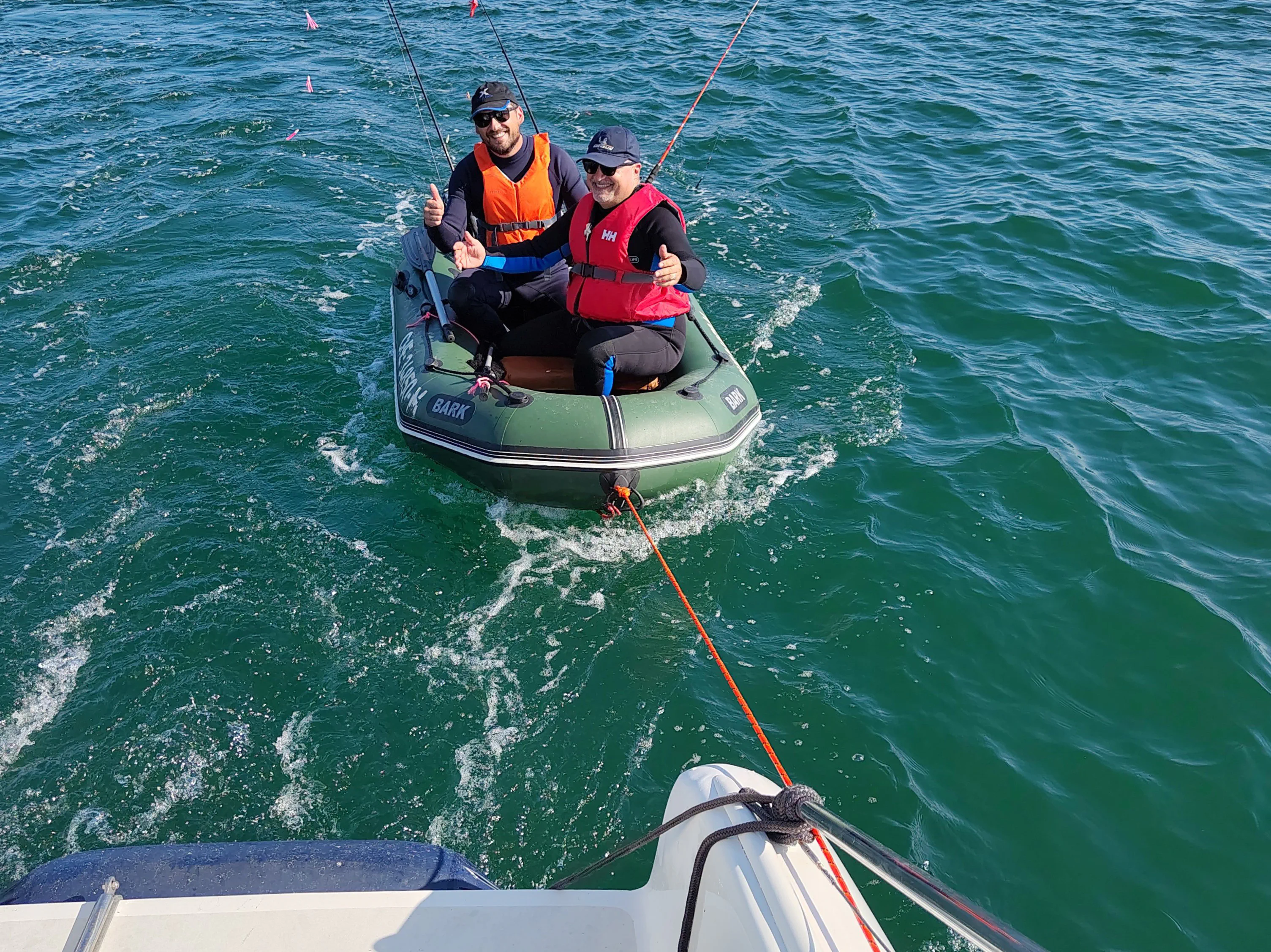
After our rescue detour, we entered the highly protected bay of La Rapita, dropping the anchor in 5 meters of water off the beach of Punta de la Banya. We arrived with 98% SOC.
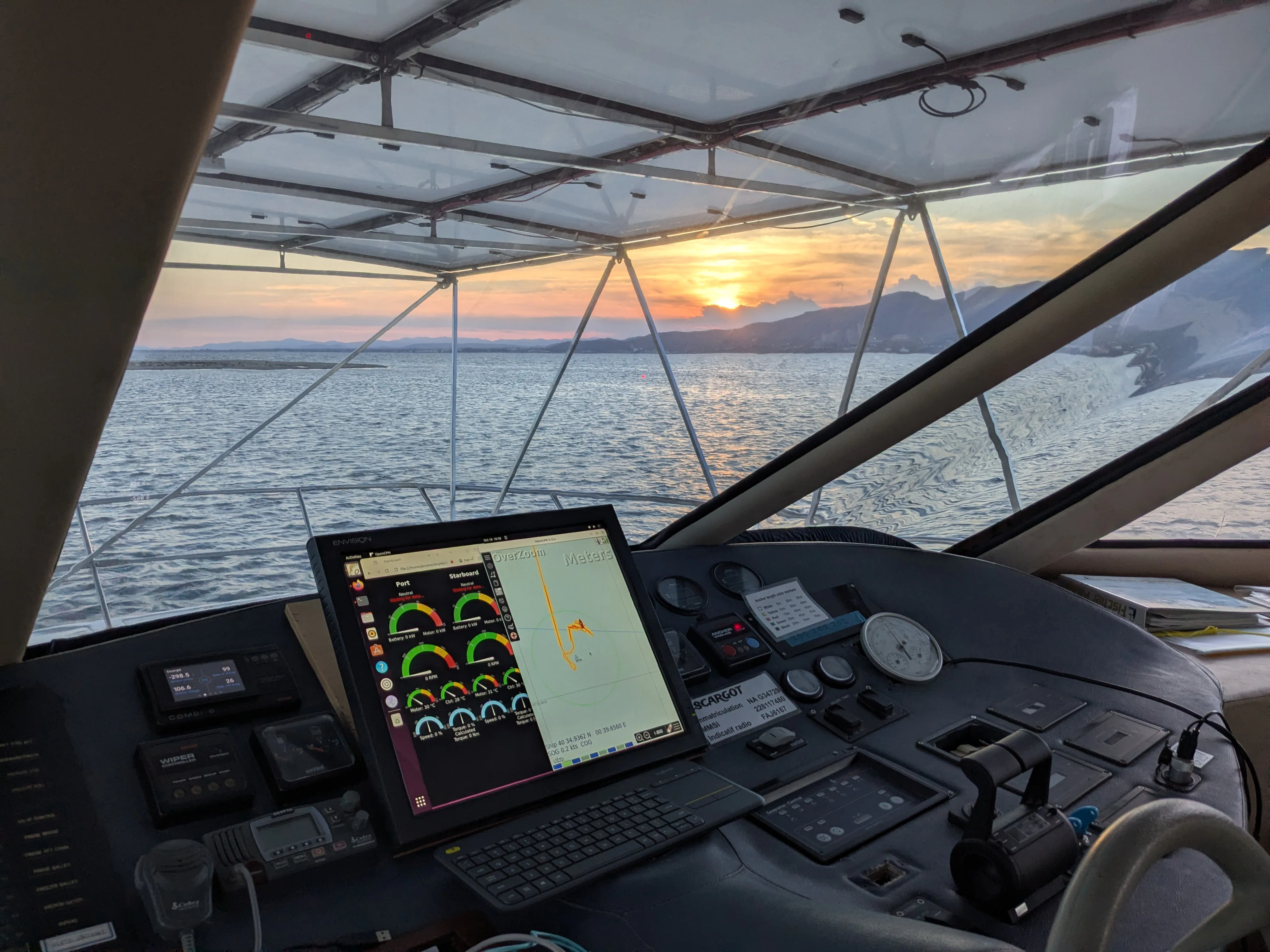
Sadly, we found the beach in this nature reserve heavily littered with plastic. We made it a point to fill a trash bag during each of our shore excursions, bringing the debris back to Escargot for proper disposal.
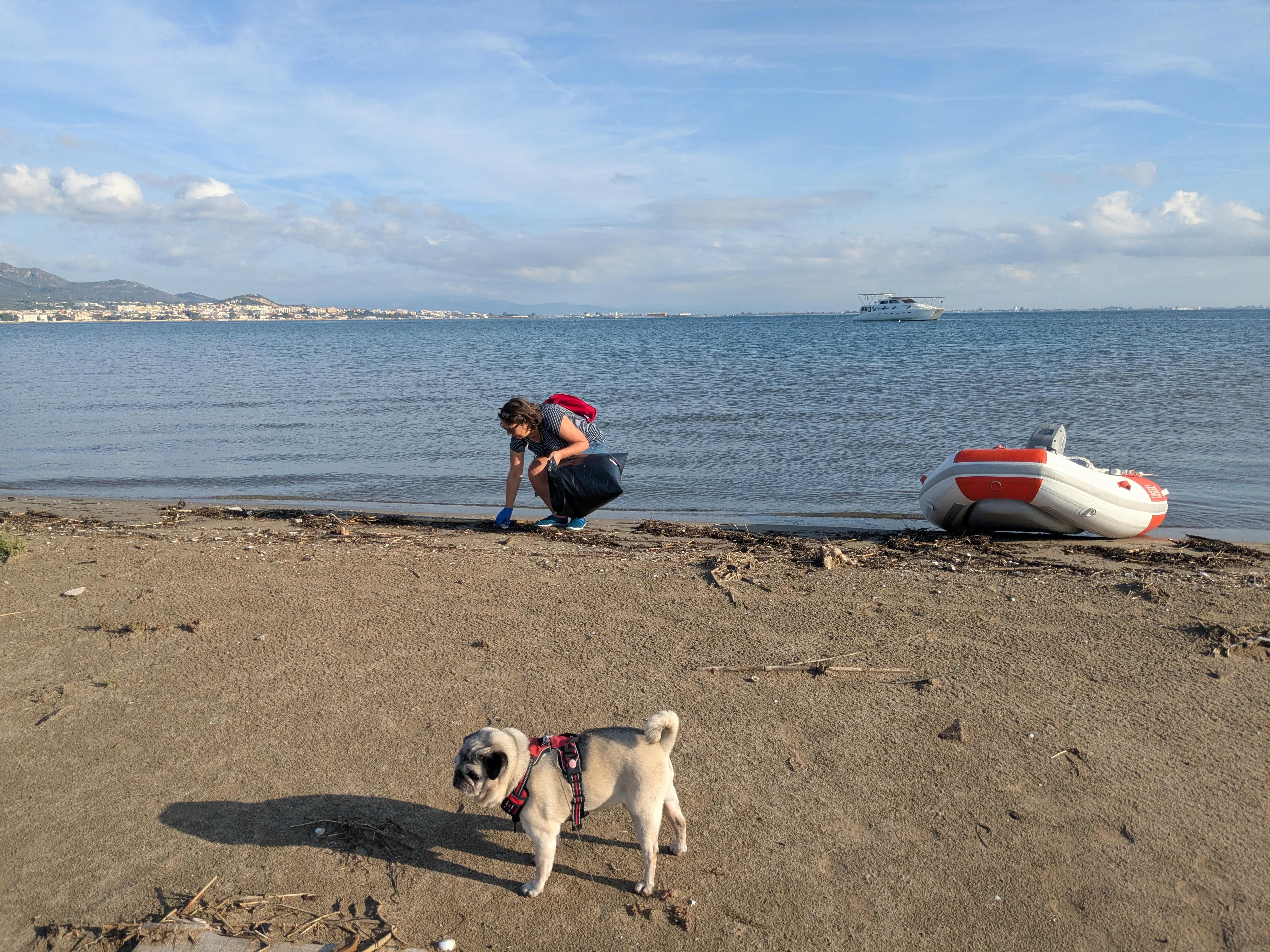
After a few deeply peaceful days at anchor, we decided to hop across to the north side of the Ebro Delta, near the town of L’Ampolla. We initiated our departure procedures and started weighing anchor with 91% SOC. Over the past few days, the wind had swung us around our anchor, and we were now positioned directly above it. Unfortunately, as we brought the chain up, our anchor trip line snagged on the port-side propeller.
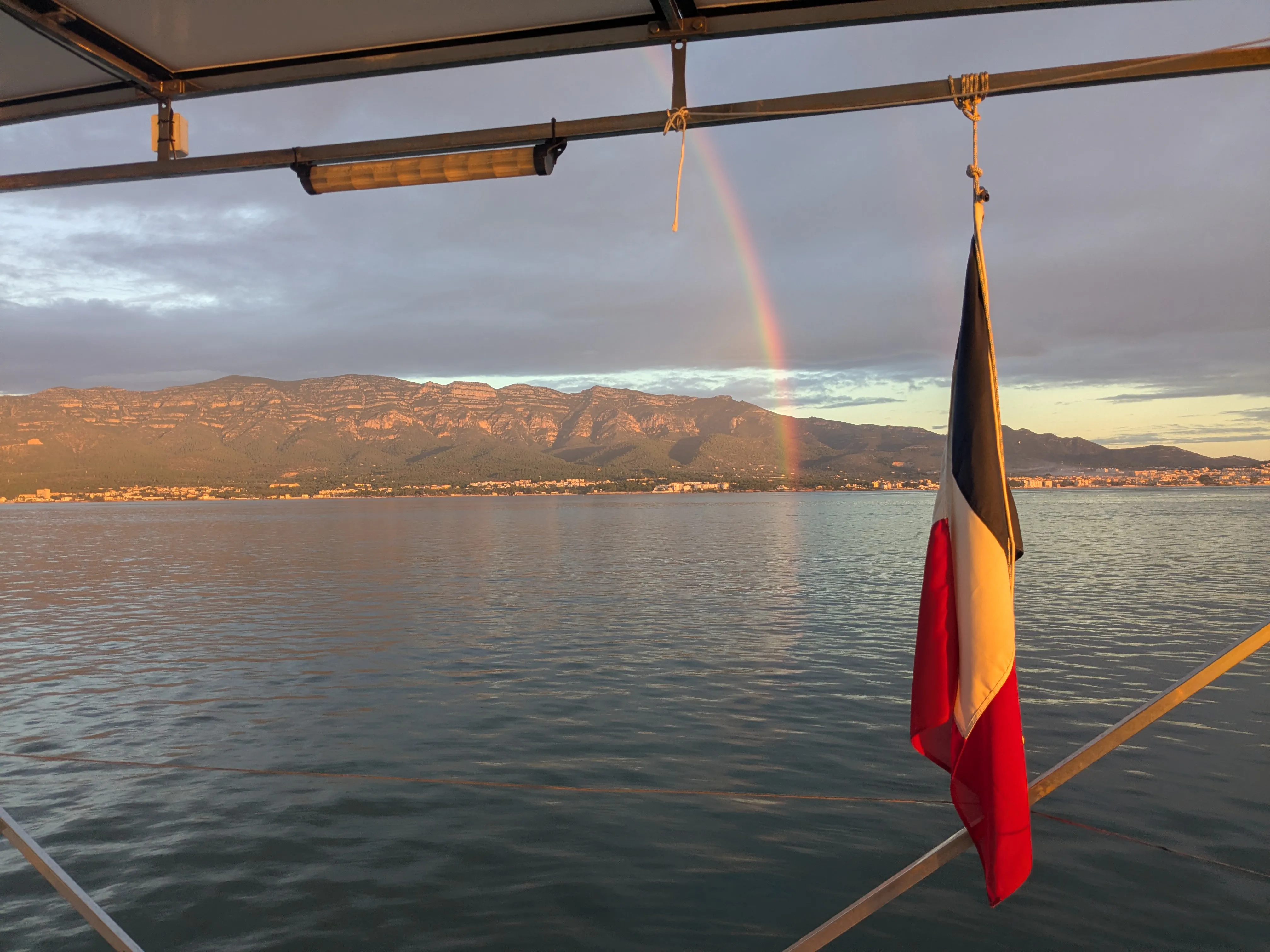
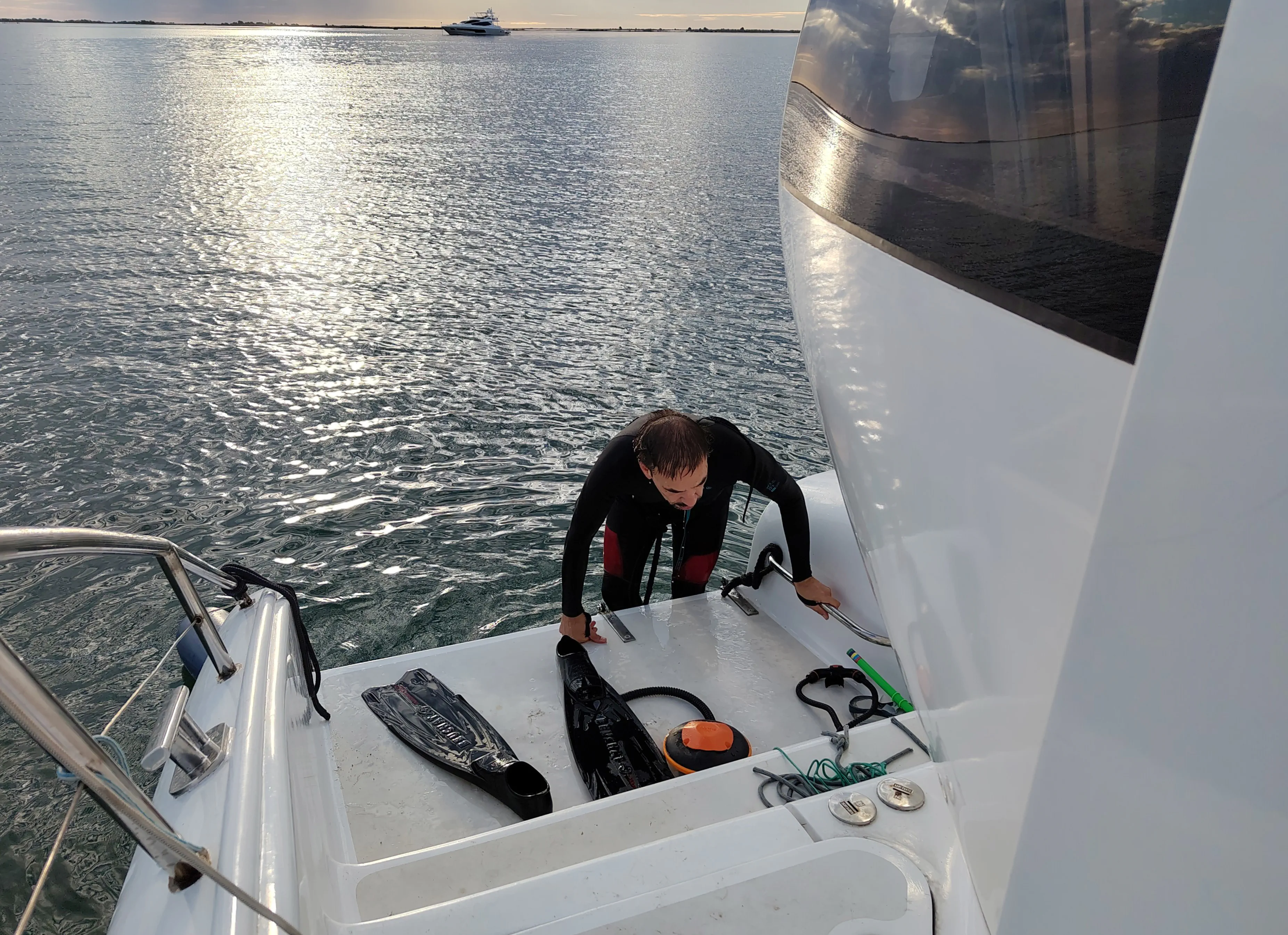
I had to dive into the water with a knife to cut the line, free the prop, and retrieve our anchor buoy. Thirty-five minutes later, we were finally free and underway.
For this leg, we kept propulsion at a highly efficient 6kW all day. A mild following sea and a favorable current kept our speed between 4 and 4.4 knots. We rounded Cabo Tortosa on beautifully calm waters.
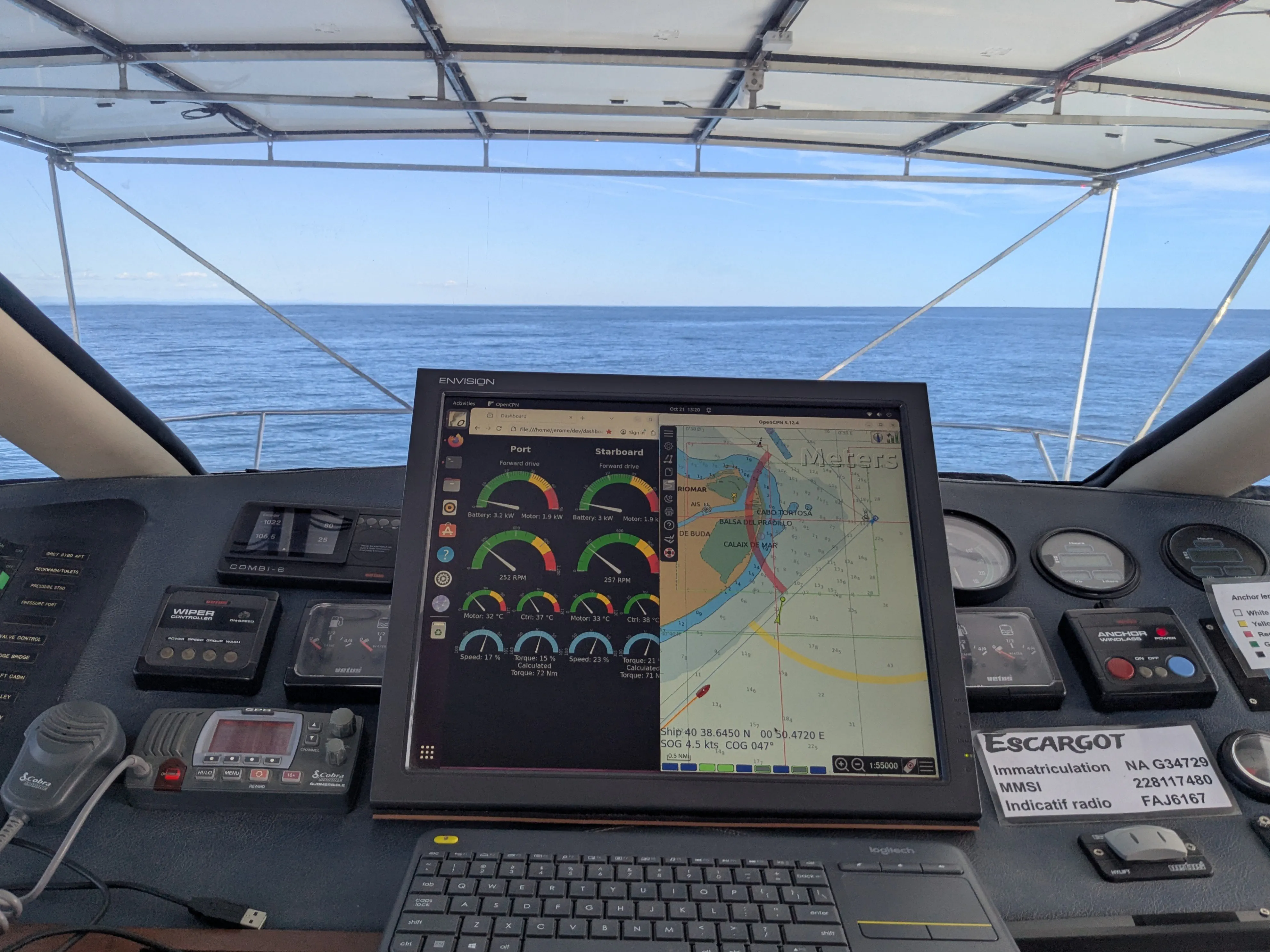
Thanks to the bright sun and our low consumption, we arrived at our destination with 75% SOC. The bay of L’Ampolla is quite shallow, forcing us to drop the hook much further from shore than usual—in 3 meters of water with 35 meters of chain out.
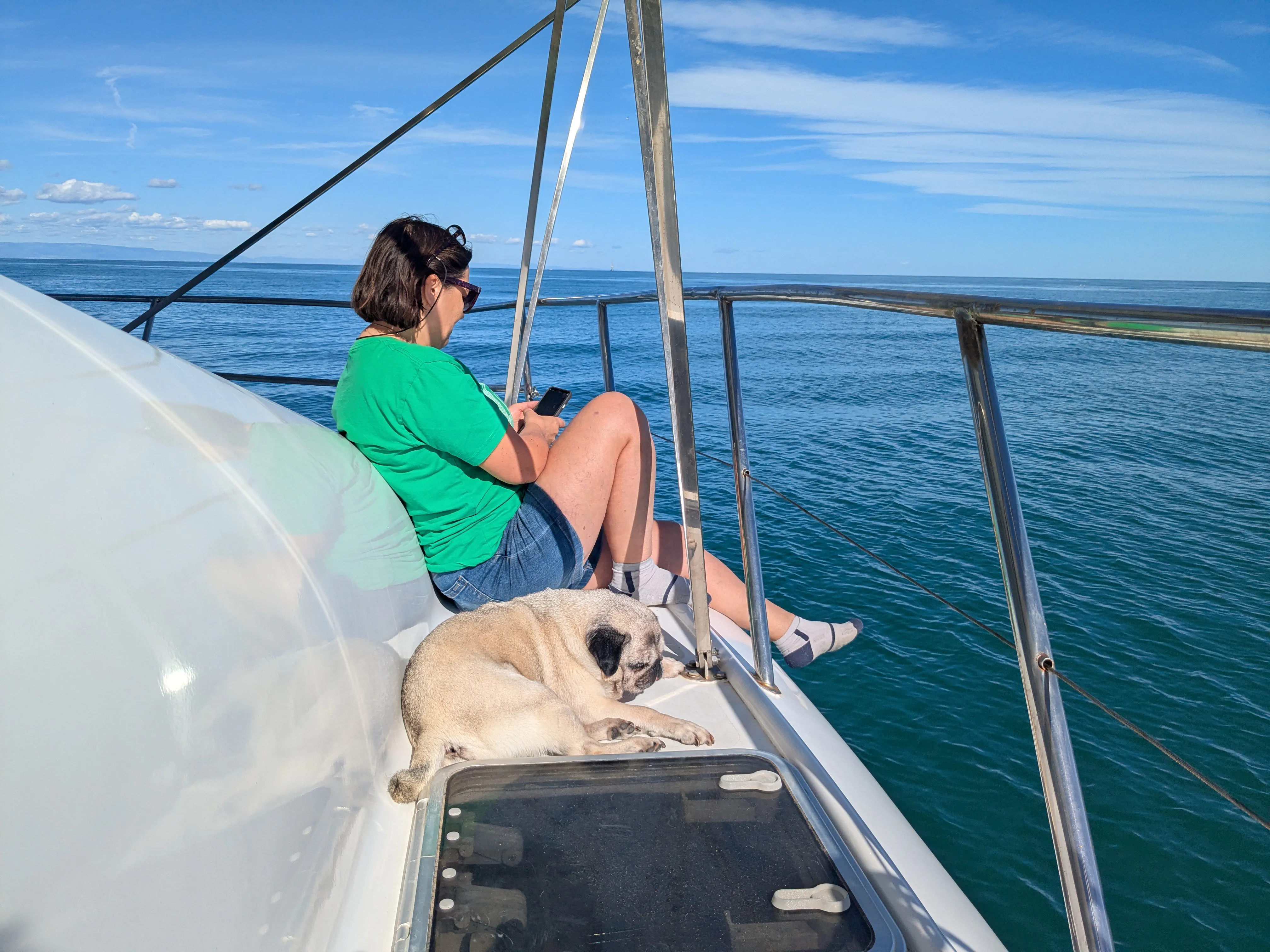
Because of the long distance to the beach, we were incredibly grateful for our electric outboard motor, gladly skipping our usual rowing routine.
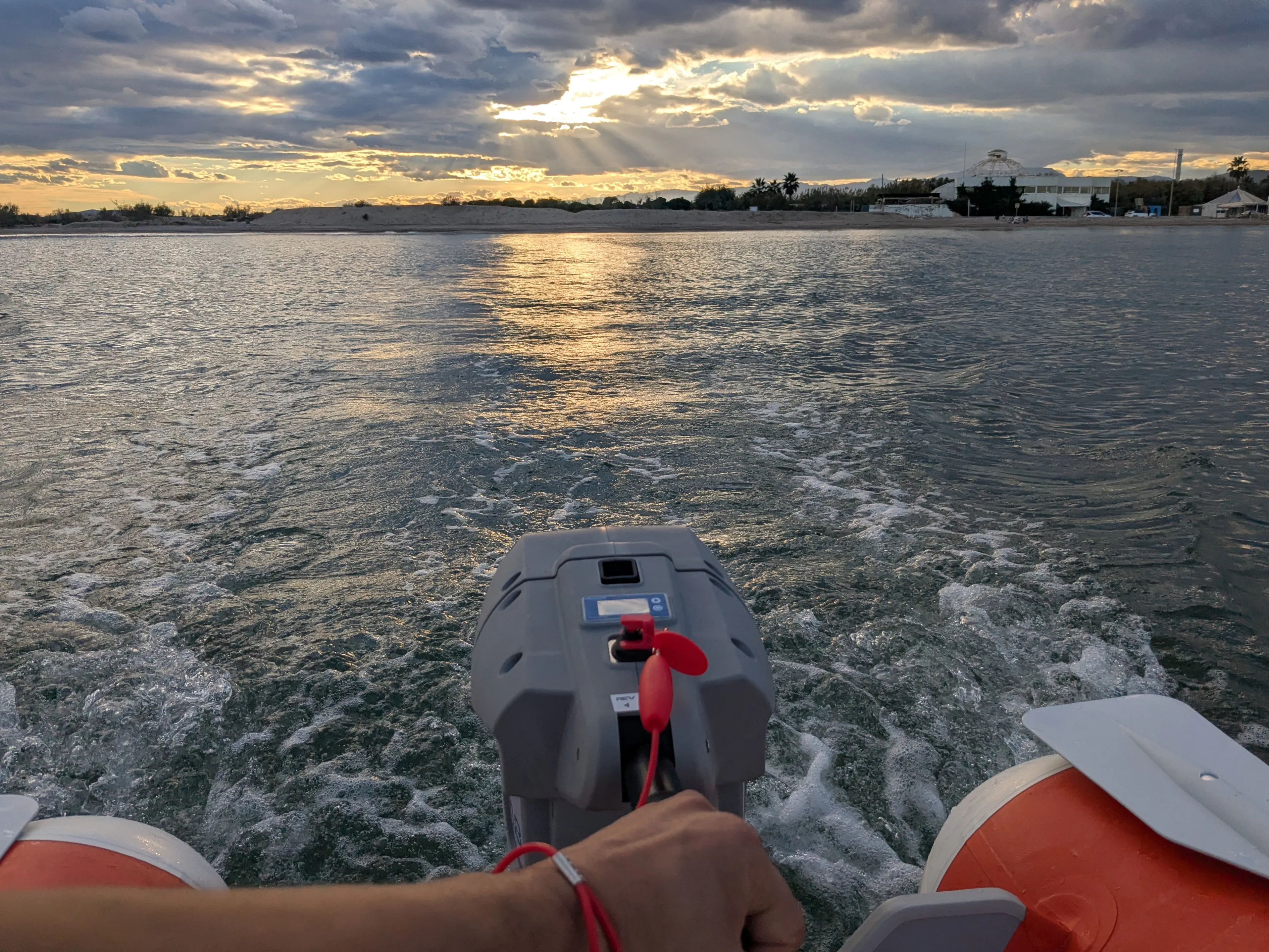
The afternoon forecast warned of offshore winds hitting 30 knots with 40-knot gusts, though all models agreed the morning would be quiet. However, at 8:30 AM, our anchor alarm triggered—we were dragging. The wind had already spiked to 30 knots, and the sea state was rapidly deteriorating with swell building off the shoreline. We managed to reset the anchor and stabilize, but less than an hour later, with the winds getting stronger, we broke loose again. We made the call to lift the anchor and run for our pre-planned fallback: Club Nautico L’Ampolla.
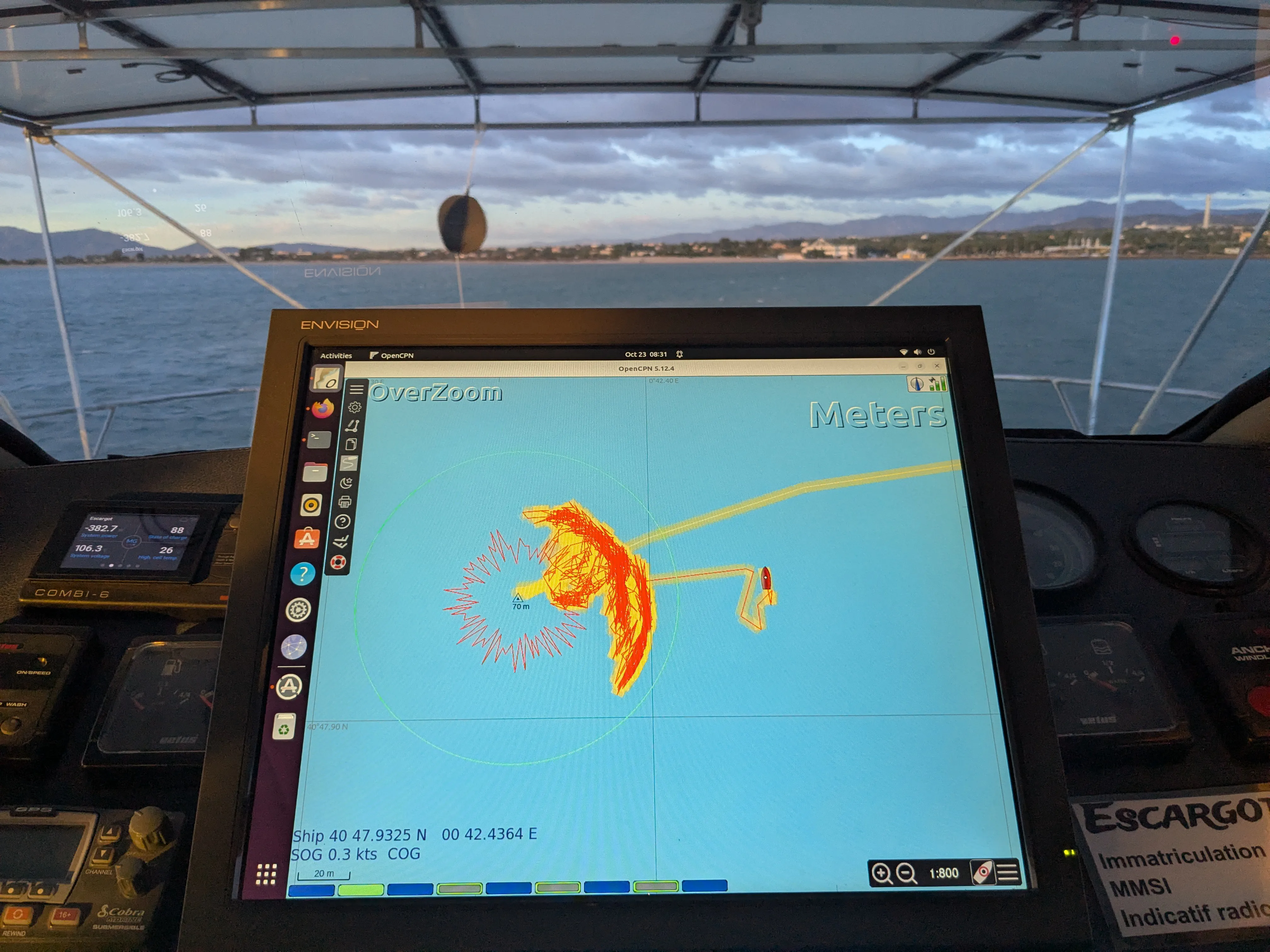
Weighing anchor in these conditions was sportier than usual, but we kept our cool, and 10 minutes later we were steaming toward the small port. We hailed the marina on VHF channel 9, but received no response. Proceeding inside, we targeted a dock that looked large enough for Escargot. Unfortunately, it was designed for smaller boats and equipped with heavy mooring rings that protruded past the dock’s edge. As a violent gust caught Escargot during our final approach, our starboard hull suffered a minor impact against one of those rings.
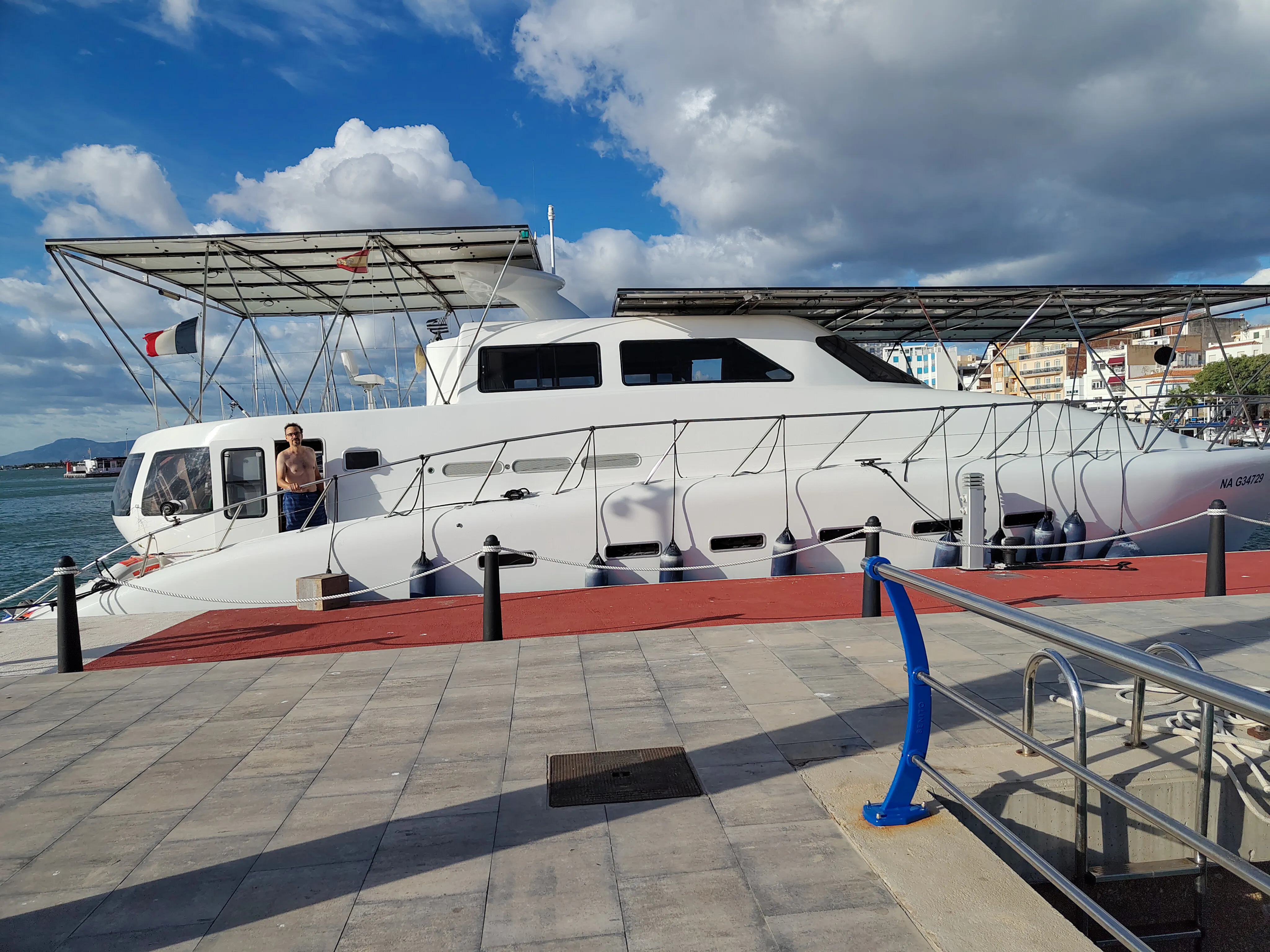
We carry epoxy filler onboard, so we spent the rest of the day making a temporary composite repair to the starboard hull.
With little to explore in L’Ampolla, we pressed on two days later to Tarragona, a city renowned for its rich Roman heritage. We departed the dock with 97% SOC.
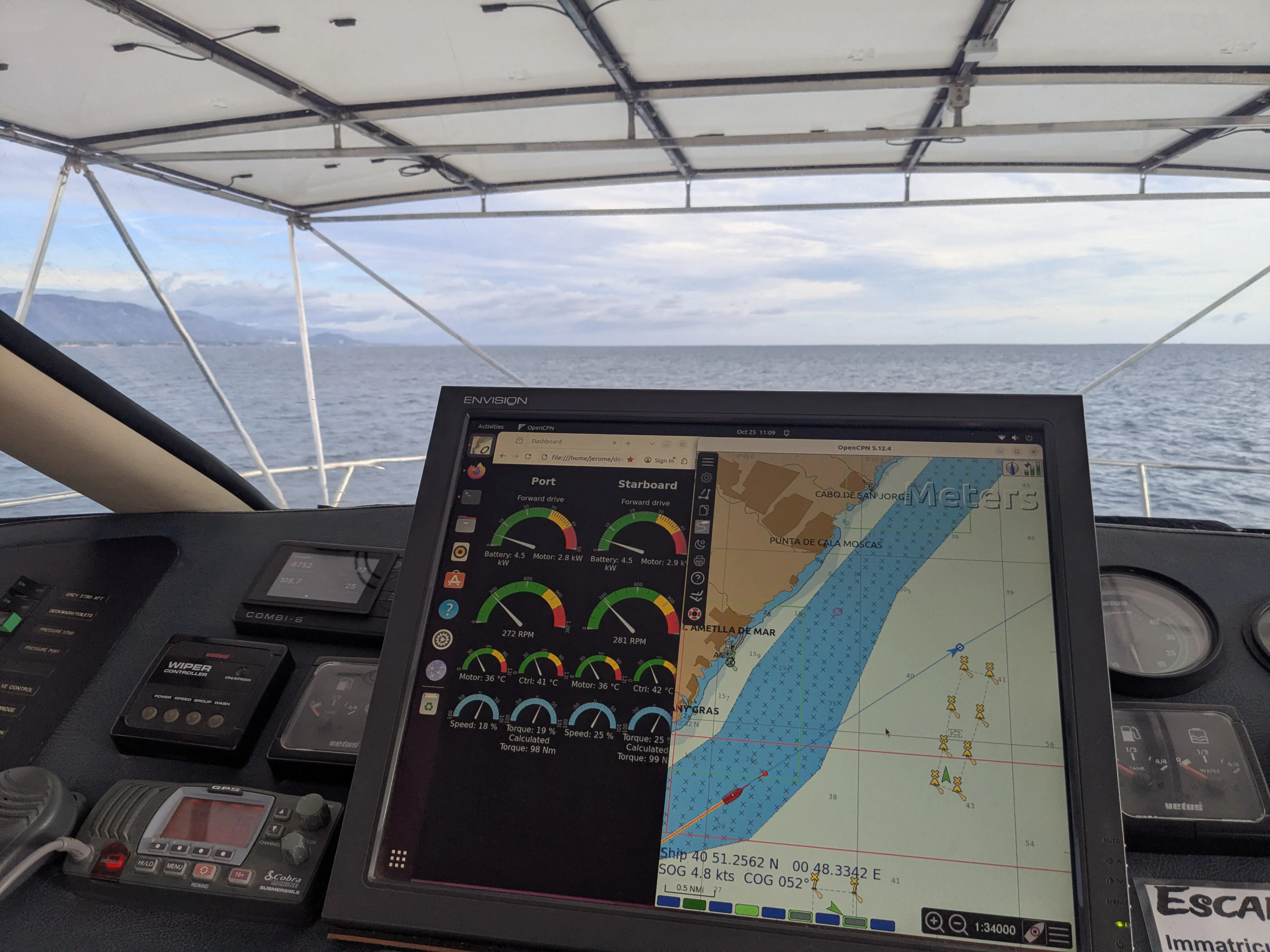
Around noon, we sailed right through a massive tuna feeding frenzy. The water was boiling with huge fish breaking the surface. Local fishermen in small, fast boats were racing around us, trying to drop lines directly into the action.
We continuously adjusted our power output to match the changing sea state, starting at 8kW in the morning and ramping up to 16kW to punch around Cabo de Salou. We eventually arrived in Tarragona, tying up with 44% SOC.
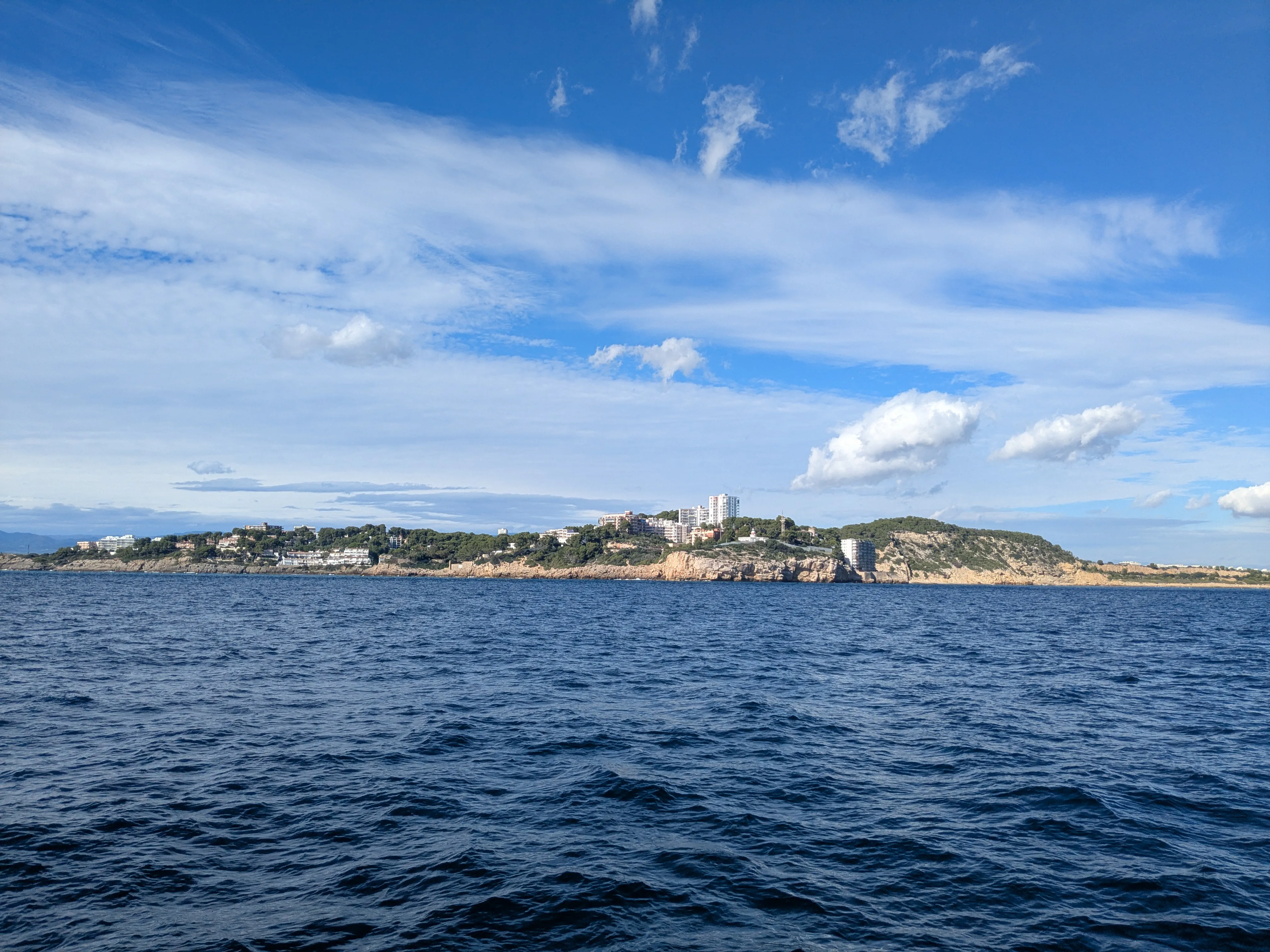
With several family members flying in over the next week, we needed to stage ourselves closer to Barcelona. We booked a slip in Calafell and departed Tarragona around midday with a 100% charge.
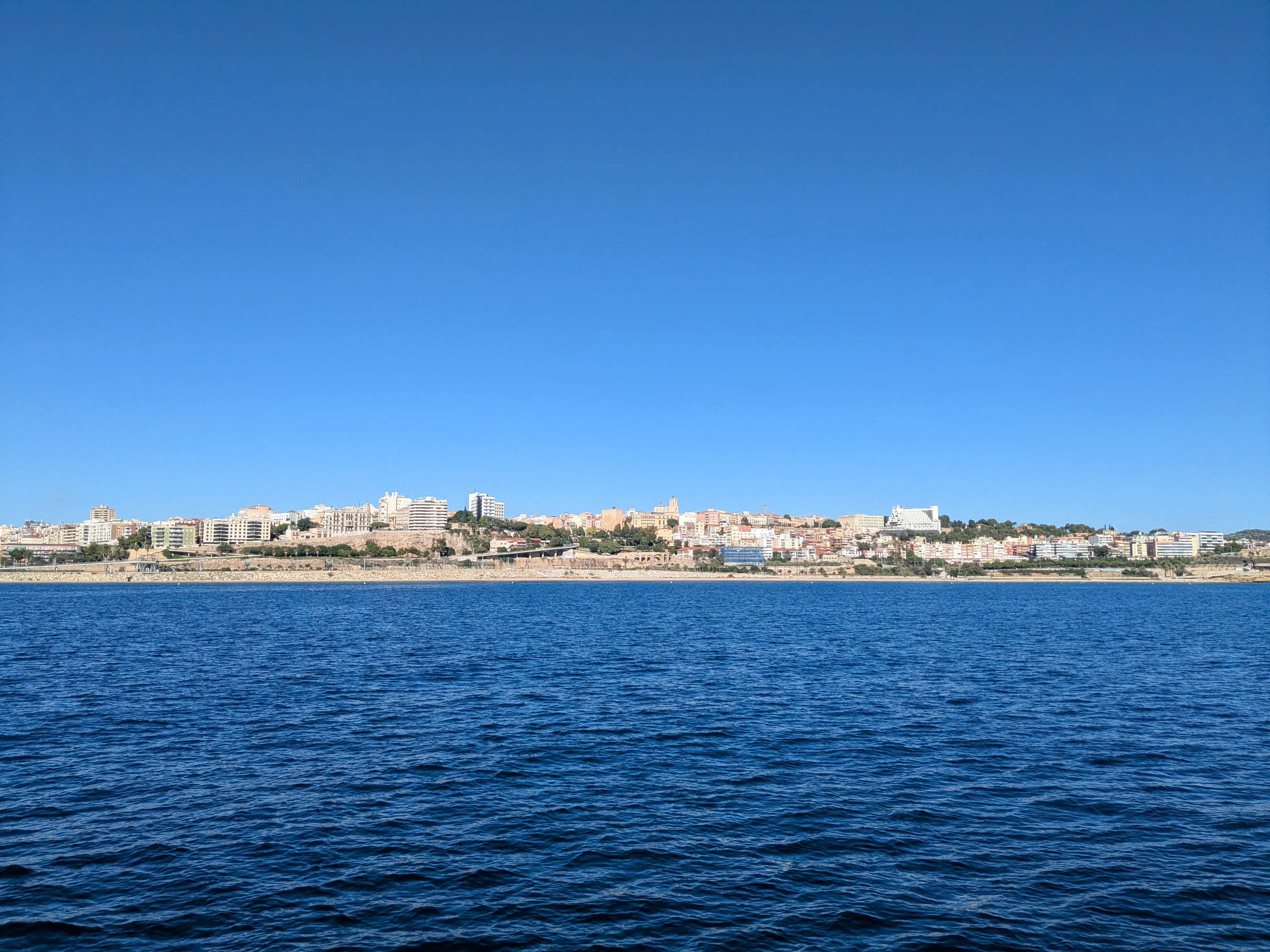
This short, 20-nautical-mile transit was phenomenally smooth. Drawing just 6kW, we glided along at nearly 4 knots. Thanks to excellent solar generation, this low consumption allowed us to keep our batteries topped up for nearly the entire trip.
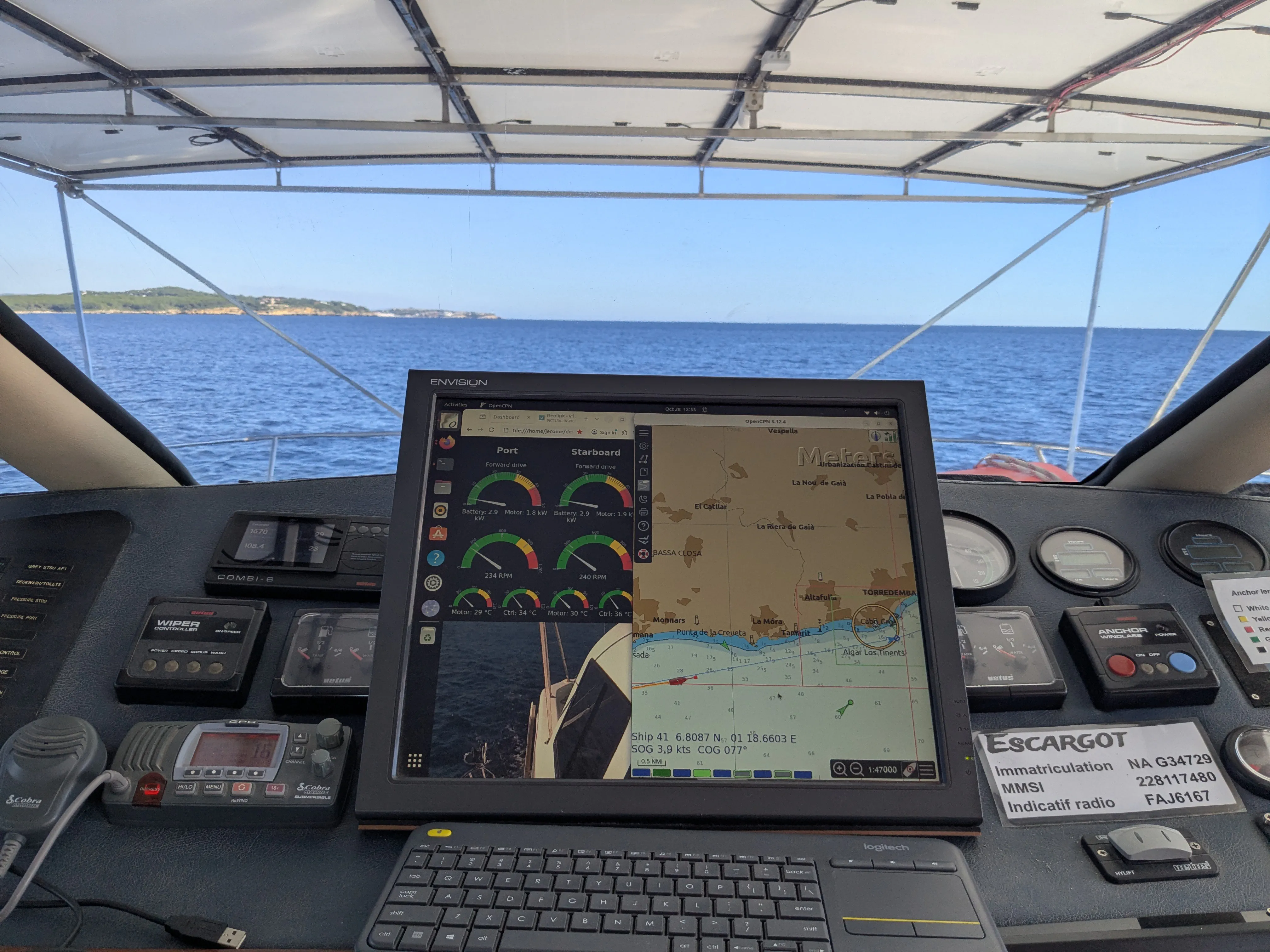
As we usually do when conditions are calm, we trolled a fishing line behind us. Just before 2:00 PM, a bonito slammed our Rapala lure. It was our very first catch aboard Escargot, and a fantastic size at that—perfect for dinner with our three visiting family members!
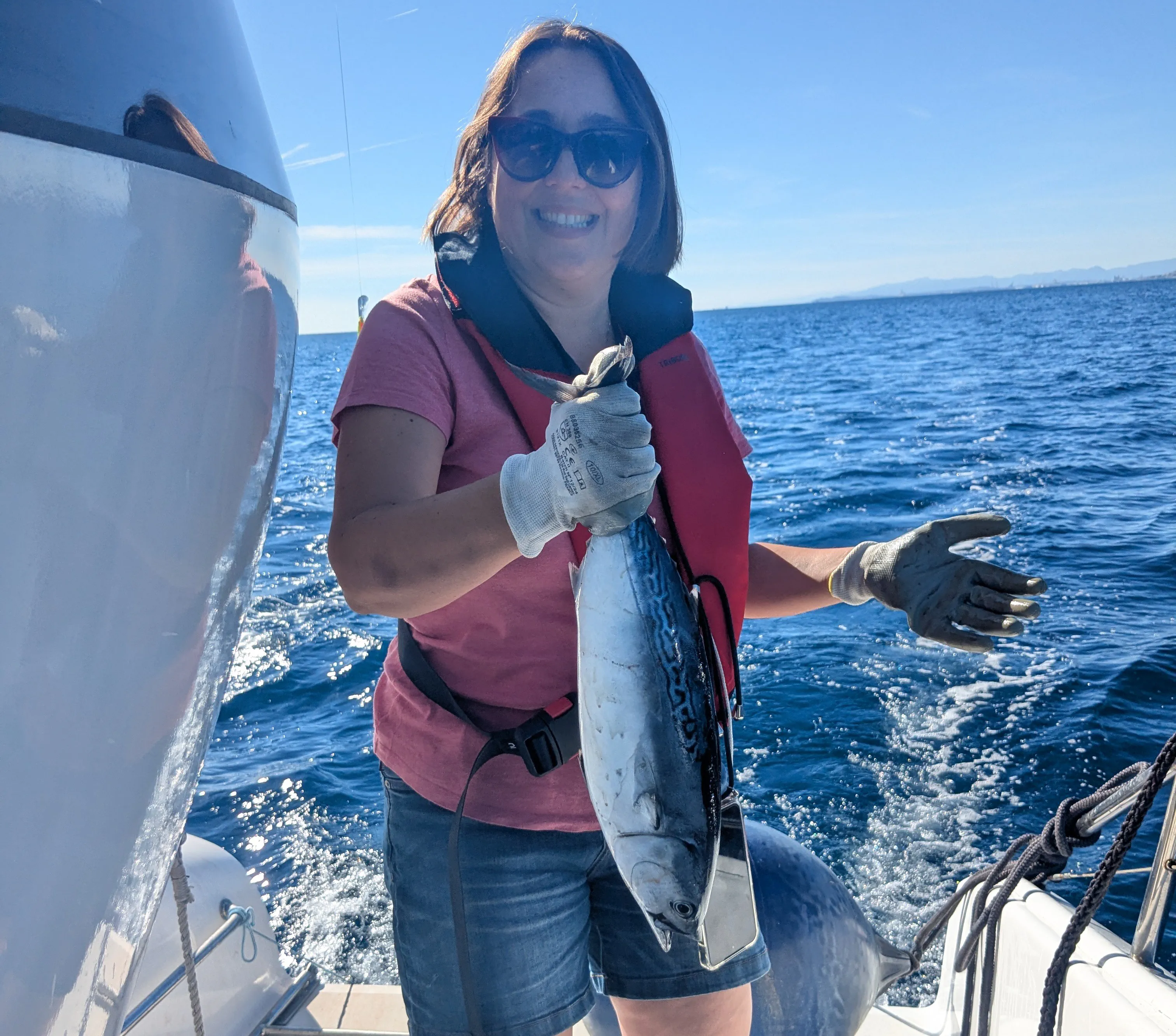
We carefully crept into Port Segur-Calafell’s narrow entrance and tied up with 93% SOC remaining.
Marina rates in Barcelona proper were prohibitively expensive, so we opted to move just down the coast to Port Ginesta. Ludivine’s sister joined us for this short hop. Leaving at 9:30 AM with 92% SOC, we set propulsion to 6kW. Riding a favorable current, we effortlessly cruised at 4.7 knots.
Just before noon, our trolling line went taut again: a second bonito, slightly smaller than the first, but equally welcome!
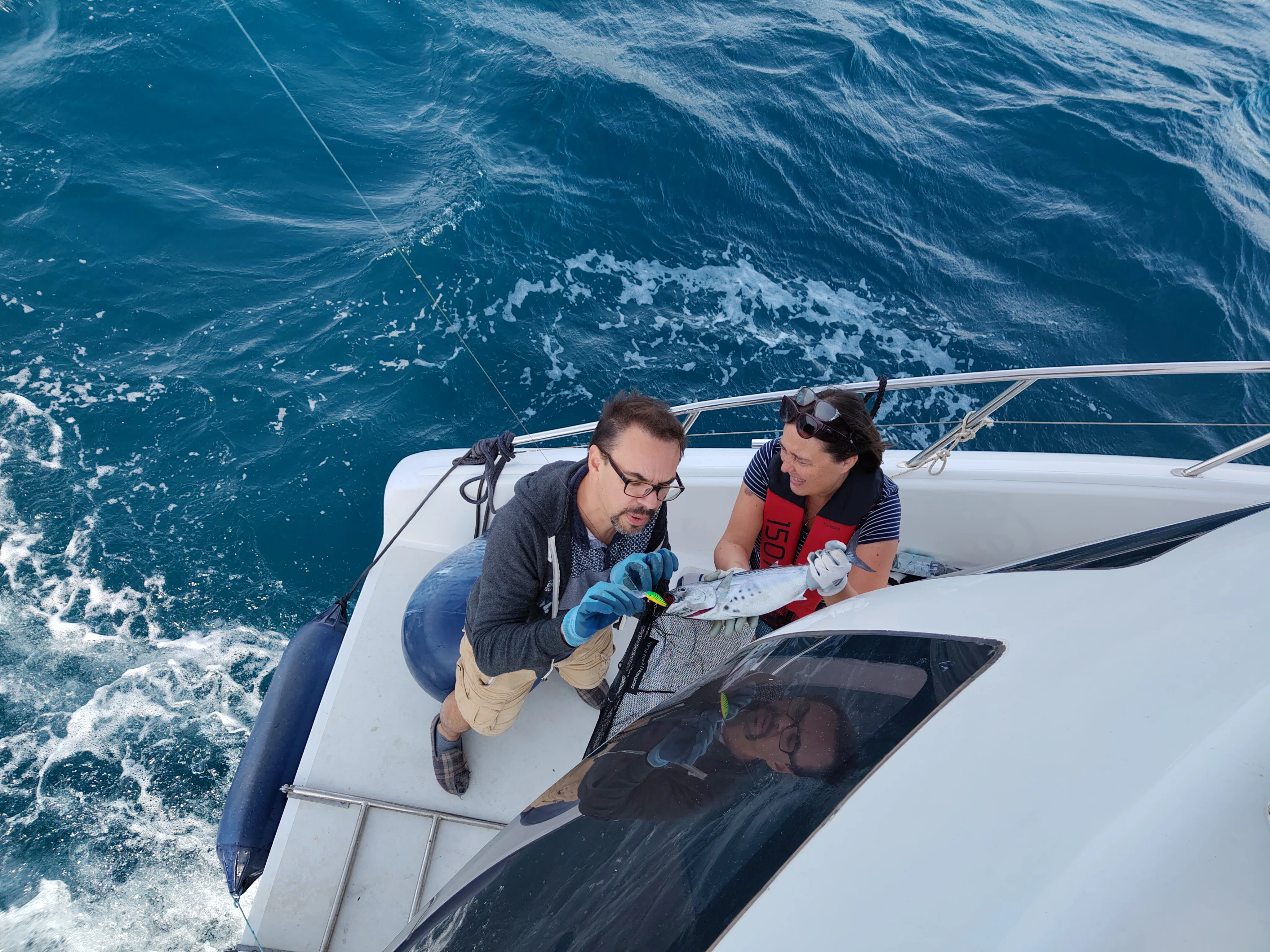
We arrived in Port Ginesta with 90% SOC and spent the afternoon prepping our fresh catch for dinner.
Our next jump bypassed Barcelona entirely, a nearly 40-nautical-mile journey north to Arenys de Mar. We departed Port Ginesta at 8:40 AM with 91% SOC. The marine forecast was pristine: waves under 0.3 meters and winds below 10 knots.
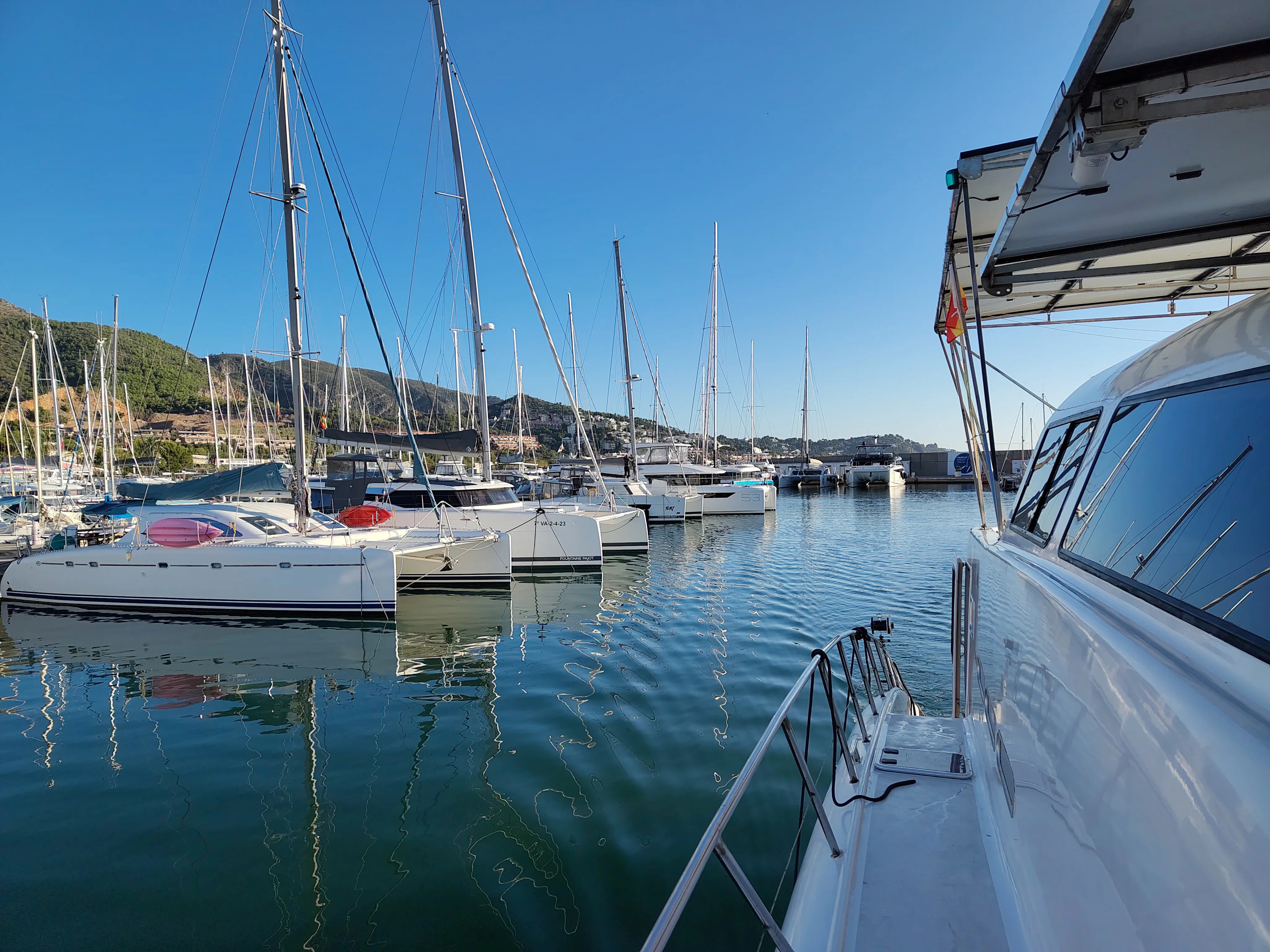
We held our power consumption at 6kW all morning. By midday, our solar panels were outputting exactly what the motors were drawing, resulting in a net-zero energy burn. However, as we passed the Barcelona coastline, we hit a foul current. We had to throttle up to between 8 and 10kW just to keep our speed above 4 knots, weaving through massive commercial anchorages populated by towering cargo ships.
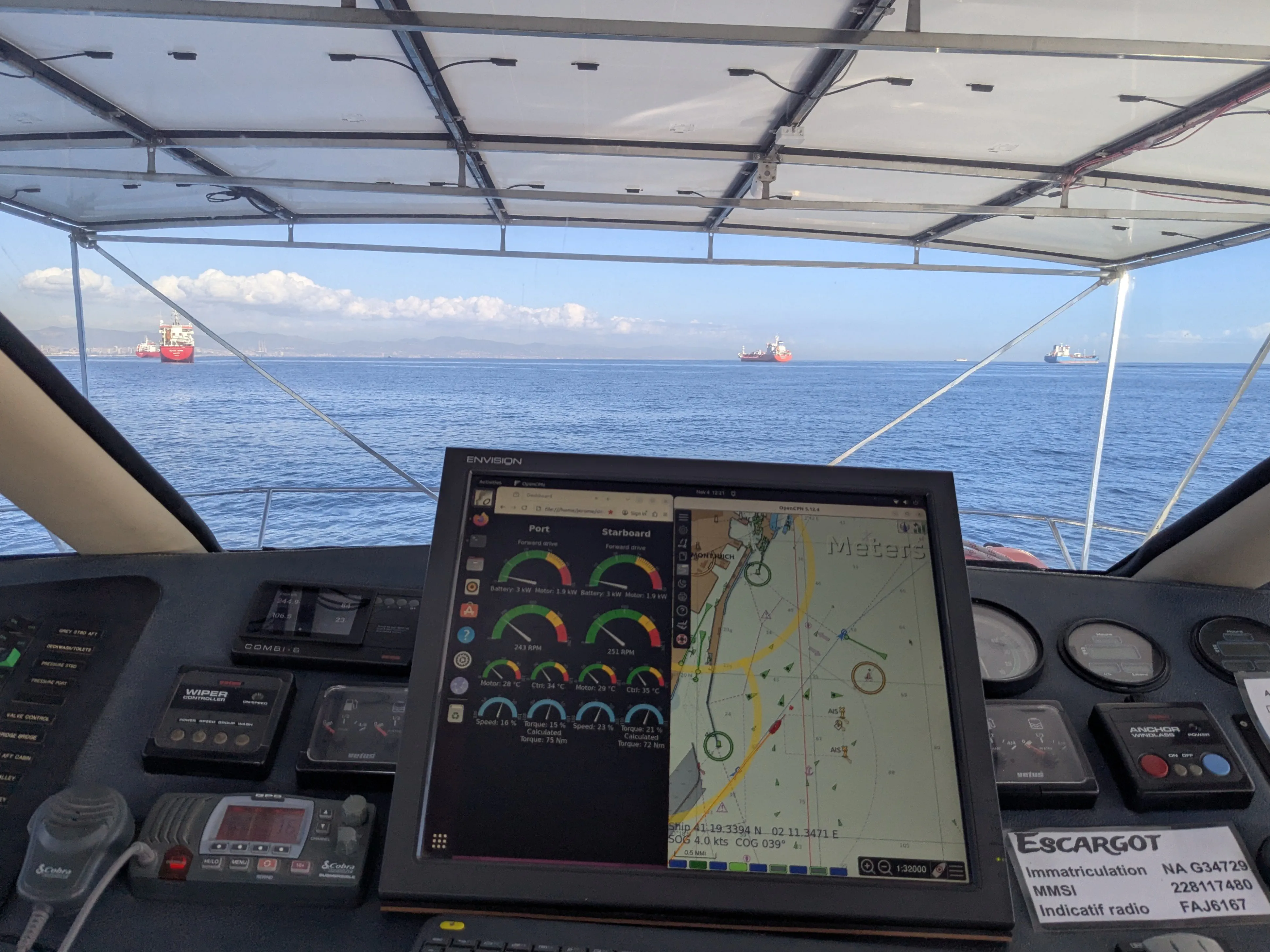
The offshore view of Barcelona’s skyline was spectacular, specifically the unmistakable, nearly completed spires of the Sagrada Familia.
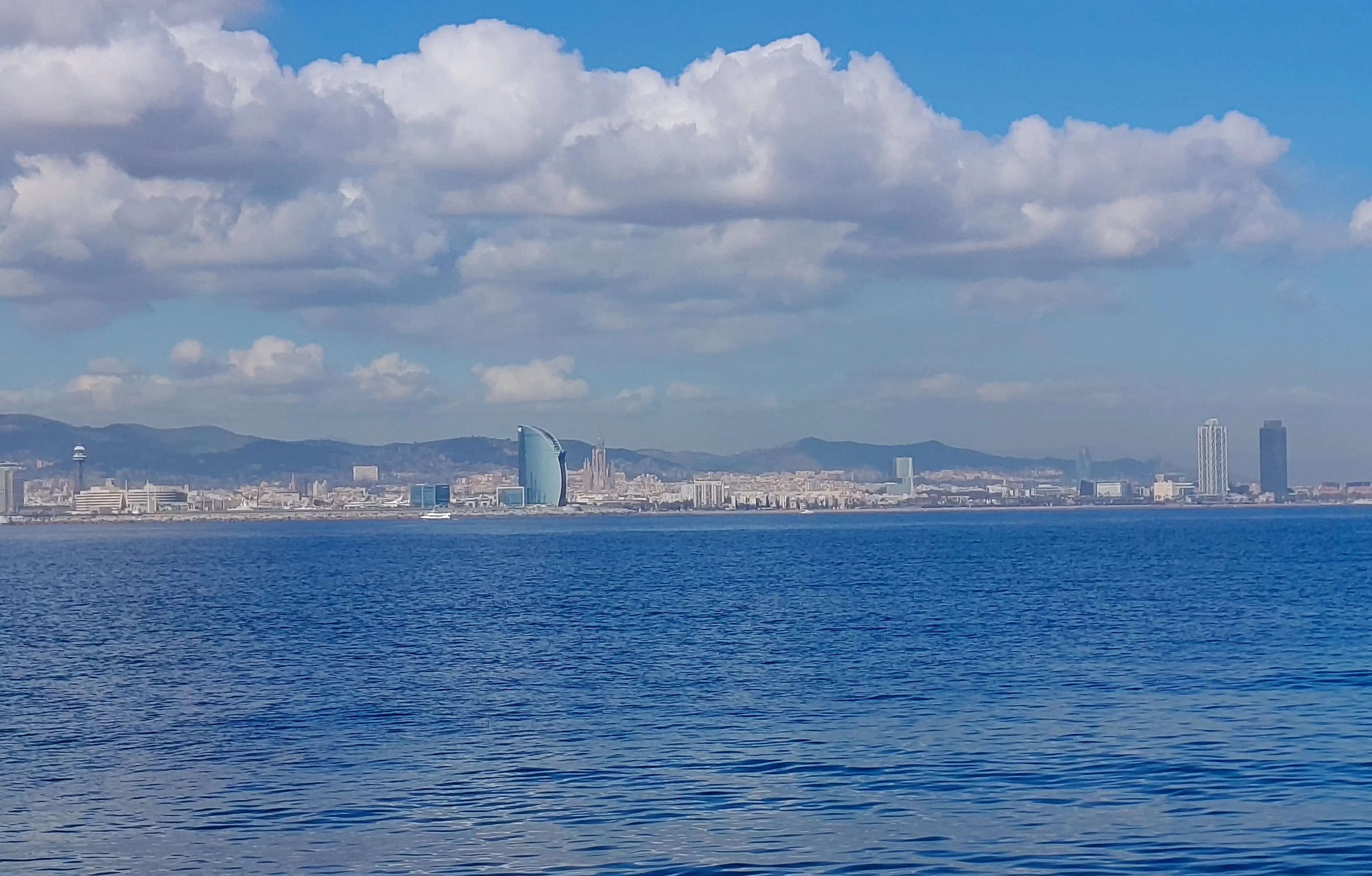
We arrived in Arenys de Mar at 5:40 PM, draining the bank down to 50% SOC. We left Escargot safely docked there for a few days while we made a quick road trip into France to attend to a family matter.
Our tour of the Spanish coast was drawing to a close. We aimed to reach Banyuls-sur-Mer in France—about 80 nautical miles away—within the next few days. We split the trip, planning to anchor just south of the Gulf of Roses in Cala Sa Riera for the night.
Slipping our lines at 7:45 AM with 96% SOC, we traced the ruggedly beautiful northern Catalonia coast. To ensure we had enough reserve energy to pull off two long back-to-back passages, we capped our power draw at 5kW, maintaining a steady 3.8 knots.
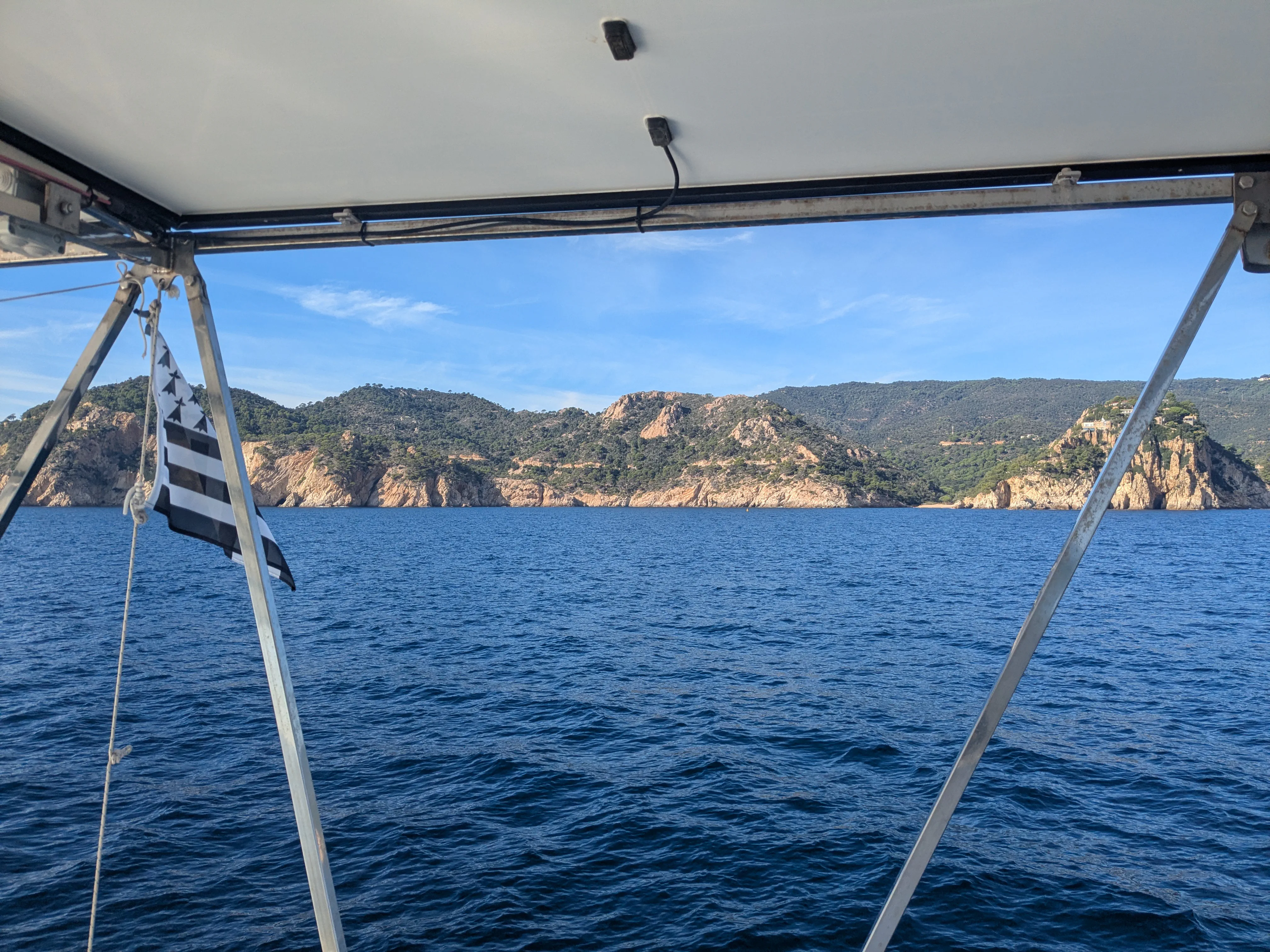
As the sun sank lower in the sky and our solar input dropped, we further reduced our draw to 3.4kW, slowing to 3 knots. As darkness fell, we pulled up the forward infrared camera feed on our cockpit navigation computer to help spot any floating debris in our immediate path.
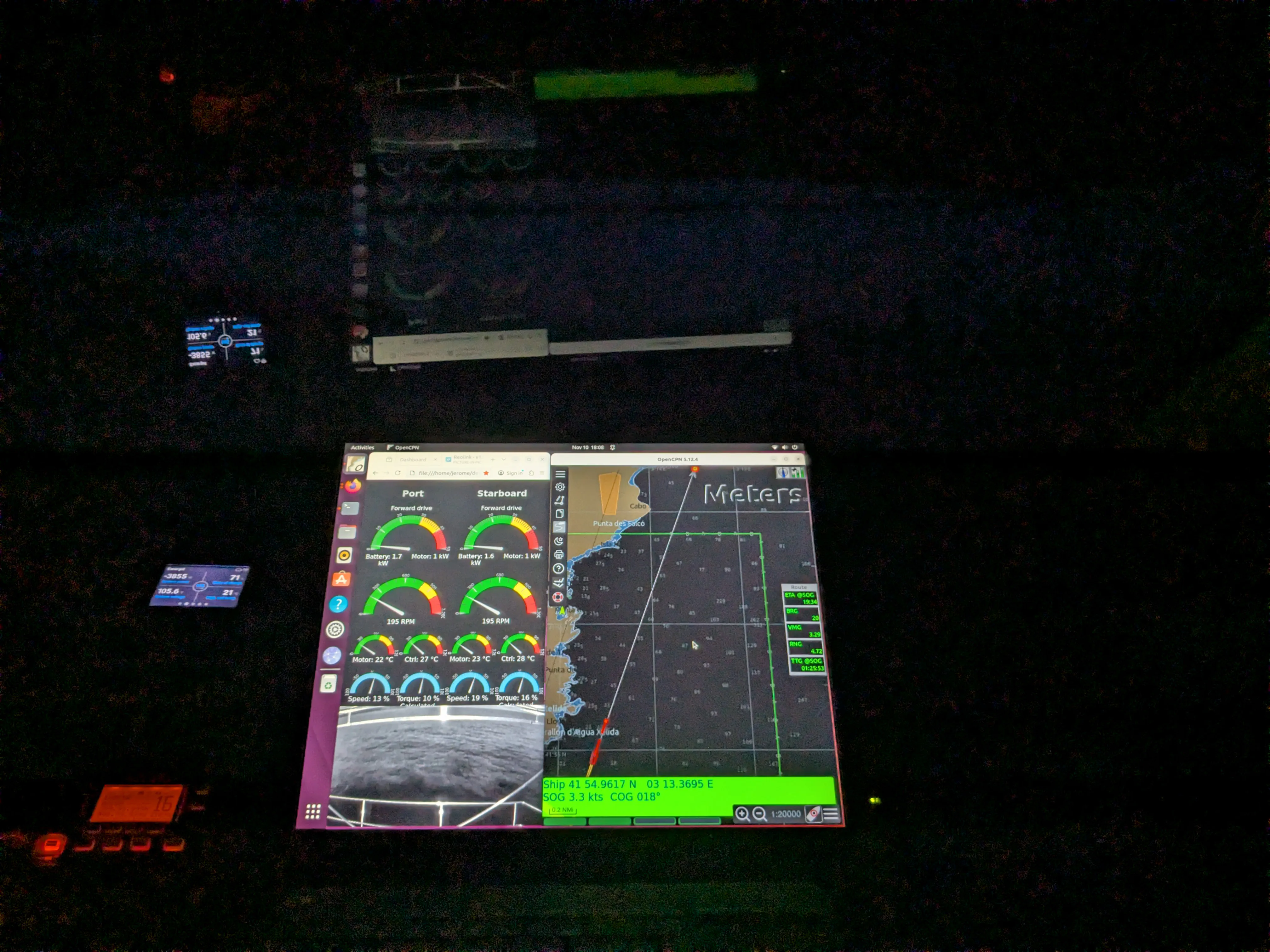
We slipped into Cala Sa Riera in the dark and dropped the hook in 5 meters of water. With the summer mooring buoys completely removed for the season, we had no trouble finding a prime spot in the empty bay. We ended the day with 64% SOC.
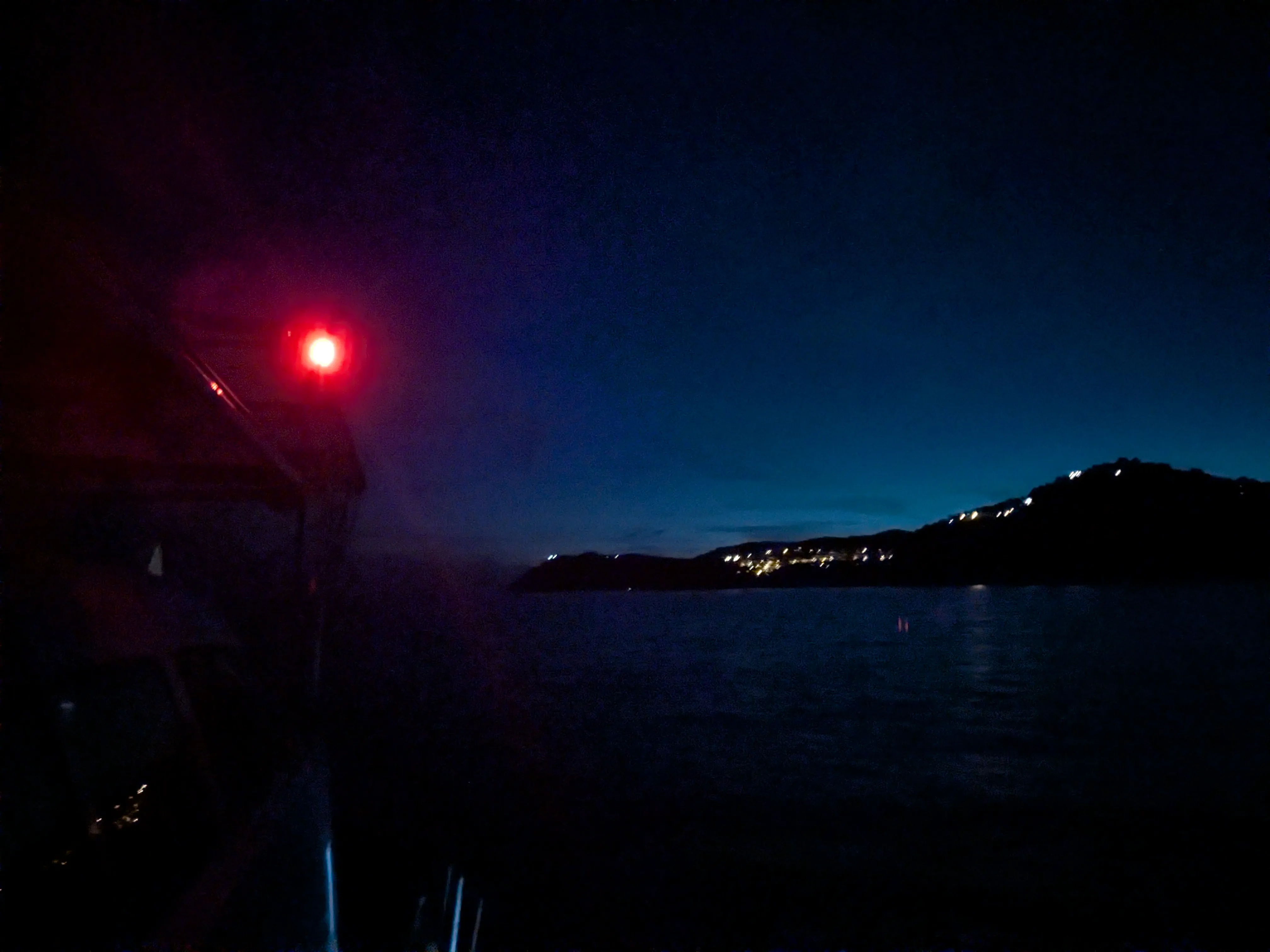
The next morning, we launched the dinghy early for a shore run with BigBoy, treated to a breathtaking sunrise over the calm anchorage.
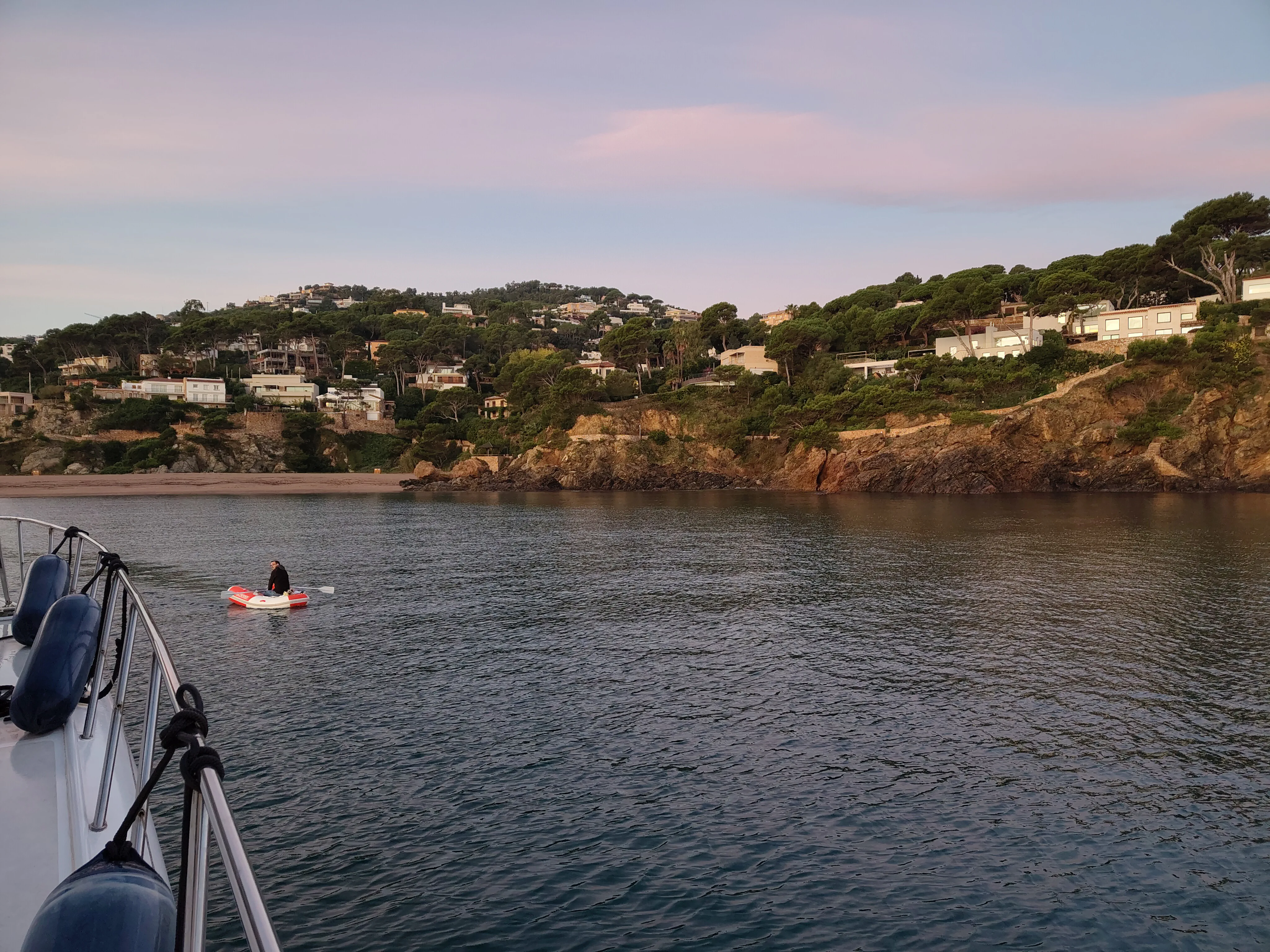
By 7:30 AM, the dinghy was secured on the forward deck, and we weighed anchor with 62% SOC. Anticipating poor solar generation under hazy skies, we limited our propulsion to a highly conservative 5kW to guarantee a safe arrival.
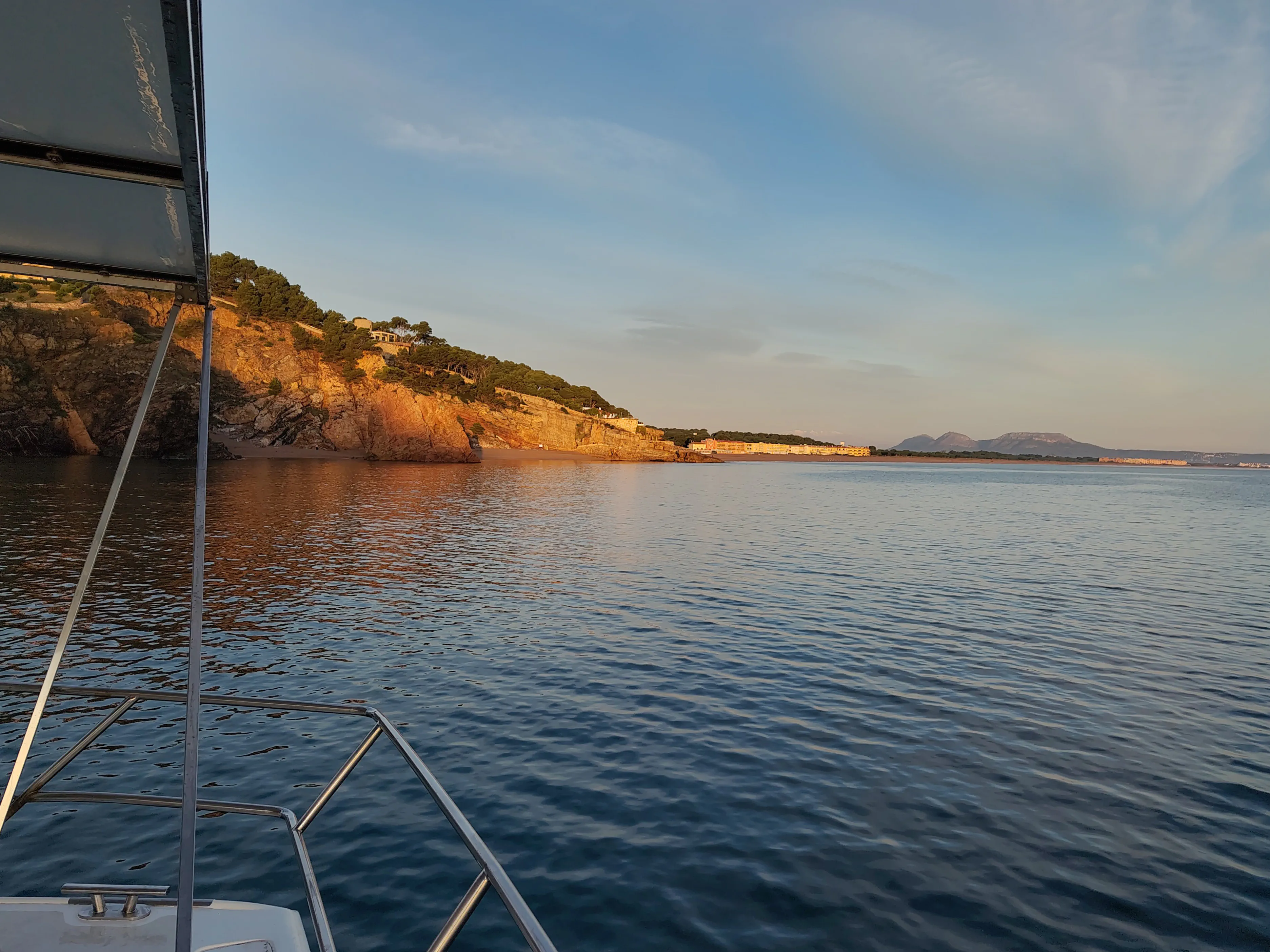
Even at 5kW, our speed fluctuated wildly between 3 and 4.6 knots, dictated by the swirling currents around the rocky capes, though we averaged just under 4 knots overall.
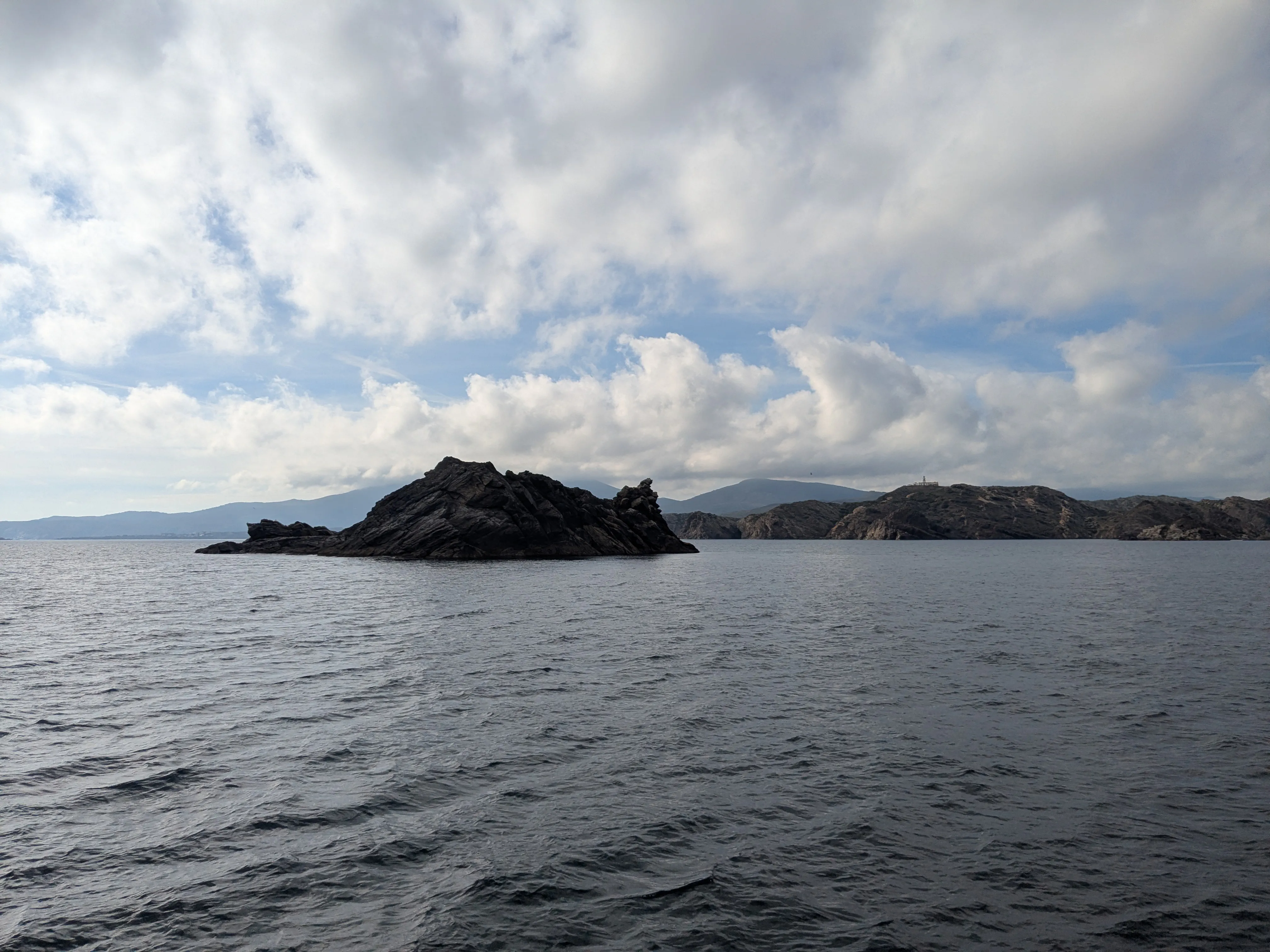
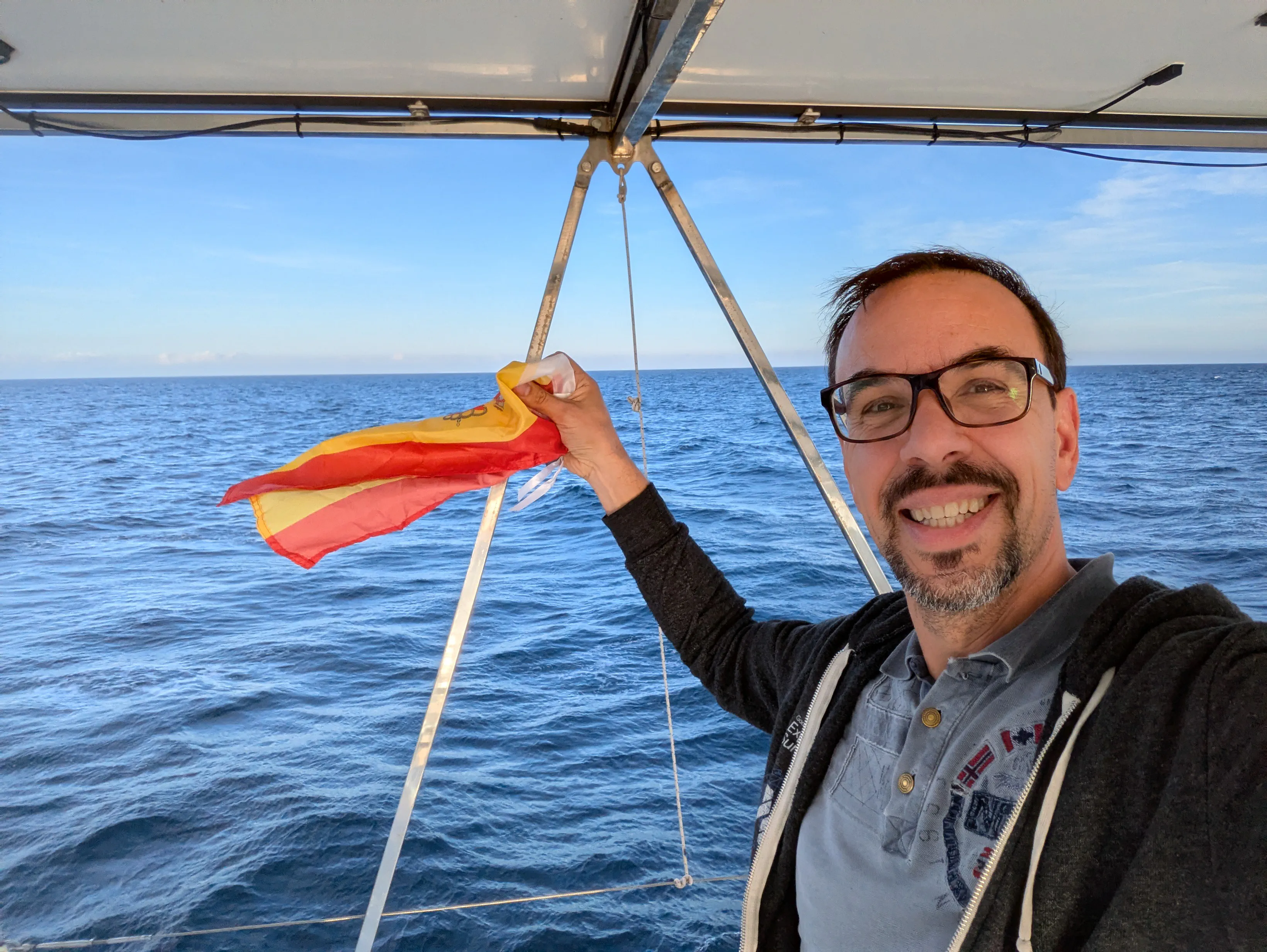
At exactly 4:00 PM, we crossed the maritime border into French waters and struck our Spanish courtesy flag. For the very first time, the French-flagged catamaran Escargot was sailing in her home waters!
We docked in Banyuls-sur-Mer at 5:10 PM, carrying a final SOC of 36%.
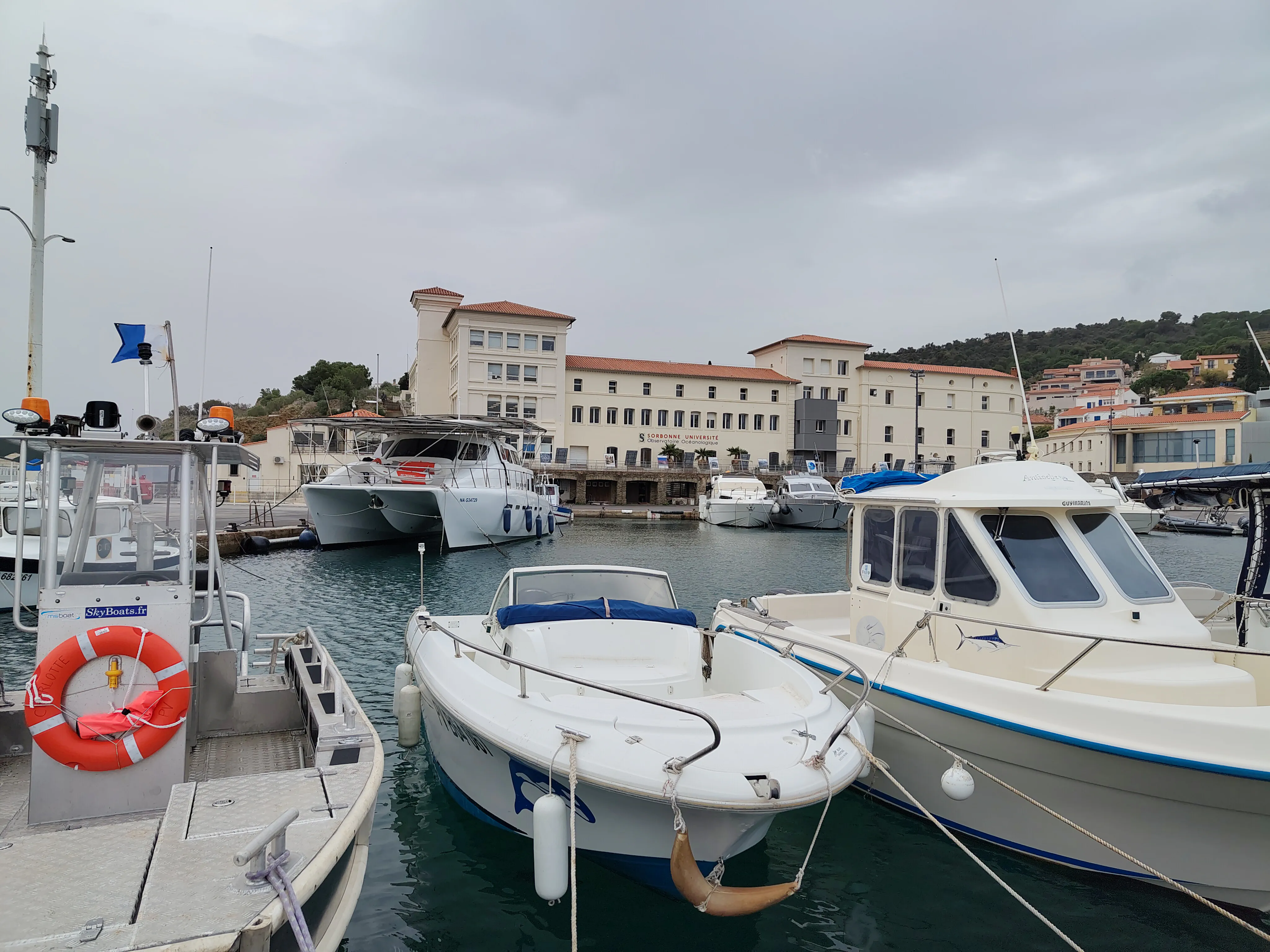
After four lovely days in Banyuls-sur-Mer, highlighted by several wonderful encounters with locals and fellow sailors, we seized a weather window to push north. Family members were driving their RV to Gruissan, and we wanted to arrive by 6:00 PM to meet them for dinner. More importantly, however, we had to execute this transit because it was our only safe window to exit the southern Gulf of Lion before a forecasted gale arrived. With heavy overcast skies ahead, we knew this wouldn’t be a purely solar-powered day.
Facing a 40-nautical-mile journey, we departed at 7:30 AM with an 84% SOC, gliding out of the calm bay of Banyuls at 8kW.
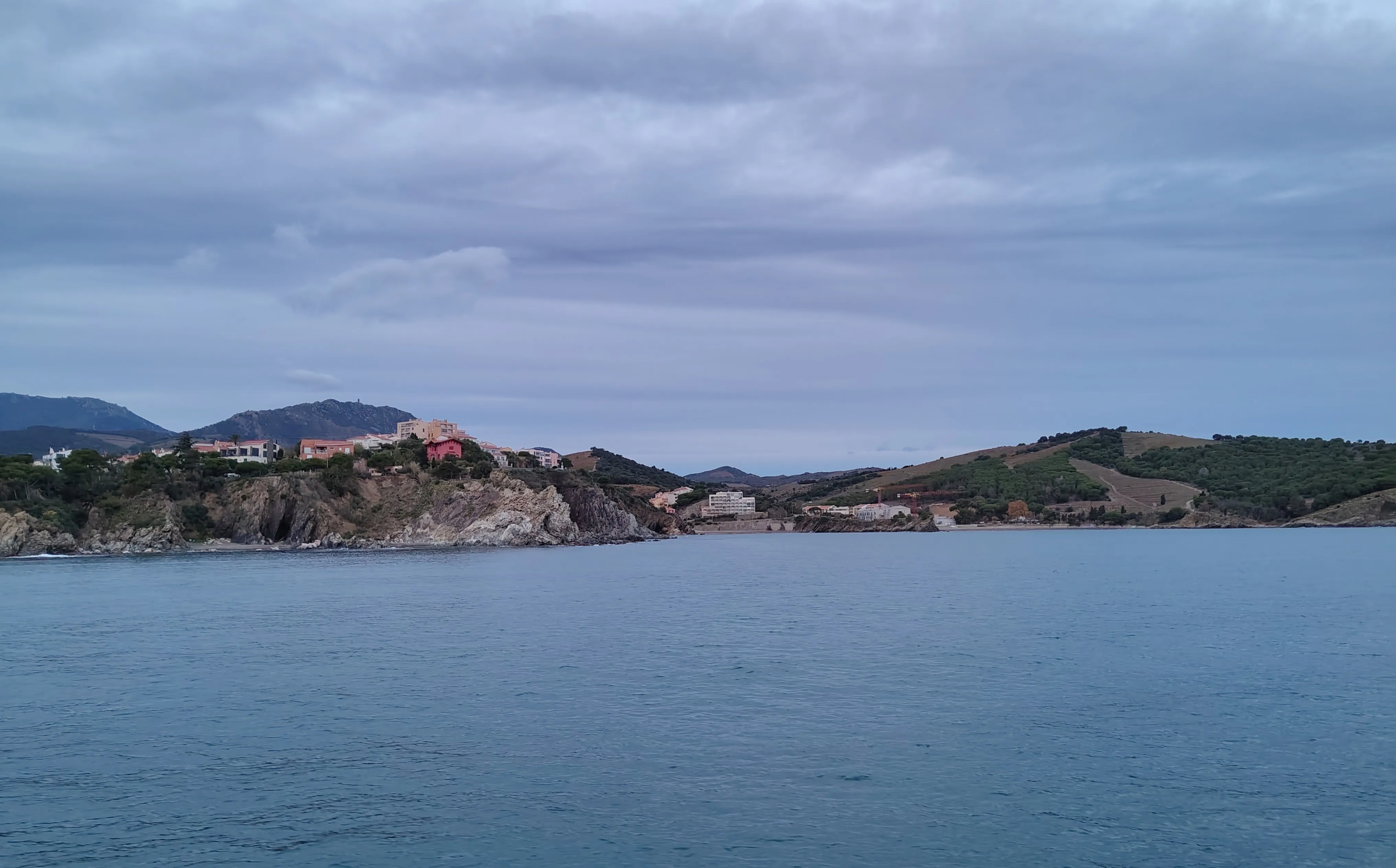
Once outside the bay’s protection, the sea state worsened, throwing waves over a meter high at our bows. The sky remained deeply overcast, generating almost no power. To maintain 4 knots against the chop, we bumped the motors up to 12kW.
By 10:30 AM, our SOC had plummeted to 54%. With seven hours left to go, relying strictly on the batteries was no longer an option. We fired up the backup diesel generator.
By 12:30 PM, the generator had brought our bank back up to 65%. Comfortable with our reserves, we pushed propulsion to 16kW, increasing our speed to 4.3 knots to ensure we made our dinner rendezvous.
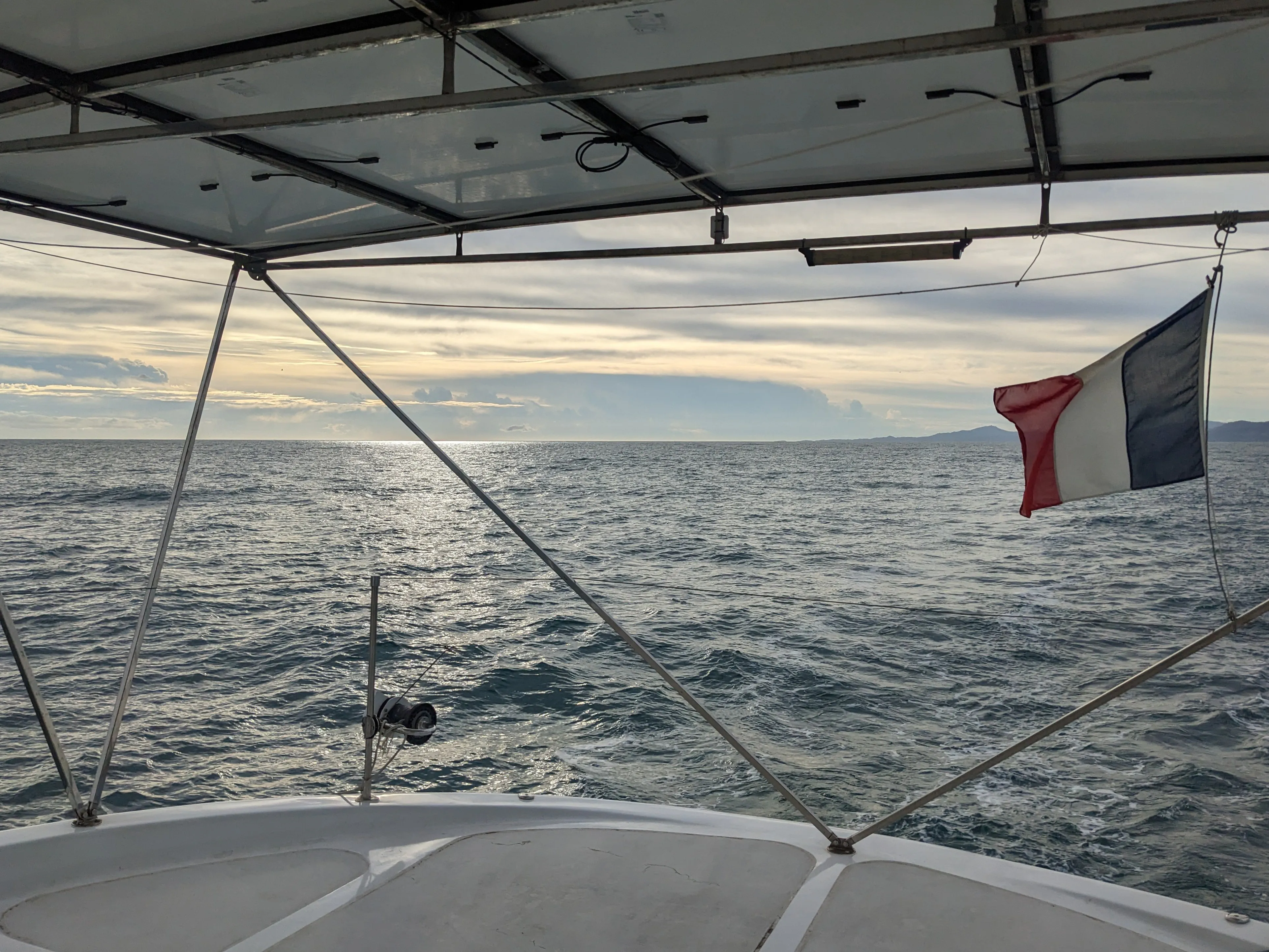
Later in the afternoon, realizing we were well on schedule, we backed the throttles down to 12kW, and eventually 8kW, allowing the generator to pack a bit more charge into the batteries for the following day’s run.
Entering the Etang du Grazel, we found ourselves skimming across glassy waters beneath a brilliant pink sunset. We dropped our power to 5kW and gracefully slid into the visitor berth at Gruissan, finishing the day with 78% SOC.
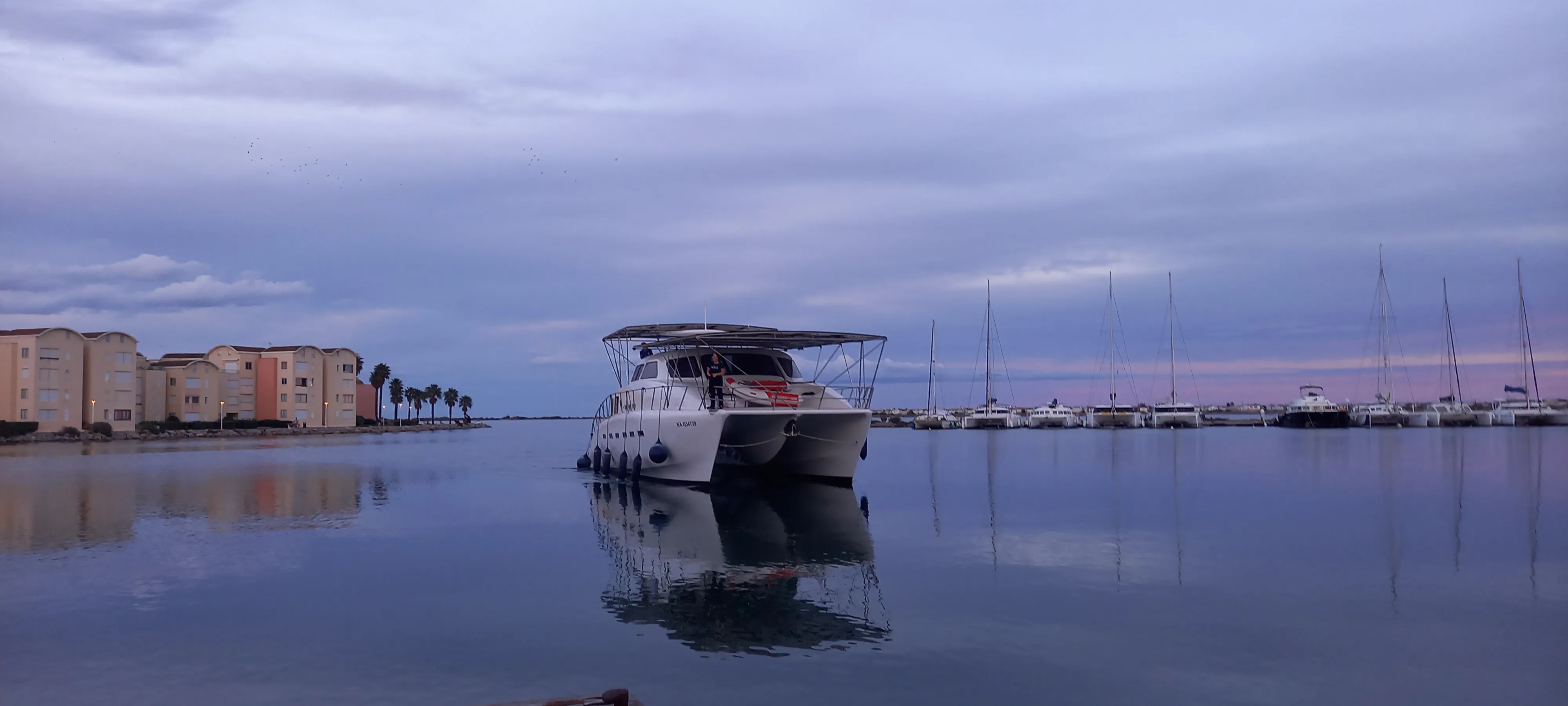
The following day required a fast hop to Sète, where we planned to hunker down for a few days while the infamous Tramontane winds blew through. The forecast called for Force 7 near-gale conditions by mid-afternoon. The main leisure marina in Sète was completely full, but the superyacht marina had a slip available and kindly agreed to match the standard leisure rate given the incoming weather.
We departed Gruissan at 7:15 AM—right at sunrise—with 73% SOC. We began with an efficient 5kW draw, yielding 3.9 knots.
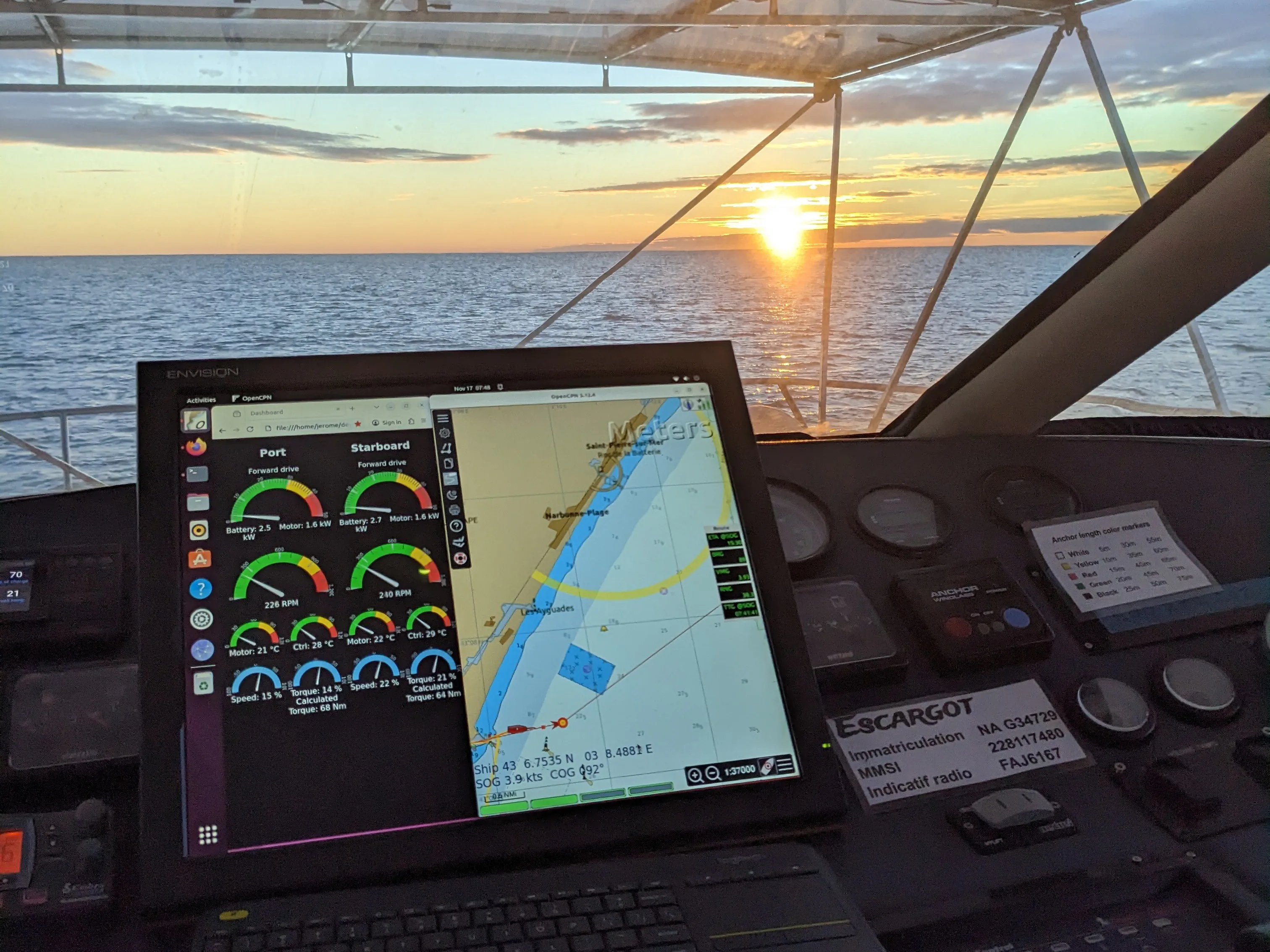
As we hoped, the morning hours were quiet and peaceful. By 9:50 AM, the wind had ticked up to 13 knots, and we increased our output to 6kW to hold 4.1 knots.
Just past noon, we rounded the island of Brescou near Cap d’Agde with 53% SOC.
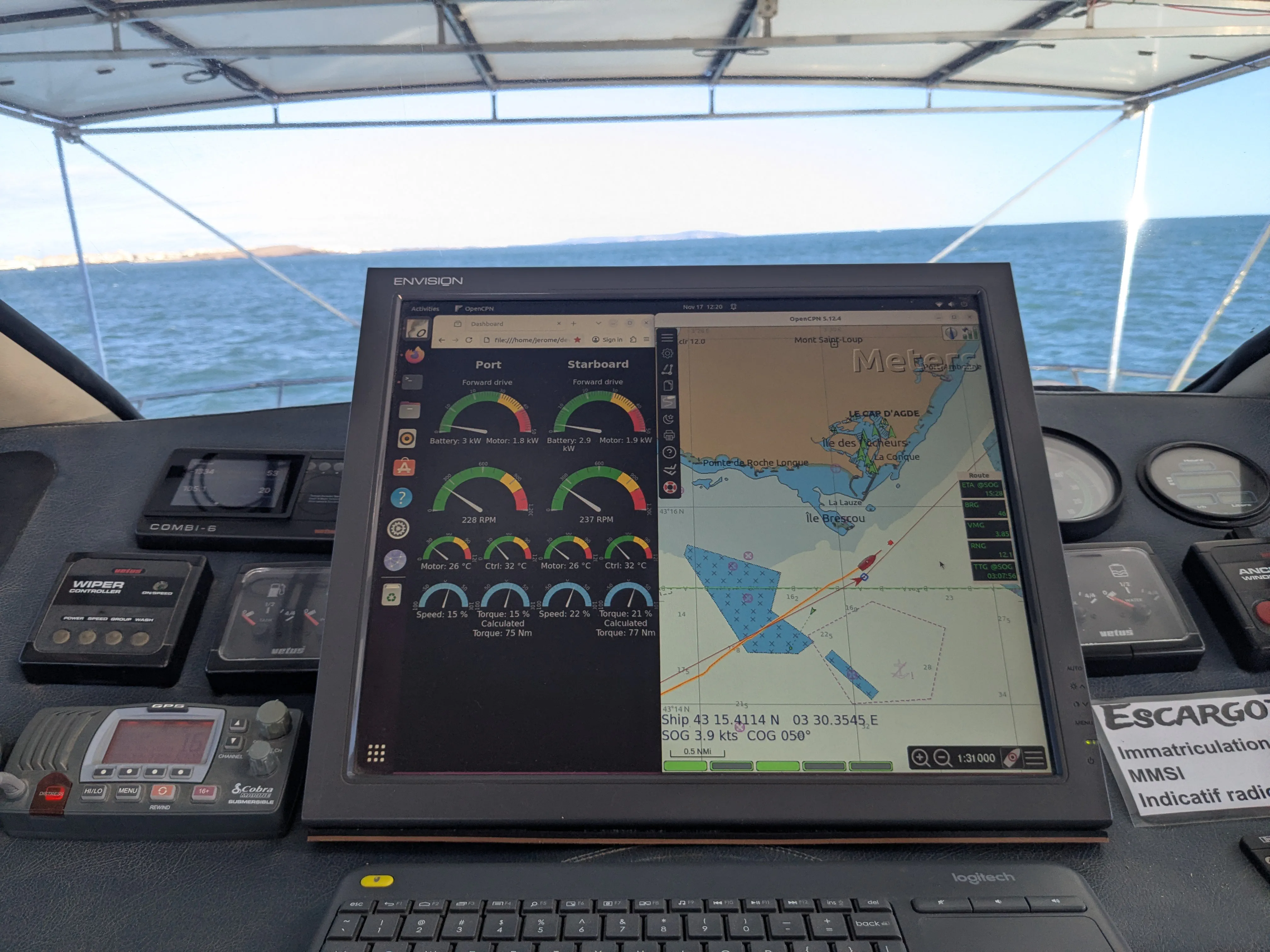
Right on cue, the local safety station (CROSS Méditerranée) broadcast a BMS (bulletin météorologique spécial) on VHF channel 16, warning of imminent Force 7 winds (28 to 33 knots). We could see the water blackening as the wind crossed 20 knots, so we altered course to hug the coastline between Cap d’Agde and Sète. Because the wind was blowing offshore, staying close to the beach kept us out of the building swell. However, navigating these shallow coastal waters (10 to 15 meters deep) proved challenging. The area was peppered with fishermen’s crab pots, requiring constant vigilance and frequent, sharp course corrections to avoid wrapping a line around our props.
We bumped our power to 9kW, running at 4.7 knots to get tied up as quickly as possible.
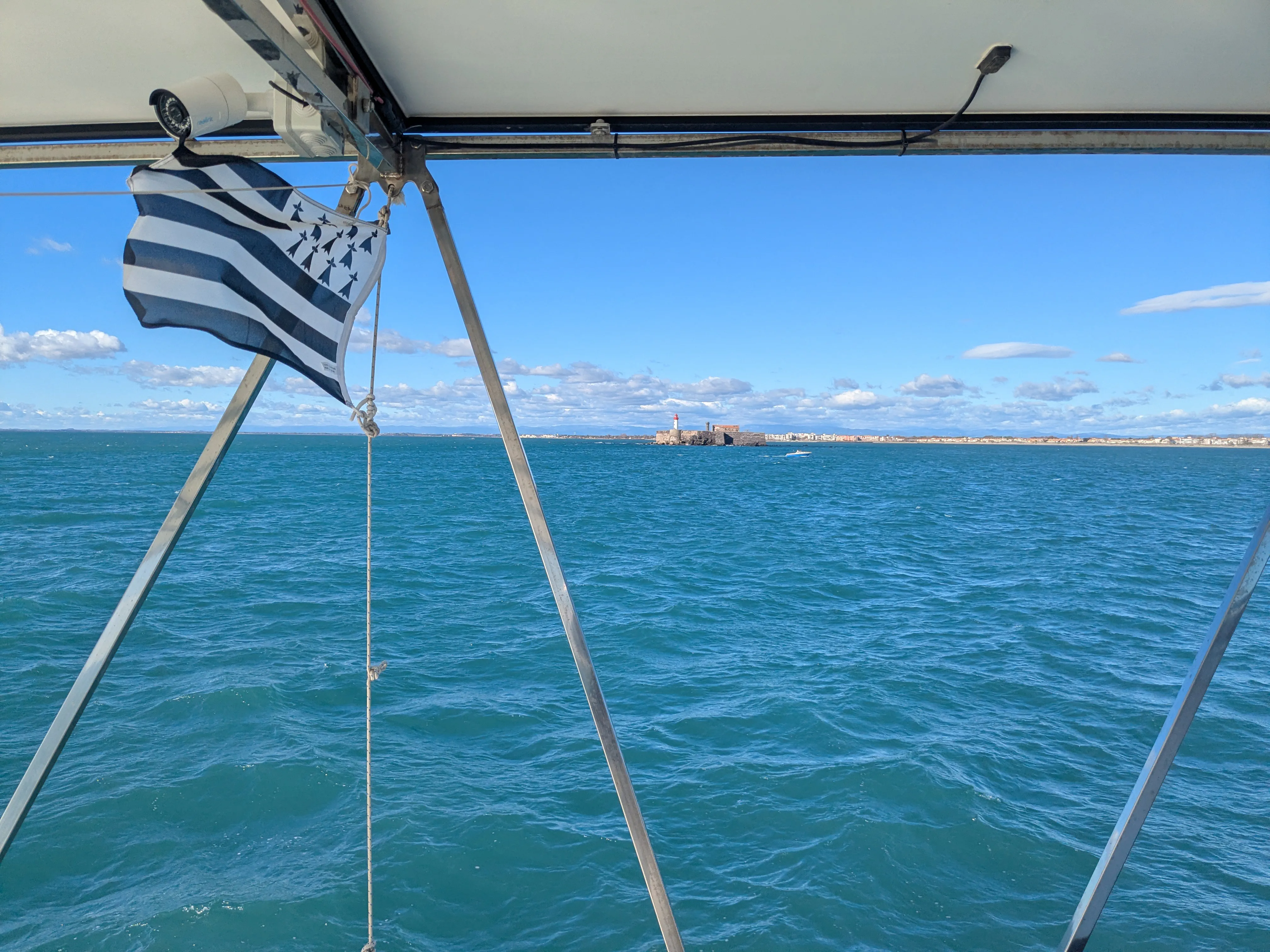
It was a tremendous relief to pass between the breakwaters into the sheltered, calm waters of Sète at 3:00 PM. We navigated through the commercial basins toward the IGY Sète Marina.
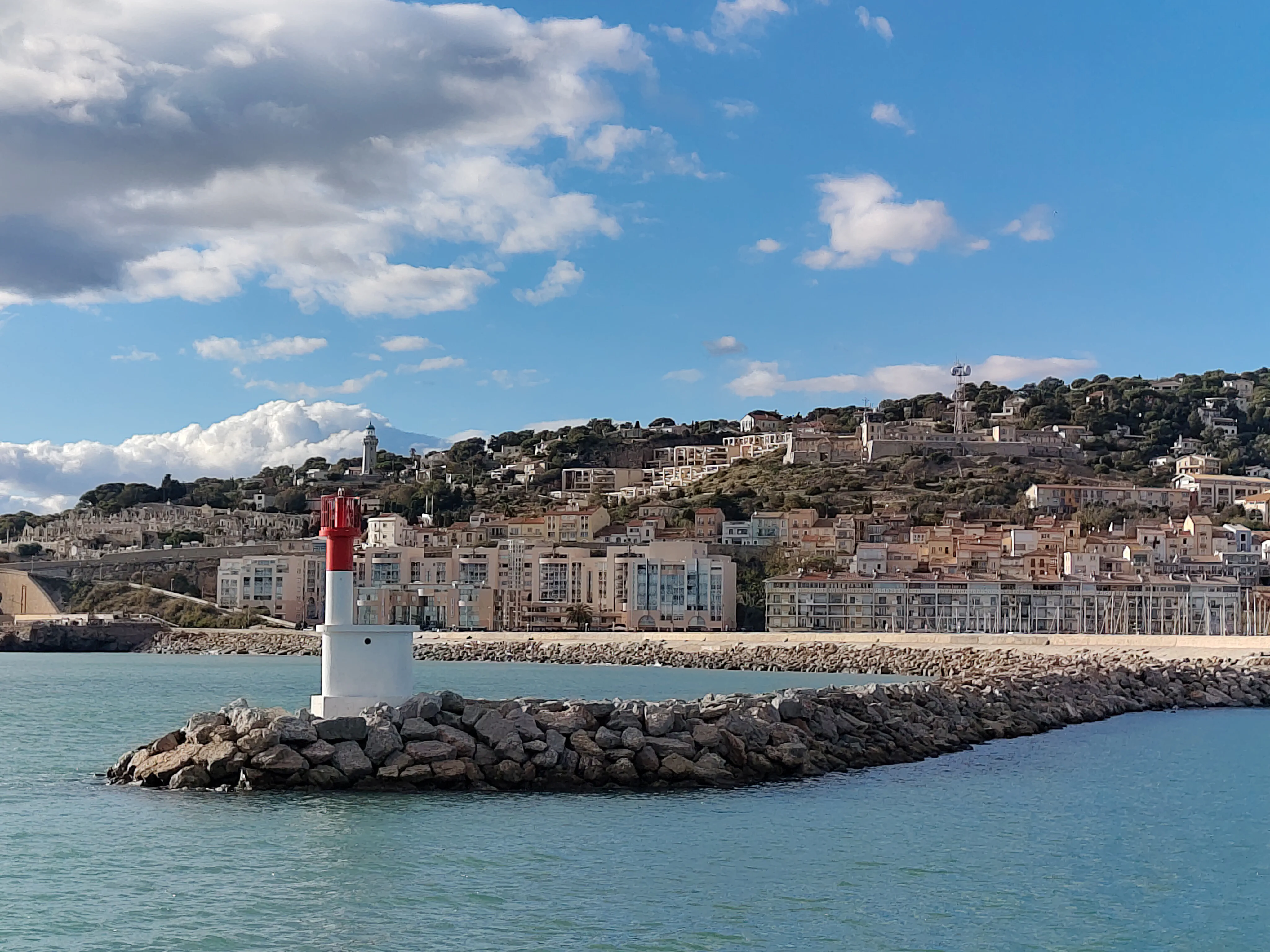
As we approached, we saw our designated berth marked by a large IGY feather flag. A dockhand was waiting to catch our lines, alongside a marina representative who warmly welcomed us with an orientation packet. It was quite fun experiencing the “superyacht” treatment. We secured the boat and shut down the systems with 39% SOC.
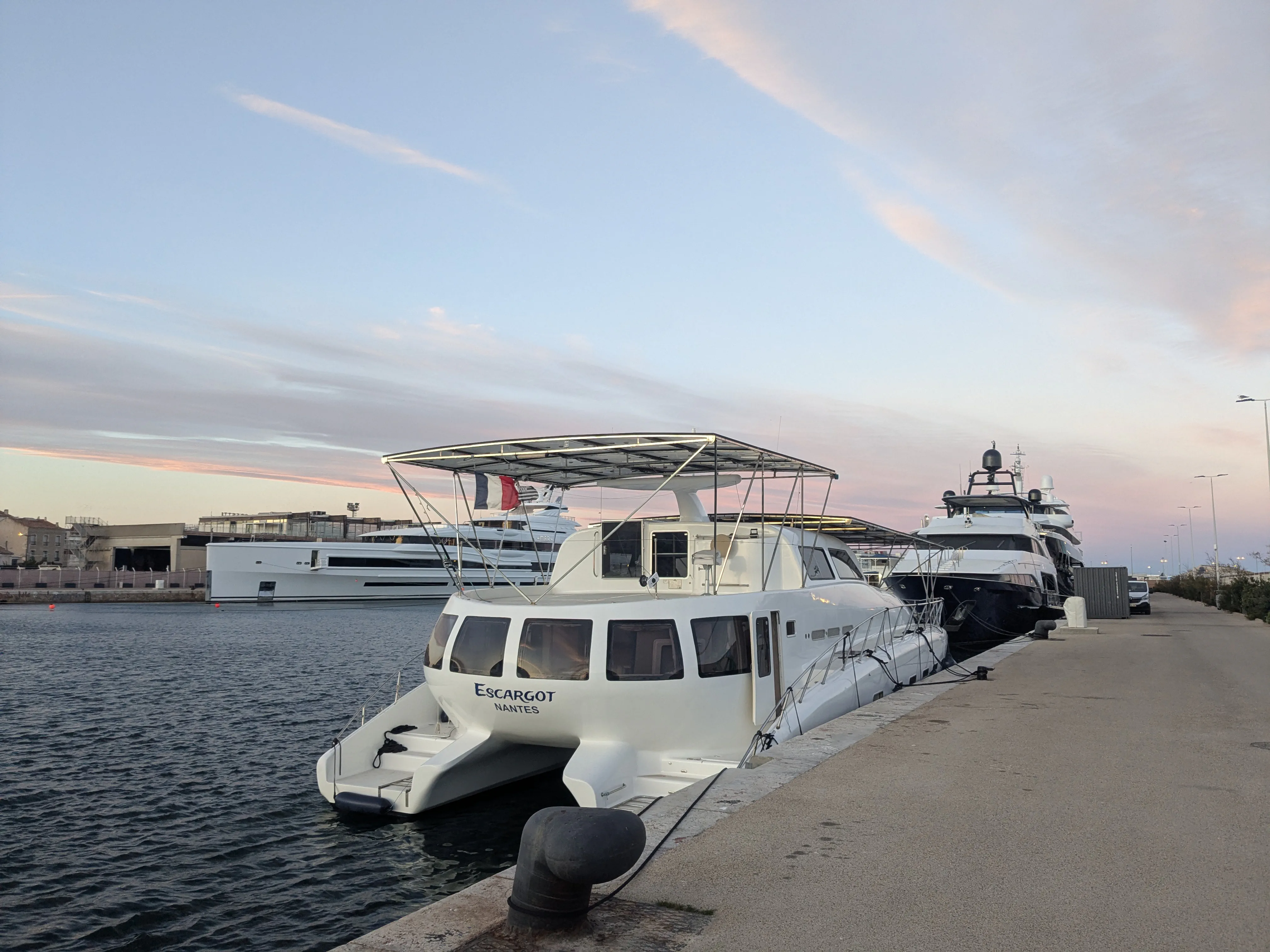
After enduring several bitterly cold and howling days in Sète, we finally caught a favorable weather window to jump to Saintes-Maries-de-la-Mer. The stark reality that “we aren’t in Spain anymore” was settling in; late November in southern France meant frigid air and scarce sunshine. We slipped out of the marina at 8:05 AM with 92% SOC and 33 nautical miles ahead of us.
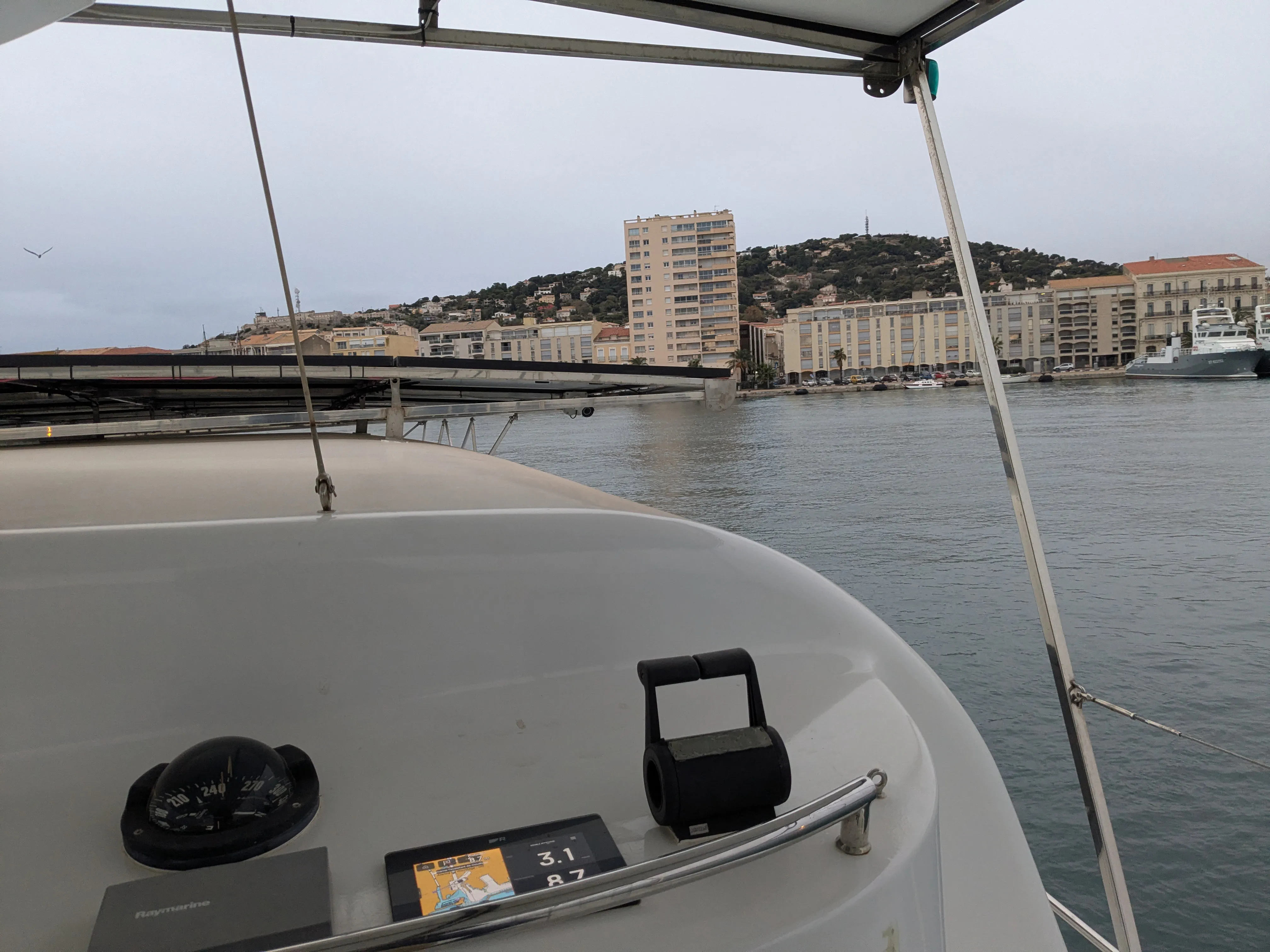
We cruised at 8kW, making between 4.4 and 4.8 knots through the morning. By 11:00 AM, we dialed it back to 6kW, settling into a comfortable 4-knot pace.
Approaching Port Gardian at Saintes-Maries-de-la-Mer around 4:00 PM, we spotted a catamaran whose crew was frantically waving at us. We hailed them on VHF channel 16. The wind had completely died, and they had suffered a total engine failure. We immediately altered course, caught their lines, and took the catamaran Grand Bleu under tow.
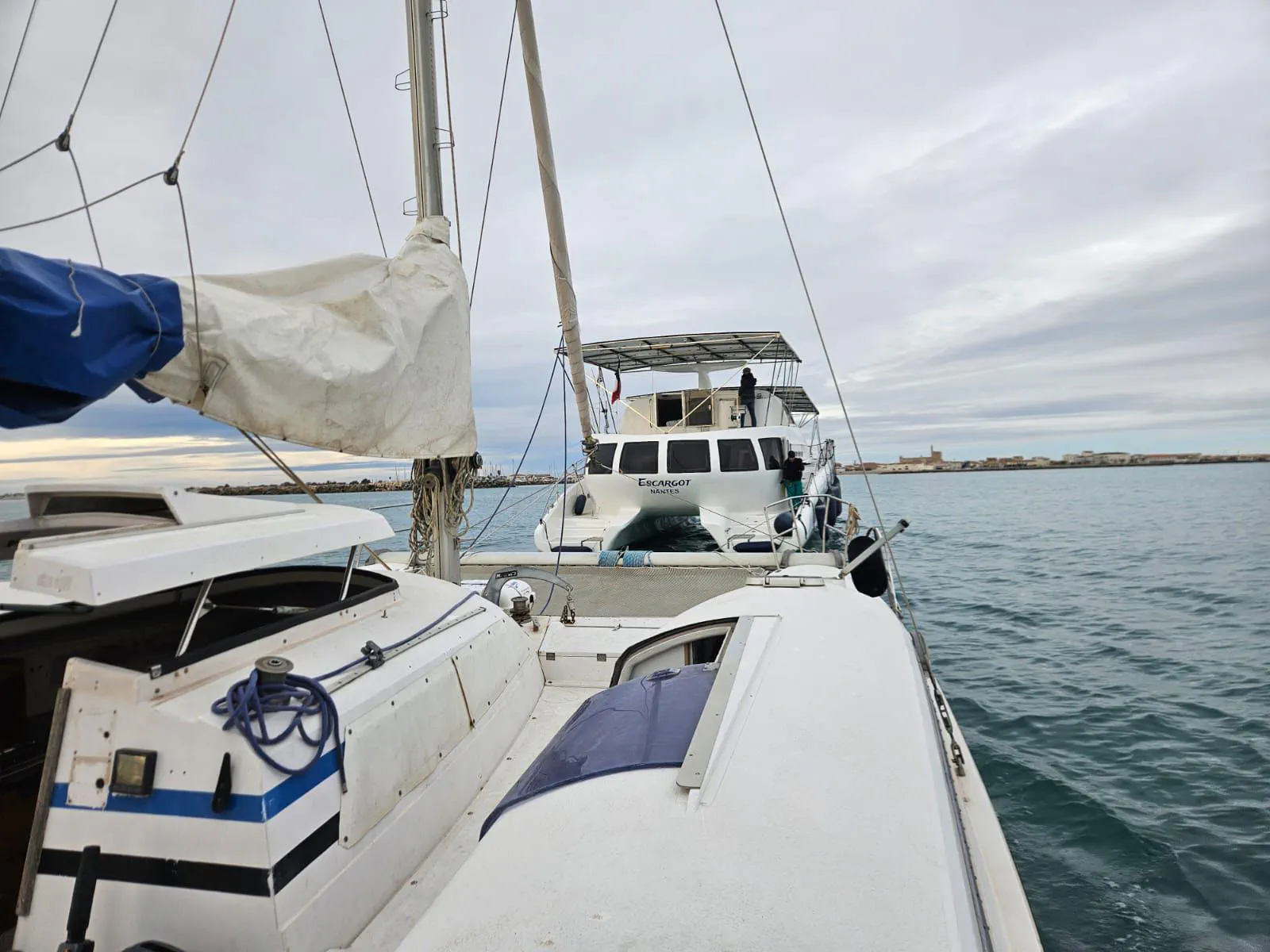
Once inside the protection of the breakwater, we released their tow line, allowing them their forward momentum to glide onto an empty receiving dock. We then proceeded with our own docking, tying up by 5:00 PM with 49% SOC remaining.
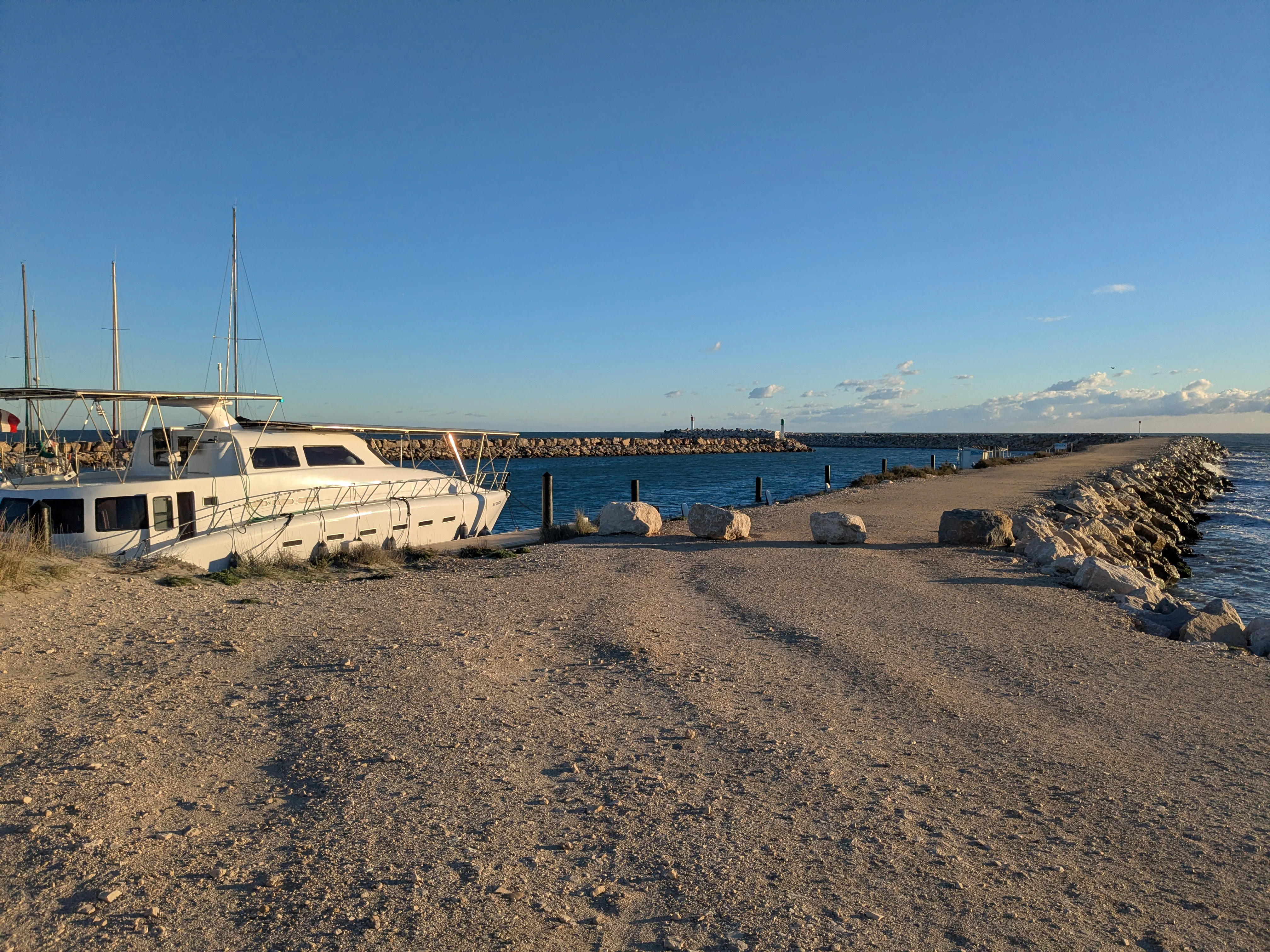
Over the next few days, the wind flared up again, churning the sea into a chaotic mess. We patiently waited out the blow, exploring the charming coastal town.
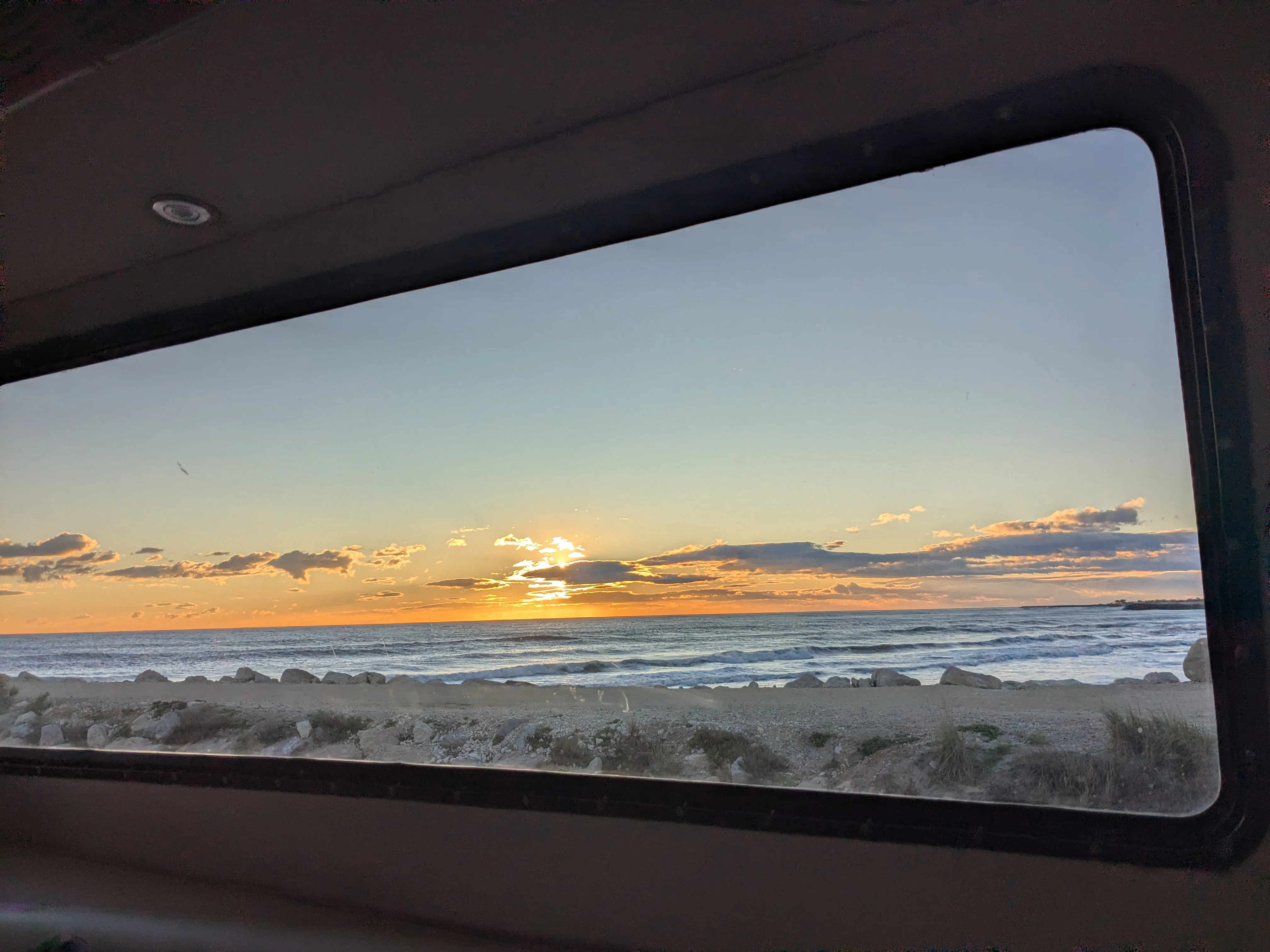
With sunny skies and flat seas forecasted, it was time for the final push. Escargot’s winter haul-out was booked for December 1st in Port-de-Bouc, just outside Fos-sur-Mer.
We cast off from the visitor dock at 8:15 AM, carrying 93% SOC.
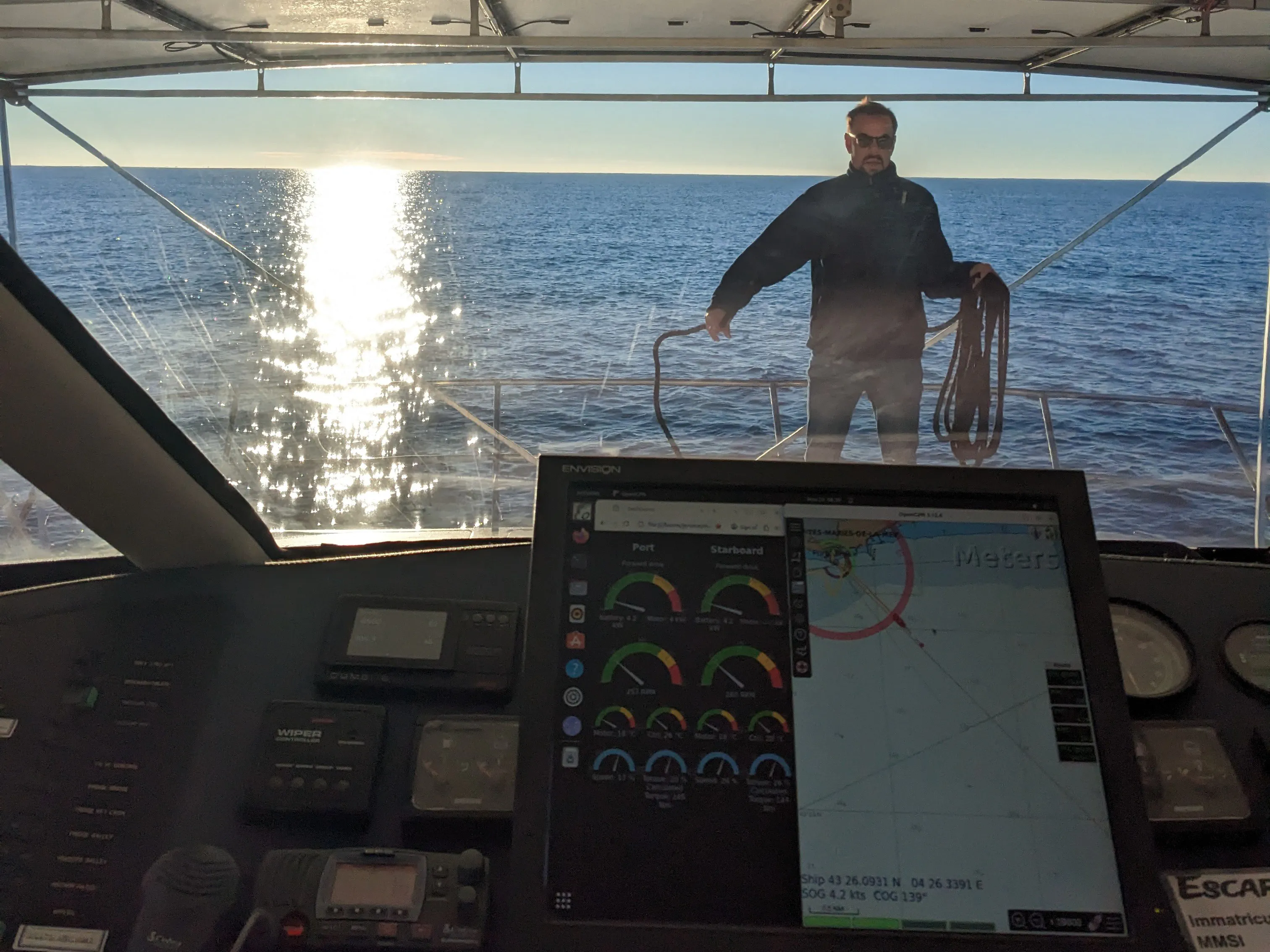
Shortly after departure, we were treated to a visit by a large, solitary dolphin that surfed our bow wake and kept us company for a solid five minutes.
We locked our power consumption at 8kW for the entire passage, with our speed fluctuating between 3.9 and 4.6 knots as we dealt with shifting coastal currents.
At 1:00 PM, we crossed into the massive, muddy outflow of the Rhône River. The boundary was stark, the brownish fresh water refusing to mix instantly with the deep blue sea.
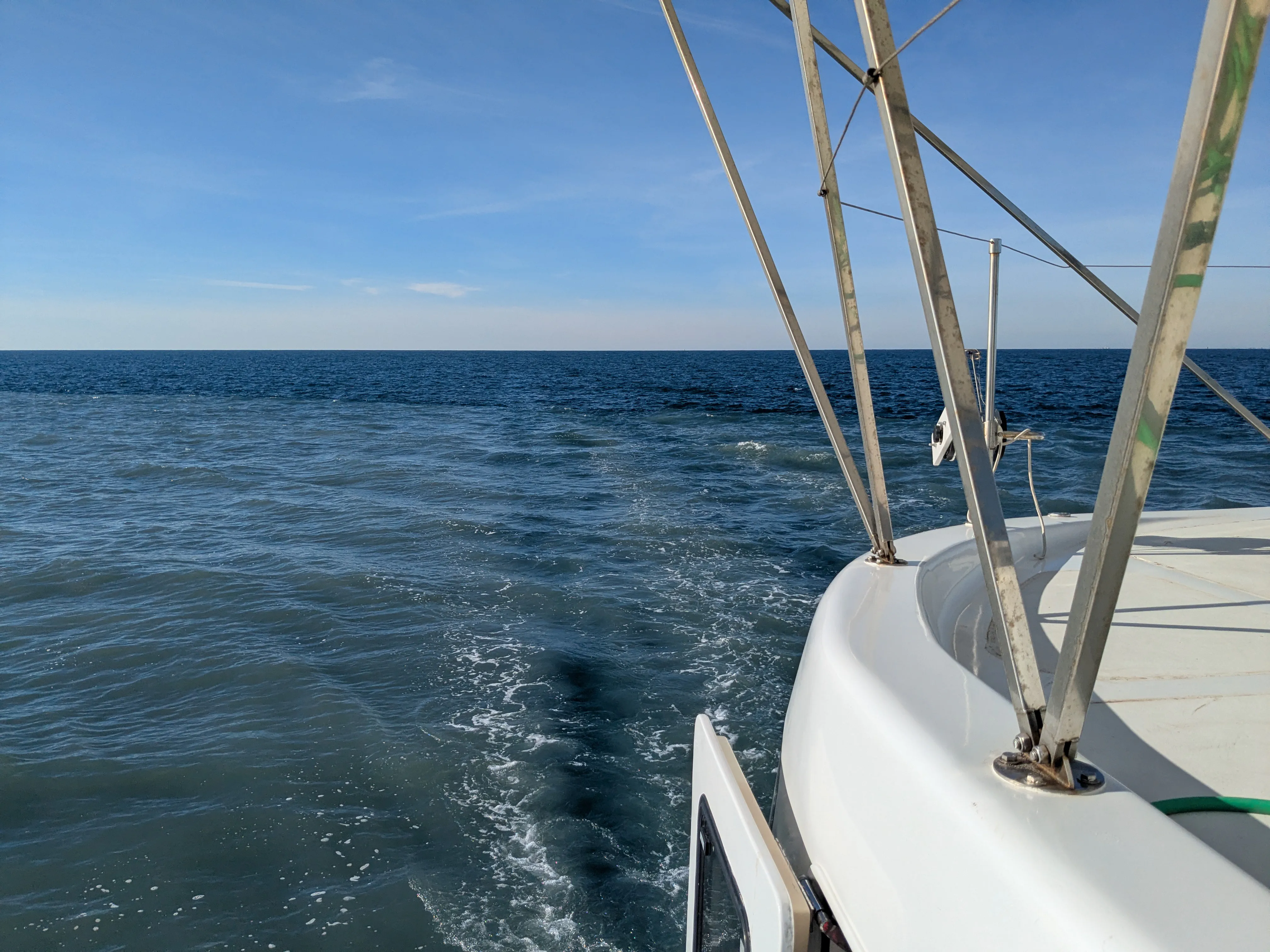
The Gulf of Fos-sur-Mer is a major industrial hub, buzzing with oil tankers and cargo vessels. We carefully tracked commercial traffic on our AIS. Timing our approach perfectly, we threaded our way across the main shipping channel without impeding any of the behemoths.
By 3:10 PM, with Port-de-Bouc in sight, we dialed our power down to just 4kW, slowing to 3.4 knots. We wanted to savor the final miles of our cruising season just a little bit longer.
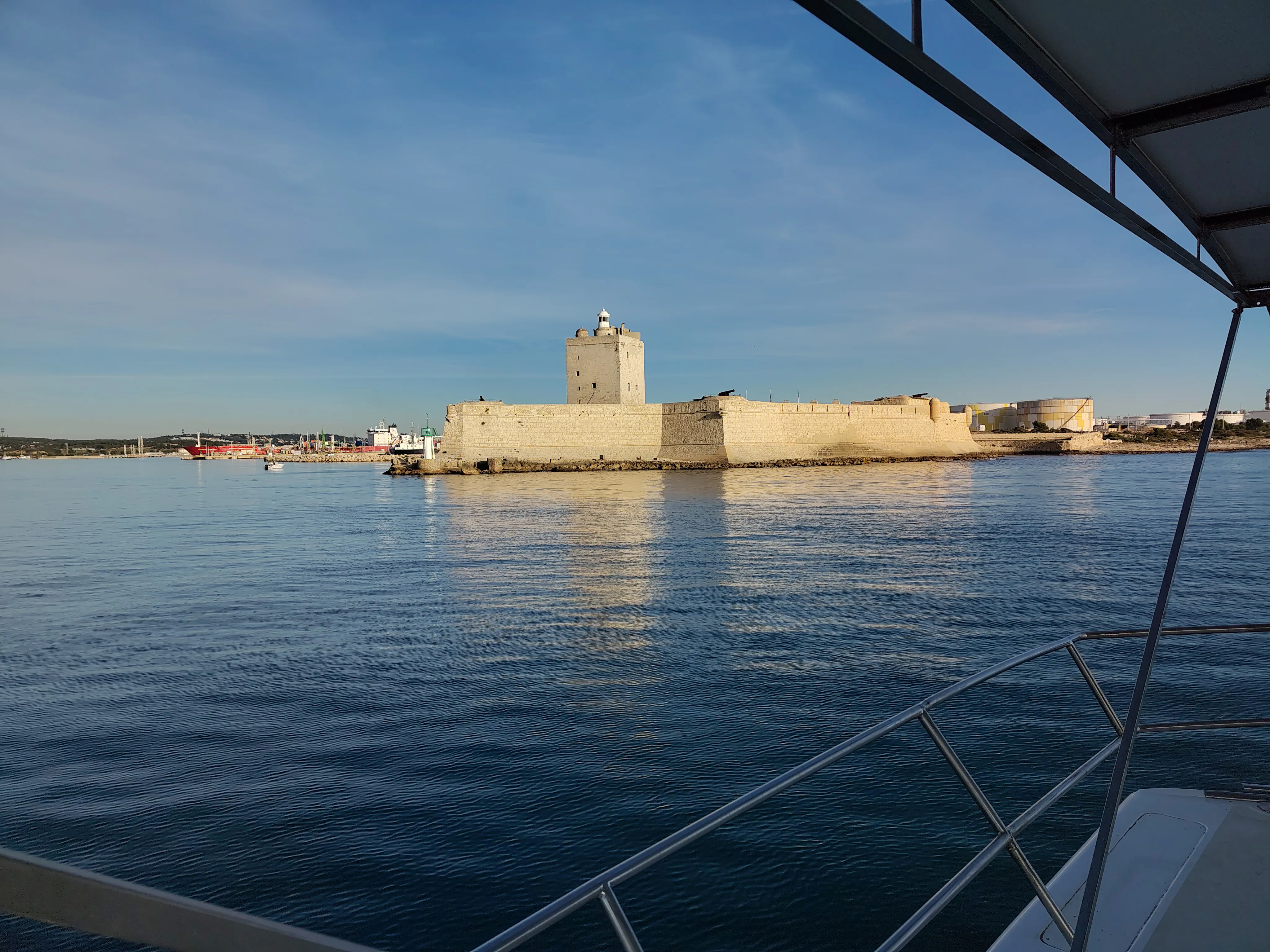
At 4:00 PM, we were securely docked. Despite the brilliant sunshine, the low winter sun angle meant our solar harvest had been poor, leaving us with 50% SOC at the end of the day.
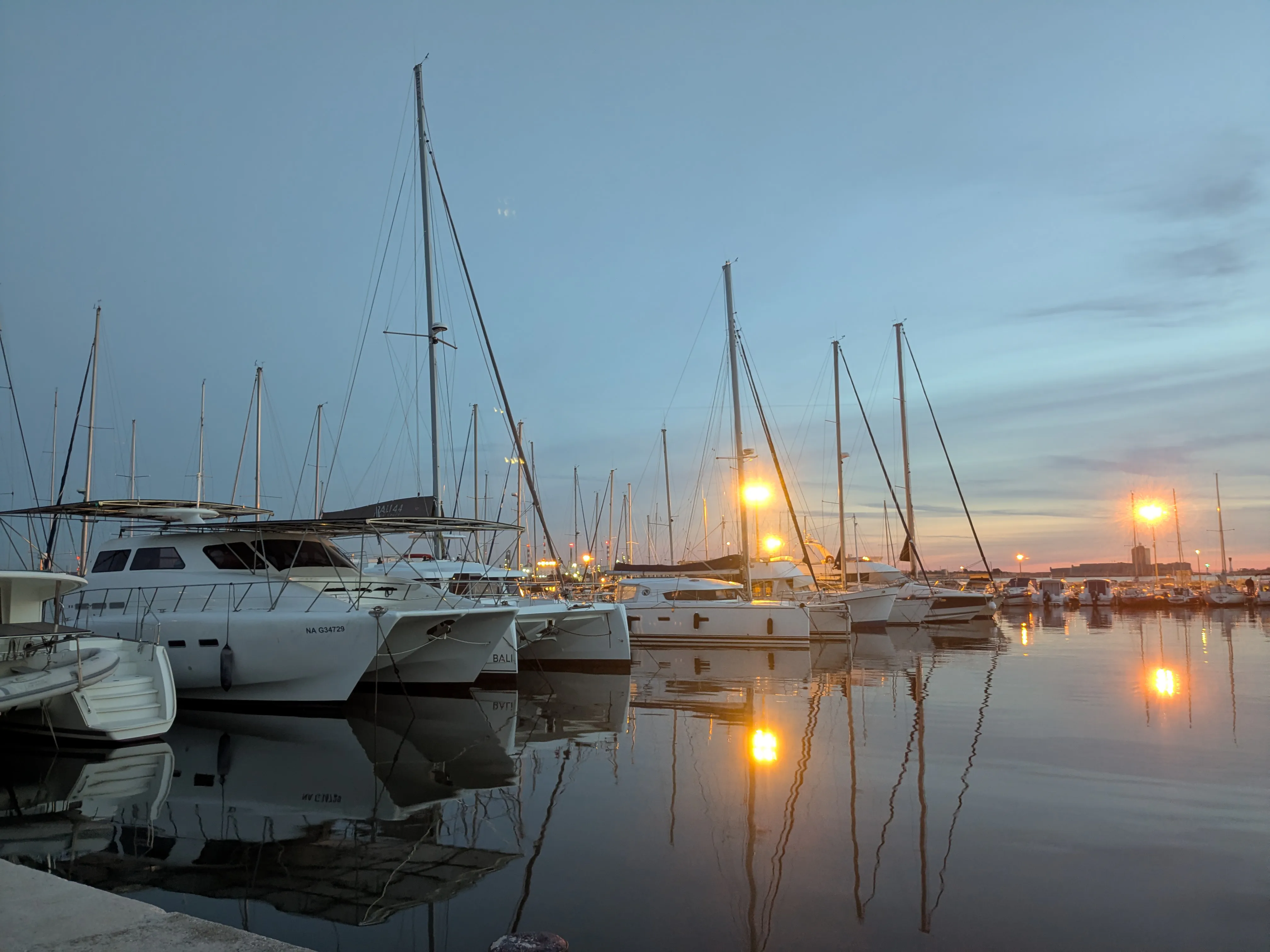
Chantier Naval de Provence scheduled our lift for 2:00 PM. We slipped our lines from the marina at 1:35 PM for the very brief navigation.
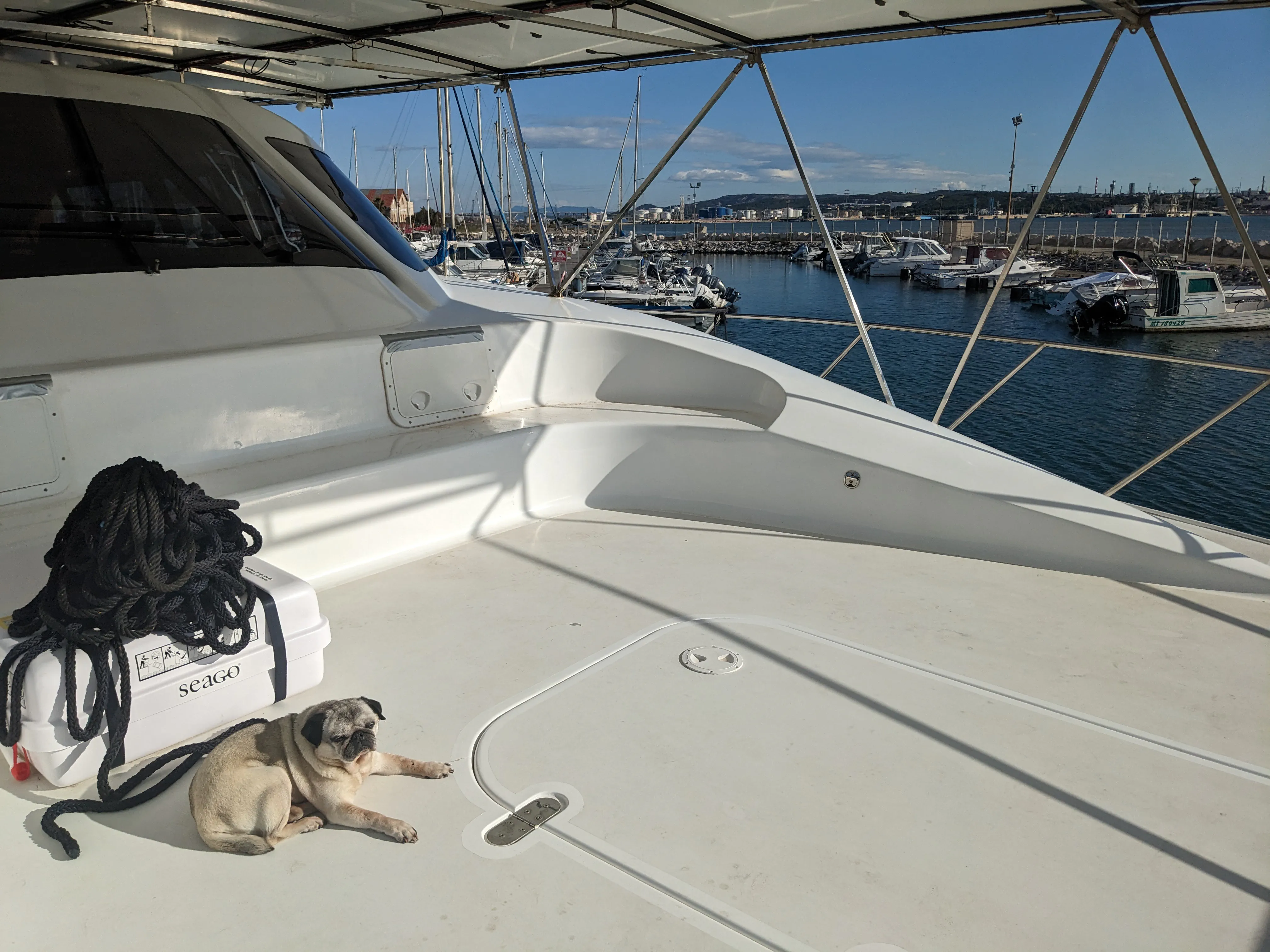
By 1:50 PM, we were centered in the travelift slip, ready to pull Escargot from the water for her winter rest.
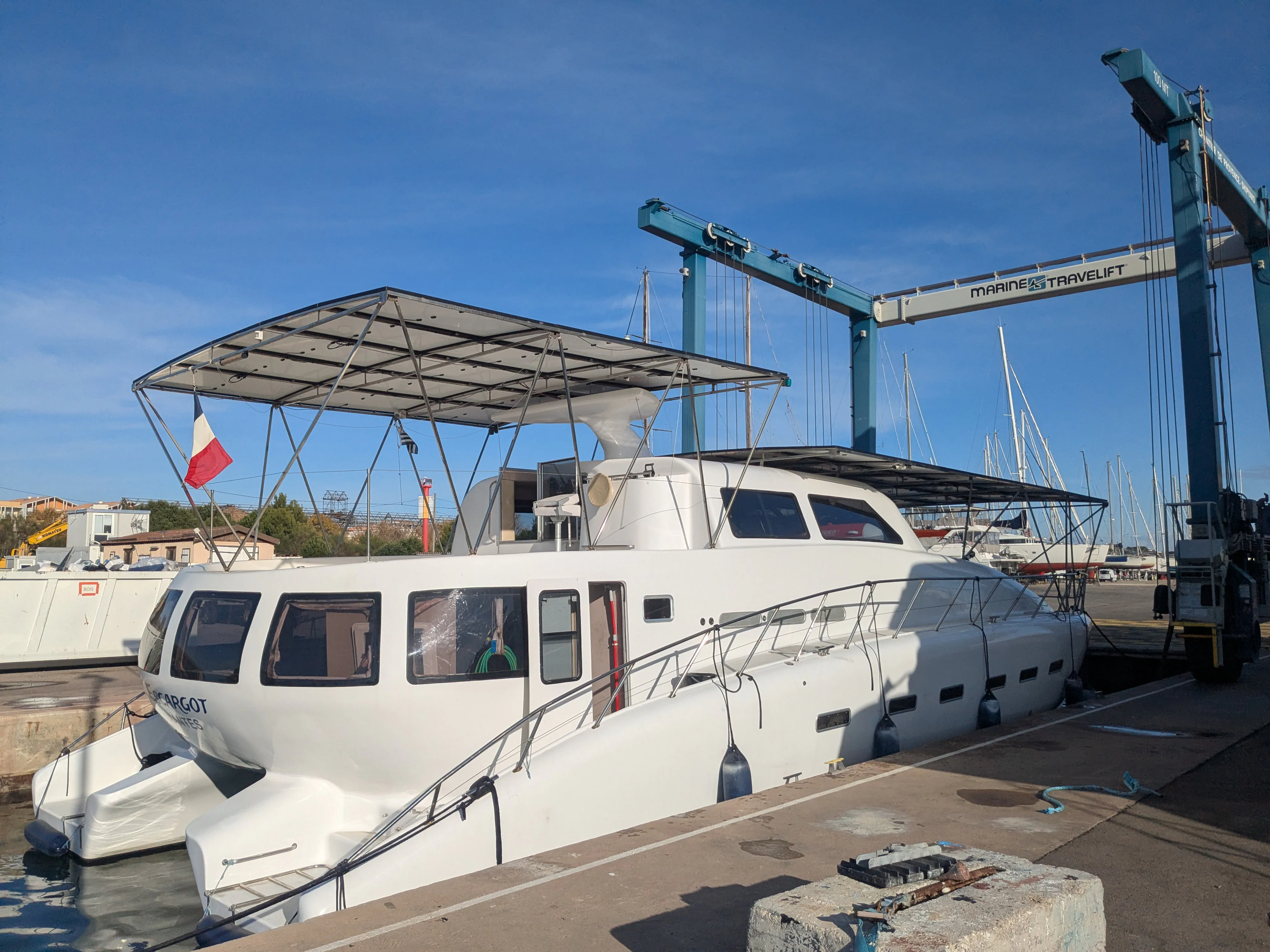
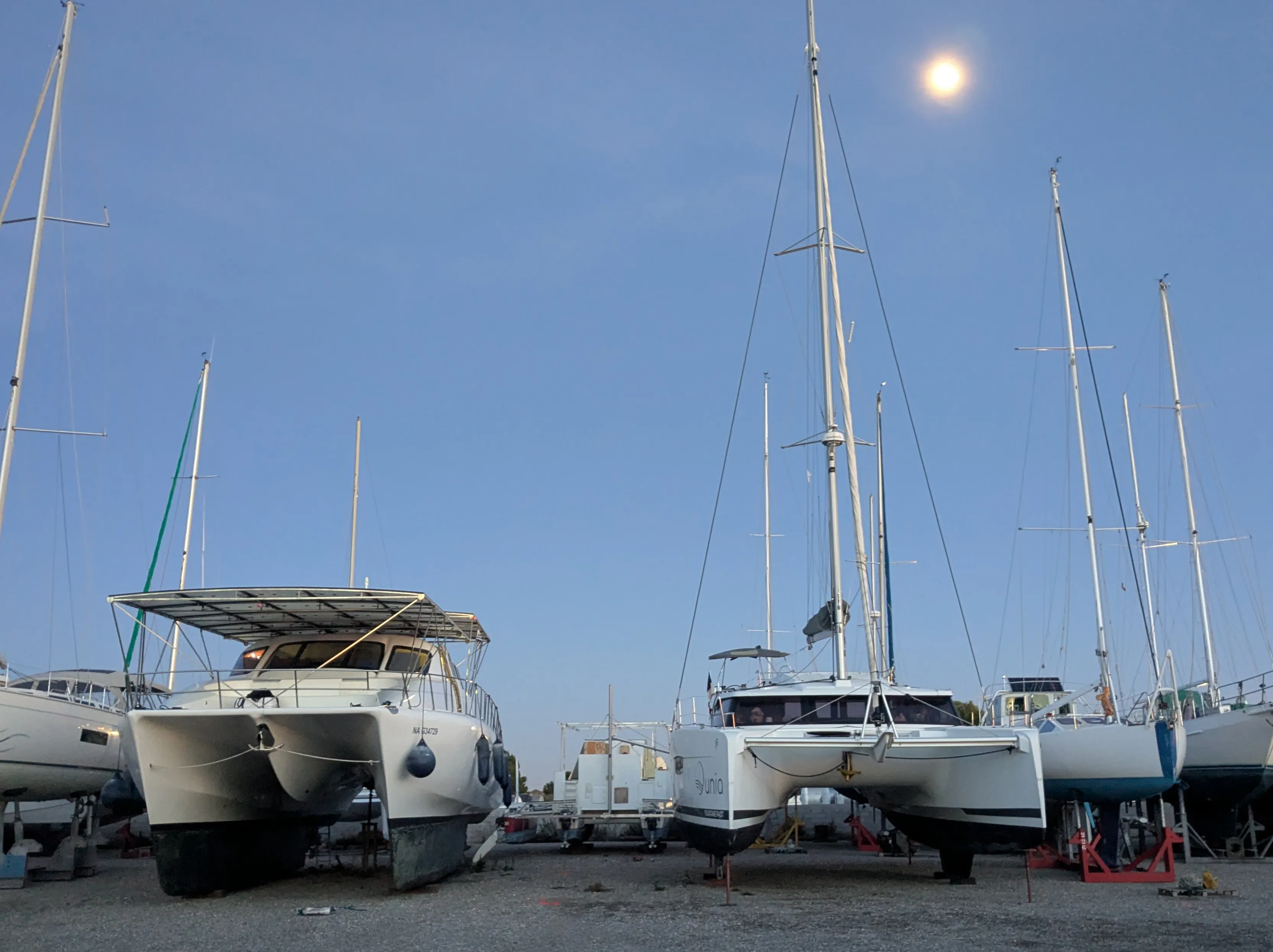
We spent the rest of the afternoon and early evening working through our winterization checklists: flushing the electric motor cooling circuits with fresh water, backing up our navigation data for off-season analysis, and deep-cleaning the interior. Even though our fall cruising season didn’t trace our original route through the Balearics, we experienced fantastic sailing, tackled usual hurdles, and discovered incredibly beautiful anchorages along the mainland coast.
Our spring season was defined by a bold ambition: crossing to the Balearic Islands. Before setting off, we focused on finalizing our autopilot …
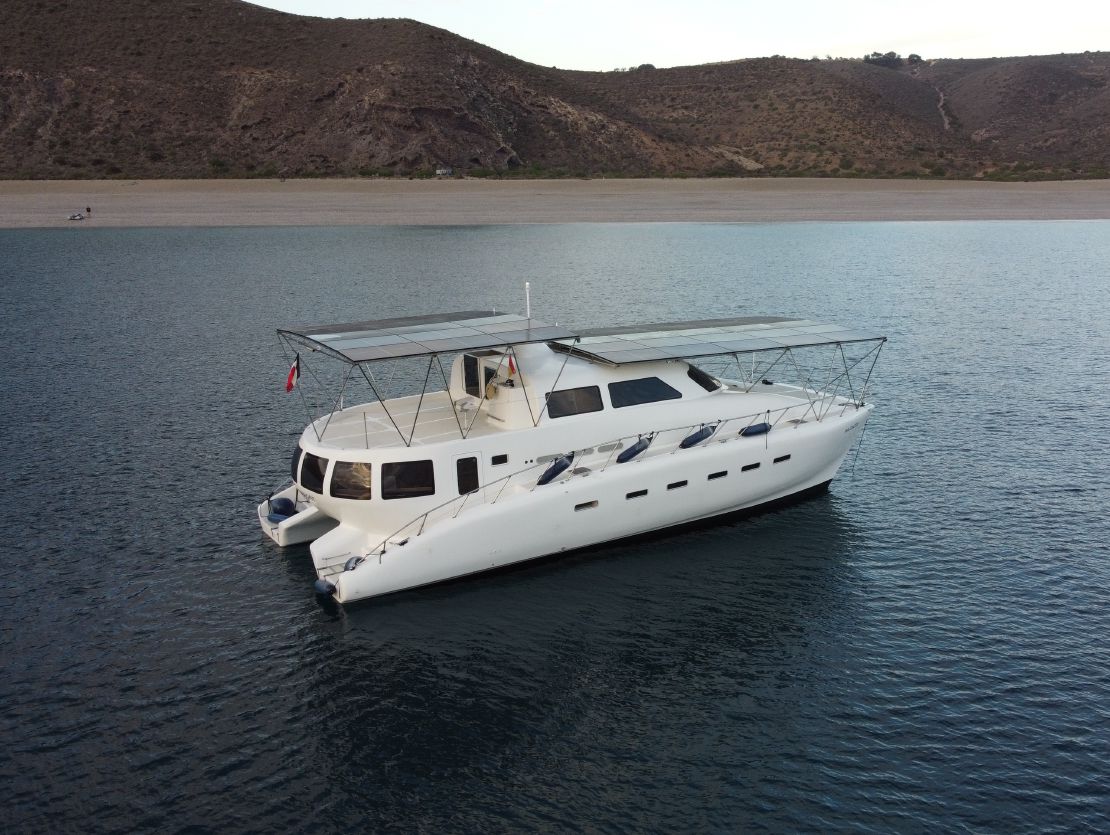
We kicked off our fall season by hosting several friends onboard before continuing our navigation along the southwest coast of Spain. Because we …